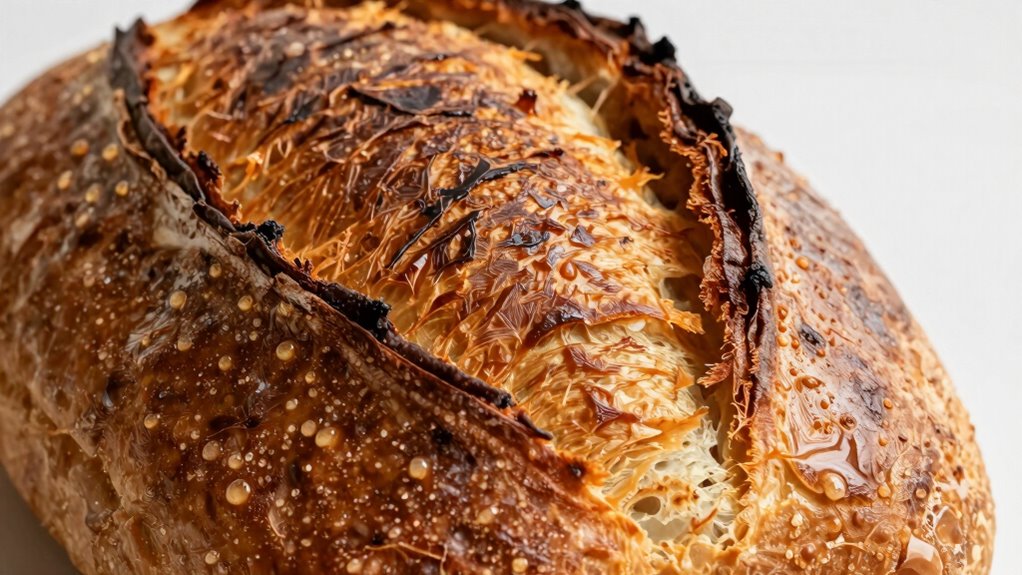
Steam ovens change bread crust and pastry texture by adding moisture during baking, which helps the crust brown evenly and become crisper. The steam creates a barrier that allows your dough to fully expand and develop a shiny, crackly crust without drying out. It also promotes better oven spring, leading to a lighter crumb inside. If you want to know how to harness this technique for perfect results, keep exploring these baking secrets.

Get baking supplies delivered free — and shop member deals
- Fast, free delivery on millions of items
- Access to Prime Big Deal Days deals on October 6–7
- Prime Video, Amazon Music and more included
Key Takeaways
- Steam infuses moisture, promoting even browning and a crisp, crackly crust.
- It delays crust formation, allowing better dough expansion and a lighter crumb.
- Steam enhances caramelization and Maillard reactions, deepening flavor and color.
- It prevents surface drying, ensuring thorough baking and a tender, moist interior.
- Controlled steam levels enable precise crust texture customization for bakery-quality results.
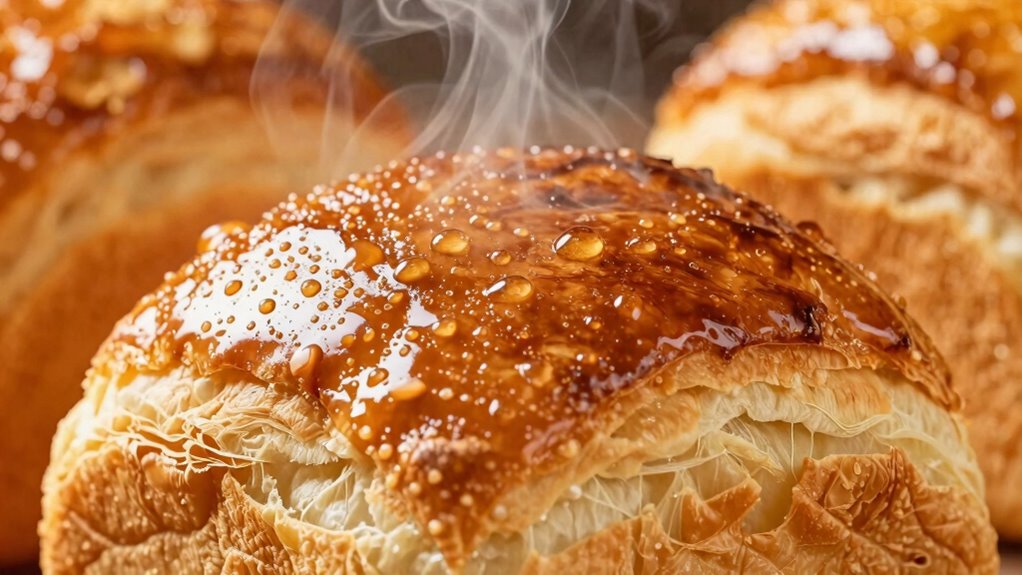
Have you ever wondered how steam ovens can transform your baked goods? The secret lies in the way they utilize steam infusion during the baking process. Unlike conventional ovens, steam ovens introduce moisture into the baking environment, which dramatically influences the final texture of your bread and pastries. When you bake with a steam oven, you release a powerful tool for achieving crusts that are not only beautifully browned but also satisfyingly crisp. This is because steam plays a key role in crust development, creating a barrier that allows the bread’s surface to expand fully before setting into its final form.
Steam ovens enhance crust crispness and browning by controlling moisture for perfect bread and pastry textures.
As your dough heats up in the oven, the moisture from steam prevents the crust from forming prematurely. Instead, the steam keeps the surface moist for longer, giving the dough more time to expand and develop a better oven spring. This process results in a lighter, airier crumb and a more pronounced, attractive crust. The steam infusion also interacts with the proteins and sugars on the dough’s surface, promoting caramelization and Maillard reactions. These chemical processes are responsible for that deep, rich color and complex flavor that makes freshly baked bread so irresistible.
You’ll notice that with a steam oven, the crust develops more evenly, avoiding the sometimes uneven or overly thick crusts you get with traditional dry baking. The moisture helps the crust become thinner yet crunchier, with a delicate balance between softness inside and crispness outside. This balance is particularly important for pastries, where a flaky, tender texture is desired. By controlling the amount of steam, you can fine-tune the crust’s texture to match your preference, whether you want a delicate, crackly crust or a slightly softer one with a shiny, glazed appearance. Additionally, controlling moisture levels can help prevent common issues such as stale crusts or uneven baking results.
Furthermore, steam infusion assists in preventing the surface from drying out too quickly, allowing the interior to bake thoroughly without sacrificing moisture. This results in a more tender crumb that stays moist longer. Using steam control is an important advantage that helps you achieve bakery-quality results at home. In fact, some ovens even feature automatic moisture regulation, making it easier to maintain optimal conditions during baking. Overall, steam ovens give you the ability to elevate your baking by enhancing crust development and ensuring a superior texture. The precise control over moisture during baking means you can experiment to find the perfect balance for your favorite breads and pastries, creating bakery-quality results right in your own kitchen.
As an affiliate, we earn on qualifying purchases.
Frequently Asked Questions
Do Steam Ovens Require Special Bread or Pastry Recipes?
No, you don’t need special recipes for your steam oven, but adjustments can improve results. Using recipes with higher hydration levels helps produce better bread flavor enhancement and crust development. Keep in mind, proper steam oven maintenance guarantees consistent moisture levels, which influence bread and pastry texture. You can experiment with your favorite recipes, adding a splash of water or adjusting baking times, to optimize the effects of steam on your baked goods.
How Does Steam Affect Gluten Development in Dough?
Steam affects gluten development by temporarily weakening the gluten structure, which allows the dough to expand more easily during baking. This increases dough elasticity, making it more stretchable without tearing. As the steam escapes, the gluten bonds firm up again, resulting in a chewier, better-textured bread or pastry. You’ll notice that steamed baked goods often have a lighter, airier crumb due to this process.
Can Steam Ovens Replace Traditional Baking Methods Entirely?
Can steam ovens replace traditional baking entirely? Not quite. Sure, they simplify maintenance and reduce costs with fewer parts to worry about, but they lack the charm of classic ovens. Steam ovens excel at perfecting crusts and pastries, yet for authentic bread or complex baking, you’ll still crave that traditional oven’s magic. Think of them as modern helpers, not complete replacements. Embrace the innovation, but keep the classics alive!
Are Steam Ovens Energy-Efficient Compared to Conventional Ovens?
Steam ovens are generally more energy-efficient than conventional ovens because they heat up quickly and use less energy to maintain ideal humidity levels. You’ll likely see a lower energy consumption and cost comparison over time, especially if you bake frequently. Their precise temperature control minimizes wasted energy, making them an eco-friendly choice. So, if you’re concerned about energy use, a steam oven can be a smart, efficient investment.
How Do Different Steam Levels Influence Crust and Pastry Outcomes?
Higher steam levels increase moisture, leading to a softer crust and more tender pastries, while lower steam levels promote crust crispness by allowing surface drying. You’ll notice that using less steam results in a crunchier crust and a firmer texture, ideal for bread. Conversely, more steam keeps the dough moist longer, producing a delicate, tender crust and moist interiors. Adjusting steam levels lets you control the balance of crust crispness and texture moisture.
As an affiliate, we earn on qualifying purchases.
Conclusion
So, next time you marvel at that perfect crust or flaky pastry, remember it’s the steam doing all the magic—turning simple baking into an art. Ironically, what’s often overlooked in the oven’s secret arsenal is what makes your baked goods exceptional. Don’t underestimate the power of steam; it’s the silent hero transforming your baking from ordinary to extraordinary. Who knew that a little moisture could make all the difference?
As an affiliate, we earn on qualifying purchases.
automatic steam oven for home use
As an affiliate, we earn on qualifying purchases.
As an affiliate, we earn on qualifying purchases.
Fall Picks
fall essentials
As an affiliate, we earn on qualifying purchases.