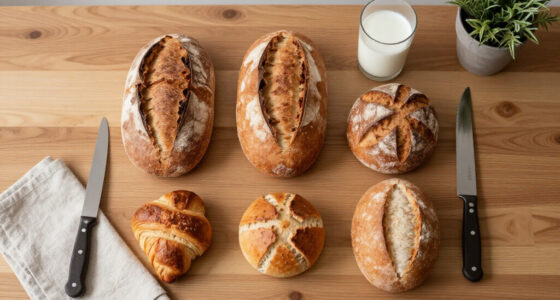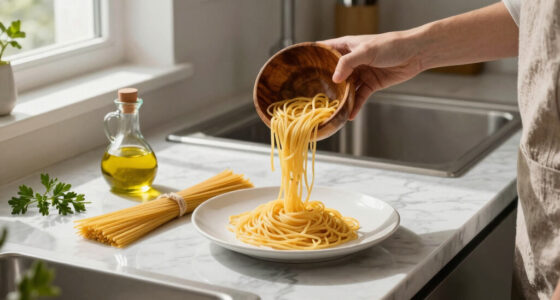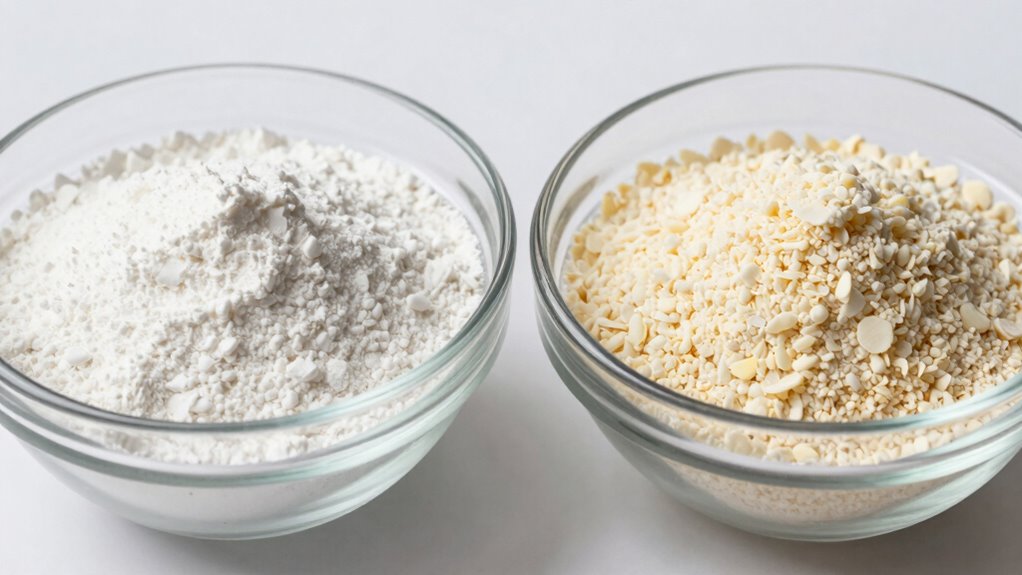
Fast starches, like wheat or tapioca, break down quickly during baking, producing a softer crumb and fine, even textures. Slow starches, such as potato or corn, gelatinize more gradually, leading to denser or chewier results. Understanding these differences helps you choose ingredients that control the baking process, affect the structure, and improve your results. If you continue exploring, you’ll discover how these starch types influence various recipes and how to optimize your baked goods perfectly.
Key Takeaways
- Fast starches break down quickly, releasing sugars and thickening early, while slow starches gelatinize gradually over time.
- Fast starches create softer, tender textures, whereas slow starches result in denser, chewier baked goods.
- Fast starches are ideal for rapid thickening and smooth finishes, while slow starches support sustained thickening in recipes like custards.
- Substituting fast or slow starches alters bread and pastry textures, enabling targeted modifications in baking outcomes.
- Gelatinization timing differs: fast starches gelatinize early, influencing structure and clarity; slow starches do so gradually.
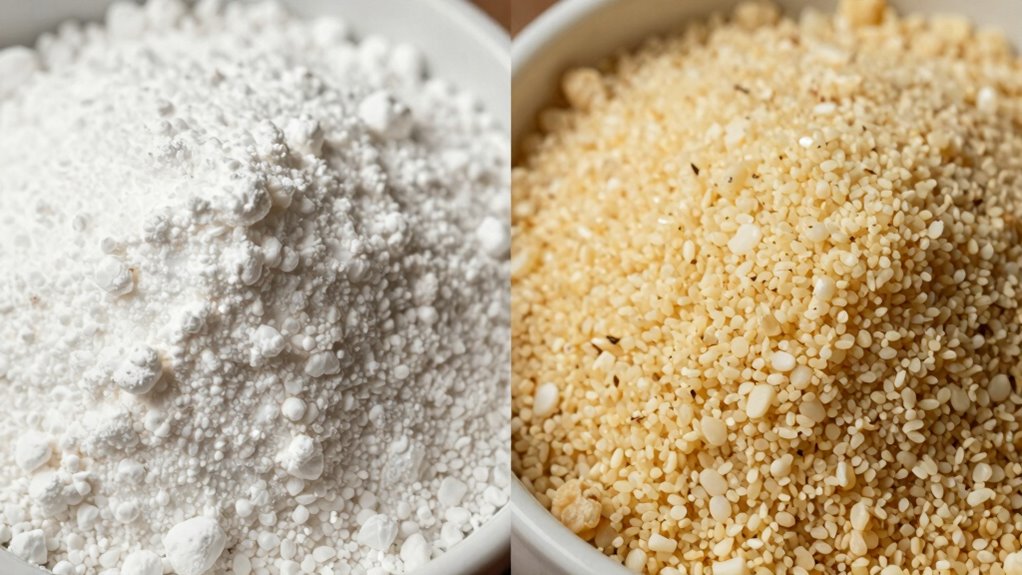
When it comes to baking, understanding the difference between fast and slow starches can make a significant impact on your results. These starches influence the way your baked goods turn out, especially regarding texture and structure. Fast starches, like wheat and tapioca, break down quickly during baking, releasing their sugars and thickeners early. Slow starches, such as potato or corn, take longer to gelatinize, providing a more gradual thickening process. Recognizing this difference allows you to make smarter ingredient substitutions to achieve the desired outcome in your baked creations.
If you want to modify the texture of your baked goods, knowing which starch to use is essential. For instance, incorporating fast starches can give your bread a softer, more tender crumb because they gelatinize quickly, trapping moisture early and creating a fine, even structure. Conversely, slow starches tend to produce a denser or chewier texture since they release their thickening properties more gradually. When experimenting with ingredient substitution, you can select the right starch to enhance or alter the texture, depending on your preferences or the recipe’s demands. Understanding starch behavior can help you better predict how different ingredients will interact during baking.
Using fast starches is also advantageous when you need rapid thickening in recipes like fillings or glazes. They help you achieve a smooth, glossy finish without overcooking or risking a runny consistency. Slow starches, on the other hand, are better suited for recipes that benefit from a sustained, gradual thickening process, such as custards or sauces that require a longer cooking time. By understanding these characteristics, you can adapt recipes more effectively, ensuring your baked goods maintain the right consistency from start to finish. Additionally, knowing how gelatinization works can help you control the texture and clarity of your finished product.
Regarding ingredient substitution, knowing which starch to swap in can save your recipe if you’re missing a key ingredient or aiming for a specific texture. For example, if you want a lighter, softer bread, replacing part of the flour with a fast starch like tapioca can help. For heartier, more substantial baked items, a slow starch like potato flour might be more appropriate. The key is to think about how each starch behaves during baking and how it interacts with other ingredients. This knowledge empowers you to tweak recipes confidently, achieving consistent and desirable results every time. Additionally, understanding the gelatinization process of starches can help you better predict their behavior during baking. Recognizing the timing of gelatinization can be crucial for perfecting layered or multi-step baked goods.

Anthony's Organic Tapioca Flour Starch, 2.5 lb, Gluten Free, Non GMO
- Organic USDA Certified Tapioca Flour: USDA Organic Tapioca Flour / Starch
- Gluten-Free Verified: Batch Tested and Verified Gluten Free
- Vegan and Non-GMO: Organic, Vegan, Non-GMO, No Additives
As an affiliate, we earn on qualifying purchases.
As an affiliate, we earn on qualifying purchases.
Frequently Asked Questions
Can Fast Starches Be Used as a Substitute for Slow Starches?
Yes, you can use fast starches as alternative starch sources, but expect different results. Fast starches tend to create a softer, smoother texture, whereas slow starches provide a firmer structure. For texture modifications, substitute carefully and consider blending different starches to mimic slow starch properties. Keep in mind that using fast starches alone may alter the final product’s consistency, so adjust your recipe accordingly for best results.
How Do Storage Conditions Affect the Starch Types’ Performance?
Imagine your pantry as a quiet vault, protecting your starches. Storage temperature plays a vital role; too warm, and starch stability diminishes, causing clumping or spoilage. Keep your fast and slow starches in cool, dry conditions to maintain their performance. Proper storage preserves their thickening power, ensuring your baked goods turn out perfect each time. Neglecting these conditions risks compromised texture and consistency, undermining your baking success.
Are There Health Differences Between Fast and Slow Starches?
Yes, there are health differences between fast and slow starches. Fast starches cause a higher glycemic impact, leading to quick blood sugar spikes and potentially increased hunger. Slow starches, on the other hand, promote steadier blood sugar levels, supporting better nutrient absorption and sustained energy. Choosing slow starches can help manage weight and improve overall metabolic health, making them a smarter choice for balanced eating.
Do Fast and Slow Starches Require Different Baking Times?
Baking with fast and slow starches is like adjusting a recipe’s tempo—you’ll need different baking times. Fast starches gelatinize quickly, often requiring shorter baking times at appropriate temperatures, while slow starches need longer heat exposure for complete gelatinization. Keep an eye on baking temperature, as it influences starch behavior. Adjust your time accordingly to guarantee your baked goods turn out perfect, regardless of starch type.
Which Starch Type Is Better for Gluten-Free Baking?
For gluten-free baking, slow starches like tapioca or arrowroot are often better because they provide a chewy texture and structure. You might also explore alternative flour options like rice or potato flour, which complement slow starches well. Nutritional comparisons show slow starches generally offer more fiber and slower digestion, making your baked goods more filling. Using a mix of these can enhance both texture and health benefits in your gluten-free recipes.
As an affiliate, we earn on qualifying purchases.
Conclusion
So, now that you know fast starches turn your baked goods into speedy monsters and slow starches take their sweet time, you’re practically a baking scientist. Just remember, choosing the right starch is like picking a dance partner — one’s quick on their feet, the other’s a graceful mover. So go ahead, experiment, and may your baked creations be as perfectly timed as a Swiss watch—no pressure, unless you’re timing your bread rise!
As an affiliate, we earn on qualifying purchases.
As an affiliate, we earn on qualifying purchases.