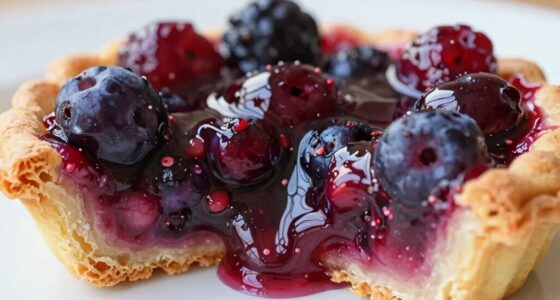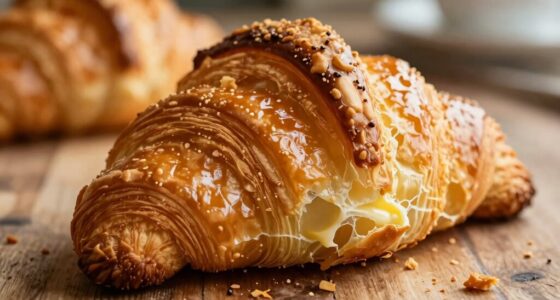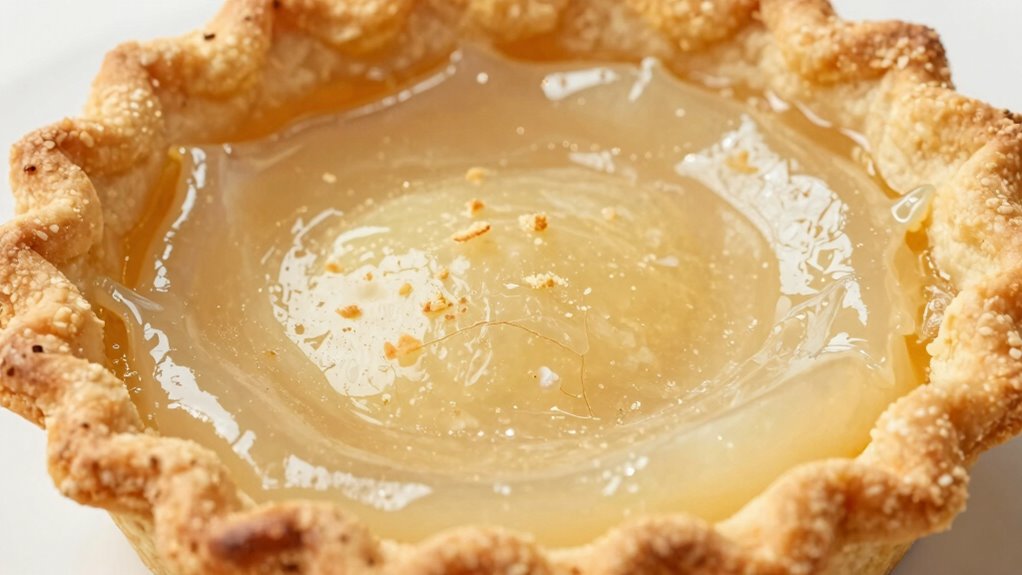

The main mistake that causes soggy bottoms later is skipping proper blind-baking steps. If you don’t fully pre-bake the crust with enough weights and at the right temperature, moisture from fillings will seep in and make it soggy. Removing the crust before it’s fully baked also weakens the structure. By ensuring thorough blind-baking and handling your pastry correctly, you’ll get a crisp, sturdy base. Keep going, and you’ll discover more tips to perfect your crust.
Listen free for 30 days with Audible
Thousands of audiobooks and originals — cancel anytime.
As an affiliate, we earn on qualifying purchases.
Key Takeaways
- Removing the crust before it is fully baked allows moisture to seep in, leading to sogginess later.
- Skipping or inadequately lining the crust with parchment or foil prevents proper weight distribution, causing uneven baking.
- Not pre-baking the crust long enough results in a soft, undercooked bottom that absorbs moisture from fillings.
- Using fillings with high moisture content without pre-treating or reducing liquids increases the risk of soggy bottoms.
- Baking at too low a temperature or for insufficient time fails to set the crust properly, making it prone to sogginess later.
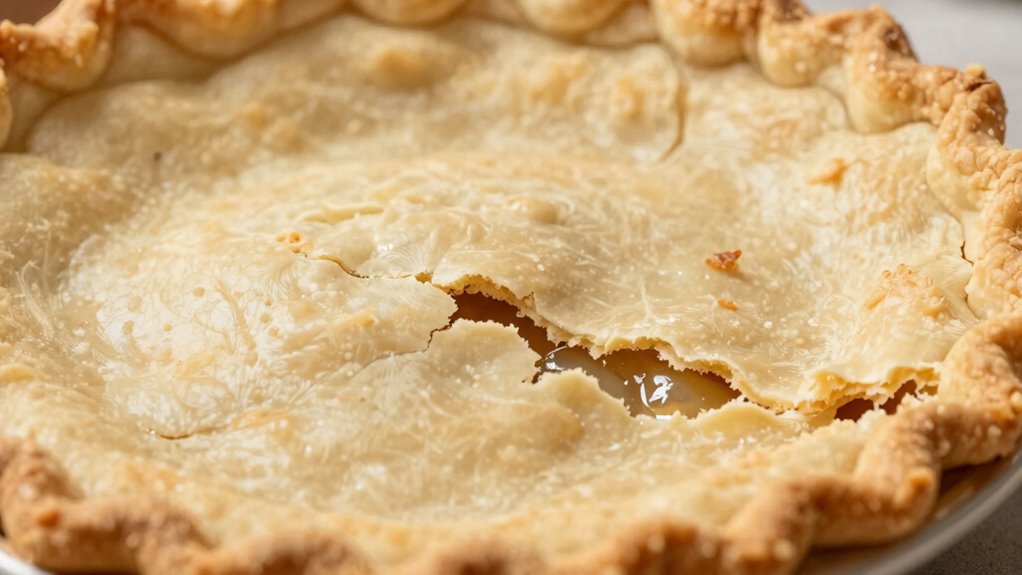
Have you ever baked a pie only to find the crust soggy and unappetizing? If so, you’re not alone. That common disappointment often stems from a mistake in the blind-baking process, which can lead to soggy bottoms that ruin even the most delicious fillings. Understanding how pastry textures and baking techniques interact is key to avoiding this frustrating outcome.
When you prepare a pie crust, the goal is to create a sturdy, flaky shell that can hold moisture without becoming soggy. This requires attention to pastry textures—ideally, a cold, well-chilled dough that’s rolled out evenly. But the real secret lies in how you handle the blind-baking process. Many bakers skip essential steps or use improper techniques, resulting in a crust that’s underbaked or overly moist.
One common mistake is not pre-baking the crust long enough or at the right temperature. When you blind-bake, you need to bake the crust fully before adding the filling. If you remove it too early, the moisture from the filling will seep into the crust, making it soggy. To prevent this, you should prick the bottom of the crust with a fork to allow steam to escape, and then line it with parchment paper or aluminum foil. Fill the lined crust with pie weights, dried beans, or rice to weigh down the pastry and prevent puffing or shrinking. This technique guarantees even baking and helps establish a crisp, flaky pastry texture.
Another vital aspect is the baking temperature. Baking at too low a heat won’t set the crust properly, while too high a temperature can cause uneven browning or burning. Using a hot oven—around 375°F to 400°F—is typically ideal. Once the crust is baked until golden and firm, you should let it cool slightly before adding the filling. This step helps the pastry set and reduces the chances of sogginess later. Proper pre-baking techniques and temperature control are crucial for a successful, non-soggy crust. Additionally, understanding how pastry textures respond to different baking conditions can help you fine-tune your process for perfect results.
It’s also worth mentioning that some fillings release more moisture than others. For high-moisture fillings like berries or custards, pre-treat the ingredients or partially cook them beforehand. This reduces the amount of liquid that can seep into the crust during baking, keeping your pastry textures crisp and appealing. Additionally, ensuring the crust is properly dried and chilled before baking can significantly improve its ability to stay crisp.
As an affiliate, we earn on qualifying purchases.
Frequently Asked Questions
How Can I Tell if My Blind-Baked Crust Is Properly Cooked?
You can tell your blind-baked crust is properly cooked when it’s golden around the edges and firm to the touch. Remove the parchment paper and check the bottom for a light, even color. An egg wash applied before baking helps achieve a shiny finish, but for doneness, look for a crisp texture. If it’s still soft or pale, bake it a few more minutes until it’s evenly golden.
What Types of Fillings Are Most Likely to Make a Crust Soggy?
You might notice soggy crusts when your filling has high fruit moisture or custard seepage. These liquids release steam and cause the crust to become damp. To prevent this, guarantee your crust is properly baked and consider adding a barrier like a layer of chocolate or a thin coating of egg wash. Proper blind baking and drainage can help keep your crust crisp, even with juicy fillings.
Does the Type of Baking Dish Affect the Crust’s Texture?
Yes, the type of baking dish affects your crust’s texture. For example, glass dishes conduct heat differently than metal, impacting dough consistency and oven temperature control. Using a metal pan allows for a crisper crust because it heats quickly and evenly. Be mindful of oven temperature adjustments based on your dish type. Properly preheated dishes and adjusting baking times help prevent soggy bottoms and guarantee a perfectly baked crust.
Can Using a Different Pie Crust Recipe Prevent Sogginess?
Yes, using alternative crust recipes can help prevent sogginess. Look for recipes with higher fat content or added ingredients like ground nuts or oats that absorb moisture better. Pre-baking techniques, such as chilling the crust before baking and blind baking with pie weights, also create a barrier that keeps moisture out. Combining these strategies guarantees your crust stays crisp and delicious, avoiding soggy bottoms.
What Is the Best Way to Store a Blind-Baked Crust Before Filling?
Picture your crust as a delicate sculpture, needing protection to keep its crisp integrity. To preserve its perfect crust texture, store it in an airtight storage container or wrap it tightly with plastic wrap. This shields it from moisture and air, preventing sogginess. Keep it at room temperature if you’ll fill it within a day, or refrigerate if longer, ensuring your crust remains flaky and inviting when it’s time to bake.
parchment paper for baking crust
As an affiliate, we earn on qualifying purchases.
As an affiliate, we earn on qualifying purchases.
Conclusion
If you skip the essential step of properly blind-baking, your tart shell becomes a sponge waiting to soak up moisture, turning your perfect crust into a soggy mess. Think of your pastry as a delicate sailboat—without a sturdy, dry hull, it’s doomed to sink beneath the waves of filling. So, don’t rush the process. Follow each step carefully, and you’ll keep your crust crisp and your desserts shining like a lighthouse guiding the way to perfect baking.
As an affiliate, we earn on qualifying purchases.
As an affiliate, we earn on qualifying purchases.
Fall Picks
fall essentials
As an affiliate, we earn on qualifying purchases.