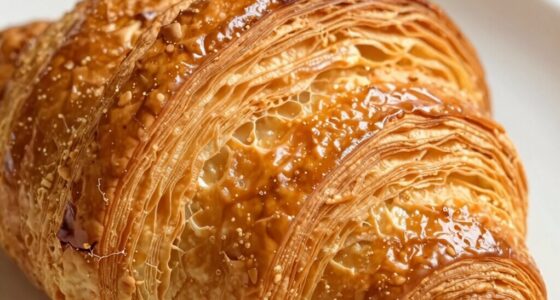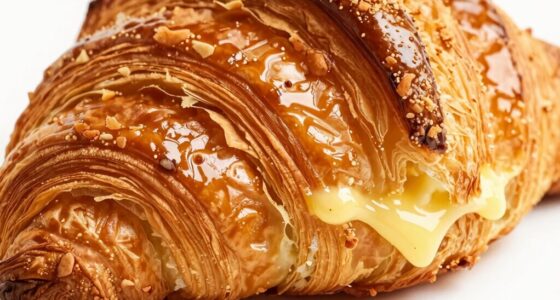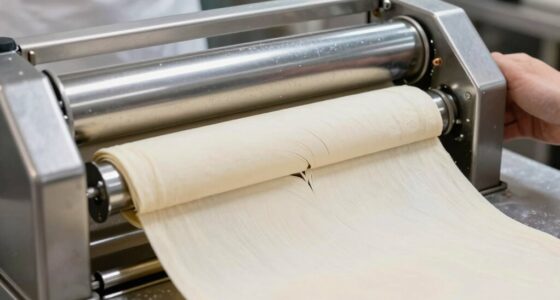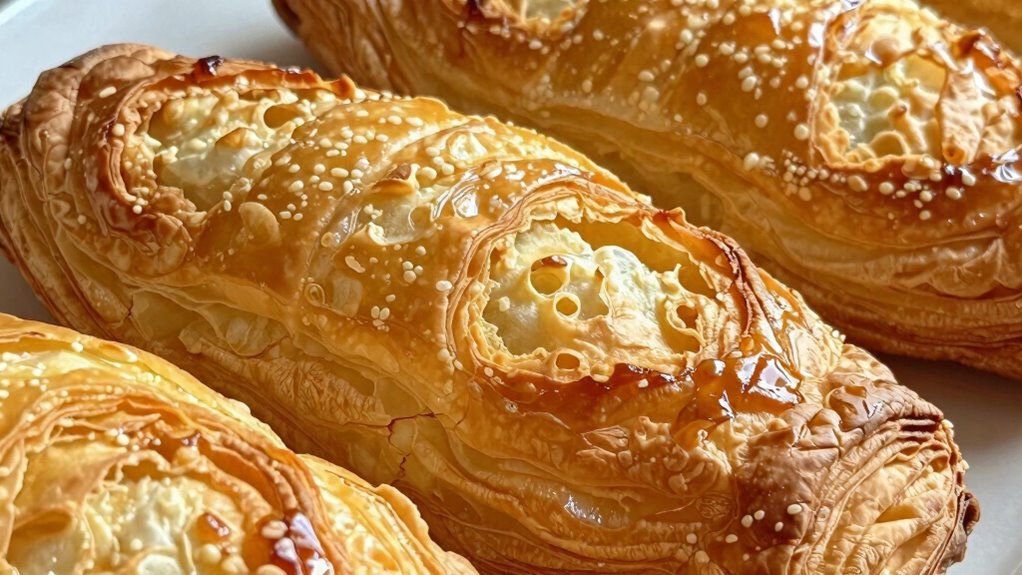

If your puff pastry rises unevenly, it’s often due to uneven dough elasticity, temperature fluctuations, or inconsistent baking conditions. You might have overworked or under-kneaded the dough, which affects gluten development and how well it can expand. Also, unstable oven temperatures or dry environments can cause layers to dry out or not puff uniformly. Paying attention to proper handling and oven setup helps, and there’s more to improve your results by understanding these factors more deeply.
Key Takeaways
- Uneven rising can result from inconsistent oven temperature or fluctuating heat during baking.
- Insufficient or uneven gluten development affects uniform expansion of the pastry layers.
- Overworking or underworking dough impacts elasticity, causing irregular puffing.
- Variations in oven humidity can dry out or inhibit proper layer expansion.
- Improper dough handling or uneven rolling can lead to inconsistent layer thickness and rise.
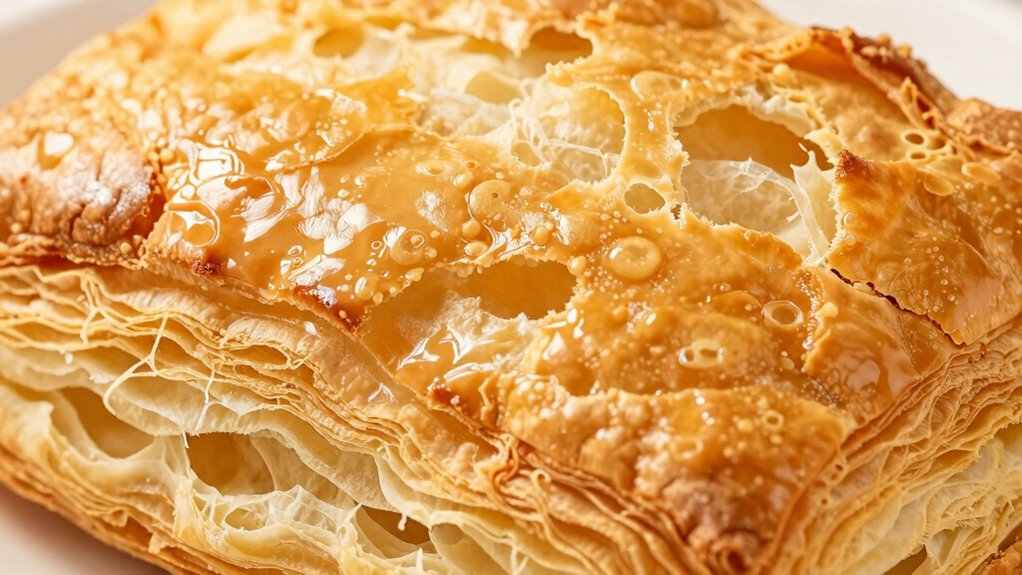
Puff pastry rising unevenly can be frustrating, especially when you’re aiming for perfectly flaky layers. The key to achieving that delicate balance lies in understanding how factors like dough elasticity and oven humidity influence the process. When your dough isn’t elastic enough, it struggles to stretch uniformly, which can cause irregular puffing. Conversely, if the dough is too elastic, it resists expansion, leading to uneven layers. Achieving the right dough elasticity requires proper kneading and resting time, allowing gluten to develop just enough to give the dough flexibility without making it tough. Additionally, the gluten development process during kneading plays a crucial role in how well the dough can expand during baking. Oven humidity plays an essential role in how puff pastry rises. A dry oven environment can cause the layers to dry out too quickly, preventing the steam from building up evenly and resulting in uneven puffing. On the other hand, if the oven is too humid, excess moisture can inhibit proper expansion, making the pastry dense or uneven. To control oven humidity, it’s helpful to preheat your oven thoroughly and avoid opening the door too often during baking. Some bakers even place a small dish of water at the bottom of the oven to create a steamy environment, which encourages the layers to puff evenly. Maintaining consistent oven temperature is also vital, as fluctuations can cause uneven rising, with some parts expanding faster than others. Always use an oven thermometer to guarantee your oven is set to the correct temperature—usually around 400°F (200°C) for puff pastry. This helps create a stable environment for the layers to rise uniformly. Additionally, how you handle the dough before baking impacts its rise. Overworking the dough can diminish dough elasticity, making it less responsive to heat and steam, which results in uneven puffing. Proper dough handling techniques can make a significant difference in achieving a perfectly puffed pastry. Understanding the importance of consistent oven conditions can help bakers troubleshoot and improve their results. Paying attention to dough elasticity and handling methods can further enhance your baking success. For optimal results, it’s also beneficial to consider temperature control throughout the baking process to ensure even expansion.
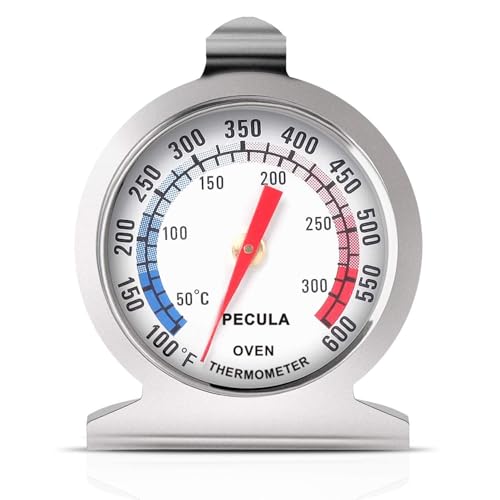
Stainless Steel Oven Thermometer 50-300°C/100-600°F, Analog Instant Read, Battery-Free Kitchen Cooking Thermometer, Hook & Stand Design Food Thermometer for Oven, Grill, Smoker, Fryer
Clear Dial Display: PECULA's analog oven thermometer delivers precise, instant readings from 50–300°C / 100–600°F. Its dial features…
As an affiliate, we earn on qualifying purchases.
As an affiliate, we earn on qualifying purchases.
Frequently Asked Questions
Can the Type of Flour Affect Puff Pastry’s Rise?
Yes, the type of flour affects puff pastry’s rise. Flours with higher protein content, like bread flour, promote stronger gluten development, which can make the layers rise more evenly and create a flaky texture. Conversely, using lower-protein flours like cake flour results in weaker gluten, leading to uneven rising. So, choosing the right flour with the appropriate gluten development is key to achieving perfectly puffed pastry.
Does Altitude Influence Puff Pastry Rising?
Yes, altitude effects can influence how puff pastry rises. At higher altitudes, the lower air pressure causes gases in the dough to expand more quickly, which can lead to uneven rising or even collapse. You should adjust ingredients, like increasing flour or decreasing liquids, to maintain ingredient consistency. Also, extend chilling and baking times to help the pastry rise evenly and achieve the desired flaky texture.
How Does Humidity Impact Puff Pastry Dough?
Humidity effects can drastically alter your puff pastry’s rise. When humidity is high, moisture in the air can make your dough more elastic, causing it to become sticky and difficult to handle. Imagine a dough that’s so moist, it barely holds its shape — that’s the impact of excess humidity. To combat this, keep your dough cool and dry, ensuring it maintains the perfect elasticity for a flaky, even rise.
What Role Does Oven Temperature Play in Uneven Rising?
Oven temperature plays a key role in even puff pastry rising. If your oven has hot spots, some areas heat faster, causing uneven rising. To prevent this, use a baking rack placement that promotes even heat distribution and rotate the pastry during baking. Make sure your oven is properly calibrated, and avoid opening the door frequently, which can cause temperature fluctuations and uneven puffing.
Can Using Cold Ingredients Prevent Uneven Puff Pastry Rise?
Using cold ingredients can help prevent uneven puff pastry rise by improving thermal conduction effects during baking. Cold butter and dough create a more controlled release of steam, leading to even puffing. Cold ingredient strategies slow down heat transfer, allowing the layers to expand uniformly. This technique minimizes the risk of uneven rising, ensuring a crisp, flaky texture throughout your pastry. Always keep ingredients cold for the best, consistent results.
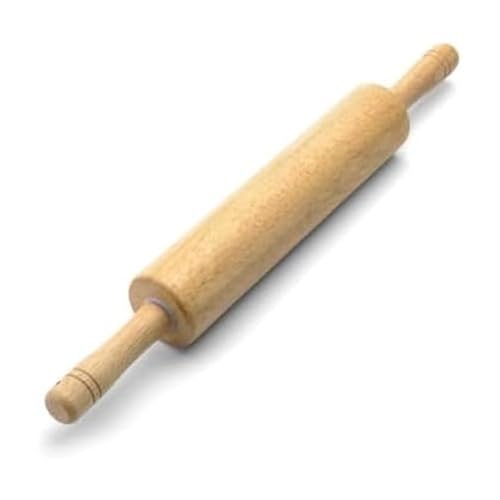
FARBERWARE Classic Wood Rolling Pin, 18-Inch Hardwood Dough Roller for Baking Pizza, Pies, Pastry and Cookies, Ergonomic Handles, Kitchen Essential
PREMIUM HARDWOOD CONSTRUCTION: Built from moisture-resistant hardwood that delivers a smooth, non-dragging rolling surface for consistent results every…
As an affiliate, we earn on qualifying purchases.
As an affiliate, we earn on qualifying purchases.
Conclusion
So, next time your puff pastry rises unevenly, remember it’s often just a small coincidence—maybe a chilly spot in your oven or a slightly uneven roll. Sometimes, it’s these tiny imperfections that give your pastry a unique charm. Don’t stress over perfection; instead, enjoy the process and your delicious creation. After all, even imperfect puff pastry can surprise you with its flaky, buttery goodness—proof that sometimes, life’s little quirks make all the difference.

Winco Steam Pan, 2-1/2-Inch, Stainless Steel
25 gauge 18/8 stainless steel Anti-jamming
As an affiliate, we earn on qualifying purchases.
As an affiliate, we earn on qualifying purchases.

Rainspire Bench Scraper, Stainless Steel Dough Scraper, Pastry Scraper, Pizza and Dough Cutter Multi-Purpose Scraper/Chopper, Pizza Cutter Food Chopper Baking Supplies Kitchen Gadgets, Black
Multi-purpose scraper/chopper tool – Great for cutting dough, sectioning crusts, scraping baking sheets, chopping veggies and more
As an affiliate, we earn on qualifying purchases.
As an affiliate, we earn on qualifying purchases.