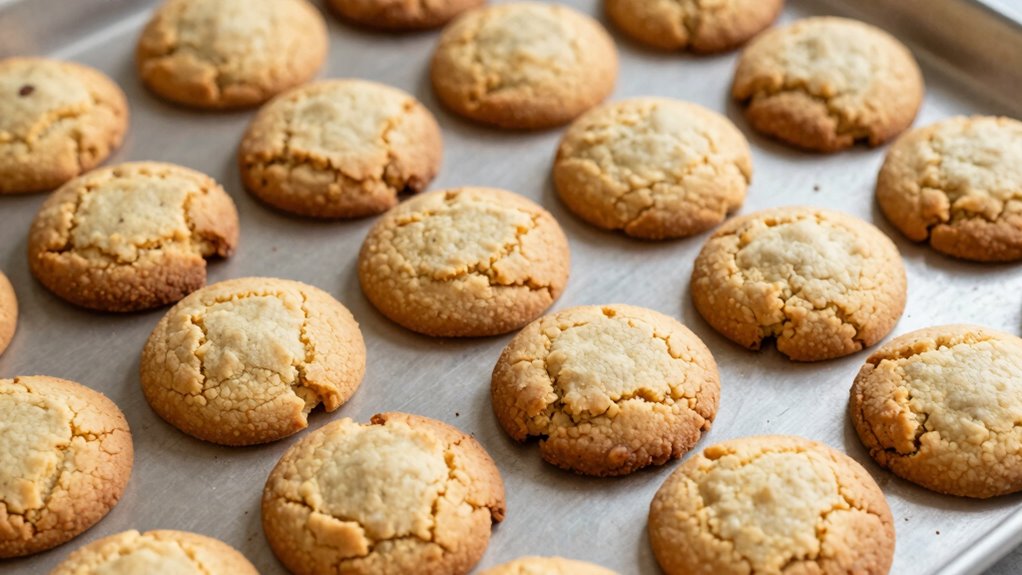
When you overcrowd a sheet pan, cookies don’t have enough space to spread evenly. This causes them to merge or flatten unevenly, resulting in misshapen cookies. High oven temperatures can make them spread too much, while low temperatures may keep them thick and distorted. Proper spacing allows heat to circulate properly, helping cookies keep their shape. If you want to learn how to prevent these issues, keep exploring the details behind better baking techniques.
Key Takeaways
- Crowding causes cookies to spread more and merge, resulting in misshapen or flattened cookies.
- Tight spacing restricts heat circulation, leading to uneven baking and distorted shapes.
- Overcrowded pans increase the risk of cookies spreading excessively due to higher heat concentration.
- Proper spacing prevents merging and helps maintain individual cookie shapes during baking.
- Using appropriate pan size and spacing ensures cookies retain their intended shape and texture.
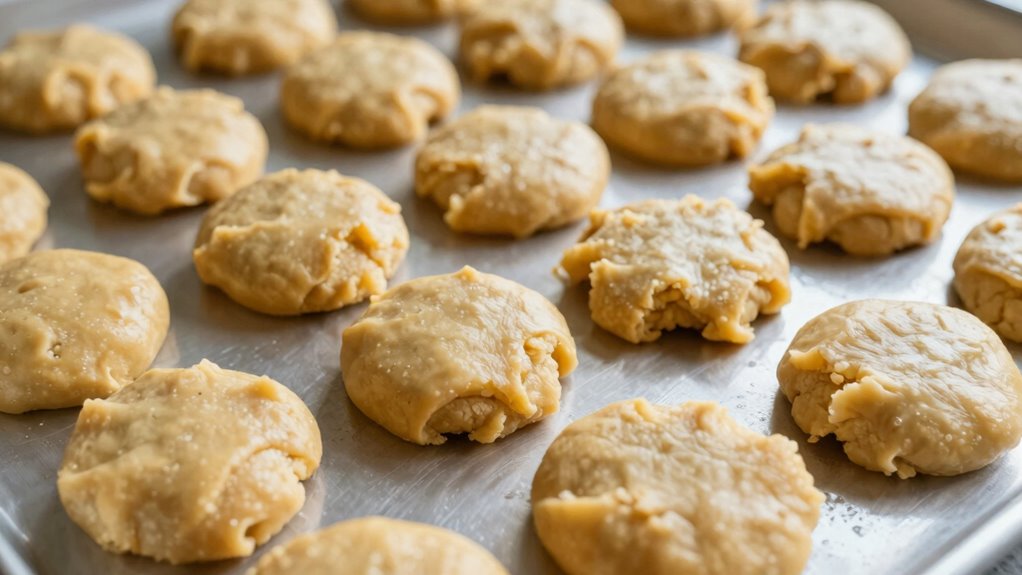
When baking cookies on a sheet pan, crowding the pan can lead to uneven baking and misshapen cookies. If you pack too many dough balls close together, heat doesn’t circulate properly around each cookie. This causes some cookies to bake faster on the edges while others remain underdone in the middle. The result is irregular shapes and inconsistent textures. To prevent this, leave enough space between each cookie—about 2 inches—to allow proper heat flow. This spacing helps ensure that each cookie bakes evenly and maintains its intended shape. This way, the oven temperature affects all cookies evenly, and they bake uniformly.
Crowding also impacts how the cookies spread. When cookies are too close, they tend to merge into one another as they melt and spread out during baking. This not only distorts their shape but can also make them flatter and more uneven. The oven temperature plays a key role here—if it’s too high, cookies might spread too quickly, increasing the chance of merging. Conversely, if it’s too low, they may not spread enough, resulting in thick, misshapen cookies. Maintaining a consistent oven temperature ensures that each cookie spreads at a controlled rate, which keeps their shape intact. Proper heat circulation is essential for achieving the best results, especially when working with crowded pans. Additionally, pan size can influence how cookies behave—using a larger or smaller pan than recommended can further alter their shape and spreading pattern. Baking time becomes another critical factor when the pan is crowded. Overcrowded pans often require longer baking times because heat isn’t evenly distributed to each cookie. If you don’t adjust the baking time accordingly, some cookies may be underbaked or overbaked, which affects their shape and texture. For example, underbaked cookies tend to be gooey and misshapen, while overbaked ones become too firm and lose their soft, rounded appearance. To avoid this, check your cookies a few minutes before the recipe’s recommended baking time, especially if the pan is crowded, and use visual cues—like golden edges—to judge doneness. Remember that baking sheet material can also influence heat transfer, so choosing the right type of pan can help achieve more consistent results. Proper cookie spacing and understanding your oven’s behavior are key to maintaining the ideal cookie shape and texture. Additionally, adjusting your baking techniques based on pan crowding can further improve your results.
cookie sheet pan with proper spacing
As an affiliate, we earn on qualifying purchases.
As an affiliate, we earn on qualifying purchases.
Frequently Asked Questions
How Does Pan Material Affect Cookie Spreading?
Your pan material impacts cookie spreading through heat conduction. Metal pans, especially aluminum or steel, conduct heat quickly and evenly, causing cookies to spread more uniformly and often flatter. On the other hand, glass or ceramic pans heat more slowly and unevenly, resulting in less spreading and thicker cookies. So, choosing the right pan material helps control how much your cookies spread, giving you more consistent results.
Can Different Cookie Dough Types React Differently to Crowding?
You’ll find that different cookie dough types react uniquely to crowding. For example, higher dough hydration can cause cookies to spread more and lose shape when crowded, while well-developed gluten provides better structure. A dough with less hydration and strong gluten development resists spreading, maintaining shape even when crowded. So, understanding these factors helps you predict how your cookies will behave on a crowded sheet pan, ensuring they come out perfect.
Does Oven Temperature Influence Cookie Shape When Crowded?
Oven heat profoundly influences cookie shape when crowded, as baking dynamics come into play. Higher temperatures cause cookies to spread faster and more unevenly, especially in crowded conditions, leading to distorted shapes. Conversely, moderate oven heat allows cookies to bake more evenly, maintaining their intended form despite crowding. To control cookie shape, adjust the oven temperature carefully, understanding how heat impacts spreading and baking behavior in crowded sheet pans.
How Can I Prevent Cookies From Merging in Crowded Pans?
To prevent cookies from merging, focus on proper cookie spacing and baking sheet layout. Keep enough space between each cookie—about 2 inches—so they don’t spread into each other. Arrange your cookies evenly across the baking sheet, avoiding overcrowding. Use multiple pans if needed, and rotate them during baking to guarantee consistent heat. This way, your cookies stay separate, maintaining their shape and appearance.
Are There Specific Baking Times Recommended for Crowded Sheets?
Yes, when baking on a crowded sheet pan, you should reduce the baking time slightly to prevent overbaking due to heat retention. Keep an eye on the cookies, especially if they’re thicker, as they may need a bit longer. Use a baking surface with good heat circulation and consider rotating the pan midway. This guarantees even baking without overcooking or merging, maintaining your cookies’ perfect shape and texture.
non-stick baking sheet for cookies
As an affiliate, we earn on qualifying purchases.
As an affiliate, we earn on qualifying purchases.
Conclusion
Now that you know how sheet pan crowding affects cookie shape, you’ll be better prepared to space your cookies properly for perfect results. Did you know that overcrowded pans can cause cookies to spread up to 50% more than when spaced correctly? So, next time, give your cookies room to breathe—they’ll bake more evenly, look better, and taste even more delicious. Happy baking and enjoy those perfectly shaped treats!
baking sheet with even heat distribution
As an affiliate, we earn on qualifying purchases.
As an affiliate, we earn on qualifying purchases.
cookie baking mats for even spreading
As an affiliate, we earn on qualifying purchases.
As an affiliate, we earn on qualifying purchases.