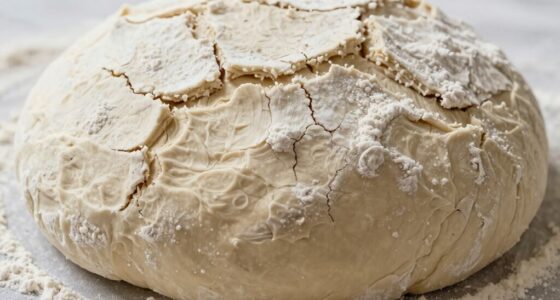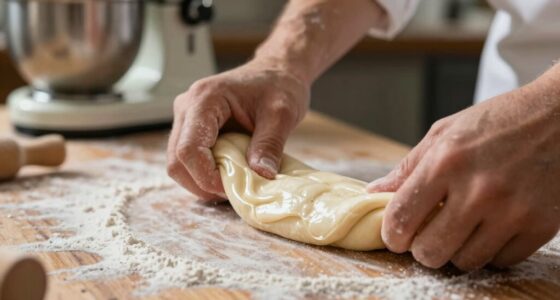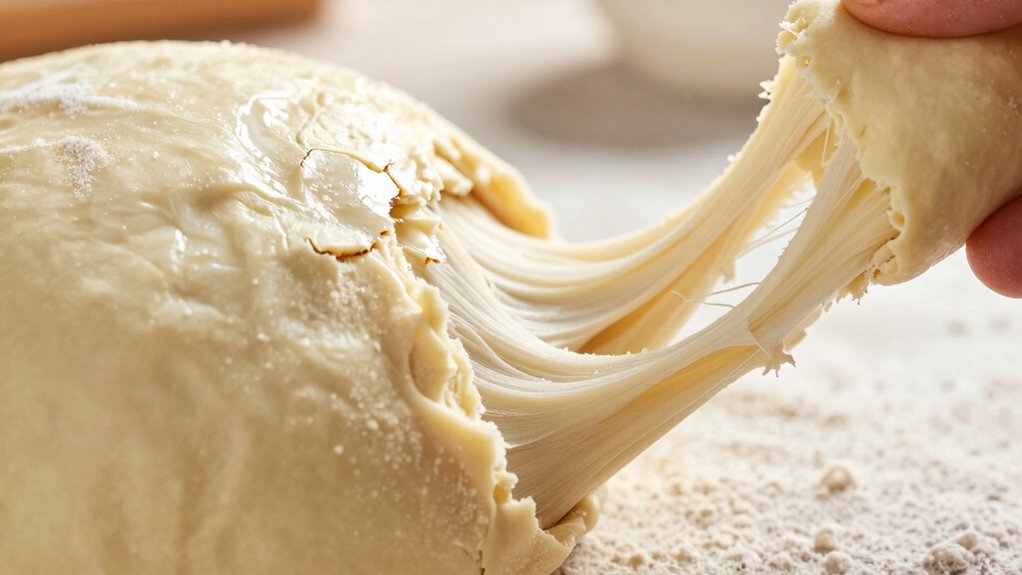
Dough strength and extensibility are in constant tension because they rely on the gluten network, which reacts differently to ingredients and fermentation. When you increase dough strength, it becomes more resistant to stretching, but this often makes it less extensible. Conversely, adding tenderizers or reducing fermentation can make dough more stretchable but weaker. Understanding this balance helps you control dough behavior—stick around to learn how to master this delicate interplay for perfect results.
Key Takeaways
- Increasing gluten strength enhances dough resilience but reduces its ability to stretch, creating a trade-off between strength and extensibility.
- Overfermentation weakens the gluten network, decreasing dough strength while increasing extensibility.
- High-protein flours create stronger gluten networks that resist stretching, opposing the desire for extensibility.
- Adding fats and sugars tenderizes dough, boosting extensibility but potentially weakening overall strength.
- Balancing fermentation time, temperature, and ingredients is essential to harmonize dough strength and extensibility.
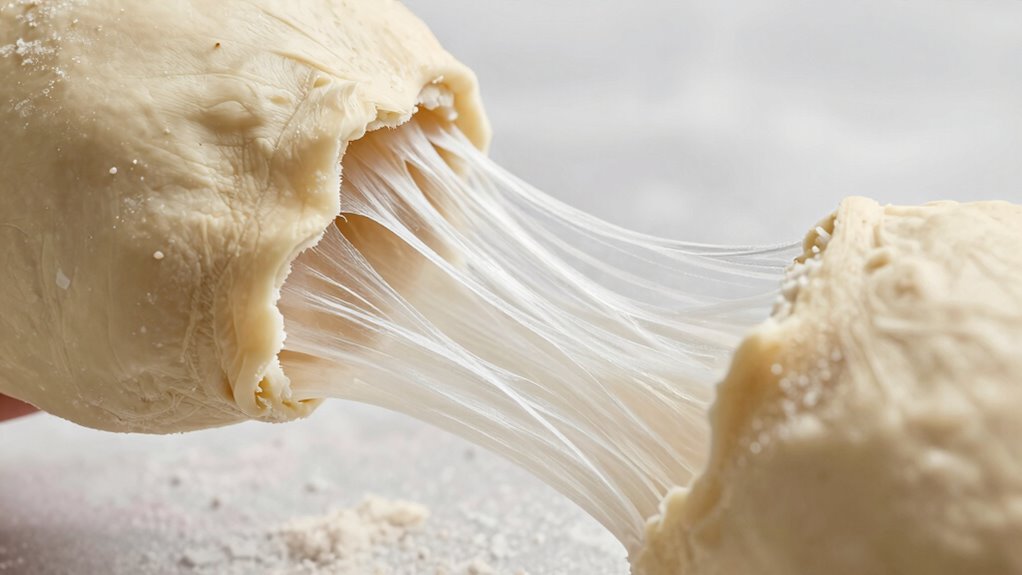
Understanding dough strength and extensibility is essential for achieving the perfect baked goods. These qualities are often at odds because of how fermentation dynamics and ingredient interactions influence dough behavior. When you’re working with dough, you want it to be strong enough to hold its shape and trap gases, but also extensible enough to stretch without tearing. Striking this balance can feel like a constant tug-of-war, but grasping the underlying factors helps you control the outcome.
Balancing dough strength and extensibility is key to perfect baking—understanding fermentation and ingredients makes all the difference.
Fermentation dynamics play a major role in shaping dough’s strength and extensibility. As yeast ferments, it produces carbon dioxide and alcohol, which cause the dough to rise and develop structure. Overfermentation, however, can weaken the gluten network, reducing dough strength and making it overly extensible or even slack. Underfermentation, on the other hand, results in a dough that’s too tight and stiff, lacking the necessary elasticity to stretch properly. The timing and conditions of fermentation directly impact how the gluten develops, affecting the dough’s ability to balance strength with extensibility. Proper fermentation is crucial for achieving the desired dough qualities. Additionally, maintaining optimal fermentation conditions helps preserve the delicate balance between these properties. Temperature control during fermentation also plays a key role in managing these traits, as it influences yeast activity and gluten development. Proper dough handling techniques are also essential to prevent overworking the dough, which can negatively affect its extensibility.
Ingredient interactions are equally crucial. Flour types, water content, salt, fat, and additives all influence how dough reacts during mixing and fermentation. For example, high-protein flours tend to build stronger gluten networks, resulting in more resilient dough but potentially less extensible. Conversely, adding fats or sugars can tenderize the dough, making it more extensible but sometimes sacrificing strength. Water absorption affects gluten development; too little water creates a stiff, weak dough, while too much can make it overly slack and difficult to handle. These interactions determine the dough’s final texture and how it responds to shaping and proofing. The choice of additives can also modify the dough’s properties, allowing bakers to tailor the texture to their specific needs. Understanding ingredient interactions can help in customizing dough characteristics for different baked goods.
The challenge is that increasing dough strength often diminishes extensibility, and vice versa. When gluten becomes too tight, the dough resists stretching, but if it’s too weak, it can collapse and lose its shape. To manage this, you need to consider how fermentation and ingredient choices influence these properties. Adjusting fermentation times, controlling temperature, or modifying ingredient ratios can help you fine-tune the dough’s qualities. For instance, a longer fermentation might improve flavor but weaken gluten, so you might need to strengthen the dough with additional kneading or gluten supplementation. Recognizing the interplay of these factors is essential for consistent results. Understanding the gluten network and how it responds to different conditions further enhances your ability to control dough behavior.
Ultimately, understanding how fermentation dynamics and ingredient interactions influence dough strength and extensibility empowers you to manipulate these factors intentionally. By paying attention to how your dough behaves during fermentation and how your ingredients interact, you can craft baked goods that strike the perfect balance—tough enough to hold their shape yet flexible enough to stretch and expand. It’s this mastery of the nuanced dance between strength and extensibility that leads to consistently successful baking.
bread dough strength and extensibility tools
As an affiliate, we earn on qualifying purchases.
As an affiliate, we earn on qualifying purchases.
Frequently Asked Questions
How Do Different Flours Affect Dough Strength and Extensibility?
Different flours influence dough strength and extensibility through their gluten network and protein structure. High-protein flours, like bread flour, develop a strong gluten network, making dough more elastic and resilient, but less extensible. Conversely, low-protein flours, like cake flour, create a weaker gluten network, resulting in softer, more extensible dough. Understanding these differences helps you adjust hydration and mixing to balance strength and flexibility in your dough.
Can Additives Improve Both Dough Strength and Extensibility Simultaneously?
Additives can improve both dough strength and extensibility through strategic interactions, creating beneficial additive interactions that enhance rheological modifications. When you combine ingredients thoughtfully, you enable the dough to become more resilient yet flexible, precisely balancing these qualities. It’s a coincidence of science and art, where understanding how additives influence the dough’s structure allows you to manipulate its properties simultaneously, achieving a harmonious dough that’s both strong and extensible.
How Does Fermentation Time Influence Dough’s Mechanical Properties?
Longer fermentation enhances dough’s mechanical properties by allowing microbial activity to develop flavors and gluten structure. Fermentation effects include increased dough extensibility and strength, but over-fermentation can weaken the gluten network, making it too slack. You’ll notice improved elasticity and resilience with ideal fermentation time, but if you extend it too long, the microbial activity may break down gluten, reducing dough strength and leading to a less desirable texture.
Are There Specific Techniques to Balance Dough Strength and Extensibility?
To balance dough strength and extensibility, you should focus on proper kneading techniques that develop dough elasticity without overworking it. Techniques like gentle kneading or stretch-and-fold methods help strengthen gluten while maintaining extensibility. Adjust kneading time based on dough response, ensuring it’s elastic yet pliable. This approach prevents the dough from becoming too tough or too slack, resulting in a well-balanced dough suitable for your desired bread texture.
What Role Does Gluten Development Play in Dough Flexibility?
Gluten development is essential for dough flexibility because it forms a strong protein network, known as the gluten matrix. When you knead, you’re strengthening this network, which provides dough with elasticity and extensibility. A well-developed gluten matrix balances strength and flexibility, allowing the dough to stretch without tearing. Proper kneading and hydration help develop this network, making your dough more pliable and easier to shape.

OXO Good Grips Multi-Purpose Scraper & Chopper
- Versatile for dough and pie crusts: Ideal for cutting dough and sectioning pie crusts
- Stainless steel blade with measurements: Features 1-inch markings for precise cuts
- Ergonomic non-slip handle: Soft, comfortable grip for easy use
As an affiliate, we earn on qualifying purchases.
As an affiliate, we earn on qualifying purchases.
Conclusion
Understanding the tug-of-war between dough strength and extensibility helps you master baking. Remember, it’s all about balance—pushing and pulling until everything comes together just right. Don’t be discouraged if your dough seems to fight you; patience and practice are your best friends. Sometimes, you have to accept that they’re like oil and water, yet with a little finesse, they can work in harmony. Stick with it, and soon you’ll have a perfectly balanced dough every time.

3 Pack Fermentation Adhesive Strip Thermometer – Displays Temperature in Degrees Celsius & Fahrenheit – Great for Kombucha, Beer, Wine, Vegetable Fermentation (46 to 93, Degrees Fahrenheit)
- Temperature Range: 46°F to 93°F
- Easy Monitoring: Stick-on thermometer for brews
- Brew Perfectly: Maintains ideal fermentation temperature
As an affiliate, we earn on qualifying purchases.
As an affiliate, we earn on qualifying purchases.

King Arthur 100% Organic Bread Flour, Unbleached, 5 lb (Pack of 1) – Non-GMO Project Verified, No Preservatives
- High Protein Content: 12.7% protein for better rise
- Versatile Baking Use: Ideal for bread, rolls, and pizza
- Premium Quality Assurance: Non-GMO, USDA Organic, Kosher
As an affiliate, we earn on qualifying purchases.
As an affiliate, we earn on qualifying purchases.