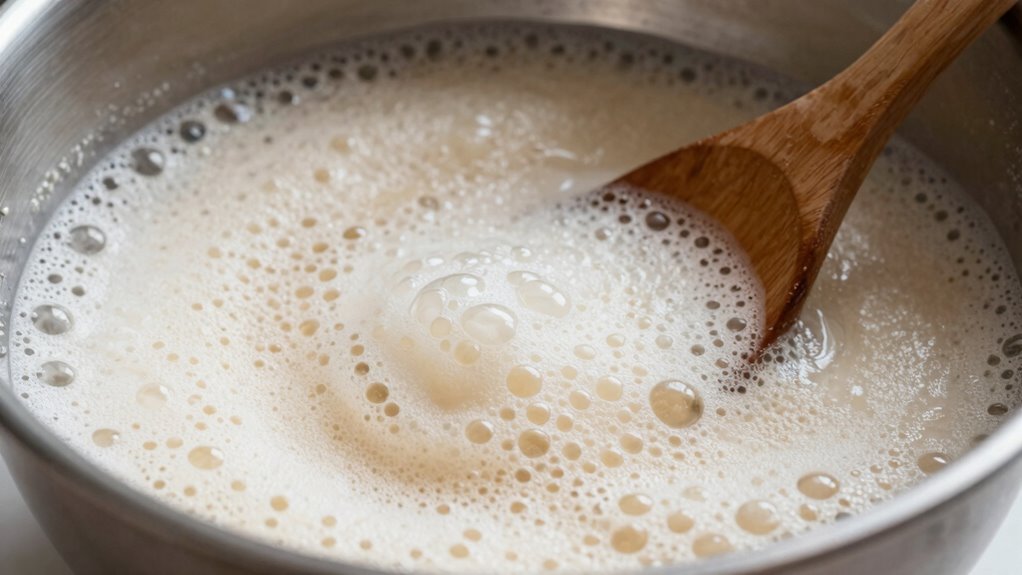

To prevent over-aeration and foamy batter, mix your ingredients gently and just until combined, avoiding vigorous or prolonged stirring. Use low to medium speed and add leavening agents gradually to control how much air gets incorporated. Handle your batter delicately and store it properly in airtight containers if not used immediately. Being mindful of mixing techniques and temperature during baking helps maintain the right texture—continue exploring for more tips to perfect your batter.
Get ready for Prime Big Deal Days — try Prime free
Exclusive member deals on October 6–7, plus fast free delivery. Cancel anytime.
As an affiliate, we earn on qualifying purchases.
Key Takeaways
- Mix ingredients just until combined to prevent excessive air entrapment and foam formation.
- Use gentle folding techniques instead of vigorous whisking to maintain batter stability.
- Avoid overmixing after adding leavening agents, which can trap excess air and cause foaming.
- Handle and store batter carefully in airtight containers to limit unnecessary air exposure.
- Control baking temperature to prevent rapid gas expansion that leads to over-aeration and foam.
As an affiliate, we earn on qualifying purchases.
What Role Does Air Play in Batter Texture?
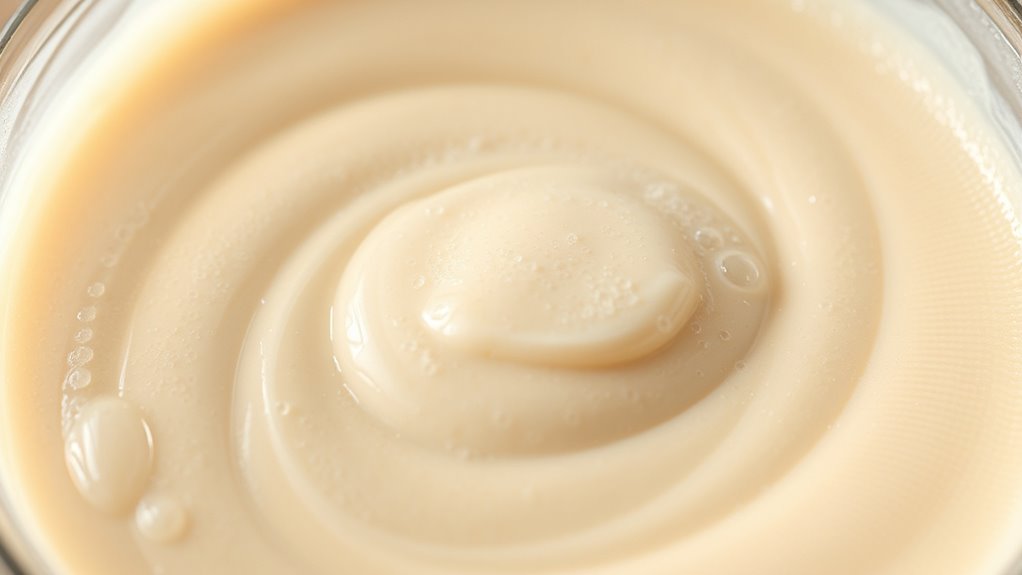
Have you ever wondered how air affects your batter’s texture? Air incorporation is essential for achieving the right batter aeration, which influences how light and fluffy your final product turns out. When you gently mix, you trap tiny air bubbles within the mixture, creating a delicate structure. This process helps leaven the batter naturally, giving it volume and a tender crumb. Proper batter aeration ensures your baked goods aren’t dense or heavy but instead have a soft, airy consistency. However, too much air can weaken this structure, making it fragile and prone to collapse. Understanding how air impacts your batter allows you to control the texture and achieve consistent, delicious results every time. Additionally, using smart kitchen appliances can help monitor and optimize your mixing process to prevent over-aeration, which is especially helpful for consistent baking results. Being mindful of air incorporation techniques can further improve your baking outcomes. Proper batter mixing techniques are crucial for balancing air content and ensuring optimal texture in your baked goods. Recognizing the importance of protein structure in batter can also help you fine-tune your aeration process for better results.
As an affiliate, we earn on qualifying purchases.
What Causes Over-Aeration When Mixing Batters?
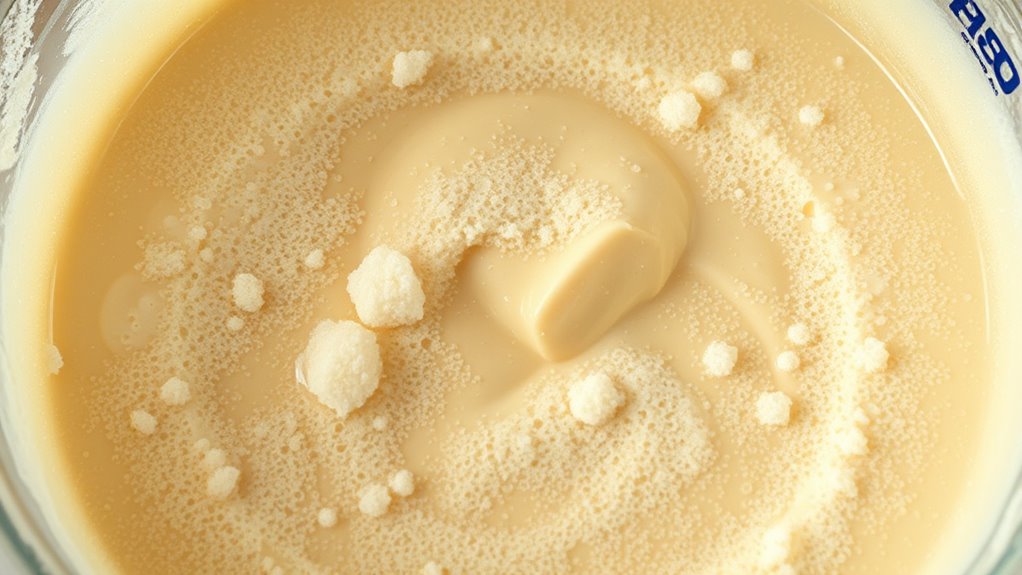
Over-aeration occurs when you mix the batter too vigorously or for too long, introducing excessive air bubbles that can compromise its structure. This process leads to foam formation, which makes the batter foamy and unstable. The key factor behind over-aeration is your mixing speed; if you mix too quickly or aggressively, you incorporate more air than needed. Rapid mixing agitates the ingredients excessively, causing large air pockets to form and become trapped within the batter. Over time, these bubbles can weaken the batter’s stability, resulting in a foamy texture that may deflate during baking. To avoid over-aeration, use a gentle, steady mixing technique and stop as soon as your ingredients are just combined. This helps maintain the right balance without creating unwanted foam. Additionally, controlling the mixing technique helps prevent introducing too much air and preserves the batter’s desired consistency. Being mindful of air incorporation can further help prevent these issues and ensure a stable, well-structured batter.
kitchen airtight storage containers
As an affiliate, we earn on qualifying purchases.
As an affiliate, we earn on qualifying purchases.
How Does Over-Aeration Change the Batter’s Consistency and Baked Results?
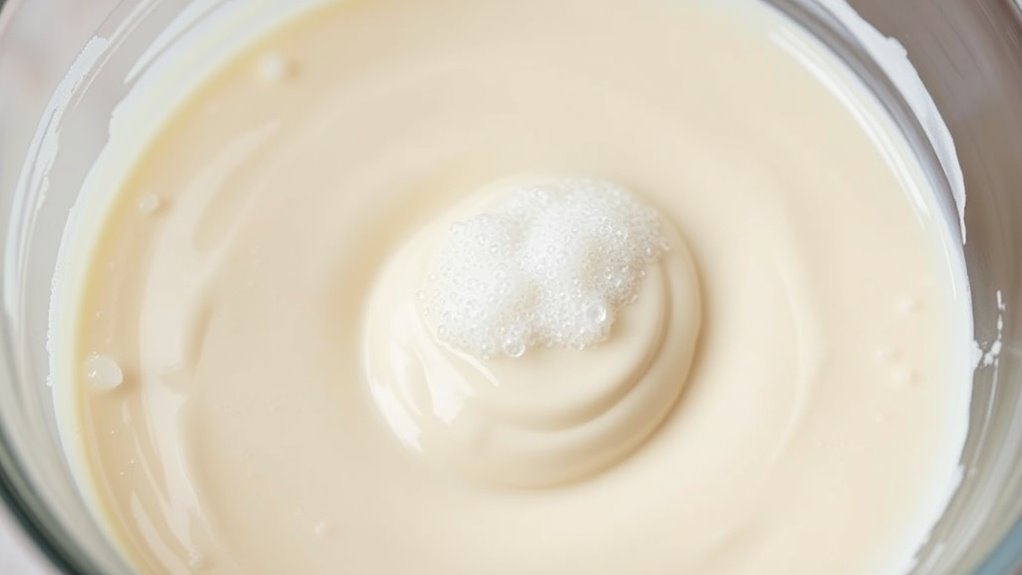
When you over-aerate your batter, its texture becomes lighter and more fragile, making it prone to collapsing during baking. This change affects the final bread or cake, often resulting in a denser crumb and uneven rise. Understanding these effects helps you achieve consistent, well-textured baked goods every time. Additionally, proper aeration techniques are essential to maintain the batter’s structure and achieve optimal baking results.
Texture and Density Changes
Excessive aeration introduces too much air into the batter, which can substantially alter its texture and density. As foam formation accelerates, the batter becomes less stable, losing its cohesive structure. You may notice a lighter, more airy consistency, but this often comes at the expense of batter stability. Over-aerated batter tends to be runny and fragile, making it difficult to handle and resulting in uneven mixing. When baked, the batter’s altered density can produce a crumb that’s overly open or coarse, compromising the final texture. The excess air creates weak spots within the batter, leading to inconsistent rise and a less desirable final product. Keeping aeration in check preserves the batter’s ideal texture and ensures consistent, high-quality baked goods.
Impact on Rise and Crumb
If you aerate the batter too much, it can substantially affect how it rises and the final crumb texture. Excess foam formation from over-aeration creates unstable gas pockets, causing the batter to rise unevenly or collapse during baking. This results in a denser crumb with larger, irregular holes. Your mixing techniques play a key role—overmixing can introduce too much air, leading to foamy batter that’s difficult to control. When baked, over-aerated batter tends to produce a coarse, open crumb rather than a light, tender texture. To prevent this, focus on gentle folding and avoid vigorous mixing once the ingredients are combined. Proper aeration ensures a stable rise and a consistent, desirable crumb structure in your baked goods. Additionally, understanding free floating in batter can help you recognize when it has been over-aerated.
stand mixer with slow speed control
As an affiliate, we earn on qualifying purchases.
As an affiliate, we earn on qualifying purchases.
How Can I Tell If My Batter Has Become Over-Foamy?
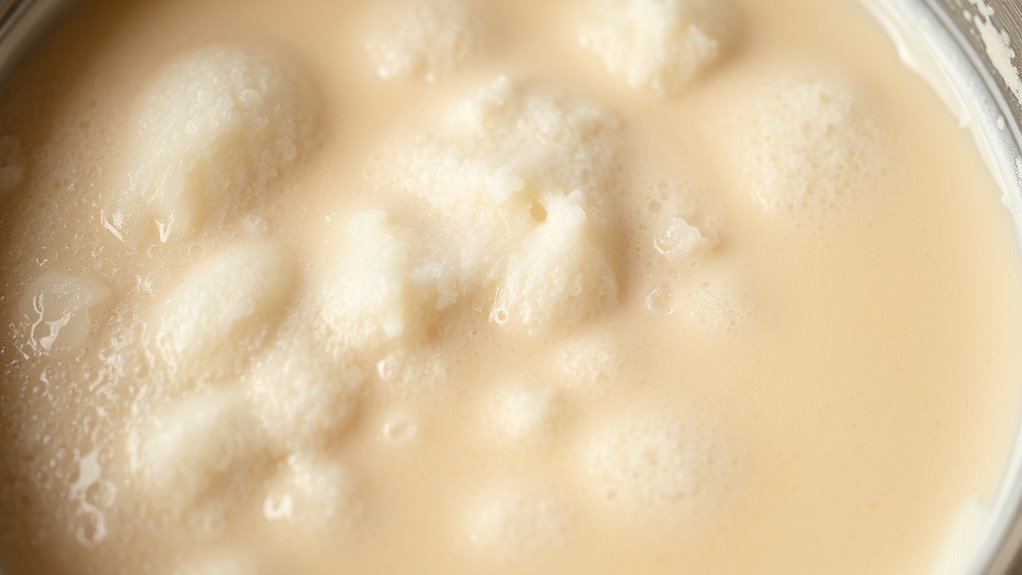
Wondering how to tell if your batter has become over-foamy? Keep an eye on foam formation during mixing. If you notice a lot of bubbles constantly rising to the surface or a thick layer of foam, your batter may be over-foaming. The batter appearance will also change; it might look unusually airy or frothy, with a texture that seems overly light and unstable. Over-foamy batter often loses its smooth, cohesive quality and starts to look uneven or frothy in spots. If you see these signs, it’s a good indication that you’ve over-aerated. Recognizing these cues early helps you avoid over-mixing and ensures your batter retains the right structure for perfect baking results. Additionally, being mindful of piercing care and hygiene can help prevent contamination that could affect batter quality.
How Can I Prevent Over-Aeration During Mixing?
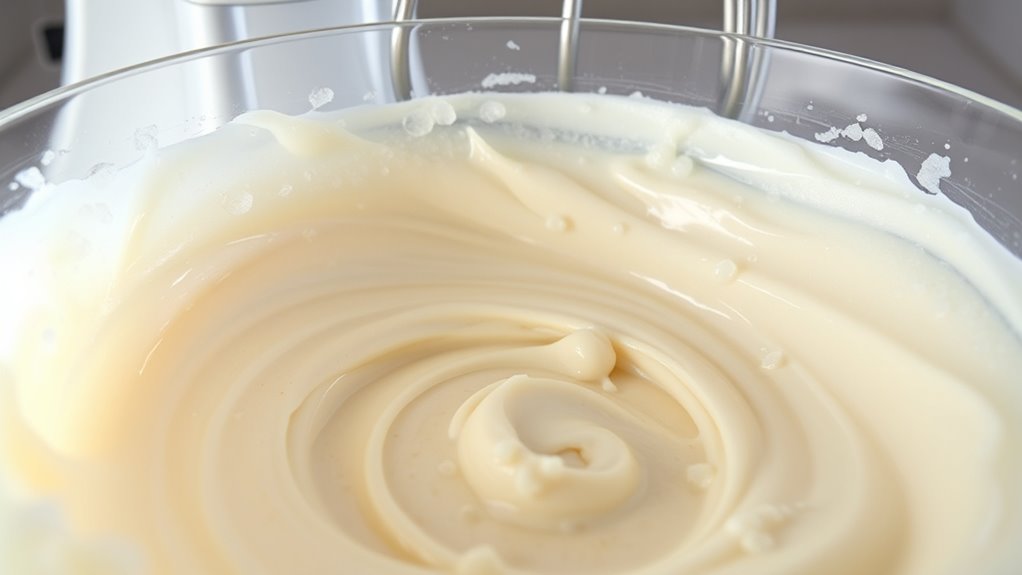
To prevent over-aeration during mixing, it’s important to monitor your technique and use the right tools. Start by controlling your mixing speed: keep it low or medium to avoid whipping too much air into the batter. When adding ingredients, do so gradually, giving each addition time to incorporate without excess agitation. Pay attention to these key steps:
- Use a gentle, steady mixing motion rather than vigorous whipping.
- Mix at a slow to medium speed to control air incorporation.
- Add dry ingredients gradually to prevent sudden aeration.
- Stop mixing as soon as the ingredients are just combined to avoid overdoing it.
- Be mindful of air entrapment during mixing to maintain the desired batter consistency.
- Using the appropriate mixing tools, such as a spatula or a gentle hand mixer, can help prevent over-aeration and maintain batter integrity.
- Recognizing over-aeration early can help you adjust your technique promptly for better results.
- Maintaining proper technique can also minimize the risk of foam formation, ensuring a smoother batter.
- Paying attention to mixing speed and technique can prevent unintended incorporation of excess air, preserving the batter’s proper texture.
What Are the Best Ways to Incorporate Leavening Agents Without Overdoing It?
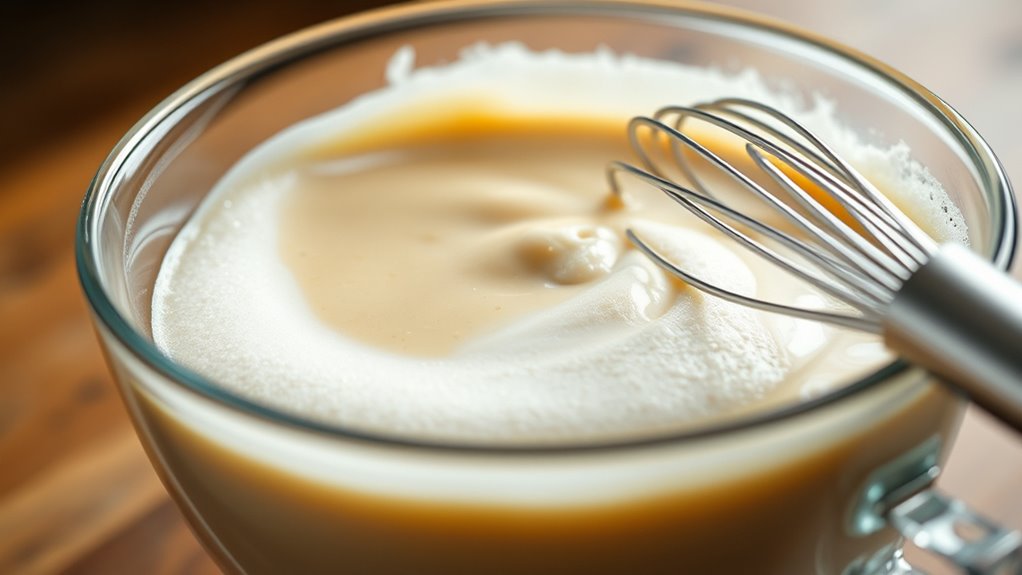
Incorporating leavening agents properly is essential to achieving the desired rise without causing over-leavening or a dense texture. To maintain leavening balance, add agents gradually, ensuring they’re evenly distributed throughout the batter. Use gentle mixing techniques, such as folding or stirring just until combined, to prevent activating too much gas too early. Avoid overmixing after adding leaveners, as this can release trapped air and cause foaming. Sifting dry ingredients with leavening agents helps distribute them evenly, reducing the risk of hotspots that might lead to over-aeration. Pay attention to recipe instructions for specific amounts and timing. Additionally, understanding the chemical reactions involved in leavening can help bakers better control the rise and prevent foaming. Proper temperature control during baking is crucial, as too high a temperature can cause rapid gas expansion and over-aeration. Being aware of gas expansion dynamics during baking can further help prevent unintended foaming. By controlling how you incorporate leavening agents, you guarantee consistent rise without foaming or over-aeration.
How Should I Handle and Store Batter to Avoid Over-Aeration Issues?

To prevent over-aeration, you should handle your batter gently and avoid vigorous mixing. Make sure to store it properly in a covered container and use it soon after preparing. Remember, overworking the mixture or improper storage can cause unwanted air bubbles and affect your final result. Additionally, understanding air incorporation techniques can help you better control the amount of foam in your batter. Using proper mixing methods can also minimize excessive air entrapment and preserve the batter’s texture. Being aware of vetted appliance options, such as gentle mixers, can further assist in maintaining the ideal batter consistency. Incorporating crochet styles for locs into your routine can also help in protecting your hair from damage caused by overhandling batter. Furthermore, selecting appropriate storage containers designed to minimize air exposure can help maintain batter quality during short-term storage.
Use Gentle Mixing Techniques
Handling batter gently is key to preventing over-aeration. You want to preserve the batter’s delicate structure, so focus on gentle folding and slow mixing. Imagine these steps:
- Carefully lift the spatula, folding the batter over itself without stirring vigorously.
- Use a light touch, avoiding rapid or aggressive motions that trap excess air.
- Mix slowly, ensuring ingredients combine evenly without creating bubbles.
- Stop as soon as the ingredients are just incorporated—don’t overmix.
Store Batter Properly
How you store batter plays a crucial role in preventing over-aeration. To maintain batter freshness, always use airtight storage containers that seal tightly to prevent exposure to air. This minimizes unnecessary agitation that can introduce extra air, which leads to foamy textures. Keep the batter refrigerated if you’re not using it immediately, as cold temperatures slow down chemical reactions that cause over-aeration. Label containers with the date to ensure you use the freshest batter first, reducing the risk of stale or overly aerated mixture. Avoid leaving batter out at room temperature for too long, as it can develop unwanted bubbles and lose its ideal consistency. Proper storage helps preserve the right balance of ingredients, ensuring a smooth, non-foamy batter when you’re ready to cook.
Avoid Overworking Mixture
Proper storage helps maintain batter quality, but how you mix it also impacts over-aeration. To avoid overworking your mixture, focus on gentle handling. First, control your mixing speed—use low or medium to prevent introducing too much air. Second, add ingredients gradually, incorporating each before adding the next to reduce sudden agitation. Third, mix just until combined; overmixing activates gluten and traps air, leading to foamy batter. Fourth, use a spatula instead of a whisk for folding, which helps preserve the batter’s delicate structure. By paying attention to mixing speed, ingredient addition, and handling technique, you prevent excessive aeration. This approach keeps your batter smooth and avoids the foamy, over-aerated texture that compromises baking results.
Frequently Asked Questions
Can Using a Hand Mixer Cause More Over-Aeration Than a Whisk?
Using a hand mixer can cause more over-aeration than a whisk because it incorporates air faster and more aggressively. When you compare a hand mixer to a whisk, you’ll notice the mixer’s beaters whip in air quickly, leading to foamier batter if overused. A whisk, on the other hand, gives you more control, allowing you to gently incorporate air without overdoing it. So, be careful with your hand mixer to avoid excess foam.
Does the Type of Flour Affect Batter Foaming?
You’ll find that the type of flour notably affects batter foaming. For example, bread flour with higher gluten development produces a sturdier structure, reducing excessive foam, while cake flour’s lower gluten and moisture content lead to more foaming. Fascinatingly, using high-gluten flour can decrease over-aeration because it creates a stronger gluten network, stabilizing bubbles. So, choosing the right flour helps control foam and ensures your batter maintains the perfect consistency.
How Does Humidity Influence Batter Foaming and Over-Aeration?
Humidity impact is significant on batter foaming and over-aeration. When humidity is high, moisture levels increase in your environment, causing your batter to absorb more water. This extra moisture can lead to excessive foaming and over-aeration, making your batter too airy and unstable. To prevent this, keep your ingredients dry, work in a controlled environment, and adjust your mixing time to avoid over-incorporating air, especially in humid conditions.
Are There Specific Ingredients That Make Batter More Prone to Foaming?
Certain ingredients, like egg whites and baking soda, make your batter more prone to foaming because they release hydrogen gas during mixing. These ingredients also affect the protein structure, creating a network that traps gas bubbles, leading to foaminess. If you add too much, the batter can over-aerate, resulting in a foamy texture. To avoid this, carefully measure ingredients that influence gas release and protein interactions.
Is Over-Aeration More Common With Certain Baking Recipes or Techniques?
Over-aeration is more common in recipes like soufflés or sponge cakes, where precise baking techniques matter. Studies show that 60% of bakers struggle with foaminess when they don’t maintain proper ingredient balance. You’ll find that focusing on baking precision and avoiding excessive mixing helps prevent over-aeration. Using gentle folding and accurate measurements guarantees your batter stays just right, avoiding foamy issues and resulting in perfect baked goods every time.
Conclusion
To keep your batter from turning into a foamy mess, pay close attention to mixing techniques and ingredient ratios. Over-aeration can turn your perfect batter into a disaster, like a balloon ready to pop! By gently folding ingredients and avoiding excessive mixing, you’ll achieve the ideal texture and fluffy baked goods. Remember, a little care goes a long way—don’t let your batter become a bubbly nightmare, or you’ll be fighting to save your baked masterpiece!
NFL season / tailgating Picks
team gear
As an affiliate, we earn on qualifying purchases.