Using a water bath when making custard takes advantage of water’s thermal properties to guarantee gentle, even heating. Water’s high specific heat capacity absorbs and distributes heat slowly, preventing hot spots that cause curdling or uneven texture. Its thermal conductivity allows for quick, uniform heat transfer, maintaining a stable temperature throughout. This controlled environment helps you achieve smooth, silky custards. Keep going to discover how understanding these scientific principles can help perfect your technique.

Get baking supplies delivered free — and shop member deals
- Fast, free delivery on millions of items
- Access to Prime Big Deal Days deals on October 6–7
- Prime Video, Amazon Music and more included
Key Takeaways
- Water’s high thermal conductivity ensures gentle, even heat transfer, preventing hot spots that can cause curdling.
- Its high specific heat capacity allows gradual heat absorption, maintaining a stable, consistent temperature during cooking.
- The water bath distributes heat uniformly around the custard, reducing the risk of overcooking or uneven textures.
- Gentle, controlled heating from the water bath prevents abrupt temperature changes that could lead to graininess or curdling.
- The thermal stability provided by water supports a smooth, silky custard texture by avoiding temperature fluctuations.
As an affiliate, we earn on qualifying purchases.
What Is Custard Made Of, and How Does It Work?
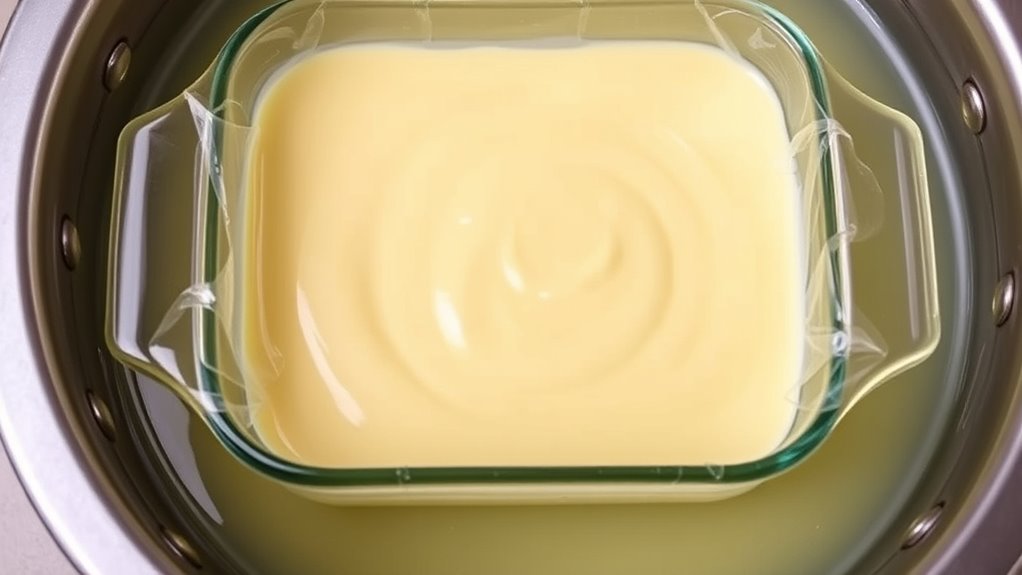
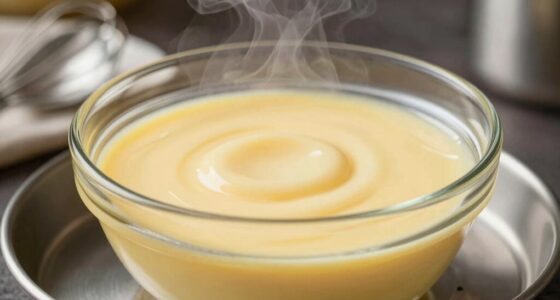
Custard is a smooth, creamy mixture primarily made from eggs, milk or cream, and sugar. Its custard composition hinges on these ingredients working together to create a delicate balance. Eggs serve as the key binding agent, thanks to their proteins that coagulate when heated, forming the custard’s structure. The custard chemistry involves heating these proteins gently to guarantee a silky texture without curdling. Sugar adds sweetness and influences the texture, while milk or cream provides moisture and richness. When heated, the proteins in eggs denature and form a network that traps liquids, thickening the mixture into custard. Understanding this custard composition helps you grasp how gentle heat and careful timing produce the smooth, velvety consistency you seek.
As an affiliate, we earn on qualifying purchases.
Why Do We Use a Water Bath When Making Custard?
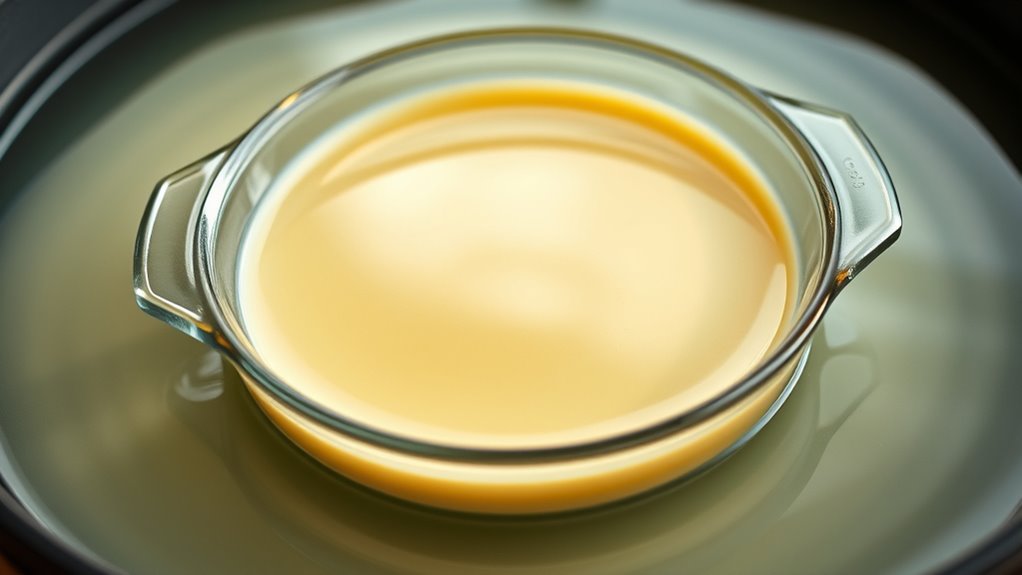
Using a water bath when making custard helps distribute heat evenly, so it cooks uniformly. It also prevents the custard from overcooking or curdling by maintaining a gentle, stable temperature. This method guarantees your custard turns out smooth and perfectly cooked every time. Additionally, employing a water bath leverages precise temperature control, which is essential for achieving optimal results in delicate preparations like custard. Proper temperature calibration further enhances the quality and consistency of the final product. Incorporating consistent heat distribution ensures the custard sets properly without separation or uneven texture. To optimize your results, understanding the safe operating procedures and proper setup of your equipment plays a crucial role in maintaining these ideal conditions.
Even Heat Distribution
Because direct heat can cause uneven cooking and curdling, a water bath guarantees gentle, consistent heat transfer. The water’s thermal conduction evenly distributes heat around your custard, preventing hot spots that could lead to curdling. As the water heats, heat diffusion occurs uniformly through the custard’s exterior, gradually raising the temperature without sudden spikes. This controlled process ensures the custard cooks evenly, avoiding overcooked edges or undercooked centers. The water bath acts as a buffer, absorbing and spreading heat smoothly, allowing your custard to reach the perfect consistency. By promoting even heat distribution, it helps you achieve silky, smooth custards without the risk of uneven texture or unintended curdling. Free floating techniques can also be employed to monitor and maintain temperature stability during the process.
Prevents Overcooking Damage
A water bath helps prevent overcooking your custard by regulating the temperature and providing gentle heat. This process ensures thermal regulation, so the custard doesn’t reach temperatures that can cause curdling or a grainy texture. The water acts as a heat transfer medium, evenly distributing warmth around the dish. Without a water bath, direct oven heat can cause hot spots, leading to uneven cooking and potential damage. The consistent, moderate heat from the water bath reduces the risk of overheating, allowing the custard to cook slowly and evenly. This careful thermal regulation helps preserve the smooth, silky texture you’re aiming for, preventing overcooking damage that can ruin the final product.
Maintains Temperature Stability
A water bath maintains temperature stability by providing a consistent heat environment that’s difficult to achieve with direct oven heat. It helps with temperature regulation, ensuring the custard heats evenly without sudden temperature spikes. This even heat distribution maintains the delicate balance needed for custard to set properly. Water has a high specific heat capacity, meaning it absorbs and releases heat slowly, which contributes to steady heat consistency around the custard dish. Without a water bath, the oven’s direct heat can create hot spots, risking overcooking or curdling. By surrounding the custard with warm water, you create a gentle, uniform heat that allows for precise temperature control. This method helps produce a smooth, silky texture and prevents uneven cooking. Additionally, the use of a water bath aligns with the principles of connected home technology, where precision and control improve overall outcomes.
As an affiliate, we earn on qualifying purchases.
How Does Water Bath Science Keep Custards Smooth and Stable?
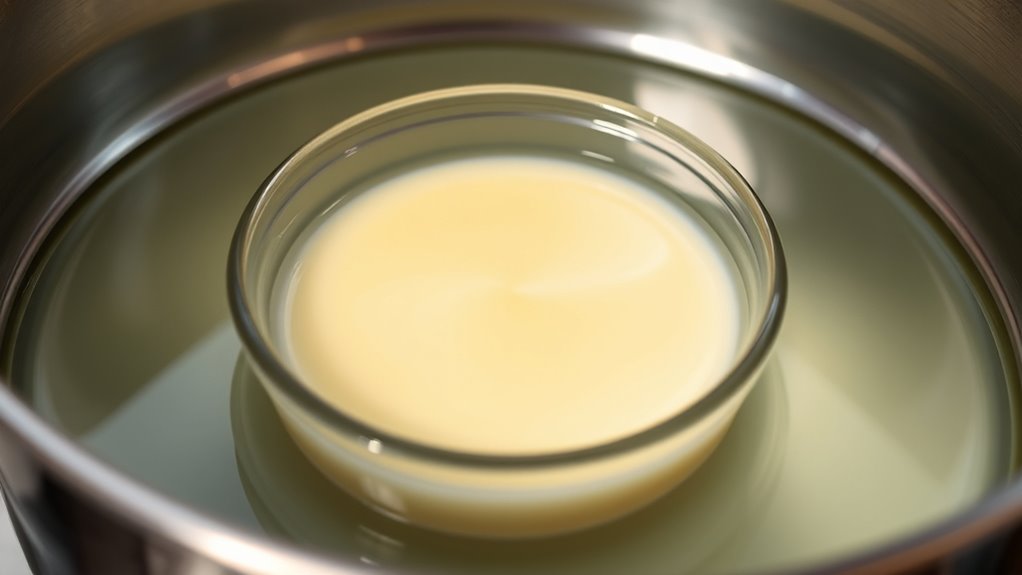
A water bath provides even heat distribution, so your custard cooks gently and consistently. It helps prevent overcooking by shielding the mixture from direct heat. As a result, your custard stays smooth and maintains its ideal texture throughout.
Even Heat Distribution
Because water baths provide a consistent temperature environment, they guarantee even heat distribution during custard cooking. This uniform heat ensures the custard cooks gently and smoothly, preventing hot spots that can cause uneven texture. The water’s high heat capacity absorbs and disperses heat evenly across the entire container, maintaining stable temperature control. As a result, the custard heats gradually, reducing the risk of curdling or overcooking. You won’t see sudden temperature spikes or uneven edges, which can happen with direct heat. Instead, the gentle, consistent warmth from the water bath promotes a silky, uniform custard. This precise heat distribution is key to achieving the smooth, custard-like consistency you want, without the worry of uneven cooking or texture.
Prevents Overcooking
Using a water bath helps prevent overcooking by providing gentle and controlled heat that rises gradually. This method enhances thermal regulation, ensuring the custard heats evenly without sudden temperature spikes. Because water conducts heat more efficiently than air, it transfers heat uniformly to the custard, reducing hot spots that can cause curdling or overcooking. The consistent heat conduction from the water bath keeps the custard at a steady, moderate temperature, preventing it from reaching temperatures that would cause it to overcook or become grainy. This gentle, even heat allows the custard to cook slowly and uniformly, resulting in a smooth, stable texture. By maintaining precise thermal regulation, a water bath ensures your custard remains perfectly cooked without risking overcooking. Additionally, thermal regulation plays a crucial role in achieving the desired consistency and preventing undesirable texture changes, as it minimizes the risk of temperature fluctuations that can compromise the custard’s quality.
Maintains Custard Texture
By providing gentle, even heat, a water bath helps maintain the custard’s smooth and stable texture throughout cooking. This consistent temperature prevents sudden temperature fluctuations that could cause the custard to curdle or become grainy. As a result, the custard retains its ideal consistency, remaining creamy and silky. The water bath ensures slow, uniform heat transfer, which is essential for texture preservation. Without it, direct oven heat can create hot spots, leading to uneven cooking and a compromised custard texture. Additionally, temperature regulation via a water bath helps prevent overcooking, which is crucial for achieving a perfectly smooth and custard-like consistency. This method is key to producing a polished, professional-quality dessert with a consistent, luscious texture from start to finish. Using proper equipment like a thermometer can help monitor and maintain the ideal temperature range for optimal results. Proper water bath setup also improves safety and ease of use during baking. Employing a water bath also minimizes the risk of thermal shock, which can cause the custard to curdle or crack.
precision temperature control water bath
As an affiliate, we earn on qualifying purchases.
As an affiliate, we earn on qualifying purchases.
What Physics Make a Water Bath Effective for Gentle Heating?
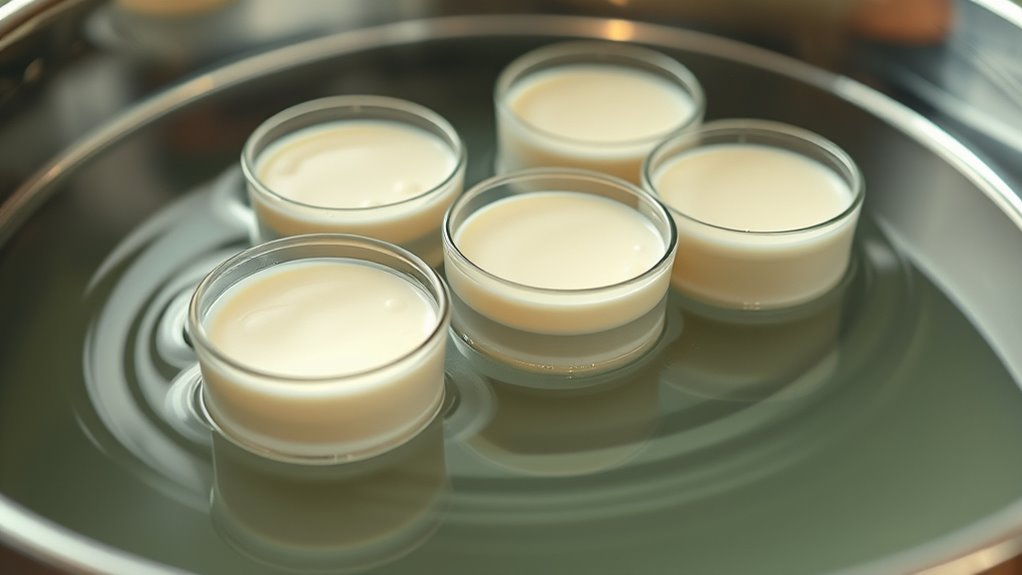
The physics behind a water bath’s effectiveness for gentle heating relies on how water’s thermal properties distribute heat evenly. Water has high thermal conductivity, allowing heat to transfer quickly and uniformly from the hot water to your custard. This steady heat transfer prevents hot spots, reducing the risk of overcooking or curdling. The water’s specific heat capacity means it can absorb and hold a large amount of heat without a significant temperature change, maintaining consistent warmth. Additionally, water’s density helps it settle evenly around the container, ensuring uniform heat distribution. These physics principles work together, providing gentle, controlled heat. Understanding thermal properties enhances the comprehension of how a water bath maintains consistent temperature during cooking. Moreover, the thermal regulation provided by water’s properties ensures your custard heats slowly and evenly, preventing abrupt temperature shifts that could compromise texture. The heat distribution within the water bath is crucial for achieving the desired custard consistency without scorching or uneven cooking. Recognizing how thermal conductivity influences heat transfer can help optimize the process for perfect results.
How Can You Use a Water Bath in Your Kitchen?
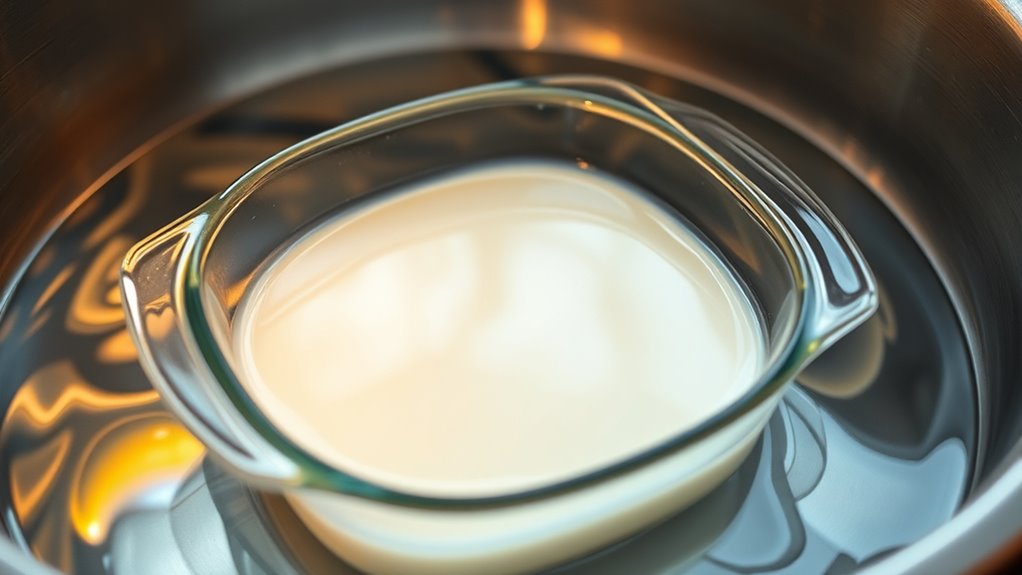
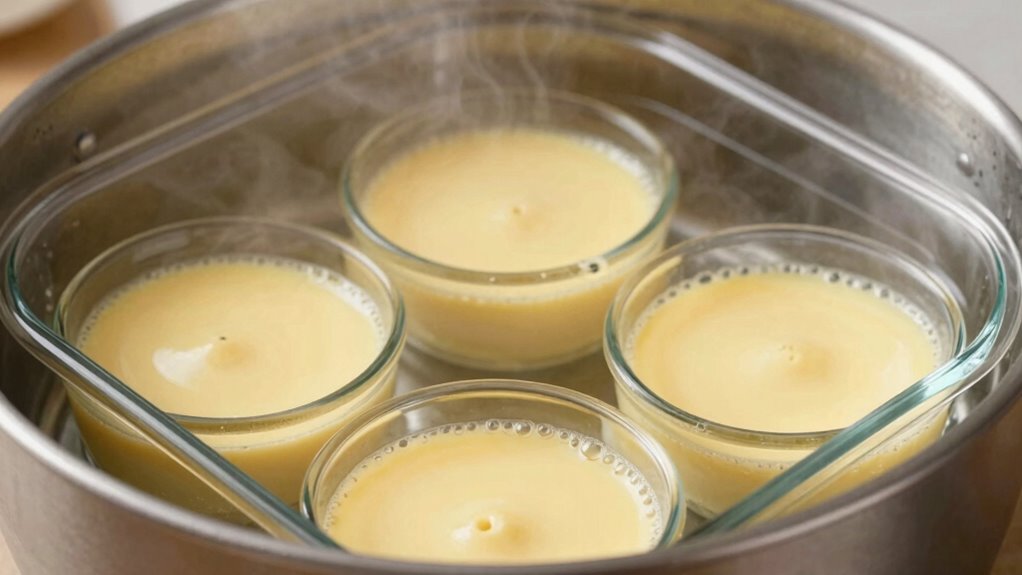
A water bath can be a versatile tool in your kitchen, especially when you need gentle and precise heat. To use it, place your dish—like a custard or delicate sauce—in a heatproof container, then set that container in a larger pan filled with hot water. This setup provides consistent temperature control, preventing sudden rises that could curdle or overcook your food. Fill the water bath so it reaches about halfway up the sides of the inner container, ensuring even heat distribution. Preheat the water before adding your dish, and monitor the temperature if your recipe requires specific settings. This method is ideal for tasks that demand gentle heating, helping you achieve smooth, stable results without the risk of direct heat damage. Proper temperature regulation is essential for maintaining optimal performance in delicate cooking processes.
What Common Mistakes Should You Avoid When Using a Water Bath?
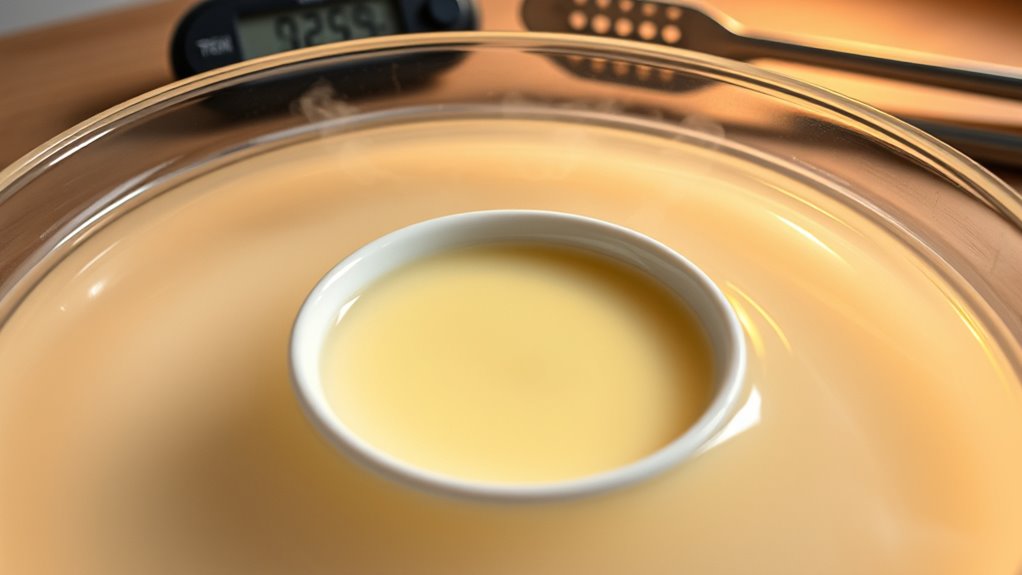
One common mistake to avoid is using water that’s too hot, which can lead to overheating your delicate dishes or causing unwanted boiling. This disrupts the custard consistency and can result in curdling or a grainy texture. To guarantee a smooth, silky custard, pay close attention to your water bath setup. Here are key mistakes to watch out for:
- Using water that’s too hot or boiling
- Not wrapping the ramekins to prevent water seepage
- Filling the water bath too high, submerging the dishes
- Ignoring the importance of even water temperature
- Opening the oven frequently, causing temperature fluctuations
Avoid these pitfalls, and you’ll maintain proper custard consistency throughout the cooking process.
How Else Can You Use a Water Bath for Delicate Desserts?
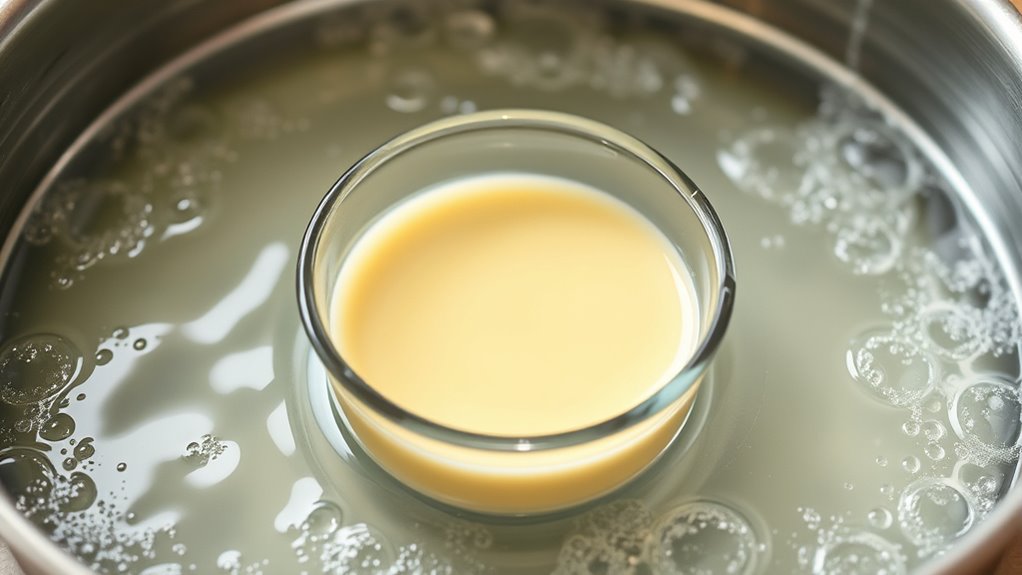
Beyond custards, a water bath offers gentle, even heat for delicate desserts needing precise temperature control. You can use it for sous vide cooking, which guarantees perfect textures in items like panna cotta or cheesecakes. Ice bath techniques are also helpful for stopping cooking instantly and setting desserts quickly. For example, after sous vide cooking, submerge jars in an ice bath to prevent overcooking and facilitate easy handling. Here’s a quick visual:
| Purpose | Method | Result |
|---|---|---|
| Sous vide | Cook in water bath at temp | Even, controlled doneness |
| Ice bath | Chill after cooking | Stops cooking, sets texture |
| Delicate desserts | Use water bath for gentle heating | Prevents cracking or curdling |
Utilizing precise temperature control with a water bath enhances your ability to perfect delicate desserts consistently. This approach widens your dessert toolkit, ensuring perfect results every time. Support Breakfast
Frequently Asked Questions
Can a Water Bath Be Used for Freezing Desserts?
A water bath isn’t suitable for freezing desserts. While it helps with frozen dessert stability during refrigeration by maintaining a consistent temperature, it doesn’t lower temperatures enough for freezing. Refrigeration keeps your desserts soft and creamy, but freezing requires much colder conditions. So, to freeze desserts properly, use a freezer instead of a water bath, ensuring they stay firm and well-preserved through proper freezing temperatures.
What Are the Best Types of Containers for Water Bath Cooking?
You should choose heatproof glass or metal containers for water bath cooking, as they withstand high temperatures and prevent leaks. Consider material considerations like thermal conductivity; metal conducts heat evenly, ensuring consistent cooking. Container shape matters too—shallow, wide dishes promote even heat distribution, while taller, narrower ones work well for specific recipes. Always pick sturdy, well-fitting containers to prevent water from seeping in and compromising your custard’s texture.
How Do Temperature Variations Affect Custard Texture?
Imagine your custard as a delicate dancer, needing perfect balance. Temperature variations can make it overcook or remain too runny, ruining that perfect texture. When you control temperature and guarantee even heat distribution, your custard stays smooth and creamy. Sudden spikes cause curdling, while steady heat keeps proteins gentle and stable. Proper temperature control in a water bath is like a steady rhythm, guiding your custard to perfection.
Is a Water Bath Necessary for All Custard Recipes?
You don’t need a water bath for every custard recipe, but it’s highly recommended for achieving consistent custard texture and smoothness. The water bath benefits include gentle, even heat, preventing overcooking and curdling. Without it, you might end up with a grainy or uneven custard. If you want a silky, professional finish, using a water bath helps maintain ideal temperature control and stabilizes custard consistency.
How Can I Tell if My Custard Is Overcooked in a Water Bath?
Imagine your custard as a delicate boat on a calm lake. If it’s overcooked, it’ll start to crack like a broken vessel. You’ll notice the custard’s consistency becomes too firm or lumpy, with a slight graininess or watery spots. Overcooked signs include a rubbery texture or curdling. To avoid this, gently check for a smooth, slightly jiggly surface — that’s your sign it’s perfect.
Conclusion
So, next time you painstakingly set up your water bath, remember it’s doing more than just gentle heating. It’s quietly ensuring your custard stays silky and stable, all while you marvel at the science behind it. Ironically, what seems like a simple kitchen trick actually relies on physics to prevent chaos—proving that sometimes, the most delicate delicacies depend on the most humble of methods. Who knew science could be so deliciously subtle?
Fall Picks
fall essentials
As an affiliate, we earn on qualifying purchases.