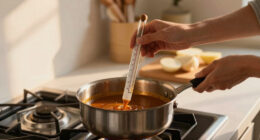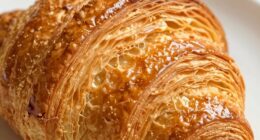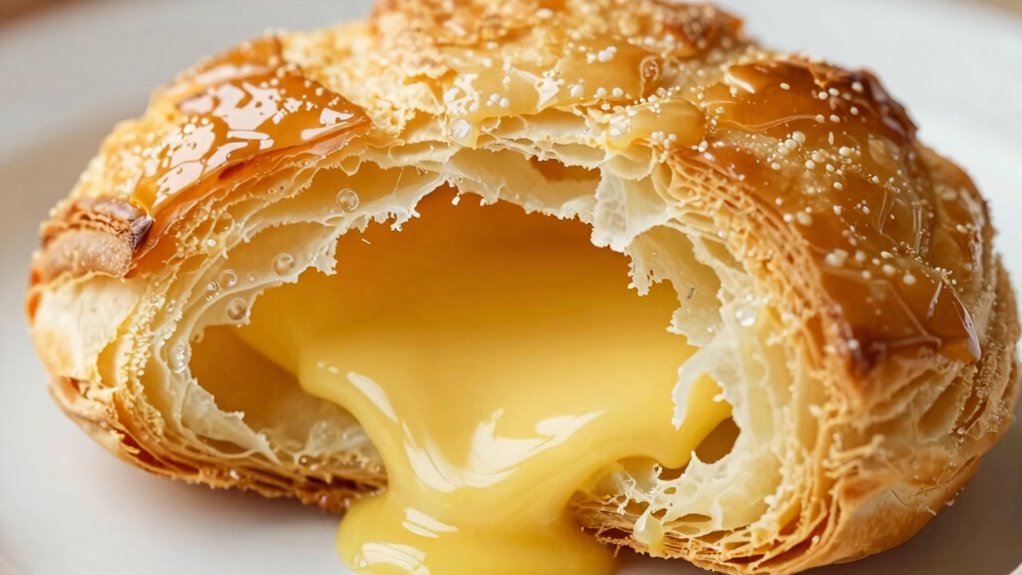

To prevent butter leakage in puff pastry, guarantee your butter is chilled but pliable before layering, as soft butter melts too quickly and causes seepage. Also, use a properly preheated oven set between 375°F to 425°F; too low and the butter won’t melt evenly, too high and it bakes too fast, trapping moisture. Maintaining correct butter consistency and oven temperature is key—keep these in check, and you’ll master flaky layers every time. If you want detailed tips, stay tuned for more.
Key Takeaways
- Ensure butter is properly chilled and firm before incorporating to prevent melting during baking.
- Maintain an oven temperature between 375°F and 425°F, verified with a thermometer for consistent heat.
- Preheat the baking sheet to promote even heat transfer and reduce butter leakage.
- Avoid sudden temperature changes; bake steadily to keep butter layers intact.
- Use correctly textured butter—firm but pliable—to support flaky layers without seeping out.
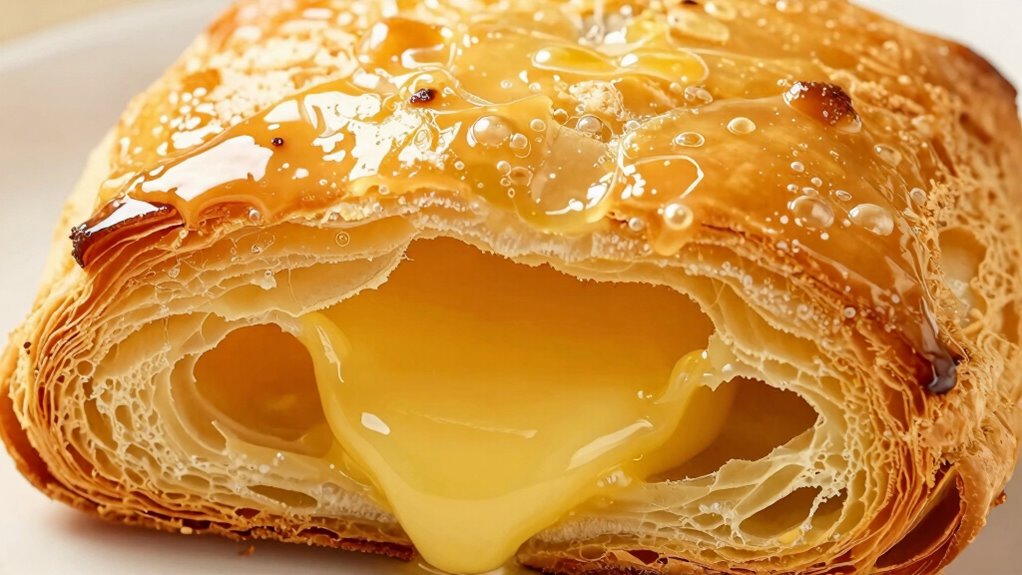
If you’ve ever baked puff pastry and noticed unexpected butter leakage, you know how frustrating it can be. This issue often stems from the delicate balance of ingredients and baking conditions, particularly the butter consistency and oven temperature. When working with puff pastry, your goal is to create that perfect flaky, layered texture, but butter leakage can sabotage that aim. Understanding how butter consistency and oven temperature influence this process will help you prevent messes and achieve bakery-quality results.
First, consider the butter consistency. The butter used in puff pastry needs to be just right—not too soft, not too hard. If the butter is too soft, it becomes very liquid-like and can seep out during baking, causing leakage. On the other hand, if it’s too cold or hard, it won’t incorporate smoothly into the dough, making it difficult to layer properly. The ideal butter consistency is firm but pliable, similar to cold plastic or chilled pie crust. This firmness allows you to evenly incorporate the butter into the dough and maintain distinct layers during rolling and folding. When you prepare your butter, keep it refrigerated until just before use, and if necessary, give it a quick chill before incorporating. This guarantees the butter stays firm enough to stay within the layers during baking.
Next, oven temperature plays a vital role in how the butter behaves as the pastry bakes. Puff pastry relies on a hot oven, typically between 375°F to 425°F (190°C to 220°C), to create steam that pushes the layers apart and produces that signature flakiness. If the oven isn’t hot enough, the butter may melt too slowly, causing it to seep out of the layers and create leakage. Conversely, if the temperature is too high, the outer layers may brown too quickly, trapping moisture and leading to butter oozing out before the layers fully puff up. Ensuring your oven is properly preheated and maintaining a consistent temperature throughout baking is key. Using an oven thermometer can help you verify that your oven reaches and stays at the right temperature. Additionally, baking on a preheated baking sheet can promote even heat transfer, helping the layers expand evenly and reducing the risk of butter leakage.

Silicone Baking Pastry Dough Mat - 28x20Inch Extra Large Cookie Bread Rolling Mats Sheet, Nonstick Kitchen Counter Kneading Board, Thick Reusable Pie Cookies Pizza Fondant Making Matt with Measurement
Premium Silicone Bakig Mat: Our kitchen baking mat is crafted with 100% food grade silicone. With 0.7mm thickness...
As an affiliate, we earn on qualifying purchases.
Frequently Asked Questions
How Can I Prevent Butter Leakage During Puff Pastry Baking?
To prevent butter leakage during puff pastry baking, make sure your butter consistency is just right—firm but pliable. Handle the dough gently to avoid melting the butter layers, and don’t overwork it. Keep your workspace cool, and chill the dough after each fold. Proper dough handling and maintaining the right butter consistency help create distinct layers, reducing the chance of leakage and resulting in perfectly flaky pastry.
What Is the Ideal Temperature for Storing Puff Pastry?
You should store puff pastry at a cool, consistent temperature around 40°F (4°C) to prevent butter melting and maintain its flaky texture. Keep it in an airtight container or wrapped tightly to avoid exposure to warm air, which can cause butter leakage and compromise the layers. Avoid storing it in the warm or humid environment, as higher storage temperatures can lead to butter softening and affect the pastry’s quality.
Does Butter Leakage Affect Puff Pastry’s Flakiness?
Yes, butter leakage can affect puff pastry’s flakiness. When the butter becomes too soft or leaks out due to improper temperature, it compromises the pastry’s butter consistency, leading to less distinct layers. Thinner pastry layers are especially vulnerable, as they can’t hold the butter as well. To maintain flakiness, make certain your butter stays firm during layering and avoid excessive leakage by controlling your oven temperature.
Can Using Different Types of Butter Reduce Leakage?
Yes, using different types of butter can help reduce leakage. Butter with higher fat content and lower moisture, like European-style butter, resists melting and leakage better. Proper refrigeration methods, such as chilling the butter before incorporating it into the dough, also prevent excess melting during baking. By choosing butter with ideal composition and keeping it well-chilled, you can minimize leakage and achieve more flaky, perfectly layered puff pastry.
How Long Should Puff Pastry Be Cooled Before Baking?
You should cool puff pastry for at least 30 minutes before baking. Proper dough chilling allows the butter to firm up, which helps prevent leakage during baking. After shaping, let the pastry cool on a baking sheet or rack to maintain its structure. Pastry cooling guarantees the layers stay distinct and flaky. Rushing this step can lead to butter seeping out, so don’t skip or shorten the cooling period.

FANGSUN 4 Inch English Muffin Rings, Stainless Steel Crumpet Rings, Tart Rings for Baking, Double Rolled Nonstick Round Cake Ring, Metal Pastry Ring Mold for Dessert Food Making Tool
Set of 5 stainless steel round muffin rings with double-rolled edges for durability. Dishwasher safe and easy to...
As an affiliate, we earn on qualifying purchases.
Conclusion
So, next time your puff pastry leaks butter, remember it’s not just a kitchen mishap but a lesson in temperature. Ironically, the very heat meant to create flaky perfection can sabotage it. Instead of blaming the dough, maybe it’s time to respect the science behind it. After all, what’s more satisfying than a perfectly baked pastry that’s as precise as your thermometer? Sometimes, the secret to success is simply controlling the heat—who knew?

RICHSC-PAN Stainless Steel Perforated Tart Ring Set, 16 Packs Food-Grade, 3.15 Inches and 2.36 Inches, Suitable for All Kinds of Small Fruit Tart Crusts.
Non-Stick Operation Tips: Before use, brush a layer of liquid butter on the inside of the tart ring....
As an affiliate, we earn on qualifying purchases.

Keewah Round Perforated Tart Ring, 9", Stainless Steel
1 PIECE 9” PERFORATED TART RINGS : Present our 1-piece round tart rings to make pastry tart. This...
As an affiliate, we earn on qualifying purchases.