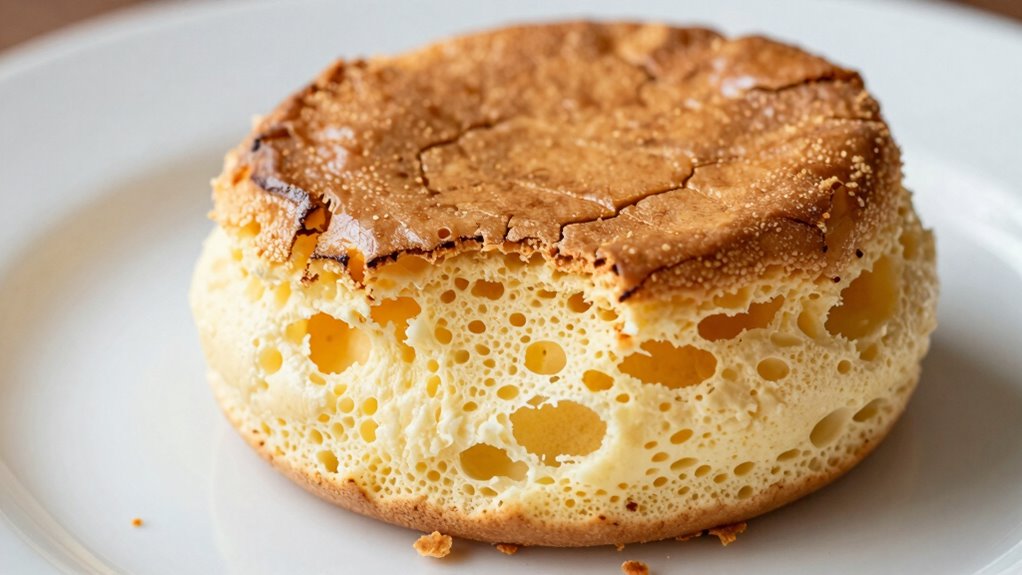

A collapsed soufflé often happens because of temperature issues, such as opening the oven door too early or uneven heating. Over-folding or rough handling can deflate the batter, while waiting too long to bake can cause it to lose its rise. Maintaining a steady oven temperature with a thermometer, handling the batter gently, and avoiding opening the oven until it’s set can prevent it from falling. Keep exploring to discover more tips for perfecting your soufflé.
Key Takeaways
- Opening the oven door early causes temperature drops, preventing proper setting and leading to collapse.
- Inconsistent oven temperature or lack of calibration results in uneven baking and early soufflé failure.
- Over-folding or rushing the folding process releases trapped air, reducing the soufflé’s rise.
- Insufficient preheating or uneven heat distribution hampers proper rising and setting.
- Handling the batter or transferring it too slowly allows air to escape, causing premature collapse.
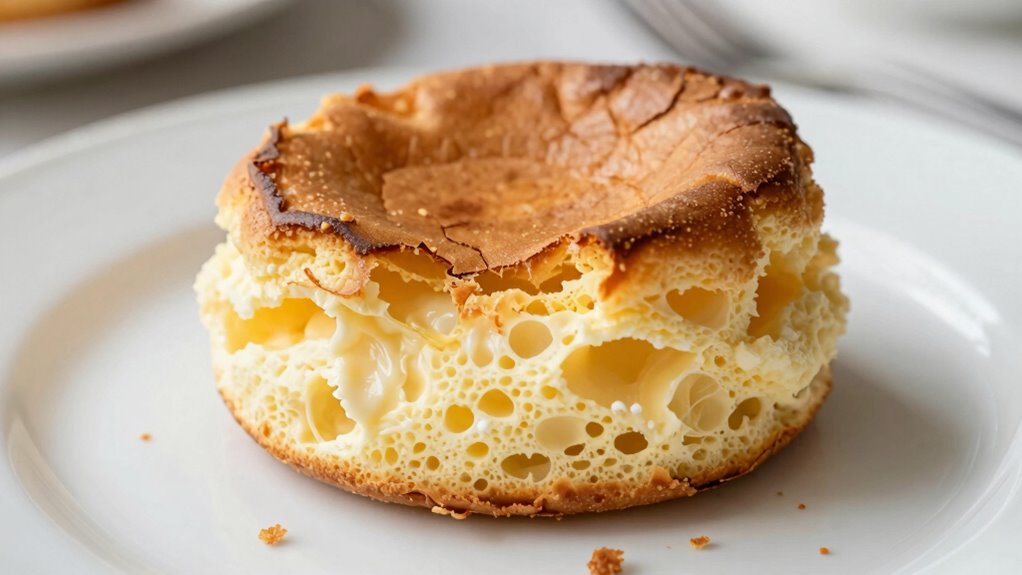
Have you ever enthusiast watched your soufflé rise only to see it cave in before serving? It’s incredibly frustrating, especially after all the effort you put into preparing it. The good news is that a collapsed soufflé often points to specific mistakes that you can easily avoid next time. One of the most common reasons is the oven temperature. If your oven isn’t hot enough or fluctuates during baking, the soufflé won’t set properly, causing it to sink once you take it out. Conversely, if the oven’s temperature is too high, the outer layer might set too quickly, trapping steam inside. When the steam escapes, the soufflé collapses. To prevent this, you need to guarantee your oven is precisely calibrated. Use an oven thermometer to monitor the temperature closely, and always preheat it thoroughly before baking.
Another critical factor involves folding techniques. When you fold your soufflé mixture, you want to do it gently and efficiently to preserve the air that’s been whipped into the batter. Over-folding or being too rough with the mixture releases the trapped air, which is the key to that lofty rise. If you’re heavy-handed or take too long to fold, you risk deflating the batter before it even hits the oven. Many home bakers make the mistake of rushing this step or not folding enough, which results in a dense, flat soufflé. To avoid this, fold with a light hand, using a gentle motion, and stop as soon as the ingredients are just combined. This preserves the delicate air bubbles that give the soufflé its signature rise.
Timing and handling also matter. Once you’ve folded the mixture, transfer it into the prepared dish quickly and smoothly. Don’t let it sit out for too long, because the air can escape, deflating the batter before it bakes. When placing the soufflé in the oven, avoid opening the door during the first 15-20 minutes of baking, since sudden temperature drops can cause it to sink. Be patient and resist the temptation to peek often; patience assures the soufflé has enough time to set properly. Additionally, ensuring your oven maintains a consistent temperature can prevent fluctuations that cause collapse.
Frequently Asked Questions
Can a Soufflé Be Saved After It Collapses?
Once your soufflé collapses, it’s usually too late to save it for serving, but you can repurpose it. Use it within its shelf life for flavor enhancement in dishes like savory casseroles or bread pudding. While you can’t restore its light texture, quickly incorporating it into other recipes helps prevent waste. Remember, timely consumption ensures the best flavor and texture, so enjoy it before it loses freshness.
What Are the Best Tips to Prevent a Soufflé From Collapsing?
To prevent a soufflé from collapsing, focus on proper whisking techniques, ensuring your egg whites form stiff peaks without overbeating. Gently fold the whites into the base to keep the air intact. Avoid ingredient substitutions that could weaken structure, like replacing eggs or cream with alternatives. Also, bake at the right temperature and serve promptly, as these steps help maintain stability and prevent your soufflé from deflating.
Does Oven Temperature Affect Soufflé Stability?
Yes, oven temperature affects soufflé stability. If your oven isn’t properly calibrated, it can cause uneven heating, leading to collapse. Make sure your oven heats accurately to the recipe’s specified temperature. Additionally, ingredient quality matters—fresh eggs and good-quality ingredients help create a stable, well-risen soufflé. Keep an eye on the oven during baking, and avoid opening the door early, which can cause temperature drops and potential collapse.
Are There Specific Ingredients That Cause Soufflé Failure?
Certain ingredients can cause soufflé failure if they disrupt egg stability or ingredient ratios. For example, too much fat or sugar weakens the egg whites, preventing proper rise. Using low-quality eggs or incorrect proportions also hampers structure. To avoid this, guarantee your ingredients are balanced and fresh. When egg stability is compromised, the soufflé can’t hold its shape, leading to collapse. Pay close attention to ingredient ratios and quality for a perfect rise.
How Long Should I Wait Before Serving a Freshly Baked Soufflé?
You should wait about 5 to 10 minutes before serving a freshly baked soufflé. This resting period allows the structure to set and prevents it from collapsing immediately. During this serving timing, the soufflé is at its peak height and texture, making it easier to cut and enjoy. Don’t rush; patience guarantees you experience the perfect, airy consistency that makes a soufflé so delightful.
Conclusion
Like Icarus flying too close to the sun, your soufflé’s downfall was inevitable without the right balance. You might have trusted the recipe or your instincts, but even the most skilled chefs know that perfection depends on subtle precision. Remember, every rise tells a story—sometimes, even the most promising begins can end in a gentle fall. Embrace the lesson, and next time, aim to soar higher by understanding what truly makes a soufflé rise.