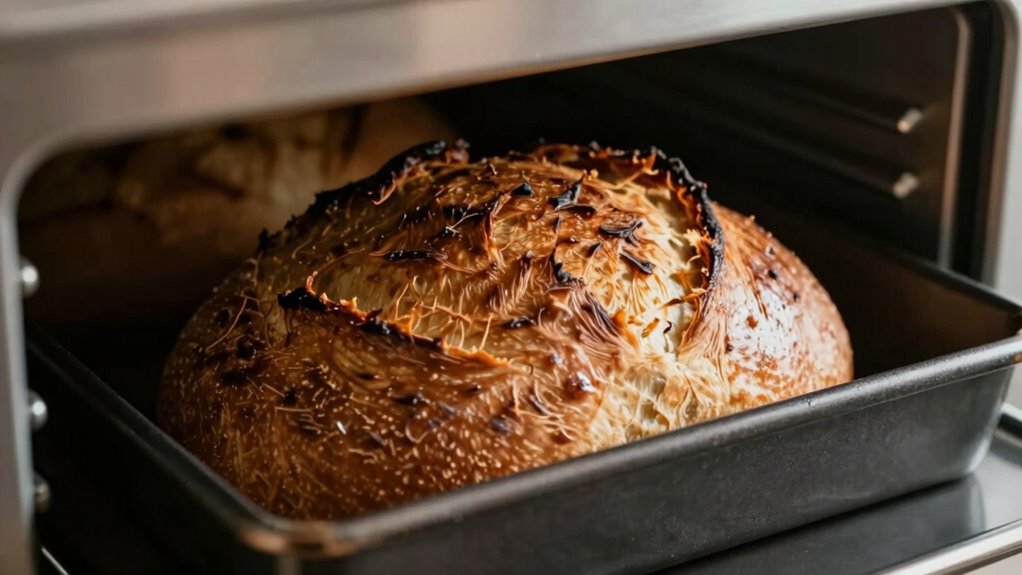

To buffer heat under covered bakers and prevent bottom scorch, use a baking mat or parchment paper to distribute heat evenly and act as insulation. Adjust your oven rack to a higher position or choose bakeware with thick, layered bases that help reduce direct contact with hot surfaces. Lowering the oven temperature slightly and monitoring during baking also help. If you want to learn more ways to keep your baked goods perfectly cooked, keep exploring these tips.
Key Takeaways
- Use baking mats or parchment paper to insulate the bottom and promote even heat distribution.
- Adjust oven rack height to prevent direct contact with the heating element and hot spots.
- Preheat the oven thoroughly and monitor temperature with an oven thermometer for consistent heat.
- Incorporate ceramic or reflective barriers inside the oven to redirect heat away from the baking surface.
- Choose high-quality, thick, or insulated bakeware that disperses heat evenly and reduces scorching risks.
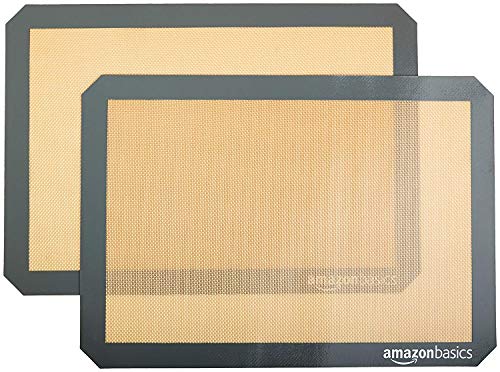
Amazon Basics Silicone Rectangular Baking Mat, Non-Stick, Reusable, Dishwasher Safe, Food Safe, Heat Resistant, 16.5" x 11.6", Beige/Gray, 2-Pack
Baking mat (2-pack) for easy and convenient baking, roasting, or food prep
As an affiliate, we earn on qualifying purchases.
As an affiliate, we earn on qualifying purchases.
Why Does Bottom Scorch Happen When Baking Covered?
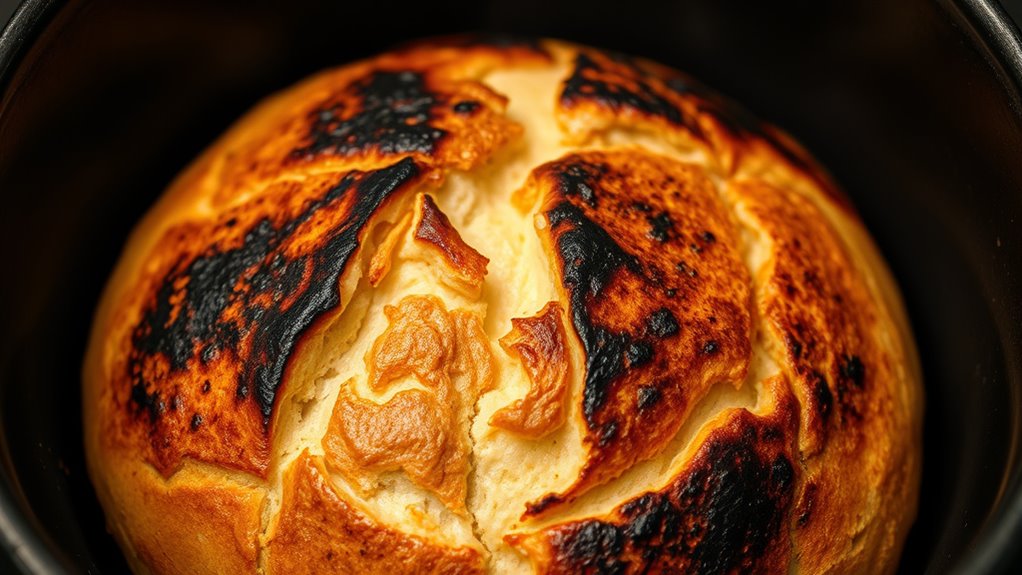
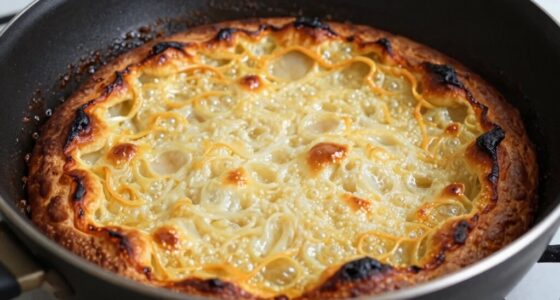
When baking covered, bottom scorch often occurs because direct contact with the hot baking dish or pan causes the bottom of the food to heat unevenly and burn. If your oven temperature is too high, the bottom heats quickly, increasing the risk of scorching during the baking duration. Overly long baking times also contribute, as the prolonged heat exposure allows the bottom to overheat before the rest of the dish is fully cooked. When you set your oven temperature too high or bake for too long, the bottom of your baked item can develop a burnt, crispy layer while the top remains underdone. Using a baking mat or parchment paper can help distribute heat more evenly and prevent scorching. Additionally, choosing appropriate cookware materials can influence heat conduction and help avoid bottom scorch. Implementing a baking stone or heat diffuser underneath the baking dish can further aid in even heat distribution, reducing the chances of scorching. Proper oven calibration and monitoring baking times closely can also make a significant difference in preventing uneven heating and protecting against bottom scorch when baking covered.

AcuRite 00620A2 Stainless Steel Oven Thermometer (150°F to 600°F)
Oven and grill safe for leave-in use while cooking
As an affiliate, we earn on qualifying purchases.
As an affiliate, we earn on qualifying purchases.
How to Choose Bakeware That Prevents Bottom Burning
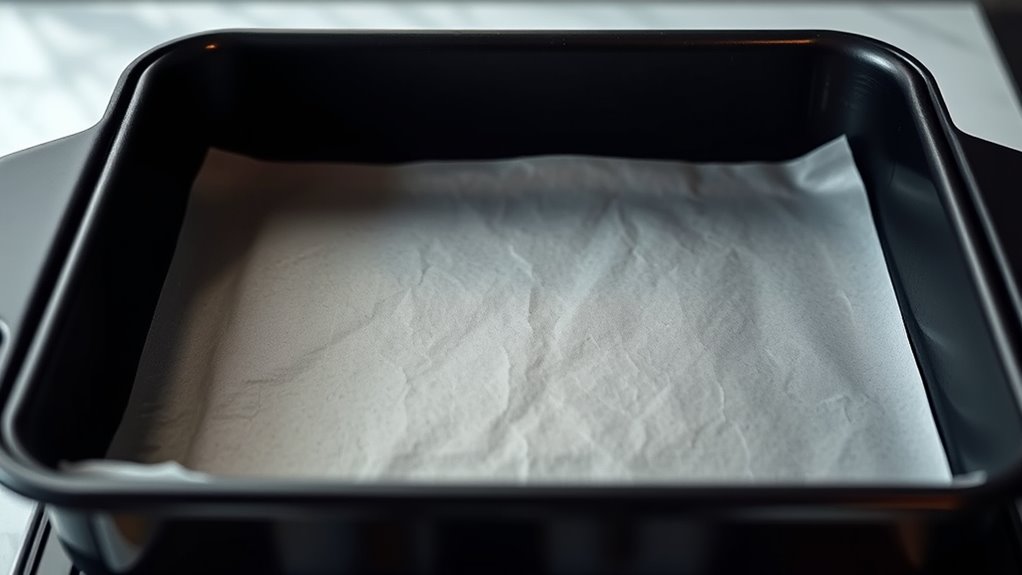
Choosing the right bakeware plays a crucial role in preventing bottom burning during baking. Look for bakeware made from oven safe materials like ceramic, glass, or aluminized steel, which guarantee safe and even heat transfer. Proper heat distribution is essential; bakeware with thick, layered bases helps distribute heat evenly across the surface, reducing hot spots that cause scorching. Avoid thin or low-quality metals that heat unevenly and can lead to burnt bottoms. Dark-colored pans absorb more heat, increasing the risk of scorching, so consider lighter-colored or reflective materials. Additionally, using bakeware with a textured or insulated bottom can help buffer direct heat, further preventing bottom burns. Selecting the right oven safe, well-designed bakeware makes a significant difference in achieving evenly baked, perfectly cooked results. Understanding thermal conductivity and how different materials transfer heat is key to choosing the best bakeware for your needs. When considering bakeware, also take into account heat retention properties, which influence how evenly heat is maintained during baking. Incorporating heat buffer layers can further improve heat distribution and minimize scorching. Using bakeware with insulating features can also reduce the likelihood of hot spots and protect baked goods from scorching. A good grasp of heat transfer mechanisms can help you select items that maintain temperature consistency throughout the baking process.

Milton Casserole for hot food, Double walled insulated inner Stainless Steel hot pot with lid, Serving box for food and roti, insulated serving bowl with lid, Set of 3 Venice, Marble Green
Pack of 3 with different Sizes: Size 1: 62.5 Oz (Length 28.6 inch, Width10.4 Height 5.7 inch), size…
As an affiliate, we earn on qualifying purchases.
As an affiliate, we earn on qualifying purchases.
What Are the Best Oven Settings to Avoid Bottom Scorch?
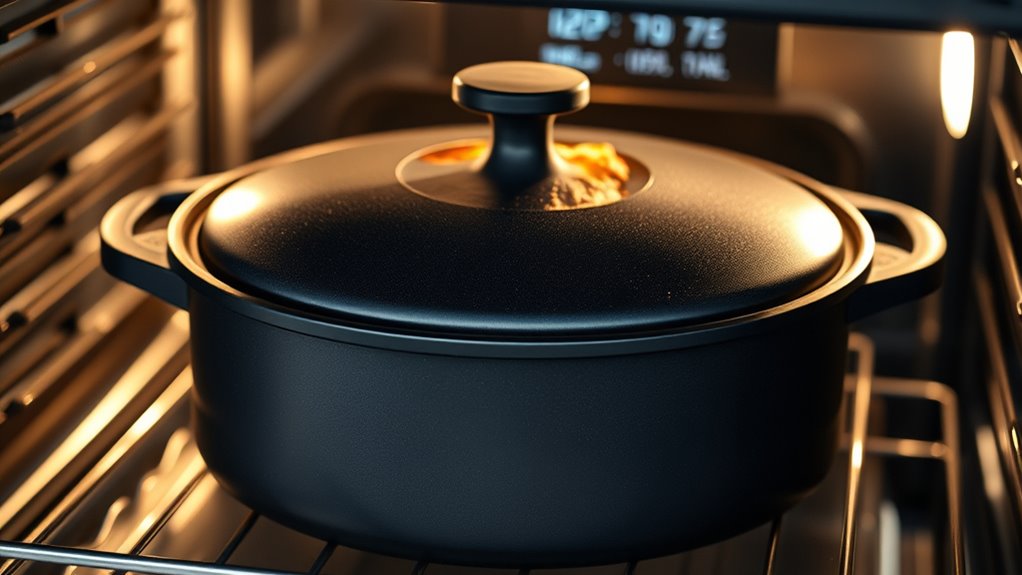
To prevent bottom scorching, adjusting your oven settings is essential. Set your oven to a moderate oven temperature, typically around 350°F (175°C), to prevent excessive direct heat that causes burning. Avoid high temperatures unless the recipe specifically calls for it, as this can shorten your baking duration and increase the risk of scorching. Use the middle rack position, which promotes even heat circulation and minimizes direct contact with the oven’s heating element. Keep an eye on the baking duration; check your baked goods a few minutes before the minimum time to prevent overbaking and bottom burning. If you notice the bottom browning too quickly, lower the oven temperature slightly or extend the baking time to ensure even, scorch-free results. Proper oven temperature control is key to achieving consistent baking outcomes and preventing bottom scorching. Additionally, employing baking mats or parchment paper can provide an extra layer of insulation and protect your baked goods from direct heat contact. Implementing heat distribution techniques can further help in achieving evenly baked items and avoiding scorching at the bottom. Using air circulation adjustments, such as rotating the baking sheet halfway through baking, can also promote uniform heat exposure and prevent hot spots that lead to scorching. Incorporating baking tools designed to improve heat flow can make a significant difference in consistent baking results.
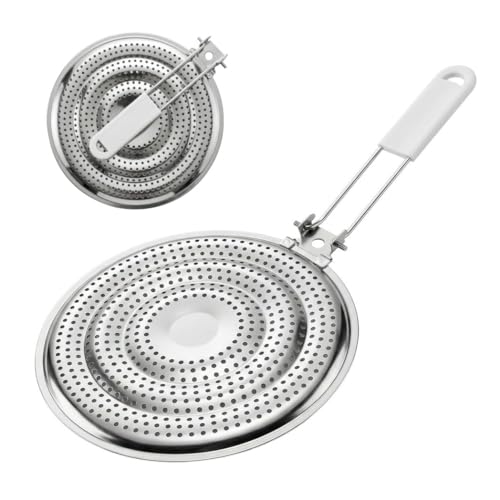
HIC Kitchen Heat Diffuser Reducer Flame Guard With Removable Handle, Stainless Steel, Distributes Heat Evenly And Reduces Scorching, For Gas Electric Glass Stovetops, 8.25-Inch
HIC Kitchen Heat Diffuser: Creates a flat cooking surface, distributes heat evenly, and reduces scorching in pans with…
As an affiliate, we earn on qualifying purchases.
As an affiliate, we earn on qualifying purchases.
How Can I Add Insulation to Buffer Direct Heat?
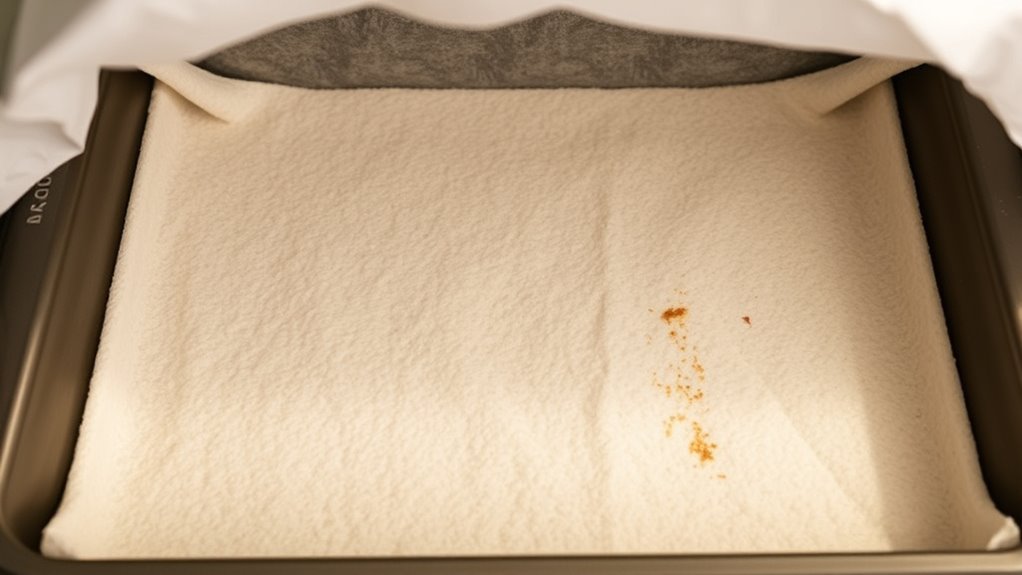
To buffer direct heat and prevent bottom scorch, you can add insulation layers like ceramic material inside your oven. Installing reflective barriers helps redirect heat away from sensitive areas, while fire-resistant materials provide extra protection. Combining these approaches creates an effective shield against excessive heat and keeps your cooking even. Additionally, incorporating proper heat shielding techniques can further enhance your oven’s ability to maintain consistent temperatures and protect the bottom surface from damage. Using insulation materials effectively can significantly improve heat distribution and prevent hot spots that cause scorching. For optimal results, consider integrating thermal management strategies to better control heat flow within your oven environment. Employing these methods ensures a more uniform heat distribution, reducing the risk of bottom scorching and extending the lifespan of your oven components.
Use Ceramic Insulation Layers
Ceramic insulation layers are an effective way to buffer direct heat and protect surfaces from scorching. By adding a layer of ceramic insulation, you create a barrier that reduces heat transfer, ensuring your baking surface remains cooler. Ceramic insulation is known for its excellent heat buffering properties, making it ideal for high-temperature environments. To implement this, place ceramic tiles or insulating boards underneath your baking surface or around the oven’s interior. This helps to prevent bottom scorching by dispersing and absorbing excess heat. It’s a simple step that can considerably improve baking results, especially when working with covered bakers or high-heat setups. Incorporating heat buffering techniques can further enhance temperature control and prevent uneven baking. Using insulation materials with thermal resistance improves overall heat management, leading to more even baking and less risk of burning the bottom of your baked goods. Additionally, choosing materials with high insulation durability ensures long-term effectiveness in maintaining consistent temperatures. When selecting insulation, consider materials with high thermal conductivity to optimize heat dispersion. With ceramic insulation, you gain better control over heat flow, leading to more even baking and less risk of burning the bottom of your baked goods. Employing proper installation methods ensures the insulation performs effectively over time.
Install Reflective Barriers Effectively
Installing reflective barriers is an effective way to reduce direct heat transfer and protect your baking surface from scorching. These barriers reflect radiant heat away, enhancing heat insulation and maintaining a stable baking environment. To install them properly, confirm they are clean, undamaged, and positioned with the reflective side facing the heat source. Secure the barriers firmly to prevent shifting during baking. Remember, proper placement maximizes their efficiency. Proper placement, along with smart home automation, can help monitor and optimize heat management during baking. Regularly inspecting precise temperature control systems can further improve baking results. Use heat-resistant tape or clips for secure attachment. Keep barriers clean for ideal reflectivity. Position barriers close but not touching the heat source. Regularly inspect and replace damaged reflective materials.
Apply Fire-Resistant Materials
Wondering how you can effectively add insulation to buffer direct heat? Start by applying heat-resistant coatings to surfaces exposed to high temperatures. These coatings create a protective barrier that reflects or absorbs heat, reducing its transfer to surrounding areas. Additionally, incorporate thermal barrier fabrics around baking chambers or oven walls; these fabrics are designed to withstand extreme heat while providing excellent insulation. Use these materials strategically to minimize bottom scorch and keep consistent oven temperatures. Make certain the coatings are evenly applied and the fabrics are securely installed for maximum effectiveness. Combining heat-resistant coatings with thermal barrier fabrics offers a reliable way to buffer direct heat, protecting your baked goods and extending the lifespan of your equipment.
Which Baking Techniques Help Prevent a Burnt Bottom?
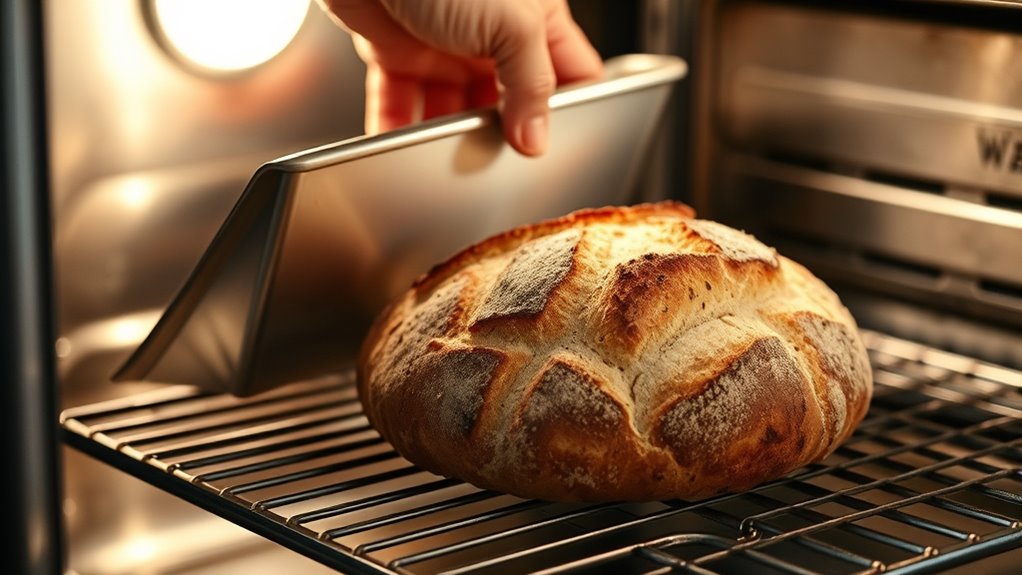
To prevent a burnt bottom, start by using a baking mat to create an even heat barrier. Adjust your oven rack height so your baked goods aren’t too close to the heating element, and always preheat the oven fully. Keep a close eye on the temperature and monitor your baking process to catch any early signs of over-browning.
Use a Baking Mat
Using a baking mat can be one of the simplest ways to prevent a burnt bottom when baking. Baking mats provide a layer of insulation that improves heat distribution, helping your baked goods cook evenly without scorching. They act as a buffer between the pan and the heat source, reducing hotspots that often cause bottom burns. When you use a baking mat, you’re less likely to need excessive oven adjustments or worry about direct contact with the pan’s surface.
- Promote even heat distribution for consistent baking
- Reduce direct contact with hot surfaces
- Minimize the risk of hotspots causing burns
- Reusable and eco-friendly alternative to parchment paper
Adjust Oven Rack Height
Adjusting the oven rack height is a simple but effective way to prevent a burnt bottom. By placing your oven rack in the middle or higher position, you avoid direct heat contact with the bottom of your baked goods. A lower rack places your item closer to the heating element, increasing the risk of scorching. Experiment with different rack heights to find the sweet spot for even baking. Keep in mind that heavier or thicker baked items might benefit from a higher rack, while delicate pastries may require a lower position to prevent over-browning. Always check your oven’s heat distribution, as hot spots can make rack adjustment even more important. Proper rack placement helps ensure your baked goods cook evenly without bottom scorch.
Preheat and Monitor Oven
Preheating your oven thoroughly before baking guarantees even heat distribution, which is essential for preventing a burnt bottom. Monitoring the oven temperature and baking duration ensures your baked goods cook evenly without scorching. Set the oven to the correct temperature from the start, and use an oven thermometer for accuracy. Keep an eye on the baking time to avoid overcooking. To help prevent bottom scorching, consider these tips:
- Use a baking stone or tile to buffer direct heat
- Avoid opening the oven door unnecessarily
- Rotate pans halfway through baking
- Adjust oven racks to optimize heat flow
How Do I Monitor and Troubleshoot Bottom Scorch While Baking?
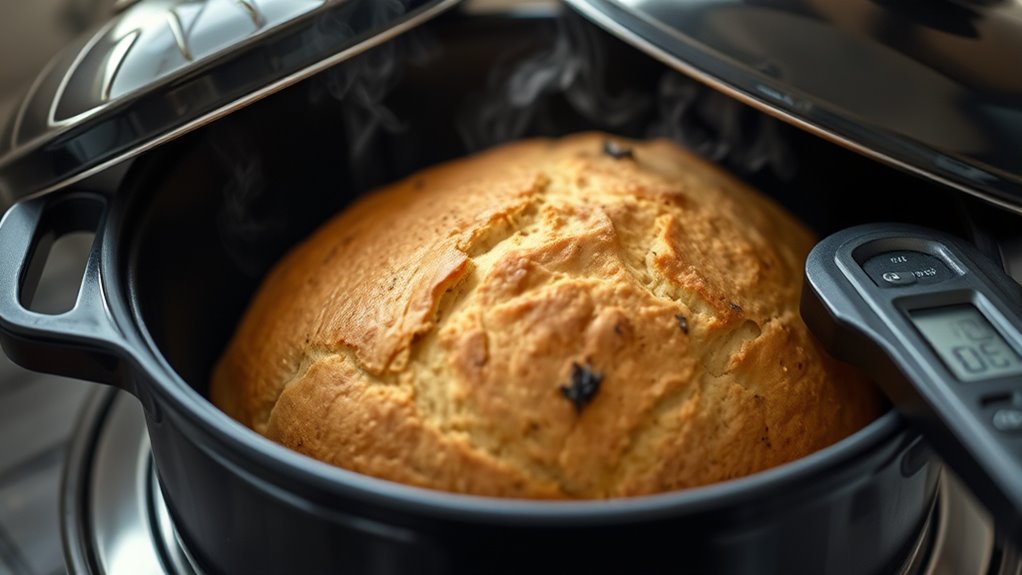
To effectively monitor and troubleshoot bottom scorch, keep a close eye on your baked goods as they cook, especially during the final stages. Use a reliable thermometer to check your oven’s temperature and ensure proper thermometer calibration; inaccurate readings can cause uneven heat. Pay attention to your oven’s heat distribution, as hot spots often lead to bottom scorch. If you notice burning or darkening at the bottom, try rotating your baking pan or switching to a different rack level to promote even baking. Adjust the oven temperature slightly lower if needed, and consider using an oven thermometer to verify consistent heat. Regularly monitoring these factors helps you catch issues early and prevents bottom scorch from ruining your baked treats.
Frequently Asked Questions
Can Using Parchment Paper Prevent Bottom Scorching?
Yes, using parchment paper can help prevent bottom scorching. It acts as a parchment barrier, providing extra heat insulation between your baked good and the hot baking surface. By creating this buffer, you reduce direct heat contact, which helps keep the bottom of your baked items from burning or scorching. Just make sure to use a sturdy, high-quality parchment paper that can withstand the oven temperature for best results.
Does Oven Calibration Affect Bottom Heat Distribution?
You might think oven calibration doesn’t matter, but it really affects heat distribution, including bottom heat. When your oven isn’t properly calibrated, hot spots can cause bottom scorching, even under covered bakers. Regularly check and calibrate your oven to ensure even heat distribution. This way, you prevent bottom scorch and achieve perfectly baked goods. Proper calibration keeps heat where you want it, improving your baking results overall.
Are Specific Baking Recipes More Prone to Bottom Scorch?
Yes, some baking recipes are more prone to bottom scorch, especially those with delicate batters or minimal batter thickness. Using an oven with good insulation helps distribute heat evenly, reducing hot spots. Placing a baking stone beneath your baked goods acts as a buffer, absorbing excess heat and preventing scorching. This technique works well for bread and delicate pastries, ensuring even baking without risking that unwanted bottom burn.
How Does Rack Placement Influence Bottom Heat Exposure?
Think of your oven rack as a bridge guiding heat to your baked goods. Proper rack positioning can considerably reduce bottom heat exposure, preventing scorching. By elevating your bread away from the oven’s heat source, you minimize direct heat conduction. Placing the rack in the middle or upper third of the oven ensures even heat distribution, helping your baked items cook perfectly without bottom scorch.
Can Adjusting Baking Time Reduce Bottom Scorch Risk?
Yes, adjusting your baking time can reduce bottom scorch risk. Lowering the baking temperature allows heat to distribute more evenly, preventing the bottom from burning. Also, consider improving oven ventilation to reduce excess heat buildup underneath the covered baker. Keep an eye on your bake and start checking earlier, especially if your oven runs hot. This way, you can prevent bottom scorch while still achieving perfect results.
Conclusion
By understanding and gently adjusting your approach, you can create a more harmonious baking experience. Selecting the right bakeware, fine-tuning oven settings, and employing thoughtful techniques serve as subtle guides to prevent unwanted imperfections. With patience and a keen eye, you’ll master the art of even baking, allowing your creations to emerge with a flawless finish. Embrace these gentle nuances, and your baked goods will always tell a story of careful craftsmanship.