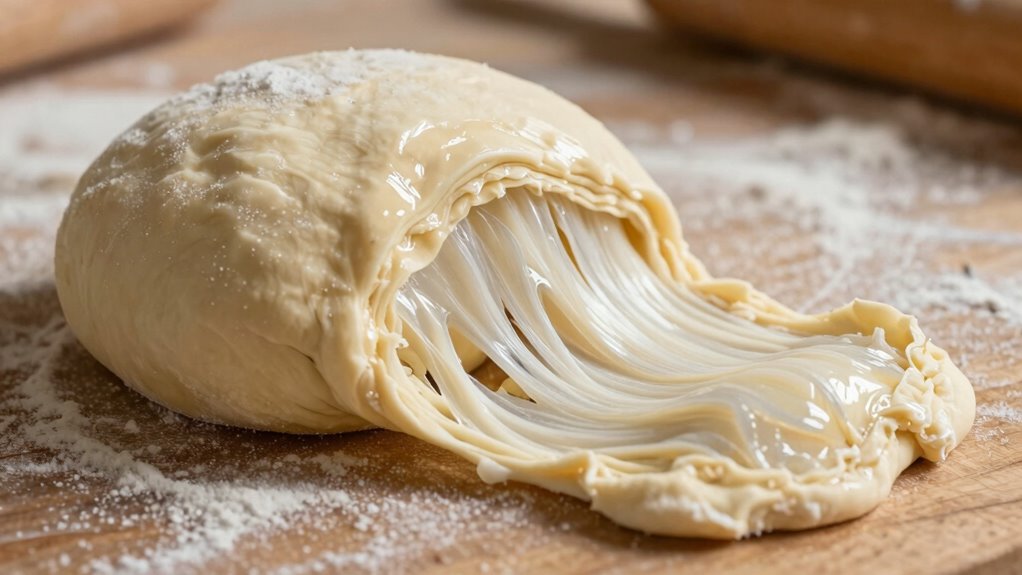

If your dough is too elastic to roll out, it’s likely been overworked or contains too much gluten, making it tough and resistant. Over-kneading or adding excess flour can develop gluten strands excessively, resulting in a springy feeling. Also, if the dough is cold, it might be less elastic, while too warm can make it sticky. To fix this, you can let the dough rest or chill it to relax the gluten. For more tips, keep exploring how to manage dough elasticity effectively.

Get baking supplies delivered free — and shop member deals
- Fast, free delivery on millions of items
- Access to Prime Big Deal Days deals on October 6–7
- Prime Video, Amazon Music and more included
Key Takeaways
- Overworking or kneading the dough excessively develops too much gluten, making it elastic and hard to roll out.
- Adding too much flour during mixing can increase gluten formation, resulting in a tough, stretchy dough.
- Resting the dough relaxes gluten strands, reducing elasticity and improving rollability.
- Using cold dough or chilling it in the refrigerator decreases elasticity and prevents spring-back during rolling.
- Improper moisture balance—either too dry or too moist—can make dough tough or sticky, affecting its elasticity and workability.
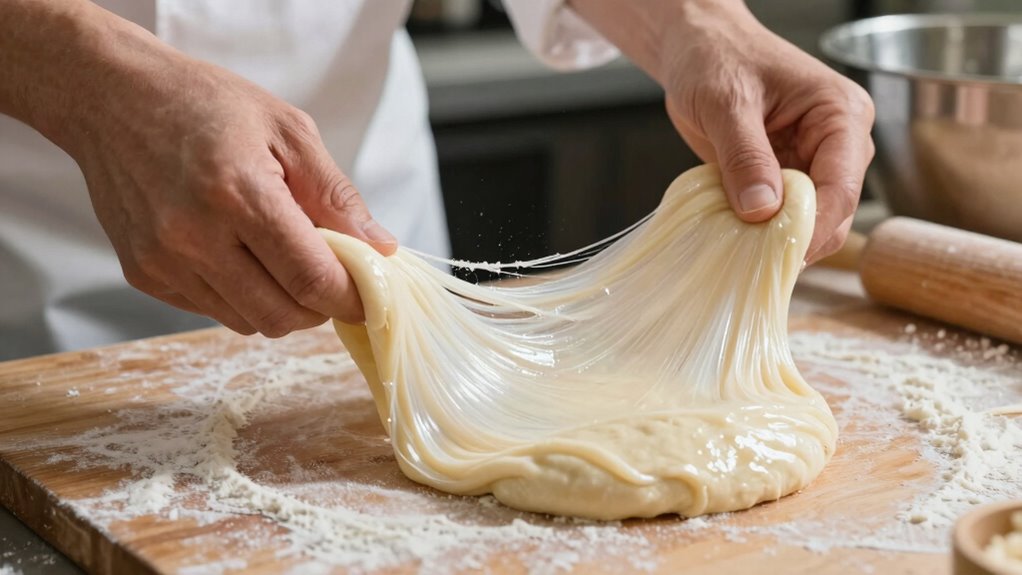
Have you ever tried to roll out dough only to find it spring back or resist flattening? If so, you’re likely dealing with dough that’s too elastic, which can make baking frustrating. The key issue often lies in how the gluten has developed and whether the moisture balance is just right. Gluten development is essential for structure, but overworking the dough or adding too much flour can cause it to become overly elastic. When gluten strands form excessively, they create a network that pulls tightly, resisting your efforts to flatten the dough smoothly. That’s why understanding how gluten forms and how to control it can make a big difference.
Overly elastic dough resists rolling due to excessive gluten development and moisture imbalance.
To manage this, you need to pay close attention to moisture balance. If your dough is too dry, it becomes tough and difficult to roll out, often leading to uneven textures. On the other hand, if it’s too moist, it can be sticky and hard to handle, but it generally won’t be as elastic. Striking the right moisture balance involves measuring ingredients carefully and adding water or flour gradually until you reach a dough that feels soft yet pliable. When the moisture content is just right, gluten strands develop enough to give the dough strength without making it resistant to rolling.
Another common cause of excessive elasticity is overworking the dough during kneading. While kneading helps develop gluten, doing it too long or with too much force can lead to a tough, elastic dough. Instead, knead just until the ingredients are combined and the dough is smooth. Resting the dough after kneading is equally important because it allows the gluten strands to relax. This relaxation reduces elasticity, making the dough easier to roll out. Typically, resting for 15 to 30 minutes under a damp cloth or plastic wrap helps achieve this.
Temperature also plays a role in gluten development and elasticity. If the dough is too warm, the gluten becomes more flexible and stretchy, which can cause it to spring back when you try to flatten it. Conversely, chilling the dough in the refrigerator for 20 to 30 minutes firms it up slightly and decreases elasticity. This step is especially useful when working with high-gluten flours or very sticky doughs.
As an affiliate, we earn on qualifying purchases.
Frequently Asked Questions
Can Adding More Flour Fix Overly Elastic Dough?
Adding more flour can help, but it might not fully fix overly elastic dough. Instead, you should focus on your kneading techniques to control gluten development. Overworking the dough can make it too elastic, so knead just enough to develop gluten without overdoing it. Incorporating a little more flour gradually can improve the dough’s consistency, making it easier to roll without becoming overly elastic.
How Does Overworking Dough Affect Elasticity?
Overworking dough is like stretching a rubber band until it snaps; it damages gluten development and weakens the structure. When you knead too much, you break down the hydration levels and overdevelop gluten, making the dough elastic and hard to roll. To prevent this, knead just enough to combine ingredients, then let it rest. This keeps the gluten balanced, ensuring your dough stays manageable and easy to work with.
Is It Better to Chill or Warm Dough to Reduce Elasticity?
It’s better to chill your dough to reduce elasticity. Lowering the dough temperature firms up the fat and relaxes the gluten, making it easier to roll out. By controlling the dough’s elasticity through chilling, you prevent it from becoming too stretchy and difficult to handle. Keep the dough cool, especially if it feels overly elastic, to improve flexibility and achieve a smooth, even crust.
Does Using Different Types of Flour Impact Dough Elasticity?
Different types of flour dramatically impact dough elasticity. Whole wheat or bread flour, with higher gluten development and protein content, create a stronger, stretchier dough. Meanwhile, pastry or cake flour, with less gluten, results in a softer, more tender texture. So, choosing your flour wisely determines your dough’s elasticity, influencing how easily it rolls out. Remember, higher gluten development equals more stretch, while lower gluten keeps things tender and pliable.
How Can I Tell if My Dough Is Overhydrated or Underhydrated?
You can tell if your dough is overhydrated or underhydrated by examining its hydration levels and dough consistency. If it feels excessively sticky and loose, it’s likely overhydrated, meaning it has too much water. If it’s dry, crumbly, and stiff, it’s underhydrated, lacking enough moisture. Adjust hydration levels gradually, adding water or flour as needed, until the dough feels smooth, elastic, and easy to work with.
As an affiliate, we earn on qualifying purchases.
Conclusion
Don’t let overly elastic dough ruin your baking plans. With a few simple tweaks—like letting it rest longer or adding a touch more flour—you can make it much easier to roll out. Remember, patience is key, and experimenting a bit will help you find the perfect consistency. So, next time your dough feels too stretchy, stay confident and give these tips a try. Enjoy baking without frustration—you’ve got this!
As an affiliate, we earn on qualifying purchases.
As an affiliate, we earn on qualifying purchases.
Halloween Picks
halloween
As an affiliate, we earn on qualifying purchases.