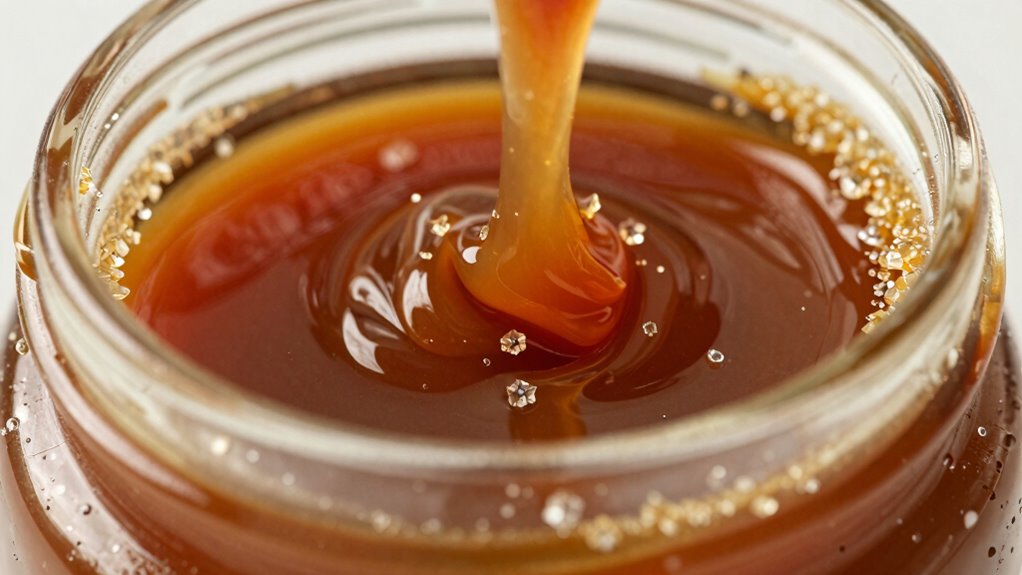
Caramel crystallizes when tiny seed crystals form from impurities, moisture, or residue on your utensils or pan. These seed crystals cause sugar molecules to gather and grow, resulting in grainy, dull caramel. Factors like fluctuations in temperature, uneven heating, or stirring during cooking can encourage crystals. Preventing this involves keeping everything clean, avoiding stirring after boiling, and adding glucose or corn syrup. If you’re curious about how to keep your caramel smooth, there’s more to learn below.
Key Takeaways
- Impurities or residues on utensils and cookware act as nucleation sites, initiating seed crystal formation in caramel.
- Excess sugar molecules attach to seed crystals, promoting their growth and resulting in crystallization.
- Sudden temperature changes or uneven heating cause seed crystals to expand, leading to grainy textures.
- Contamination from dust, moisture, or residual food introduces nucleation points that trigger crystallization.
- Stirring or disturbing the caramel after boiling encourages seed crystal development and promotes crystallization.
What Is Caramelization and How Does It Work?
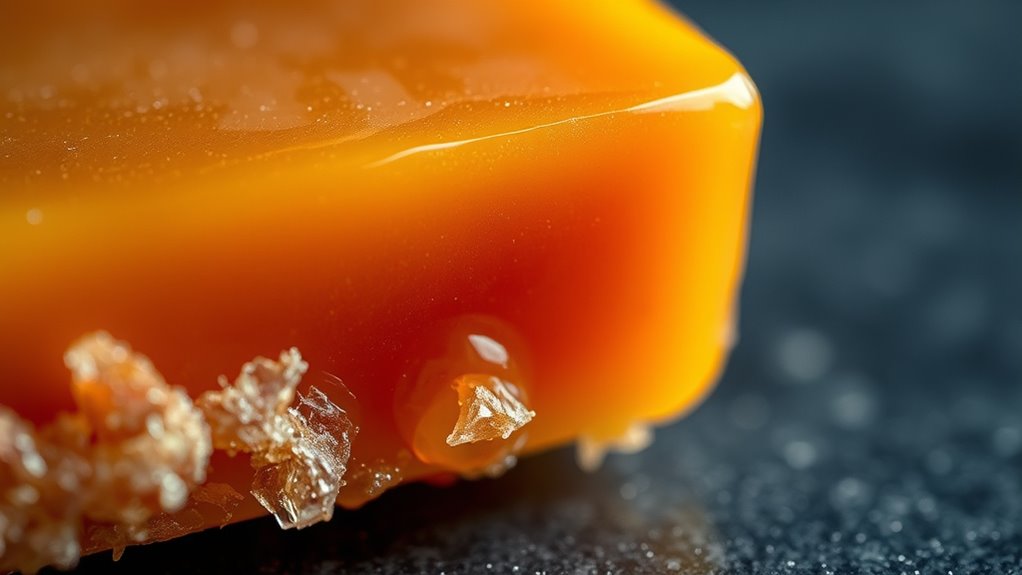
Have you ever wondered what makes sugar turn a rich, golden-brown color when heated? That process is called caramelization. When you heat sugar, it begins to melt, transforming from a solid into a liquid as the temperature rises. As the sugar melts, the heat causes the molecules to break down and react with each other, leading to complex flavor development. This chemical change produces the characteristic color and aroma of caramel. The process involves the dehydration of sugar molecules, forming new compounds that give caramel its distinctive taste. Temperature control is essential because it influences how thoroughly the sugar caramelizes and how deep the flavor becomes. Proper temperature management ensures you achieve the ideal caramel color and flavor without overcooking or burning the sugar. Additionally, understanding the chemical reactions involved in caramelization helps you better control the process and produce consistent results. Recognizing the importance of curiosity in mastering culinary techniques can inspire you to explore and refine your skills further. Understanding caramelization helps you create perfect caramel and avoid unwanted crystallization, which can ruin the texture and appearance of your confectionery.
How Do Sugar Crystals Form When Cooking Caramel?
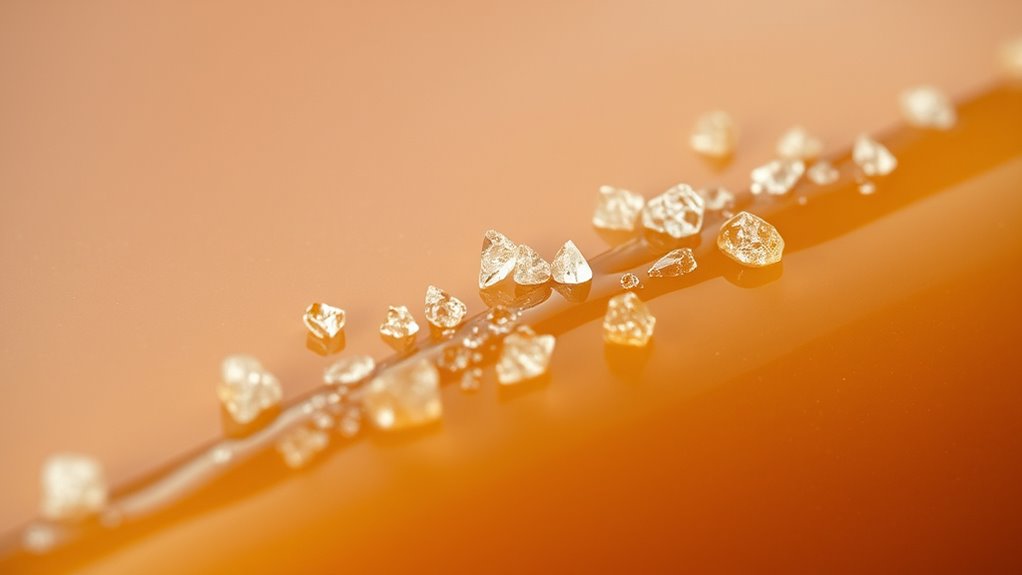
As sugar heats and begins to melt during caramelization, its molecules become more mobile, but certain conditions can lead to the formation of sugar crystals instead of smooth caramel. This process starts with sugar nucleation, where tiny seed crystals form from supersaturated sugar solutions. Once nucleation occurs, crystal growth accelerates. Imagine:
When heating sugar, nucleation can cause crystals, leading to grainy caramel instead of smooth.
- Small sugar particles sticking together as they collide.
- Excess sugar molecules attaching to tiny seed crystals.
- Temperature fluctuations causing uneven cooling.
- Impurities or residual moisture providing nucleation points. Supersaturation in the solution is a critical factor that promotes crystal formation. These factors promote crystal growth, resulting in a grainy texture rather than silky caramel. To prevent this, you must control the environment, avoid agitation, and maintain even heat, minimizing sugar nucleation and crystal growth during cooking. Additionally, understanding the energyLast involved in temperature regulation can help maintain consistent heat and prevent crystallization. Proper temperature control is essential to achieve a smooth, glossy caramel. Maintaining a steady environment also helps reduce impurity influence, ensuring a uniform texture. Implementing techniques such as adding lemon juice or cream can further inhibit unwanted crystallization by affecting the crystallization process.
Do Impurities and Contaminants Cause Crystallization?
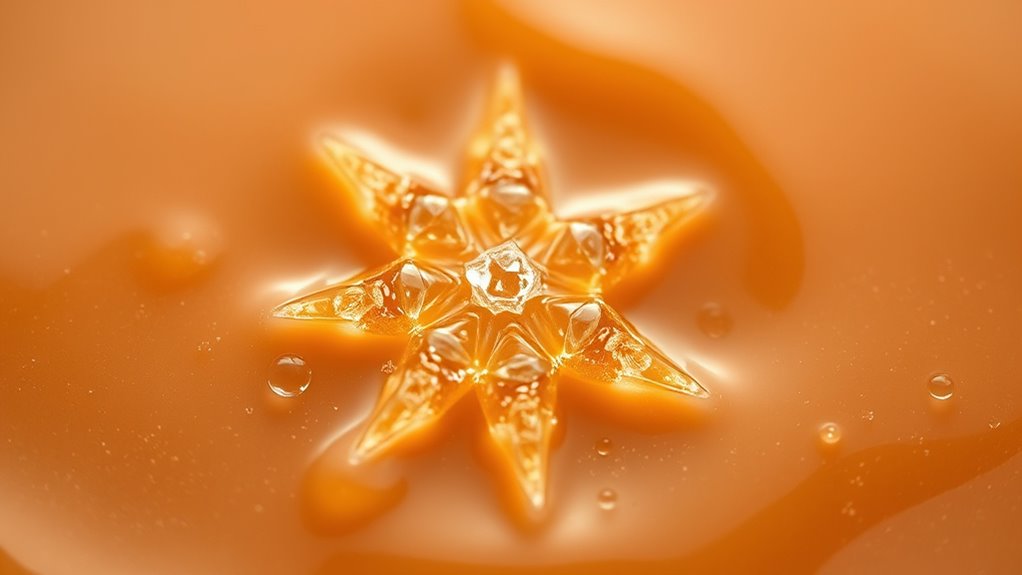
Impurities and contaminants can substantially increase the likelihood of crystallization in caramel. Impurity effects often act as nucleation sites, encouraging sugar molecules to gather and form crystals more easily. Common contamination sources include dust, residual food particles, or foreign substances introduced during preparation or storage. Even tiny amounts of impurities can disrupt the smooth, syrupy consistency, triggering seed crystal formation. To minimize this risk, keep your workspace clean, use high-quality ingredients, and store caramel in airtight containers. Avoid introducing foreign substances, as these act as unintended crystallization centers. Additionally, understanding seed crystal formation helps in implementing better control measures. By controlling contamination sources, you reduce impurity effects that promote unwanted crystallization, helping your caramel stay smooth and stable longer. Proper temperature control and gentle stirring techniques also play a crucial role in preventing crystallization issues and maintaining the desired texture. Being aware of water content and humidity levels can further aid in reducing the chances of crystallization, ensuring a glossy finish. Maintaining optimal sugar concentration is equally important to prevent the formation of seed crystals and preserve caramel’s smoothness. Furthermore, employing proper storage conditions can significantly reduce the risk of crystallization over time.
How Does Moisture Affect Caramel’s Texture and Stability?
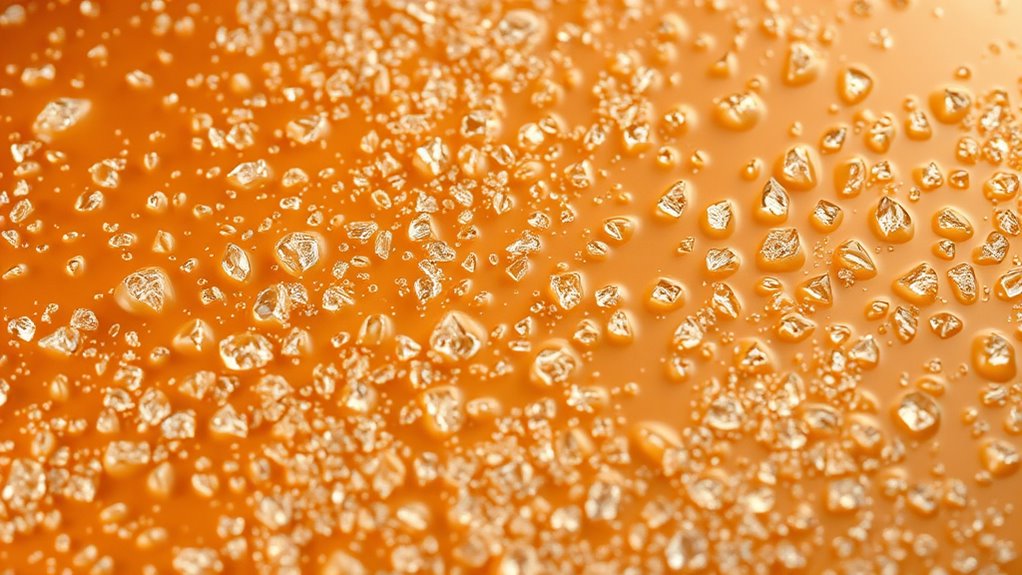
Moisture plays a significant role in determining the texture and stability of caramel. When moisture levels fluctuate, they directly impact caramel’s consistency and shelf life. Too much moisture can cause the caramel to become sticky or soft, undermining its structure. Conversely, low moisture levels lead to a brittle, hard texture. Imagine these scenarios:
- A humid kitchen introduces humidity that seeps into your caramel, softening it unexpectedly.
- Improper storage exposes the caramel to air, causing moisture loss and resulting in a crumbly texture.
- Moisture effects can promote unwanted reactions, destabilizing the caramel matrix over time.
- Excess moisture hampers caramel stability, increasing the risk of crystallization or spoilage.
Controlling moisture content is key to maintaining the ideal texture and preventing crystallization issues caused by moisture fluctuations. Additionally, understanding the influence of wave and wind can help in managing environmental factors during storage and handling. Maintaining proper moisture levels is essential for crystallization prevention and ensuring consistent quality, especially in environments susceptible to humidity fluctuations. Proper environmental control, including climate regulation, is crucial in maintaining caramel’s desired consistency and preventing texture issues over time.
Why Do Temperature Fluctuations Lead to Crystallization?
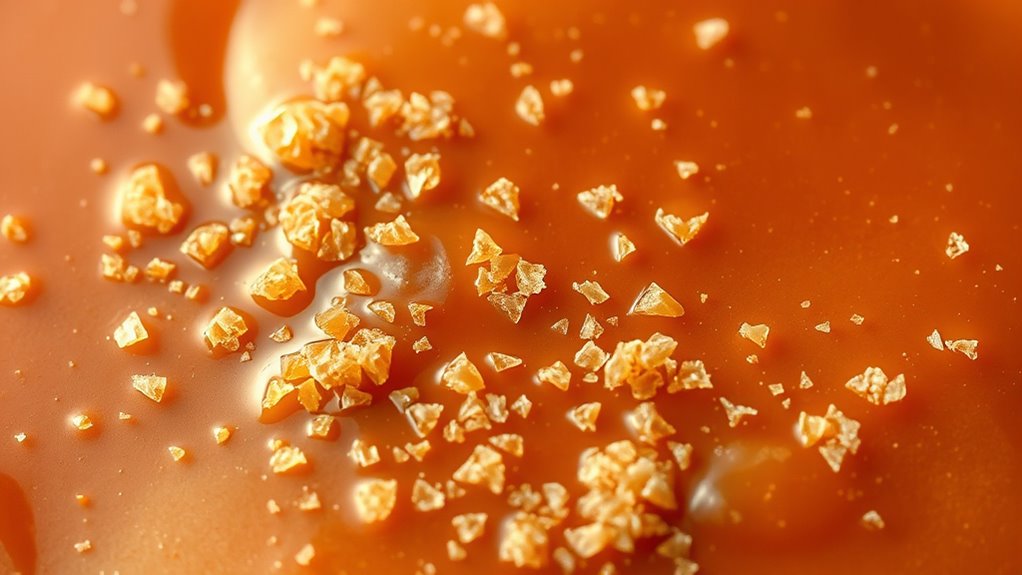
Have you ever noticed how sudden temperature changes cause your caramel to seize or develop unwanted crystals? When temperature shifts occur during cooking or cooling, they disturb the delicate balance of dissolved sugars. These fluctuations provide energy that encourages crystal growth, especially around tiny seed crystals. Rapid cooling or uneven heating creates localized areas where sugar molecules slow down or gather, promoting crystallization. As a result, the smooth, glossy texture transforms into a grainy or cloudy consistency. Controlling temperature stability is essential to prevent these issues. By maintaining a steady heat and avoiding abrupt changes, you minimize crystal growth. Keeping the caramel at a consistent temperature ensures the sugar remains in a supersaturated state, preventing the nucleation points where unwanted crystals form and grow.
What Are the Best Techniques for Preparing and Cooking Sugar?
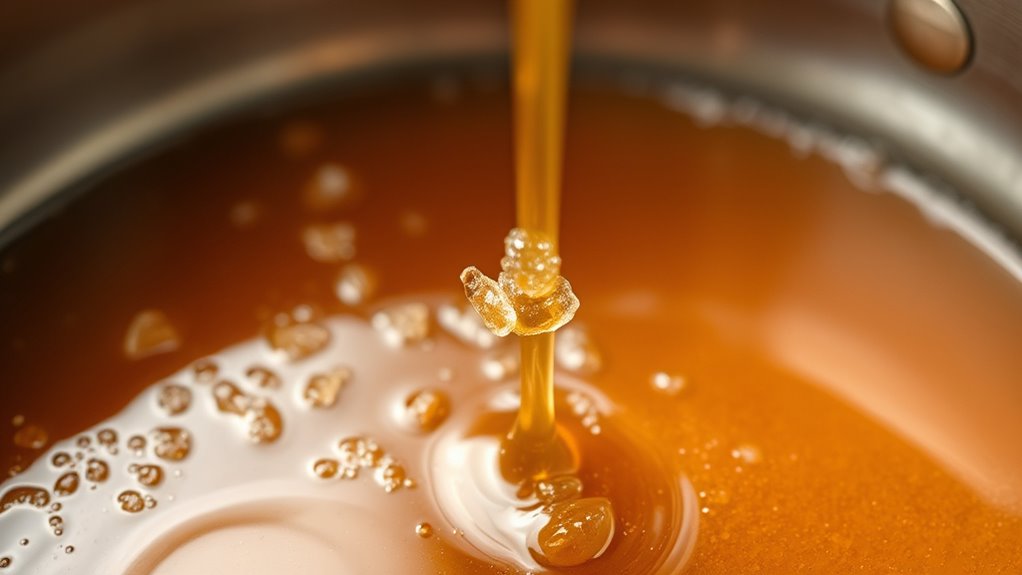
To achieve smooth, glossy caramel without unwanted crystals, mastering the best techniques for preparing and cooking sugar is key. Start by selecting high-purity sugar, as impurities can trigger crystallization. When cooking, follow these steps:
- Use a heavy-bottomed saucepan to distribute heat evenly.
- Dissolve sugar gently over low heat, avoiding stirring to prevent seed crystals.
- Monitor the cooking temperature closely with a reliable thermometer, aiming for the desired caramel stage.
- Add a small amount of water or an acid like lemon juice to help dissolve sugar uniformly and prevent crystallization.
- Ensuring proper temperature control during cooking is crucial for consistent results and preventing crystallization issues. Using a precision thermometer helps maintain the correct heat levels throughout the process.
- Additionally, maintaining clean utensils and cookware free of any residual sugar or grease is essential to avoid introducing seed crystals that can cause crystallization. Proper stirring techniques are also important to avoid disturbing the sugar’s surface and initiating crystallization.
- Recognizing the importance of sugar purity can make the difference between perfect caramel and grainy results, as even small impurities can act as nucleation sites for crystals.
What Common Mistakes Cause Seed Crystal Formation?
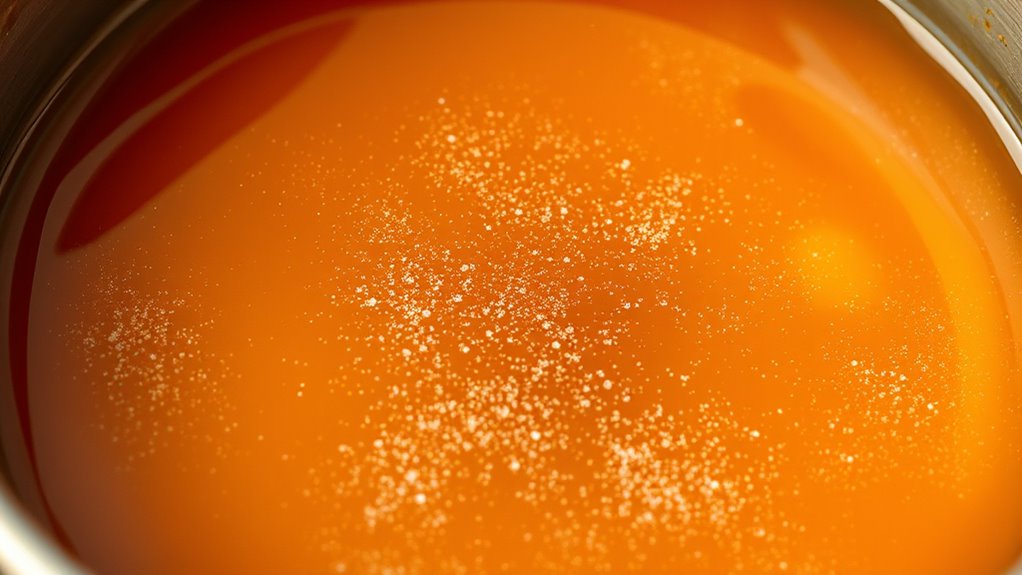
One common mistake that leads to seed crystal formation is stirring the sugar solution once it has begun to boil. This agitation introduces tiny imperfections and promotes unwanted nucleation sites. Additionally, using impure sugar can increase crystallization risk because impurities act as natural seed crystals. Ensuring high sugar purity helps prevent this problem. Equipment cleanliness is equally important; any residue or grease can serve as nucleation points, encouraging crystal growth. Using dirty utensils or unclean pots can inadvertently seed the solution. To avoid seed crystals, handle the sugar carefully, avoid stirring during boiling, and use thoroughly cleaned, high-quality equipment. These steps minimize impurities and prevent the formation of unwanted seed crystals, ensuring a smooth, amber caramel.
How Can You Prevent Crystallization While Making Caramel?
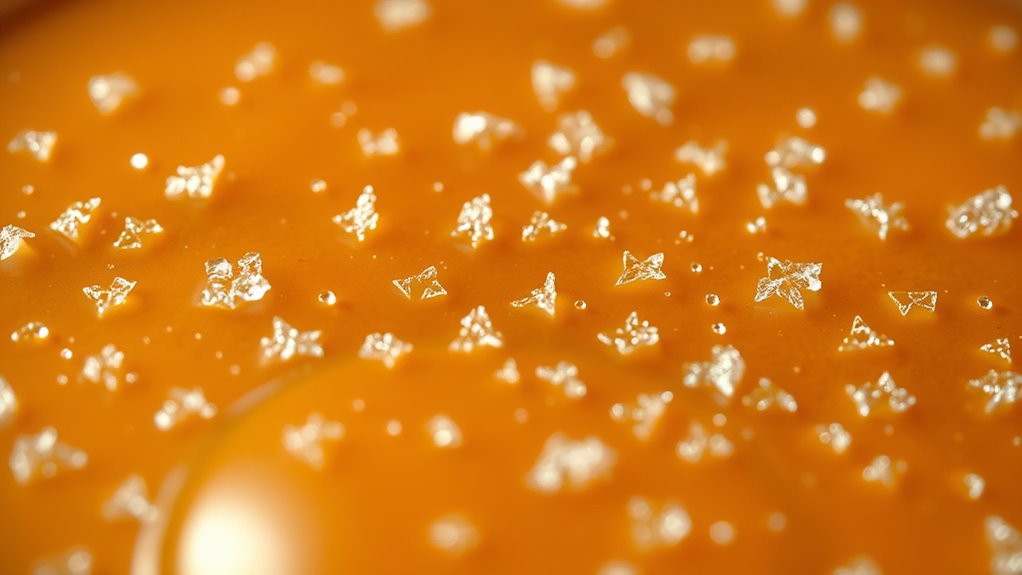
Preventing crystallization during caramel making starts with careful control of the cooking process. First, ensure your sugar is pure; impurities can seed crystals. Second, monitor temperature precisely with a reliable thermometer to reach the ideal caramel stage without overshooting. Third, avoid stirring once the sugar begins to melt; gentle swirling helps dissolve evenly. Fourth, add a damp brush to wipe down any sugar crystals clinging to the sides of the pan. Maintaining consistent heat and using high-quality, pure sugar minimizes seed crystal formation. These steps create a smooth caramel by keeping the sugar in a supersaturated state without encouraging unwanted crystal growth. Vigilance with temperature control and sugar purity is your best defense against crystallization.
How Do Glucose or Corn Syrup Stop Crystals From Forming?

Glucose or corn syrup helps stop crystals from forming by interfering with the sugar molecules as they attempt to organize into a crystal lattice. These sugar substitutes work by bonding with glucose molecules, preventing them from aligning properly. Because they are more soluble and less prone to crystallization, they act as effective crystallization inhibitors. Using corn syrup or glucose keeps your caramel smooth and creamy, even if your recipe includes flavor enhancers that might otherwise promote crystallization. These ingredients create a barrier, disrupting the formation of seed crystals that lead to grainy textures. Incorporating glucose or corn syrup is a simple way to guarantee your caramel stays velvety and consistent, offering a reliable method to control crystal growth while maintaining the desired flavor profile.
How Can You Fix Grainy or Crystallized Caramel After It’s Made?
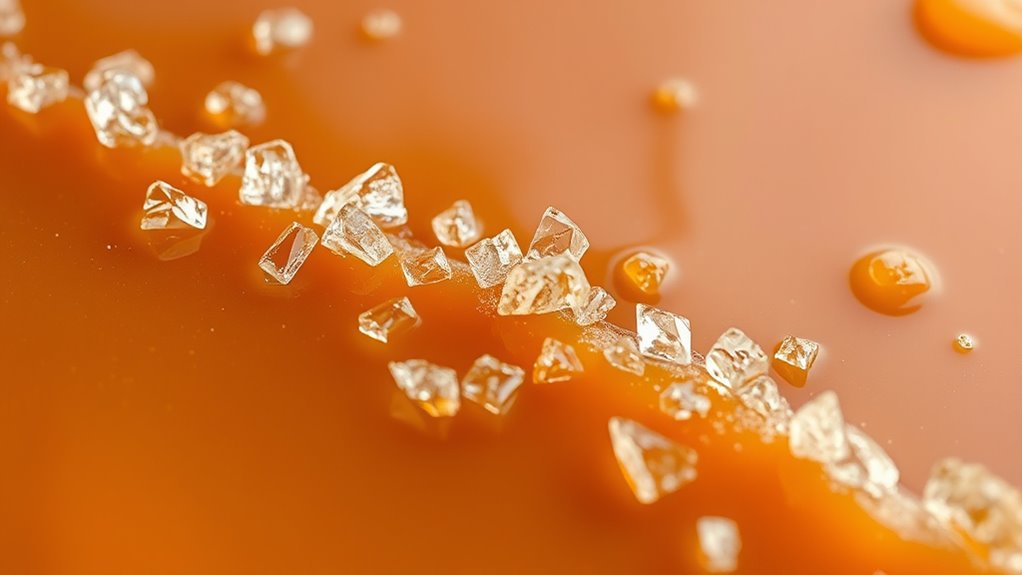
If your caramel turns grainy or crystallized after cooking, don’t worry—there are ways to salvage it. First, try adding a small amount of hot water or cream, then gently reheat while stirring to dissolve sugar granulation. Second, use a clean, damp pastry brush to wash away sugar crystals on the sides of your pan, preventing further crystallization. Third, incorporate a bit of corn syrup or glucose to break up existing crystals and smooth the texture. Fourth, employ cooling techniques like pouring the caramel into a cool, greased dish and gradually cooling it to prevent further crystallization. These steps help fix grainy caramel by dissolving crystals and controlling sugar granulation, restoring that smooth, glossy finish you want.
Frequently Asked Questions
Can the Type of Sugar Used Affect Caramel Crystallization?
Yes, the type of sugar you use can affect caramel crystallization. Using a higher-purity sugar reduces the chances of seed crystals forming, which helps prevent crystallization. Ingredient choice matters because impurities or different sugar varieties, like brown sugar or raw sugar, contain natural impurities that can promote crystallization. For smooth caramel, opt for refined, pure sugar and avoid introducing any impurities during cooking.
Does the Altitude Influence Caramel Crystallization?
Altitude effects definitely influence caramel crystallization by altering boiling points and humidity levels. Higher altitudes lower boiling points, which can disrupt the crystallization dynamics, making caramel more prone to crystallize prematurely or develop uneven textures. You might notice that at higher elevations, your caramel cools and hardens faster, requiring adjustments in cooking time or temperature. Understanding these altitude effects helps you control crystallization and achieve smooth, glossy caramel every time.
Are There Specific Storage Conditions That Prevent Crystallization?
To prevent caramel crystallization, store your sugar in an airtight container to control humidity and keep it dry. Avoid exposing it to moisture, which can trigger seed crystal formation. Make certain your storage area has consistent, moderate humidity levels, and keep sugar away from direct sunlight or heat sources. Proper humidity control and airtight storage help maintain smooth caramel and prevent unwanted crystallization.
How Does the Size of Sugar Granules Impact Seed Crystal Formation?
You’ll find that smaller sugar granules promote seed crystal formation because they dissolve more easily and provide numerous nucleation points. Larger sugar granules tend to slow down this process, as fewer surface points are available for crystals to start forming. To prevent unwanted crystallization, use fine sugar or dissolve the sugar thoroughly, avoiding larger granules that can act as seed crystals and trigger crystallization in your caramel.
Can Adding Acids Like Lemon Juice Prevent Caramel Crystallization?
Adding acids like lemon juice can help prevent caramel crystallization by disrupting seed crystal formation. The acid weakens the sugar molecules, making it harder for seed crystals to form and grow. When you add a small amount of acid, you effectively reduce the chances of crystallization, ensuring a smoother, more glossy caramel. Just be sure to add it early in the cooking process for the best results.
Conclusion
To keep your caramel smooth and glossy, remember that patience and proper technique are key—think of it as your own culinary Renaissance. Avoid rushing the process, use ingredients like glucose or corn syrup, and keep moisture and temperature in check. By understanding the seed crystal problem, you’ll master the art of perfect caramel, just like a seasoned alchemist transforming sugar into a luscious delight. With these tips, your confections will always impress, no matter the era.