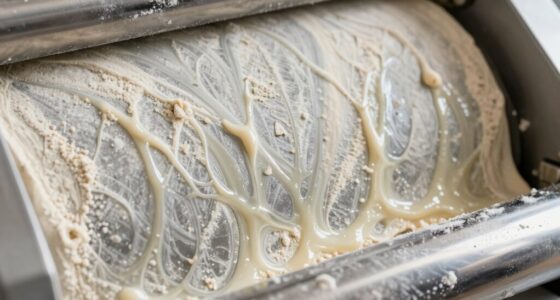
To prevent butter breakage in laminated dough, keep the dough at a consistent, cool temperature and wrap it tightly with plastic or airtight containers to maintain moisture and layers. Store it in the fridge at 35°F to 40°F for short-term use, or freeze for longer periods, ensuring it’s well sealed. Thaw slowly to preserve flakiness. Proper wrapping and temperature control are key—learn more for ideal results.
Key Takeaways
- Wrap laminated dough tightly with plastic wrap or resealable bags to prevent moisture loss and air exposure.
- Maintain storage temperatures between 35°F and 40°F (2°C to 5°C) to keep butter pliable and prevent hardening.
- Freeze dough for long-term storage, ensuring it is well-wrapped to avoid freezer burn and butter layer disruption.
- Thaw dough slowly in the refrigerator to evenly soften butter and preserve lamination quality.
- Minimize storage duration and monitor conditions to prevent butter breakage and maintain flaky layers.
What Causes Butter Breakage in Laminated Dough—and How Can You Prevent It?

Butter breakage in laminated dough occurs when the butter becomes too cold or too hard, making it difficult to layer smoothly without tearing. The key issue is butter consistency; if it’s overly firm, it won’t meld seamlessly with the dough. When the butter isn’t pliable, it resists shaping and causes tears during rolling, disrupting the lamination process. Maintaining proper dough elasticity is essential because it allows the layers to stretch without breaking. To prevent butter breakage, keep your butter at the right temperature—soft but not melting—and work quickly to maintain its ideal consistency. Chilling the dough intermittently also helps keep the butter firm enough for layering, ensuring smooth, even layers and a flaky final product.
How Should You Wrap Laminated Dough to Keep It Fresh and Flaky?

Properly wrapping laminated dough is key to preserving its delicate layers and moisture. To maintain dough elasticity and ensure a flaky texture, you need to wrap it correctly. Use an airtight method to prevent air exposure and moisture loss. Consider these tips:
- Wrap tightly with plastic wrap to prevent drying out
- Use parchment paper for an extra barrier against air
- Seal with a resealable bag for convenience
- Avoid overstretching the dough when wrapping
- Store flat to prevent deformation of layers
- Incorporate Free Floating techniques to optimize storage conditions and prevent butter breakage. Incorporating proper climate control methods can further enhance storage effectiveness and maintain the integrity of the laminated structure. Additionally, ensuring consistent temperature regulation helps keep the dough pliable and prevents unwanted butter separation. Employing proper wrapping techniques is essential to uphold the dough’s quality during refrigeration or freezing, and paying attention to storage environment can make a significant difference in maintaining flaky layers.
What Are the Best Temperature and Storage Conditions for Laminated Dough?
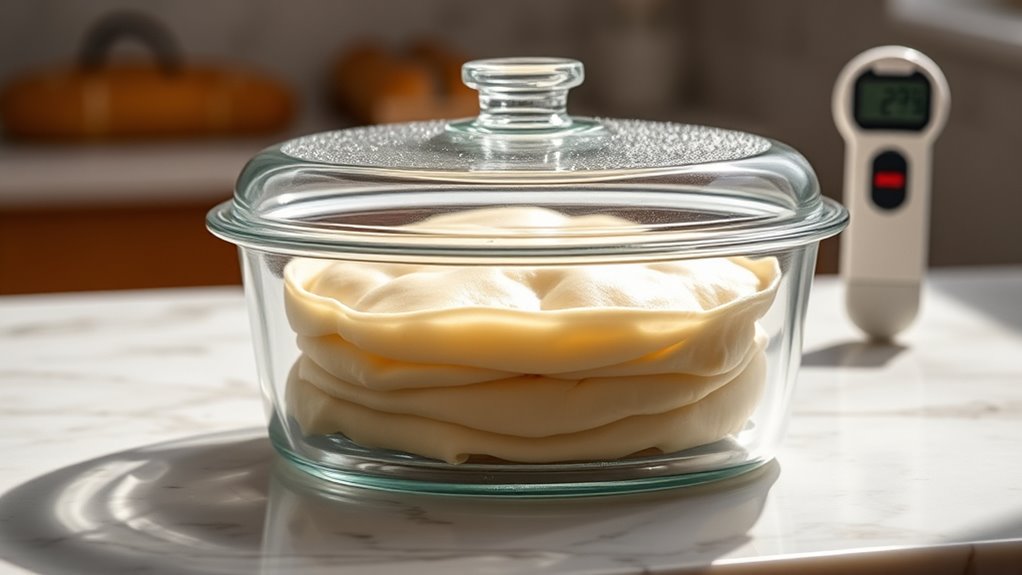
To keep your laminated dough fresh and flaky, you’ll want to store it within the ideal temperature range of 35°F to 40°F. Make sure you wrap it properly to prevent moisture loss or absorption, whether refrigerating or freezing. Understanding when to freeze versus refrigerate can make a big difference in maintaining its quality. Using the right storage conditions can also help prevent butter breakage and preserve the dough’s integrity for optimal baking results. Additionally, keeping your truck bed organized and insulated can help maintain consistent temperatures during transport and storage, ensuring your laminated dough stays in perfect condition. Being aware of outdoor weather conditions can further help you adapt your storage methods for better preservation. For added protection, consider using airtight containers to prevent air exposure that could compromise the dough’s quality. Proper temperature control and humidity levels are also crucial to avoid spoilage and maintain the dough’s elasticity and layering.
Ideal Temperature Range
Maintaining the right temperature is essential for preserving the quality and workability of laminated dough. The ideal temperature range is typically between 35°F to 41°F (2°C to 5°C). Staying within this range ensures butter remains firm enough for lamination while maintaining dough elasticity. If it’s too cold, butter can become too hard, risking breakage; too warm, and butter may soften, causing difficulty in layering. Proper temperature control helps prevent butter melt and ensures consistent layering results. Additionally, consistent storage conditions help prevent the formation of undesirable textures in the dough caused by temperature fluctuations. Consistent temperature also minimizes the risk of butter breakage, enabling smoother lamination processes. Consider these tips:
- Keep your dough just cool enough to prevent butter from melting
- Use a refrigerator that maintains a stable temperature
- Avoid temperature fluctuations during storage
- Ensure proper airflow around the dough
- Use a thermometer to monitor storage conditions consistently
- Regularly check for temperature stability to maintain optimal dough quality
- Understanding temperature regulation techniques can further improve your laminated dough results.
Proper Wrapping Techniques
Are you wrapping laminated dough correctly to preserve its quality? Proper wrapping techniques are essential for maintaining its texture and flavor. Use airtight materials like plastic wrap or resealable bags to prevent moisture loss and protect against freezer burn or drying out. For creative presentation, consider wrapping the dough neatly, which makes it easier to handle later and adds visual appeal if you’re showcasing your baked goods. Ensuring an effective seal helps lock in flavor preservation, keeping the butter layers from absorbing unwanted odors. Avoid tight or loose wrapping—tight enough to prevent air exposure, but not so tight that it compresses the dough. Correct wrapping guarantees consistent results, preserves the dough’s integrity, and makes future handling more manageable. Additionally, understanding the thermal behavior of laminated dough can help you select optimal storage temperatures to prevent butter breakage and maintain ideal consistency. Being aware of the freezing point helps you avoid temperature fluctuations that could cause the butter to become brittle or separate.
Freezing vs. Refrigeration
Choosing the right storage method for laminated dough depends on how long you plan to keep it and the texture you want to preserve. Freezing is ideal for long-term storage, helping maintain dough elasticity and preventing butter from breaking through. Refrigeration is suitable for short-term storage, keeping the dough chilled without risking butter separation. When freezing, wrap the dough tightly to prevent freezer burn and preserve butter distribution. For refrigeration, keep it in an airtight container to avoid moisture loss. Consider these tips:
- Freeze for up to 1 month for perfect freshness
- Thaw slowly in the fridge to maintain dough elasticity
- Use cold storage to prevent butter breakage
- Avoid temperature fluctuations
- Label with date for proper rotation
When and How Should You Freeze Laminated Dough for Best Results?
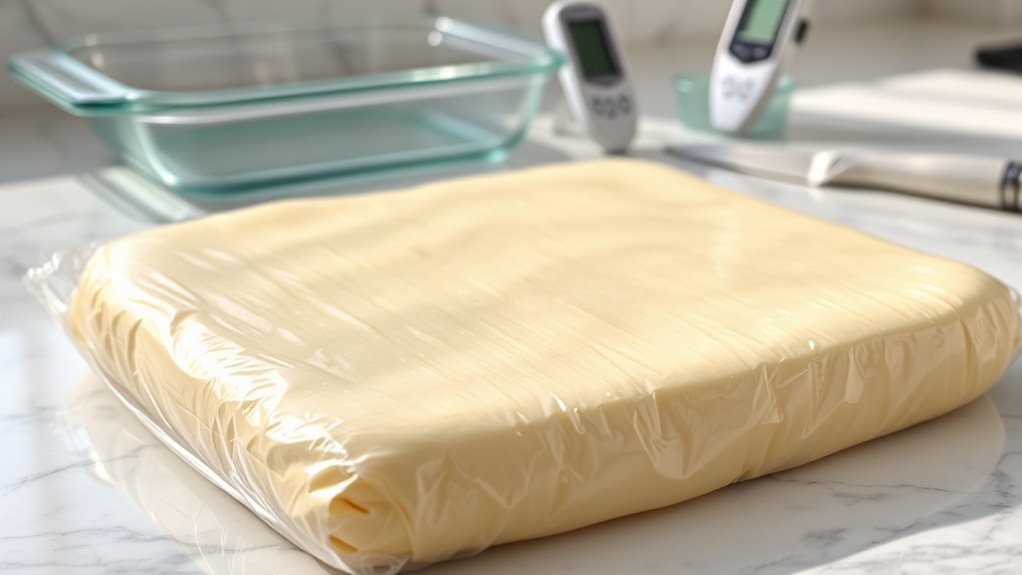
Freezing laminated dough at the right time can help preserve its quality and make your baking process more convenient. The ideal moment is after the final roll and fold, when dough elasticity is still intact, and butter consistency remains firm but pliable. Freezing too early can hinder gluten development, while freezing too late risks butter breakage. To maximize results, wrap the dough tightly in plastic wrap, then place it in a resealable bag or container. Label with date. When ready to use, thaw in the fridge overnight, allowing the dough to regain elasticity and butter to soften evenly. Proper freezing prevents butter from breaking through during baking, ensuring flaky layers and perfect lamination. Additionally, understanding the importance of sustainable practices can help ensure your kitchen remains operational during unexpected outages, making your baking experience more reliable. Properly temperature-controlled storage is essential to maintain dough quality during freezing and thawing processes, and paying attention to storage duration can prevent quality degradation over time. Maintaining optimal freezing temperatures is crucial to preserving dough integrity and preventing freezer burn.
What Are Effective Short-Term Storage Tips for Laminated Dough?

To keep laminated dough fresh and workable in the short term, proper storage is essential. You want to preserve its butter layering and dough elasticity for easy handling later. Using a clean environment when storing your dough can also prevent contamination and spoilage. Additionally, maintaining the appropriate temperature control is crucial to prevent butter separation and ensure the dough remains pliable. Here are effective tips:
- Wrap the dough tightly in plastic wrap to prevent moisture loss.
- Keep it refrigerated at 40°F (4°C) if used within 24 hours.
- Place the wrapped dough in an airtight container for extra protection.
- Avoid exposing it to temperature fluctuations, which can cause butter separation.
- Rest the dough in a cool, shaded spot if not refrigerated immediately, to maintain its texture.
- Ensure proper dough hydration during storage to avoid dryness and cracking.
These steps help maintain its butter layering and dough elasticity, ensuring a smooth rolling process and preventing butter breakage when you’re ready to bake.
How Can You Store Laminated Dough Long-Term Without Compromising Quality?

Storing laminated dough long-term requires careful planning to preserve its delicate butter layers and dough elasticity. To prevent butter breakage, stop dough fermentation before freezing by chilling it thoroughly. Wrap the dough tightly in plastic wrap to maintain butter consistency and prevent freezer burn. For extended storage, place the wrapped dough in an airtight container or vacuum-seal it. This minimizes exposure to air and moisture, which can affect fermentation and butter quality. When you’re ready to use it, thaw the dough slowly in the refrigerator to allow the butter to soften evenly, preserving its lamination. Proper storage ensures the dough maintains ideal fermentation levels and butter consistency, so you can enjoy flaky, well-layered baked goods even after long-term freezing.
Frequently Asked Questions
Can Improper Handling Cause Butter Breakage During Lamination?
Yes, improper handling can cause butter breakage during lamination. If you don’t use proper handling techniques, like gentle folding and avoiding excessive pressure, the butter may break through the dough. Additionally, maintaining proper temperature control is vital; if the dough gets too warm, the butter melts unevenly, increasing the risk of breakage. Always handle with care and keep everything cool to achieve smooth, flaky layers.
Does the Type of Butter Affect the Likelihood of Breakage?
Think of butter as the backbone of your laminated dough. The type of butter you choose markedly influences breakage; high-quality, high-fat butter with a balanced butter composition creates a smoother lamination process. Store it at the right temperature—cold but pliable—so it doesn’t become too soft or too hard. Using the proper butter and maintaining ideal storage temperature minimizes breakage, ensuring your dough layers stay intact and flaky.
How Does Humidity Influence Laminated Dough Storage?
Humidity impacts your laminated dough storage by affecting moisture levels, which can cause the dough to become sticky or dry out. Keep the dough in airtight storage containers to control humidity exposure and maintain consistent moisture. If the environment’s too humid, your dough risks becoming overly moist, leading to butter breakage. Conversely, low humidity can dry out the dough, so monitor storage conditions carefully to preserve its perfect texture.
Are There Specific Brands of Wrapping Materials Recommended?
You should choose wrapping materials like food-grade plastic wrap or parchment paper for storing laminated dough. Brands like Saran Wrap and Reynolds offer reliable options that prevent moisture loss and protect against freezer burn. These wrapping materials are flexible, easy to seal tightly, and help maintain the dough’s quality. Always opt for high-quality brands to guarantee your laminated dough stays fresh, avoiding butter breakage and preserving its flaky texture.
Can Storing Laminated Dough at Room Temperature Cause Butter Breakage?
A stitch in time saves nine, so don’t leave laminated dough at room temperature too long. Storing it there can cause the butter to melt, leading to butter breakage and ruining your layers. If the temperature rises, the butter softens and loses its structure, making your dough sloppy. To prevent this, keep your dough chilled until you’re ready to use it, ensuring crisp, flaky results every time.
Conclusion
Storing laminated dough is like safeguarding a delicate treasure—handle it with care, keep it cool, and shield it from unwanted surprises. By following these tips, you’ll guarantee your dough remains flaky and buttery, ready to transform into your next masterpiece. Think of your storage methods as a gentle lullaby, cradling your dough until it’s time to release its full flaky potential. With patience and proper care, your baked creations will always shine.