
TL;DR

Get baking supplies delivered free with Prime
- Fast, free delivery on millions of items
- Prime Video, Amazon Music and more included
- Member-only deals all year
A Food Safety News report published Oct. 28 outlines practical steps for safer trick-or-treating and Halloween parties, including checking candy, managing allergens and keeping perishable foods at safe temperatures. The report says deliberate tampering by strangers is exceedingly rare; food allergies, choking risks and foodborne illness are more common concerns.
Food Safety News published Halloween guidance on Oct. 28 urging families and party hosts to focus on food allergies, choking hazards and foodborne illness, while noting that deliberate contamination of trick-or-treat candy by strangers is exceedingly rare. The advice covers checking treats, safe food handling and keeping candy away from pets.
The report says the U.S. Food and Drug Administration recommends that parents wait until children are home before inspecting their candy. Caregivers should discard treats with torn or punctured wrappers, discoloration or other suspicious signs. They should also be cautious about homemade items without ingredient labels, particularly when they come from people the family does not know.
Families should read labels for ingredients that may trigger a child’s allergy and remove unsafe items from that child’s bag. For young children, hard candy, gum and small toys can pose choking hazards. The report also recommends handwashing before eating and serving children a meal or snack before trick-or-treating to discourage sampling candy along the route.
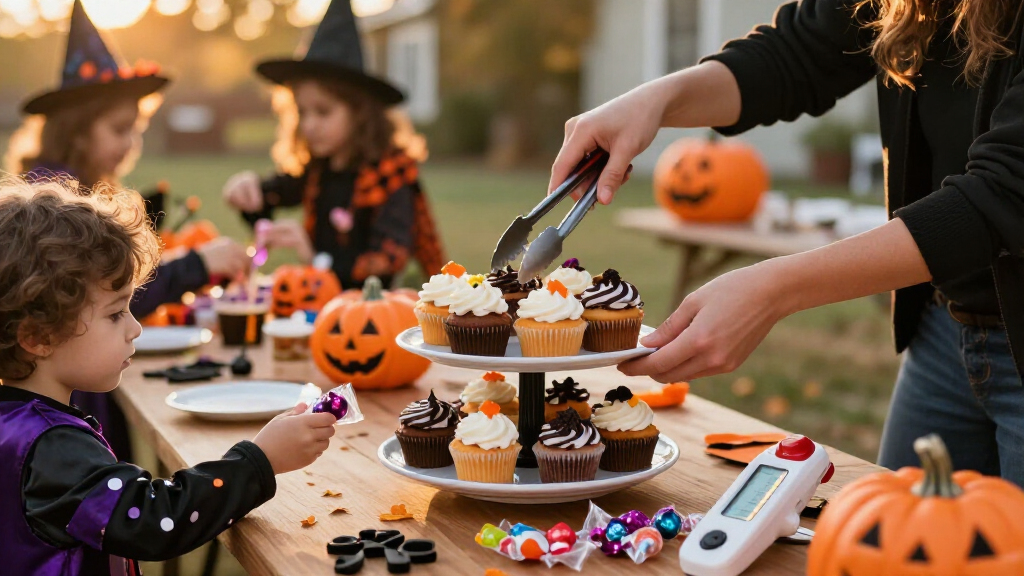
For parties, hosts should serve pasteurized cider and juices, keep perishable foods cold and avoid leaving them at room temperature for more than two hours—or one hour when temperatures are above 90 degrees Fahrenheit. The guidance also calls for separating raw meat, poultry and seafood from ready-to-eat food, washing hands and preparation surfaces, cooking foods to safe internal temperatures with a thermometer, and asking guests about allergies.
Common Risks at Halloween Gatherings
The guidance shifts attention from a familiar but rare fear—strangers tampering with candy—to risks families and hosts are more likely to encounter. Allergic reactions, choking and foodborne illness can arise from ordinary treats and party food, making label checks and safe preparation relevant to many celebrations.
Temperature control matters because perishable foods left out too long can become unsafe. Hosts also need to account for guests with food allergies: asking in advance, checking ingredient labels and keeping allergen-containing dishes separate can help guests make informed choices. For households seeking an option for children who cannot safely eat some or all candy, the Teal Pumpkin Project promotes offering non-food items.
Halloween candy also poses a risk to pets. The report says chocolate contains theobromine and caffeine, which are toxic to dogs and cats, while sugar-free candy and gum may contain xylitol, which can cause a dangerous drop in blood sugar and potentially fatal liver damage in dogs. Keeping bags and bowls out of reach can prevent accidental ingestion.
Products Worth Considering

Vitamix 5200 Professional-Grade Blender, 64 oz. Container, Black

Cuisinart 14-Cup Food Processor with 720-Watt Motor, Stainless Steel (DFP-14BCNY)

Instant Pot InstantChill Ice Cream Maker with Rolled Ice Cream Cold Plate, 2-Pint
As an affiliate, we earn on qualifying purchases.
Tampering Fears and the Evidence
Food Safety News reports that sociologist Joel Best of the University of Delaware has studied claims of Halloween candy tampering for decades. His research found no verified case of a child killed or seriously injured by a stranger deliberately contaminating a treat collected while trick-or-treating, according to the report. Some reported incidents involved hoaxes, accidents or causes that were incorrectly attributed.
The report distinguishes those claims from a 1974 Texas case in which 8-year-old Timothy O’Bryan died after eating a cyanide-laced Giant Pixy Stix. His father, Ronald Clark O’Bryan, was convicted of murder in a scheme motivated by life-insurance money and was executed in 1984. The report says the father had distributed poisoned candy to other children, but none of them ate it. The case helped fuel public fear, but it was not an instance of a stranger targeting trick-or-treaters.
Food Safety News also notes that the 1982 cyanide murders involving Tylenol capsules in the Chicago area led to federal action on tamper-resistant packaging and helped spur the Federal Anti-Tampering Act of 1983. That law addressed consumer-product tampering broadly, not Halloween candy specifically.
“Parents should wait until children get home before inspecting their Halloween candy.”
— U.S. Food and Drug Administration, as cited by Food Safety News
What Candy Checks Can Establish
Visual inspection can identify wrappers that appear damaged or suspicious, but the report does not say that checking a package can establish whether its contents are safe in every case. It advises discarding suspicious items and reporting credible concerns to law enforcement. It does not provide a new tally of tampering reports or set out a method for testing candy at home.
The report describes stranger tampering as exceedingly rare and summarizes Best’s research, but that finding does not rule out every possible incident. The likelihood of a food-allergy reaction or illness also depends on individual circumstances, ingredients and how food is handled. Hosts should ask guests about allergies rather than assume that a dish is safe for everyone.
Practical Steps Before Halloween
Before trick-or-treating, families can plan to inspect candy at home, review labels and set aside items that are unsafe for a child’s age or allergies. Households participating in the Teal Pumpkin Project, an initiative from Food Allergy Research & Education, can offer stickers, glow sticks, pencils or small toys; a teal pumpkin displayed outside signals that non-food treats are available.
Party hosts can check food temperatures, keep cold dishes refrigerated until serving and put leftovers away promptly. Wash apples thoroughly before an apple-bobbing game, or choose an alternative that does not involve participants putting their mouths into shared water. Keep candy away from pets; if an animal eats chocolate, xylitol or another potentially toxic food, contact a veterinarian or animal poison control service immediately. The report lists the ASPCA Animal Poison Control Center at 888-426-4435.
Key Questions
Should parents inspect Halloween candy before trick-or-treating ends?
The FDA recommendation cited by Food Safety News is to wait until children get home, then check for damaged wrappers, pinholes, discoloration or other suspicious signs. Discard anything that appears tampered with.Are poisoned treats from strangers a common Halloween danger?
Food Safety News describes deliberate contamination by strangers as exceedingly rare. It reports that sociologist Joel Best’s research found no verified case of a child killed or seriously injured by a stranger deliberately contaminating a treat collected while trick-or-treating.How long can party food sit out?
The report advises keeping perishable food at room temperature for no more than two hours, or one hour when the temperature is above 90 degrees Fahrenheit. Keep cold foods cold and hot foods hot.What should hosts do about guests’ food allergies?
Ask guests about allergies, read ingredient labels and keep foods containing allergens separate from other dishes. Families can also look for Teal Pumpkin Project households offering non-food treats.What if a pet eats Halloween candy?
Chocolate and xylitol-containing sugar-free candy can be dangerous to pets. The report advises contacting a veterinarian or animal poison control service immediately if a pet eats a potentially toxic food.Source: rss