
To tackle grease, smoke, and flavor transfer in your countertop oven, start by cleaning spills immediately and regularly wiping interior surfaces with mild cleaners or baking soda. For stubborn stains and smoke residue, use specialized oven cleaners or DIY solutions like vinegar and baking soda, and guarantee good ventilation to eliminate odors. Keeping up with regular maintenance prevents buildup and transfer issues. If you want to discover effective techniques, continue exploring proven tips to keep your oven pristine.
Key Takeaways
- Regularly clean interior surfaces, racks, and door glass to prevent grease buildup and flavor transfer.
- Use baking soda or specialized oven cleaners to remove stubborn grease and smoke stains effectively.
- Maintain proper ventilation by cleaning vents and using odor absorbers like baking soda or lemon slices.
- Deep clean with non-abrasive tools and soak removable parts to eliminate persistent grease and smoke residue.
- Perform routine maintenance, including seal checks and prompt repairs, to prevent odors and ensure optimal oven performance.
Understand Common Challenges: Grease, Smoke, and Flavor Transfer
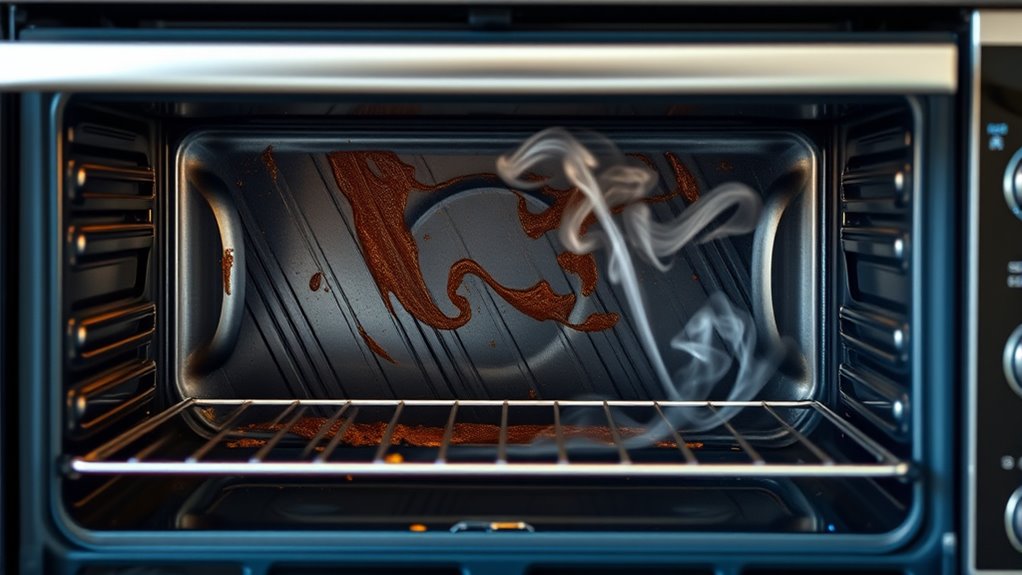
Understanding the common challenges of countertop oven cleaning is essential for maintaining a spotless appliance. Oil splatters are a frequent issue, often spreading across surfaces and making cleanup difficult if not addressed promptly. These splatters can bake onto the oven walls and racks, causing stubborn stains that transfer flavors and odors. Using protective mats can help contain spills and make cleanup easier, especially during high-heat cooking. Proper spoil containment techniques are critical to prevent messes from spreading and becoming more difficult to clean. Recognizing these challenges helps you develop effective cleaning strategies, like using protective mats and promptly wiping up splatters, to keep your countertop oven in top condition and prevent lasting issues. Implementing smart cleaning tools can further streamline maintenance and prevent buildup over time. Additionally, choosing appropriate cleaning agents can help break down stubborn grease and residue more effectively. Regular maintenance and effective spill management are key to preventing buildup and prolonging the lifespan of your appliance.
Prepare Your Countertop Oven for a Deep Clean
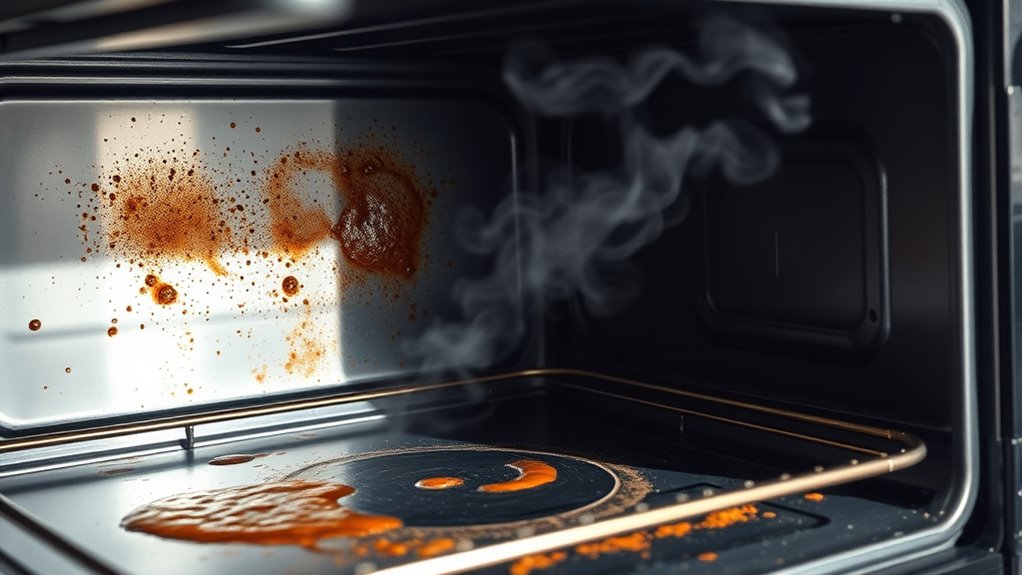
Before you plunge into a deep clean, it’s important to prepare your countertop oven to make the process smoother and more effective. Start by unplugging the appliance and removing all oven accessories, such as racks, trays, and crumb trays. These parts should be cleaned separately to ensure a thorough job. Gather your cleaning tools, including mild detergents, scrubbing brushes, microfiber cloths, and non-abrasive sponges. Wipe down the interior surfaces to loosen grease and debris, and set aside any removable accessories for soaking. Clearing out crumbs and loose grime now prevents cross-contamination during cleaning. Additionally, understanding how to maintain your appliance can help prevent future buildup and extend its lifespan. Regular seasonal checklists for cleaning and maintenance can also keep your oven functioning efficiently over time. Incorporating proper cleaning techniques can make a significant difference in removing stubborn grease and smoke stains. Being aware of common oven issues can help you address problems early and avoid costly repairs. To achieve optimal results, it’s helpful to familiarize yourself with effective cleaning methods tailored for countertop ovens. With everything prepped, you’ll be ready to tackle stubborn stains and grease buildup more efficiently, ensuring your oven is spotless and ready for its next use.
Remove Grease Buildup and Stubborn Stains Effectively
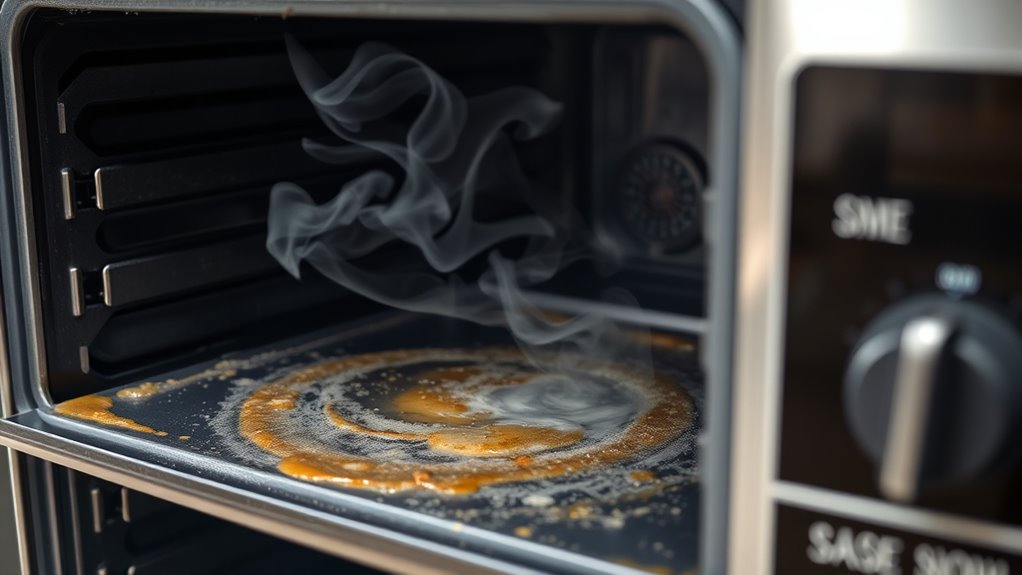
To effectively remove grease buildup and stubborn stains, start by applying a specialized oven cleaner or a paste made from baking soda and water directly onto the affected areas. Let it sit for at least 15 minutes to loosen grime. Then, follow these steps:
Apply a baking soda paste and let sit to loosen grease and stains effectively.
- Use a non-abrasive scrub brush or sponge to gently scrub away residue.
- Wipe clean with a damp cloth, ensuring no cleaner remains.
- For tougher stains, reapply the paste and repeat the process.
- Finish by drying thoroughly to prevent new buildup.
- Regular cleaning can also prevent grease smoke and flavor transfer issues in your countertop oven. Incorporating proper ventilation during cooking can further reduce smoke and residual odors.
- Choosing eco-friendly cleaning products not only helps protect the environment but also supports sustainable cleaning practices, which can extend the lifespan of your appliance. Regular, gentle cleaning keeps your countertop oven sparkling and functioning efficiently.
- Maintaining a clean oven also aligns with connected home fitness principles by promoting a healthier environment, similar to how smart fitness tech encourages healthier habits overall.
Clean Smoke Residue and Eliminate Odor Safely
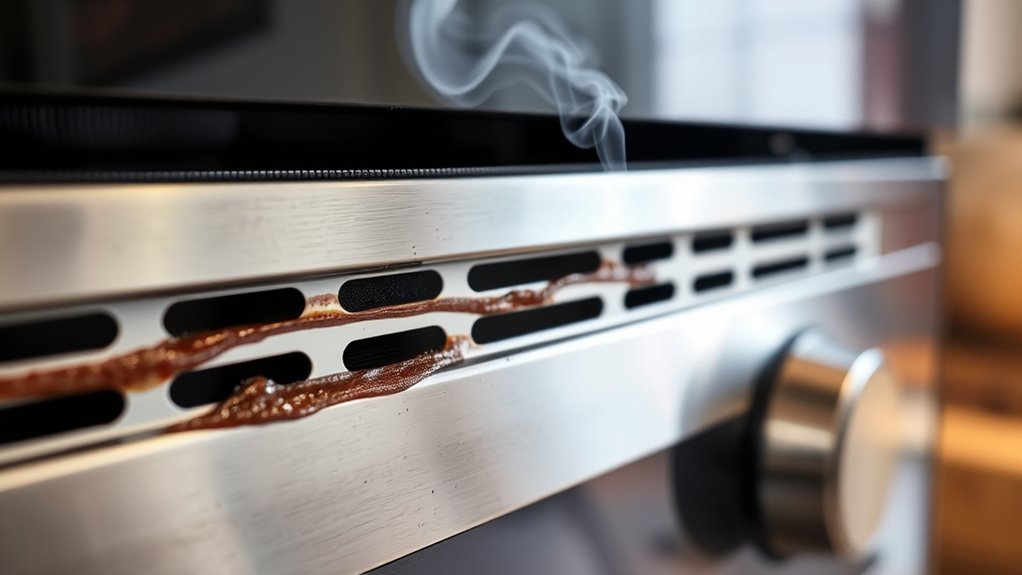
Smoke residue can linger in your countertop oven, leaving an unpleasant smell and affecting food flavor. To clean this safely, try DIY solutions like a mixture of baking soda and water or vinegar and water. Use cleaning tools such as a soft sponge or a microfiber cloth to wipe down interior surfaces gently. For stubborn smoke stains, create a paste of baking soda and water, apply it to affected areas, and let it sit for 15 minutes before scrubbing. Rinse with a damp cloth to remove residue. To eliminate odors, leave an open box of baking soda inside the oven overnight or run a short cycle with lemon slices. These simple cleaning tools and DIY solutions help remove smoke residue effectively without harsh chemicals. Additionally, ensuring proper air circulation during and after cleaning can help prevent lingering odors and improve indoor air quality. Proper ventilation practices are essential for maintaining a fresh-smelling oven and reducing residual smoke smells. Regular cleaning and good kitchen hygiene can also prevent buildup and keep your oven smelling fresh. Incorporating proper ventilation into your routine can significantly enhance the effectiveness of your cleaning efforts and reduce odor retention in your kitchen appliances.
Prevent Grease, Smoke, and Flavor Transfer in Your Oven

Properly preparing your oven can considerably reduce the transfer of grease, smoke, and flavors between dishes. Start by maintaining the oven seal; a well-sealed door prevents odors and grease from escaping. Regularly check and replace oven seals when worn. Next, keep your ventilation system in top shape by cleaning vents and filters to ensure proper airflow, which minimizes smoke buildup. Additionally, always use oven liners or foil to catch drips and splatters, preventing grease from seeping into surfaces. Proper oven care extends the lifespan of your appliance and ensures safer, healthier cooking. Regularly inspecting and maintaining the oven’s gasket and seal can help prevent leaks and ensure an airtight environment. Proper ventilation system upkeep not only reduces smoke but also improves air quality in your kitchen. Ultimately, avoid overcrowding your oven, which can trap smoke and grease. By focusing on oven seal maintenance and ventilation system upkeep, you create a cleaner cooking environment that preserves flavors and reduces cross-contamination.
Maintain Your Countertop Oven Regularly for a Spotless Kitchen
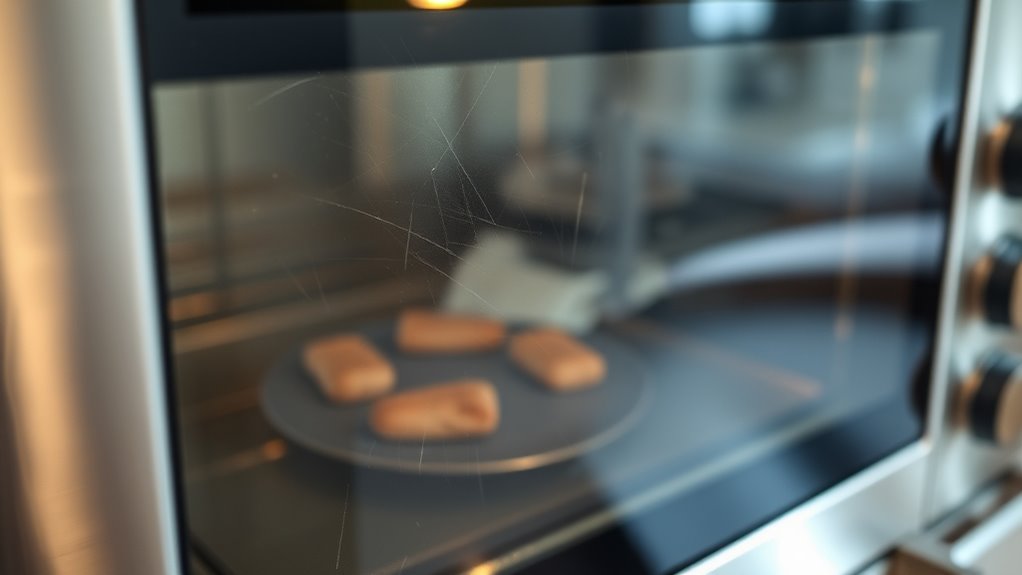
To keep your countertop oven spotless, establish a regular cleaning routine that prevents buildup. Proper surface maintenance, like wiping after each use, helps preserve its condition and appearance. Additionally, using trustworthy cleaning products can effectively remove grease and grime without damaging the surface. Regular cleaning not only maintains the oven’s appearance but also prevents grease smoke from accumulating and causing odors or smoke during future uses. Occasionally, use deep cleaning techniques to thoroughly remove stubborn grime and keep your oven performing at its best.
Regular Cleaning Routine
Regular cleaning is essential to keep your countertop oven functioning efficiently and looking its best. Consistent upkeep prevents grease buildup, reduces smoke, and minimizes flavor transfer. To guarantee your oven stays spotless, follow a simple routine:
- Remove oven accessories and wash them with mild cleaning supplies.
- Wipe down interior surfaces with a damp cloth and a gentle cleaner.
- Clean the door glass to maintain clear visibility.
- Check and clean the heating elements if accessible.
Using the right cleaning supplies and regularly maintaining oven accessories prevents residue buildup and prolongs the appliance’s lifespan. Set a weekly schedule to keep your countertop oven fresh, safe, and ready for use. A regular routine saves time and keeps your kitchen cleaner.
Proper Surface Maintenance
Maintaining the surface of your countertop oven is key to keeping it looking and functioning like new. Use the right cleaning tools, such as soft cloths or non-abrasive sponges, to prevent scratches and surface damage. Regular wiping with a damp cloth helps remove grease and food splatters, protecting the surface from buildup. Consider applying a light layer of surface protection, like a specialized oven cleaner or a gentle sealant, to keep stains at bay and ease future cleaning. Avoid harsh chemicals that can degrade the surface over time. By staying consistent with these maintenance steps, you’ll prolong your oven’s lifespan and keep it looking pristine, ensuring your cooking area remains clean and inviting. Proper surface care makes all the difference in your kitchen’s cleanliness.
Deep Cleaning Techniques
Deep cleaning your countertop oven guarantees it stays in top condition and performs efficiently. To achieve this, use the right cleaning solutions and follow safety precautions. First, unplug the appliance and wear gloves to protect your skin. Second, remove all removable parts and soak them in warm, soapy water. Third, create a mixture of baking soda and water for tough stains, applying it with a non-abrasive sponge. Fourth, wipe down the interior with a damp cloth and a gentle cleaning solution, avoiding harsh chemicals. Always verify the oven is completely dry before reassembling and plugging it back in. Regular deep cleaning prevents grease buildup and flavor transfer, keeping your kitchen spotless and safe.
Know When to Call Professionals or Consider Replacement
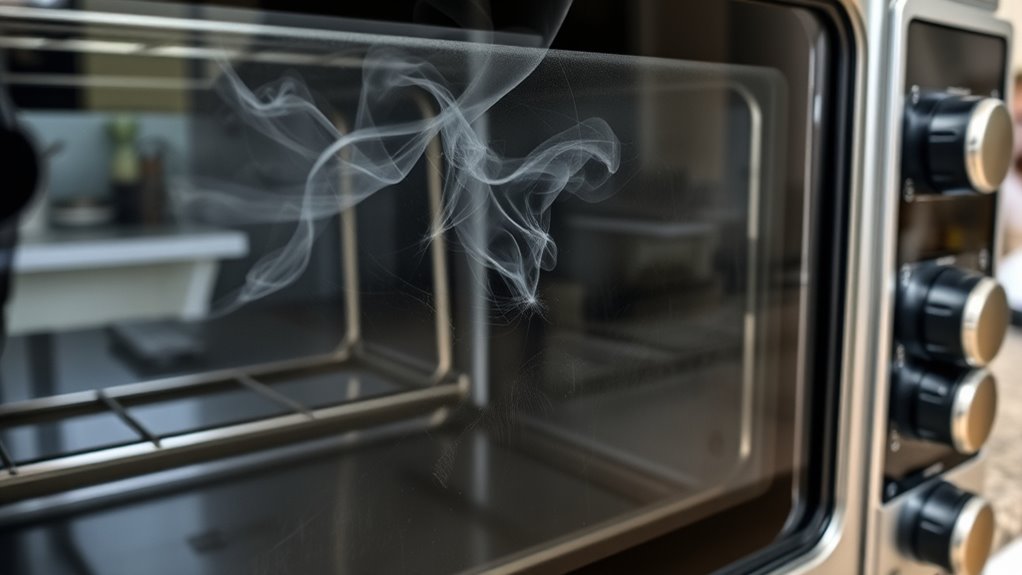
Sometimes, despite your best efforts to clean your countertop oven, issues persist or worsen over time. If you notice persistent smoke, strange odors, or uneven heating, it might be time to seek professional repair. Ignoring these signs can lead to safety risks or further damage. Consider oven replacement if repairs become too costly or ineffective, especially if the appliance is old or heavily degraded.
| Issue | What to Do |
|---|---|
| Persistent smoke or odors | Call a professional repair technician |
| Uneven cooking | Get an expert diagnosis |
| Frequent breakdowns | Consider replacing the oven |
| Cost of repairs | Weigh against the price of a new oven |
Knowing when to call professionals or replace your oven ensures safety and efficiency.
Frequently Asked Questions
What Are the Safest Cleaning Products for My Countertop Oven?
You should use safe cleaning products like mild dish soap, baking soda, or vinegar to clean your countertop oven. Avoid chemical cleaners and abrasive scrubbers, as they can damage surfaces and leave harmful residues. Instead, apply a mixture of baking soda and water for stubborn spots, and use a soft cloth or sponge. This approach keeps your oven clean without risking grease smoke or flavor transfer.
How Often Should I Deep Clean My Countertop Oven?
Think of your countertop oven as a garden that needs regular tending. You should deep clean it every 3 to 6 months to keep it in top shape. Following a consistent cleaning schedule prevents grease buildup and smoke, protecting your oven from future issues. Regular oven maintenance isn’t just about cleanliness; it’s about ensuring your cooking stays flavorful and safe, so your culinary garden stays lush and inviting.
Can I Use Natural Remedies to Remove Stubborn Stains?
Yes, you can use natural remedies to remove stubborn stains from your countertop oven. Baking soda and white vinegar are effective; make a paste with baking soda and water, then apply it to stains and let it sit before scrubbing gently. Alternatively, spray vinegar onto the stains, let it sit for a few minutes, then wipe clean. These natural solutions are safe, affordable, and environmentally friendly for tackling stubborn stains.
Are There Specific Techniques to Prevent Smoke During Cooking?
To prevent smoke during cooking, you should open windows, turn on exhaust fans, and guarantee proper ventilation tips are followed. Use cooking techniques like lowering heat, avoiding overcrowding the oven, and covering greasy foods to minimize smoke. You can also place a foil tray beneath your food to catch drips, helping keep smoke levels low. By combining good ventilation tips with mindful cooking techniques, you keep your countertop oven cleaner and smoke-free.
What Signs Indicate My Oven Needs Professional Servicing or Replacement?
If your oven emits persistent smoke, strange odors, or produces uneven cooking results, it’s time for professional servicing or replacement. These signs suggest your oven needs better appliance maintenance to prolong its lifespan. Don’t ignore these issues, as they can indicate failing components or buildup that affect performance. Regular check-ups can help you catch problems early and ensure your oven operates safely and efficiently for years to come.
Conclusion
Regular cleaning can cut grease buildup by up to 80%, reducing smoke and flavor transfer. When you stay on top of your countertop oven’s maintenance, you’ll enjoy fresher-tasting food and a healthier kitchen environment. Remember, a well-maintained oven not only performs better but also lasts longer. So, don’t wait until stains or odors become stubborn—schedule regular cleanings and keep your kitchen spotless and smelling great!