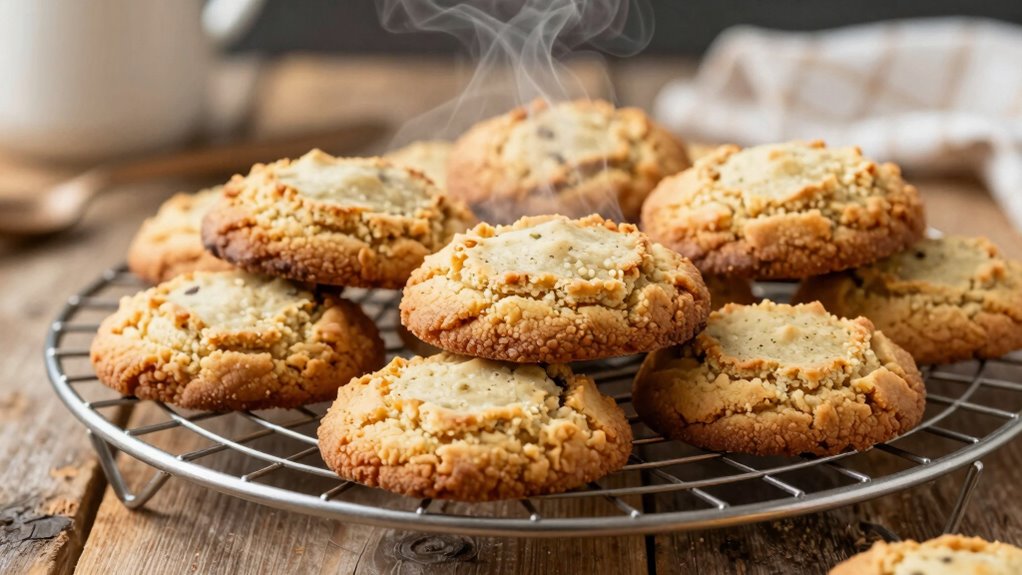

After baking, transfer your cookies to a wire rack to cool completely, ensuring air circulates around each one to prevent sogginess. Avoid handling them immediately and wait until icing or frosting fully sets before stacking or storing, as warm cookies can cause decorations to melt. Using the right ingredients and maintaining a dry, cool environment help improve texture and shape. If you want tips on perfecting your cooling process, keep exploring—more helpful advice is ahead.

Get baking supplies delivered free with Prime
- Fast, free delivery on millions of items
- Prime Video, Amazon Music and more included
- Member-only deals all year
Key Takeaways
- Transfer cookies to a wire rack immediately after baking to promote even cooling and prevent sogginess.
- Ensure cookies are fully cooled and icing is set before handling or storing.
- Avoid stacking warm cookies; store on flat surfaces with parchment paper between layers.
- Use airtight containers once cookies are completely cooled to preserve freshness and decoration.
- Maintain a proper environment with controlled humidity for optimal cooling and storage conditions.

Ever wondered how to cool cookies quickly and effectively? Cooling your cookies properly is essential to achieving the perfect texture and making cookie decorating easier. When you pull freshly baked cookies from the oven, resist the temptation to handle them immediately. Instead, transfer them to a wire rack to prevent moisture from accumulating underneath, which can make your cookies soggy. This allows air to circulate around each cookie, cooling them evenly and helping them set without losing their shape. If you’re short on time, you can gently speed up the process by placing the wire rack in a cool, well-ventilated area, but avoid stacking cookies on top of each other immediately—they might stick or become misshapen. Proper cooling techniques are also essential for maintaining the quality of your baked goods.
Once your cookies are cooled, they are ready for cookie decorating, and proper cooling is key to achieving clean, professional-looking designs. When decorating, if you notice your icing or frosting isn’t setting as quickly as you’d like, it’s often best to wait until the cookies are completely cool. Warm cookies can cause the icing to melt or slide off, ruining your design. Using ingredient substitutions can also influence how quickly your cookies cool and set. For example, replacing some of the butter with shortening can help cookies hold their shape better and cool more uniformly, making them easier to decorate. Similarly, using a different type of flour or adding a touch of cornstarch can improve the texture, helping cookies cool faster and preventing them from becoming too crumbly or dense. Proper cooling techniques are also essential for maintaining the quality of your baked goods. Additionally, maintaining the right baking environment can influence cooling times and outcomes, especially if humidity levels are high.
To prevent your cookies from becoming dry or overly soft, avoid stacking them while they’re still warm, and always store them on a flat surface once cooled. If you’re planning to store decorated cookies, ensure they are fully cooled and the icing has hardened. For longer storage, consider using airtight containers with parchment paper between layers to prevent sticking or smudging. Proper cooling also helps preserve the integrity of your decorations and keeps your cookies fresh longer. By paying attention to these cooling techniques and ingredient substitutions, not only do you improve the texture of your cookies, but you also make the decorating process smoother and more successful. Achieving the right cooling process can significantly impact both the appearance and taste of your cookies. Ultimately, patience during the cooling phase guarantees your cookies look beautiful and taste their best, whether you’re serving them right away or preparing them for a special occasion.
As an affiliate, we earn on qualifying purchases.
Frequently Asked Questions
Can I Speed up the Cooling Process for Cookies?
Yes, you can speed up cooling through rapid cooling methods. To do this, transfer your cookies to a wire rack to maximize heat transfer, allowing air to circulate around them. You might also place the rack in the refrigerator for a few minutes, but avoid leaving them too long to prevent overcooling. These techniques help facilitate heat transfer away from the cookies, cooling them faster without compromising texture.
Is It Better to Cool Cookies on a Wire Rack or Baking Sheet?
It’s better to cool cookies on cooling racks rather than baking sheets. Cooling racks allow air to circulate around the cookies, preventing them from becoming soggy and helping them set properly. If you use baking sheets, moisture can get trapped, which affects texture. Place the cookies directly on the wire racks to cool evenly, preserving their crispness and flavor. This method guarantees your cookies stay perfect for storage or immediate enjoyment.
How Does Cooling Affect Cookie Flavor Development?
Cooling your cookies allows flavor maturation and aroma development to occur fully. As they cool, the flavors deepen, and the aromas become more prominent, enhancing your overall experience. When you let cookies rest after baking, the ingredients meld together, creating a richer taste. Skipping this step can result in a less complex flavor profile. So, give your cookies time to cool properly, and you’ll notice a more satisfying, well-rounded flavor.
Should Cookies Be Cooled Before Storing or Eating?
You should definitely cool your cookies before storing or eating them. Cooling helps preserve their texture and prevents sogginess, ensuring they stay fresh longer. If you skip this step, warm cookies can create condensation in storage containers, leading to soggy cookies. So, let them cool completely on a wire rack. This way, you’ll keep their crunch or chewiness intact and enjoy perfect cookies every time. Don’t rush—patience pays off!
Can Cooling Methods Prevent Cookies From Becoming Soggy?
Cooling methods can help prevent cookies from becoming soggy by preserving their texture. After baking, use glazing techniques like a thin layer of glaze or icing to seal in moisture and maintain crispness. Allow cookies to cool completely on a wire rack, which promotes even cooling and prevents condensation. This approach preserves the intended texture and keeps cookies crisp, rather than soggy, during storage.
airtight cookie storage containers
As an affiliate, we earn on qualifying purchases.
As an affiliate, we earn on qualifying purchases.
Conclusion
Next time you bake cookies, remember that cooling them properly isn’t just about avoiding mess—it surprisingly affects their texture and freshness. You might find it funny how a simple step like cooling can make all the difference, almost like the cookies are giving you a little secret tip. So, take a moment, let them cool completely, and enjoy that perfect bite. Sometimes, the smallest detail can turn good cookies into unforgettable treats.
cookie decorating tools and supplies
As an affiliate, we earn on qualifying purchases.
As an affiliate, we earn on qualifying purchases.
baking parchment paper for cookies
As an affiliate, we earn on qualifying purchases.
As an affiliate, we earn on qualifying purchases.
Halloween Picks
halloween
As an affiliate, we earn on qualifying purchases.