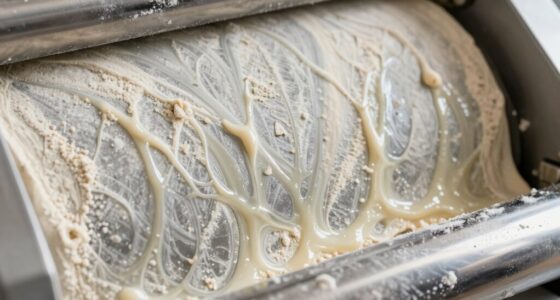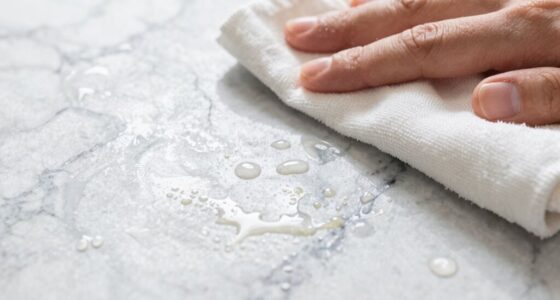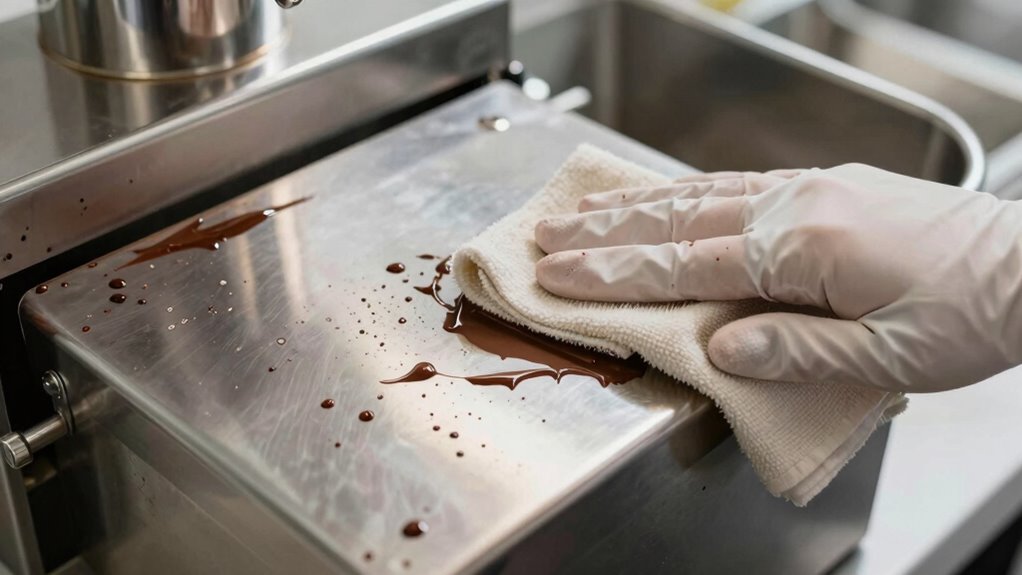

To avoid water contamination when cleaning chocolate equipment, use water-free methods like dry brushes, compressed air, and steam cleaning, which sanitize without introducing moisture. Carefully disassemble equipment, inspect for residues, and follow manufacturer guidelines to guarantee thorough cleaning. Regular maintenance, staff training in waterless techniques, and proper inspection routines are essential for maintaining hygiene and preventing spoilage. Keep these practices in mind, and you’ll find you can keep your equipment safely clean and free of water-related risks.
Key Takeaways
- Use water-free cleaning methods like dry brushes, compressed air, and steam cleaning to prevent water contamination.
- Disassemble equipment carefully following manufacturer instructions, supporting heavy parts and disconnecting power before cleaning.
- Select and apply food-grade solvents and degreasers appropriately, ensuring thorough rinsing to avoid chemical residues.
- Implement a cleaning sequence from least to most contaminated areas, inspecting for residues regularly to prevent cross-contamination.
- Train staff on waterless cleaning techniques through hands-on workshops and visual guides to maintain hygiene standards.
What Are the Risks of Water Contamination in Chocolate Production?

Water contamination during chocolate production can lead to serious safety and quality issues. When water safety isn’t maintained, harmful bacteria, mold, or foreign particles can seep into your products, risking consumer health. Contamination prevention becomes vital to avoid spoilage, off-flavors, and spoilage that compromise your brand’s reputation. Contaminated water can introduce unwanted microbes or chemicals that jeopardize the entire production line. If not properly managed, waterborne pathogens can cause product recalls or pose health hazards. Ensuring clean, safe water sources and regular testing helps protect your chocolate from contamination. Prioritizing water safety practices helps minimize risks and uphold high-quality standards, keeping your products safe for consumers and your reputation intact. Proper water management is essential to prevent contamination, and implementing safety protocols can help maintain water purity throughout the process. Additionally, incorporating water quality testing into your routine can identify potential issues before they reach the final product. Regular staff training on contamination risks further reinforces the importance of water safety measures across your team. Staying vigilant about water source management ensures ongoing protection against contamination threats.
How Do You Choose the Best Cleaning Agents for Chocolate Equipment?
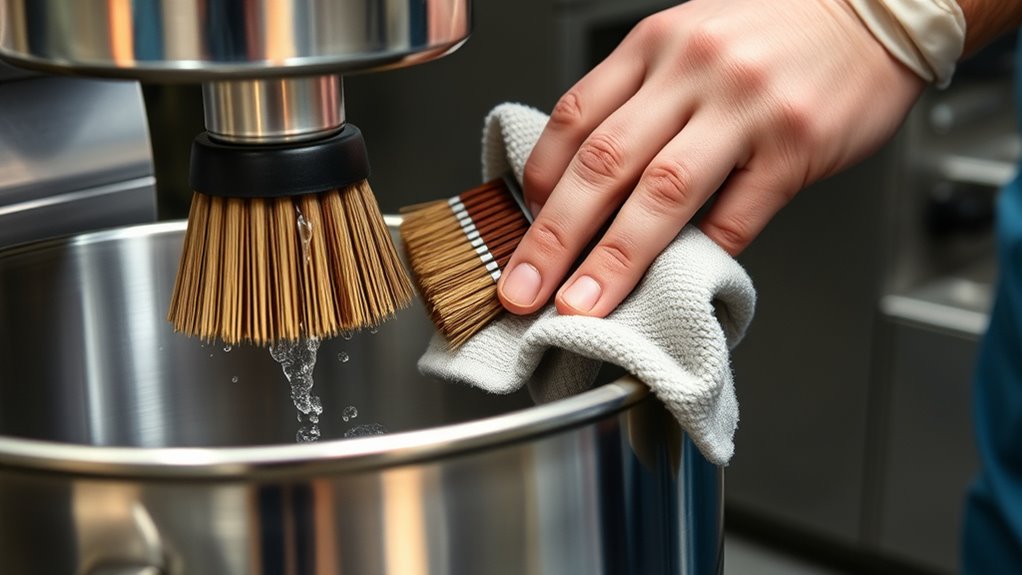
Choosing the right cleaning agents for your chocolate equipment is essential to maintaining product quality and guaranteeing safety. You should select cleaning agents that align with your cleaning schedules and effectively target residues without damaging equipment surfaces. Look for products specifically designed for food processing equipment and approved for use in chocolate production. Consider their ability to promote thorough equipment sterilization while preventing water contamination, especially in sensitive components. Avoid harsh chemicals that could leave residues or compromise equipment integrity. Always follow manufacturer instructions and industry standards to ensure superior cleaning results. Regular evaluation of cleaning agents helps identify the best options for your facility, ensuring consistent hygiene, compliance, and the longevity of your equipment. Additionally, proper cleaning techniques can significantly enhance the effectiveness of your chosen agents and prevent water contamination, especially when combined with appropriate sanitizing practices. Incorporating effective drying procedures can further minimize water retention and contamination risks, safeguarding your chocolate production process. Maintaining proper equipment maintenance routines also plays a vital role in preventing water-related issues and ensuring ongoing cleanliness.
How Can You Use Dry Cleaning Techniques on Sensitive Components?
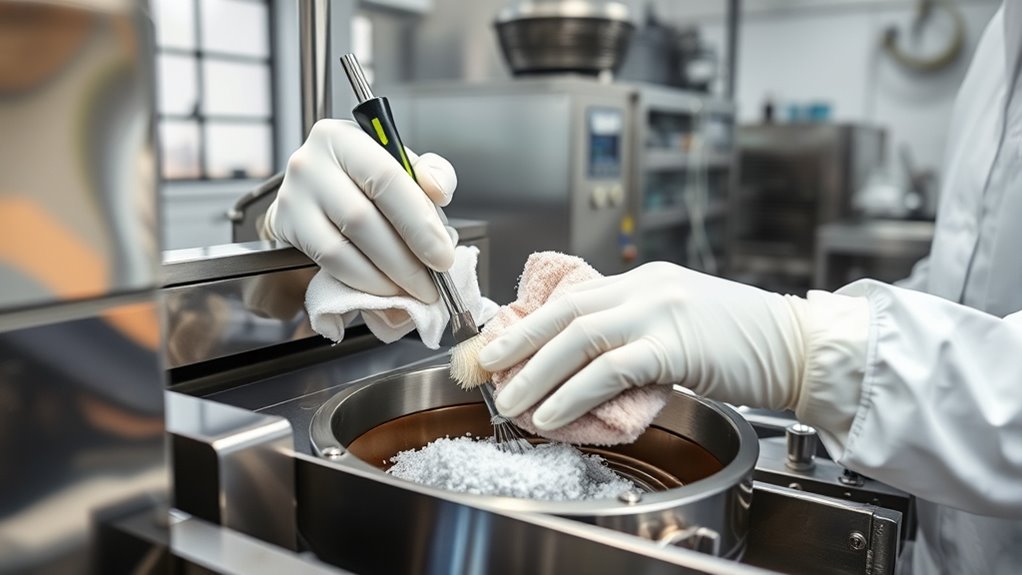
To clean sensitive components without damage, start by using compressed air to blow away loose debris gently. Then, employ dry brushes to remove stubborn residue without introducing liquids. Finish with solvent-free wipes to carefully clean surfaces while avoiding any risk of corrosion or contamination. Employing these dry cleaning methods helps prevent water-related issues and preserves the integrity of delicate parts especially in modern toilet systems. Additionally, understanding water contamination risks is crucial to ensure that cleaning techniques do not inadvertently introduce moisture that could compromise the equipment’s safety and performance. Being aware of preventing water intrusion can further safeguard against unintended moisture exposure during cleaning procedures, especially when working with water-sensitive components. Utilizing specialized cleaning tools designed for sensitive equipment can also enhance safety and effectiveness during maintenance.
Use Compressed Air
When cleaning sensitive components of chocolate equipment, using compressed air is an effective dry cleaning method that minimizes risk. Compressed air quickly removes dust, crumbs, and loose debris without introducing moisture that could cause water contamination. To guarantee proper equipment maintenance, direct a gentle, focused stream of compressed air at hard-to-reach areas, avoiding excessive force that might damage delicate parts. Keep the nozzle a short distance from the surface to maximize cleaning efficiency without causing damage. Always use clean, dry compressed air to prevent introducing contaminants. This technique helps maintain hygiene standards while preserving sensitive components, reducing downtime and the need for water-based cleaning. Incorporating compressed air into your routine enhances equipment longevity and ensures ideal performance. Additionally, using energy-efficient compressed air systems can further reduce environmental impact and operational costs.
Employ Dry Brushes
Dry brushes are a highly effective tool for cleaning sensitive components of chocolate equipment without risking water damage or contamination. By employing dry brushing, you remove chocolate residue, dust, and debris that can compromise equipment maintenance. This method is ideal for delicate parts like sensors, seals, and electrical components, where moisture could cause malfunctions. Use a stiff-bristled brush for stubborn spots and a softer brush for more delicate surfaces. Be gentle but thorough, ensuring you reach into crevices and hard-to-access areas. Regular dry brushing helps maintain peak hygiene and prolongs equipment lifespan. It’s a simple, water-free cleaning technique that minimizes the risk of contamination while keeping your chocolate equipment in top condition.
Apply Solvent-Free Wipes
Applying solvent-free wipes offers an effective way to clean sensitive components without introducing moisture or chemicals that could cause damage. These wipes enable dry cleaning, which is ideal for delicate parts prone to corrosion or water damage. To maximize effectiveness, choose high-quality solvent free wipes designed for industrial cleaning. Use gentle, circular motions to remove dust, grease, or debris without applying excessive pressure. Keep in mind the following:
| Step | Action | Tip |
|---|---|---|
| Select wipes | Choose appropriate solvent free wipes | Guarantee compatibility |
| Wipe surface | Gently clean with dry cloths or wipes | Avoid excessive scrubbing |
| Focus areas | Pay attention to crevices and joints | Use smaller wipes |
| Finish | Inspect for residue or debris | Repeat if necessary |
This approach ensures thorough cleaning while protecting sensitive components from water contamination.
Is Steam Cleaning a Water-Free Option for Chocolate Equipment?
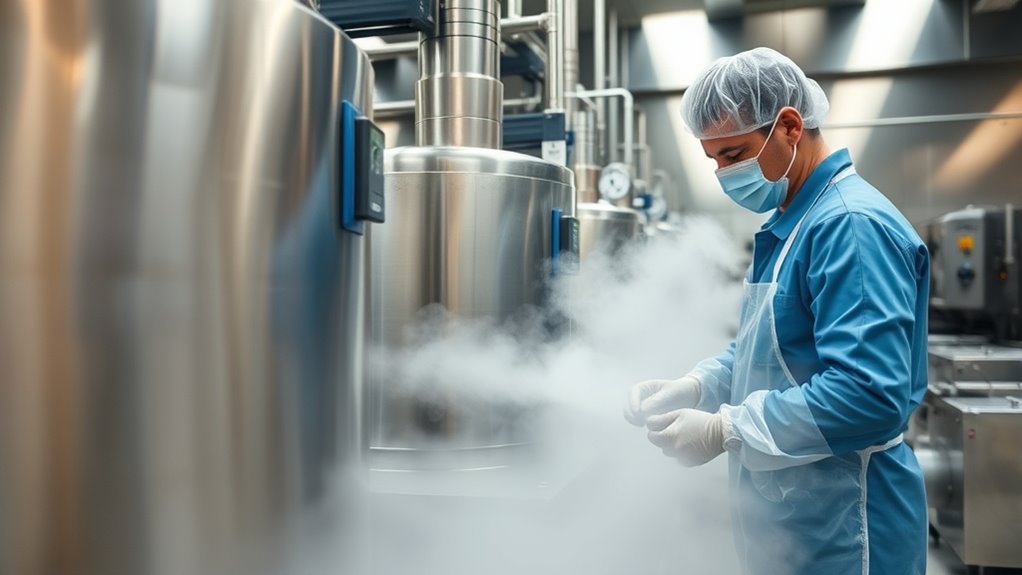
Steam cleaning can be a viable water-free option for chocolate equipment, but it’s important to understand how it works. Unlike traditional cleaning methods, steam cleaning uses high-temperature vapor to sanitize surfaces without relying on large amounts of water. This makes it an effective water-free option, reducing the risk of water contamination in your equipment. The process quickly loosens and removes residues, grease, and bacteria, leaving surfaces clean and sanitized. Additionally, modern survival tools can assist in ensuring thorough drying after steam cleaning to prevent moisture buildup. Proper equipment compatibility is essential to avoid damage during steam cleaning, and it’s vital to ensure equipment is suitable for steam cleaning and that all components are properly dried afterward to prevent moisture buildup. While steam cleaning minimizes water use, it’s not entirely water-free, but it’s a cleaner alternative that can help maintain hygiene standards without introducing excess water. Incorporating appropriate drying techniques can further enhance the effectiveness of the cleaning process and prevent potential issues caused by residual moisture. Using smart home automation devices can also optimize the drying process by scheduling and monitoring dehumidification or airflow. Additionally, understanding the water contamination risks involved in cleaning methods helps ensure you select the safest option for your equipment.
How Do You Properly Disassemble and Clean Equipment Manually?

To properly disassemble equipment, follow safe procedures to avoid damage or injury. Make sure you remove all parts carefully and keep track of each piece. Then, use effective cleaning techniques to guarantee every component is thoroughly sanitized. Incorporating maintenance best practices can also help maintain your equipment’s aesthetic and functionality over time. Additionally, understanding heat distribution and material properties can help prevent damage during cleaning or reassembly. Monitoring market trends can also inform your approach to equipment maintenance by highlighting the latest techniques and tools in the industry. Being aware of proper handling procedures ensures safety and extends the lifespan of your equipment.
Safe Disassembly Procedures
Before disassembling chocolate equipment, it’s essential to follow a systematic approach to guarantee safety and prevent damage. Start by reviewing the manufacturer’s instructions to understand proper disassembly procedures. Prioritize disassembly safety by wearing appropriate protective gear, such as gloves and eye protection. Handle equipment with care, supporting heavy parts to avoid dropping or damaging them. Disconnect power sources and ensure all moving parts have come to a complete stop before beginning. Label components if necessary, so reassembly is smooth. Use the correct tools to avoid stripping or damaging fasteners. Take your time, and never force parts apart. Proper equipment handling minimizes risks, maintains equipment integrity, and ensures safety throughout the process.
Effective Cleaning Techniques
Proper disassembly and cleaning of chocolate equipment require careful attention to detail. To guarantee thorough cleaning and prevent water contamination, follow a structured approach. First, review your cleaning schedule to determine the appropriate frequency for each piece of equipment. Second, carefully disassemble parts, noting how they fit together for easy reassembly. Third, clean each component with warm water and food-safe detergent, paying special attention to crevices. Fourth, after cleaning, inspect and calibrate your equipment to guarantee proper functioning before reuse. Regularly updating your cleaning schedules and verifying equipment calibration help maintain hygiene standards. This systematic process minimizes water contamination risks and keeps your equipment in excellent condition for high-quality chocolate production.
When Should You Use Food-Grade Solvents and Degreasers Safely?

Using food-grade solvents and degreasers is essential only when cleaning equipment that directly contacts chocolate or other edible products. You should use these products carefully to prevent any residual chemicals from contaminating your products. Food grade solvents are specially formulated to be safe for food contact surfaces, so they’re suitable for removing heavy grease, oils, and residues that water alone can’t eliminate. Degreasing agents help break down stubborn fats and residues, ensuring thorough cleaning. Always follow manufacturer instructions for proper dilution and contact time. Use these substances in well-ventilated areas and wear protective gear to avoid skin or inhalation risks. Remember, only apply food-grade solvents and degreasers when necessary, and always ensure equipment is properly rinsed afterward to prevent any contamination.
How Can You Establish Effective Dry Rinsing Methods?
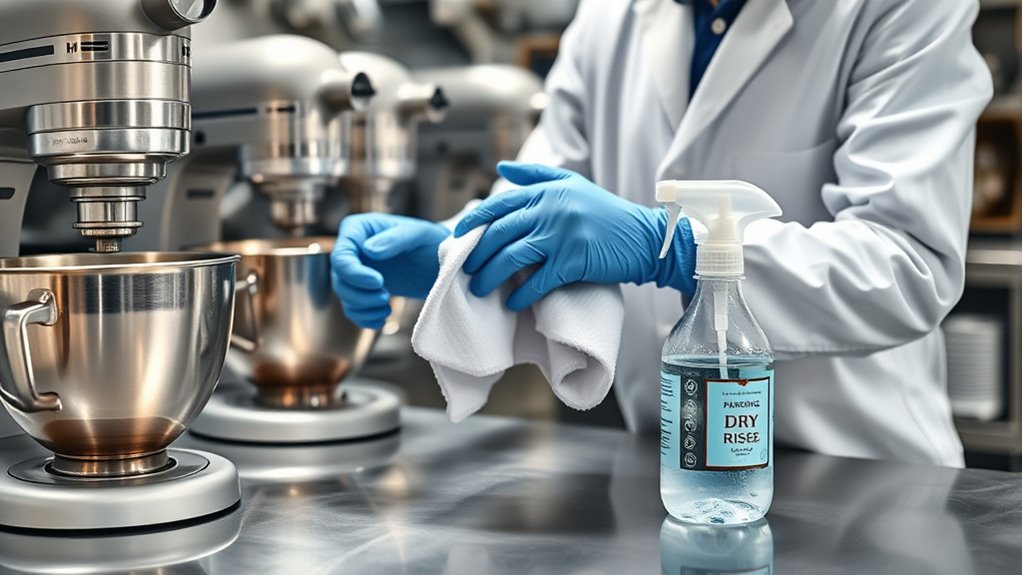
To establish effective dry rinsing methods, you need to choose the right dry products that won’t leave residue or damage your equipment. Next, you should focus on applying proper technique to guarantee thorough cleaning without excessive use. With careful selection and consistent practice, your dry rinsing will become efficient and reliable.
Selecting Appropriate Dry Products
Choosing the right dry products is essential for establishing effective dry rinsing methods on chocolate equipment. The goal is to remove residual chocolate without water, ensuring proper equipment maintenance. To do this, select products that are food-grade, non-abrasive, and absorbent. Consider these options:
- Food-grade dry cleaning powders designed for equipment
- Non-abrasive brushes or pads for gentle scrubbing
- Absorbent materials like cellulose or specialized cloths
- Compressed air for removing loose debris
Using these dry products minimizes water contact, reducing the risk of contamination. Properly selecting and applying them guarantees thorough cleaning, maintains equipment integrity, and supports compliance with food safety standards. Remember, effective dry rinsing depends on choosing the right materials for your cleaning process.
Implementing Proper Technique
Once you’ve selected the appropriate dry cleaning products, applying them correctly is key to effective rinsing. To guarantee equipment safety and prevent contamination, follow a systematic approach. Use gentle, consistent motions to remove residue without damaging surfaces. Avoid excessive force, which can cause scratches or compromise seals. Make sure all surfaces are thoroughly covered to prevent leftover chocolate bits that could harbor bacteria. Regularly inspect and clean tools to avoid transferring contaminants. Maintain a dry environment during rinsing to prevent water intrusion. Proper technique also involves training staff on the importance of contamination prevention, emphasizing that careful handling reduces the risk of water contamination and cross-contamination. Consistent, precise dry rinsing safeguards equipment and ensures a high standard of cleanliness.
How Do You Prevent Cross-Contamination During Cleaning?
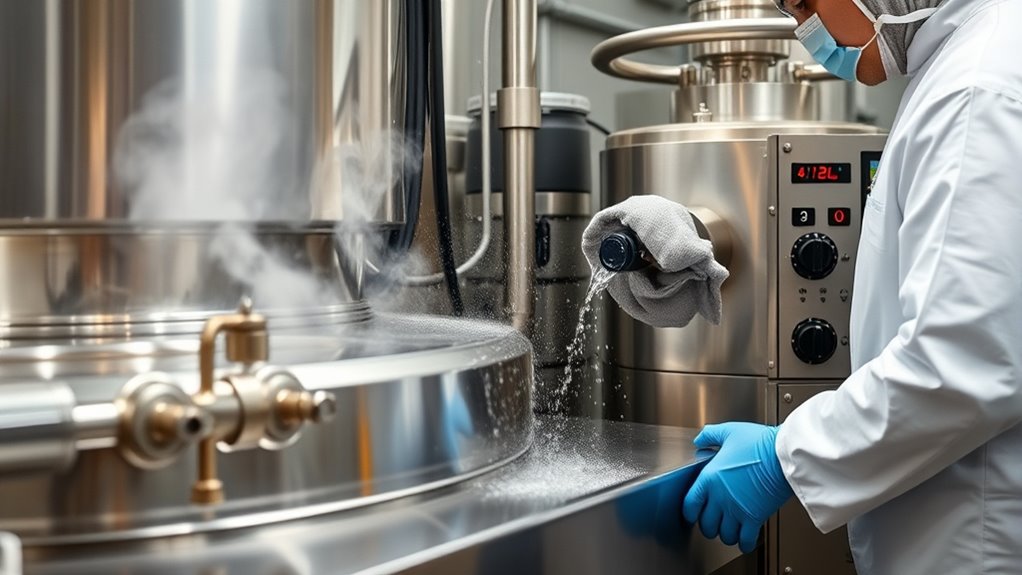
Preventing cross-contamination during cleaning starts with thorough segregation of equipment and tools. This prevents any residual chocolate or water from transferring between surfaces. To ensure effective contamination prevention, follow these steps:
- Use dedicated cleaning tools for different equipment sections to avoid cross-use.
- Adhere strictly to sanitization protocols, ensuring all surfaces are properly disinfected after each cleaning.
- Clean in a logical order, starting from the least contaminated areas and moving to the most contaminated zones.
- Regularly inspect equipment for residues that could harbor contaminants.
What Are the Best Practices for Regular Maintenance and Inspection?

Regular maintenance and inspection are crucial to keep chocolate equipment in peak condition and prevent costly breakdowns. You should regularly check equipment lubrication to guarantee smooth operation and reduce wear. Calibration procedures are essential for maintaining product consistency and safety; verify sensors and measuring devices frequently. Incorporate these best practices into your routine:
| Maintenance Task | Frequency |
|---|---|
| Equipment lubrication | Weekly or as needed |
| Calibration procedures | Monthly or after repairs |
How Can Staff Be Trained in Water-Free Cleaning Techniques?
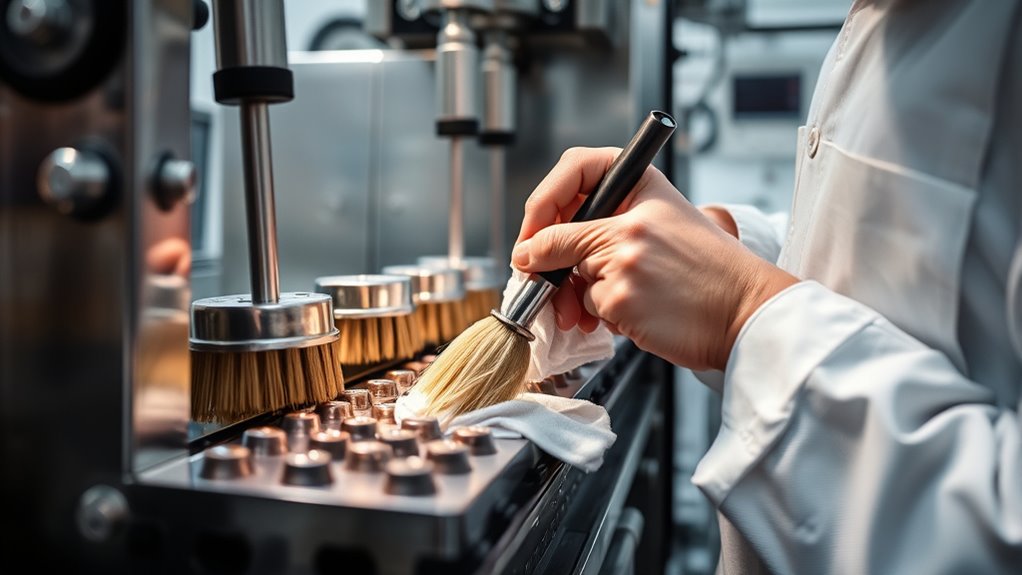
Training staff in water-free cleaning techniques is essential for maintaining hygienic conditions without risking equipment damage or corrosion. To ensure effective learning, focus on practical methods like dry training and hands-on workshops. These approaches help staff understand the nuances of waterless methods and develop confidence in their skills.
Consider these key steps:
- Conduct dry training sessions that explain the principles and benefits of water-free cleaning.
- Organize hands-on workshops where staff practice applying cleaning agents without water.
- Provide visual aids and step-by-step guides to reinforce learning.
- Regularly assess proficiency through practical tests to ensure consistent application.
This approach keeps your team well-trained, minimizes contamination risks, and prolongs equipment lifespan.
Frequently Asked Questions
What Are Common Signs of Water Contamination in Chocolate Equipment?
You’ll notice water contamination in your chocolate equipment through signs like unusual water testing results, indicating impurities. Equipment corrosion or rust spots also signal potential water issues. Additionally, you might see a change in the equipment’s appearance or a strange taste in the chocolate. Regular inspection, water testing, and vigilant monitoring help catch these signs early, preventing product spoilage and ensuring your equipment stays in prime condition.
How Often Should Equipment Be Inspected for Water Residues?
You should conduct equipment inspections for water residues at least weekly to guarantee contamination detection is timely. Regular inspection frequency helps you catch any water buildup early, preventing potential contamination in your chocolate products. By maintaining a consistent schedule, you reduce the risk of water residues going unnoticed, ensuring your equipment stays clean and your products remain safe and high-quality. Consistency in inspections is key to effective contamination prevention.
Can Ultrasonic Cleaning Prevent Water Contamination Effectively?
Ever wondered if ultrasonic cleaning can truly prevent water contamination? It can be highly effective because ultrasonic cleaning uses high-frequency sound waves to remove residues thoroughly, leaving equipment spotless and reducing the risk of water contamination. Unlike traditional methods, ultrasonic cleaning reaches tiny crevices that often trap water and debris. So, yes, it’s a dependable way to guarantee your chocolate equipment stays clean and free from water contamination, enhancing product safety and quality.
What Are Alternative Methods to Water-Based Cleaning for Delicate Parts?
You can consider dry cleaning or solvent-based methods for delicate parts. Dry cleaning uses specialized compounds that remove residues without water, reducing contamination risks. Solvent-based methods, like using alcohol or other food-safe solvents, effectively clean without introducing moisture. These options help you maintain equipment hygiene while preventing water-related issues, especially when dealing with sensitive components that could be damaged or contaminated by water.
How Does Humidity Control Impact Water Contamination Risks?
Did you know that improper humidity levels can increase water contamination risks by up to 30%? Controlling humidity levels is essential because excess moisture can lead to mold growth and bacterial contamination. By maintaining ideal moisture control, you minimize water intrusion and keep your chocolate equipment cleaner and safer. Consistent humidity management ensures a dry environment, reducing contamination risks and preserving product quality effectively.
Conclusion
By adopting water-free cleaning methods, you can substantially reduce the risk of chocolate contamination, ensuring product quality and safety. Did you know that improper cleaning can lead to up to 30% of production downtime due to contamination issues? Staying vigilant with best practices and training your staff in dry cleaning techniques helps maintain equipment integrity and hygiene. Embracing these strategies will keep your chocolate production smooth, safe, and delicious for your customers.