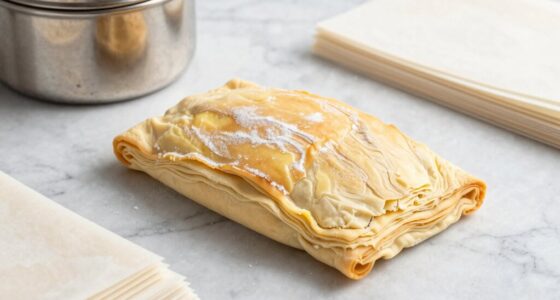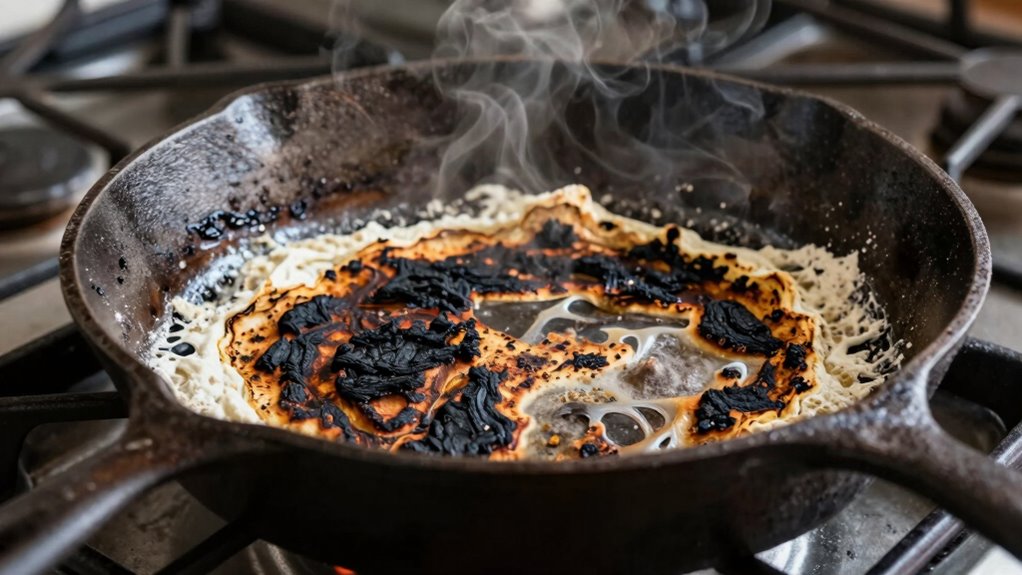

To clean burnt flour from your cast iron without soap, start by heating hot water or steam to soften the residue, then use coarse salt or baking soda as gentle abrasives to lift stuck particles. Vinegar and water soak can help loosen stubborn spots, while boiling water also softens burnt flour. After cleaning, re-season your pan with a thin oil layer. For more detailed, effective tips to handle burnt flour calmly, keep exploring these strategies.
Key Takeaways
- Use coarse salt or baking soda as gentle abrasives to scrub burnt flour without damaging the seasoning.
- Soak the pan in vinegar and water to loosen burnt residue safely without soap.
- Employ boiling water or steam to soften burnt flour, making it easier to lift with a brush or scraper.
- Gently scrub with a wooden or silicone scraper to lift burnt flour without scratching the cast iron surface.
- After cleaning, re-season the pan with a thin oil layer and bake to restore its non-stick, rust-resistant surface.
Why Does Burnt Flour Stick to Cast Iron?
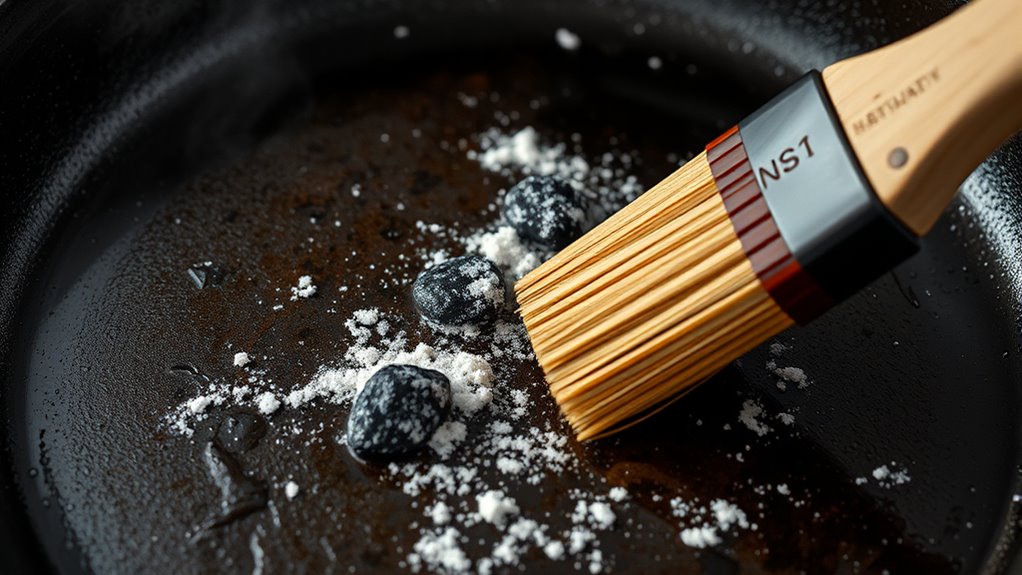
Burnt flour tends to stick to cast iron because it carbonizes and bonds tightly to the seasoned surface. This bond results from flour adhesion, which becomes stronger as the flour burns and carbonizes. The seasoning impact plays a significant role here; a well-seasoned pan has a polymerized layer that can sometimes trap burnt flour particles. Once burnt flour bonds to this layer, it’s difficult to remove with simple wiping or water alone. The heat causes the flour to form a crust that adheres stubbornly, especially if the pan’s surface isn’t properly maintained or seasoned. Understanding how flour adhesion works explains why burnt flour sticks so tenaciously and highlights the importance of maintaining a proper seasoning layer to prevent excessive sticking. Proper seasoning maintenance can help reduce the likelihood of burnt flour sticking in the future.
How Does Seasoning Affect Cleaning Burnt Flour?
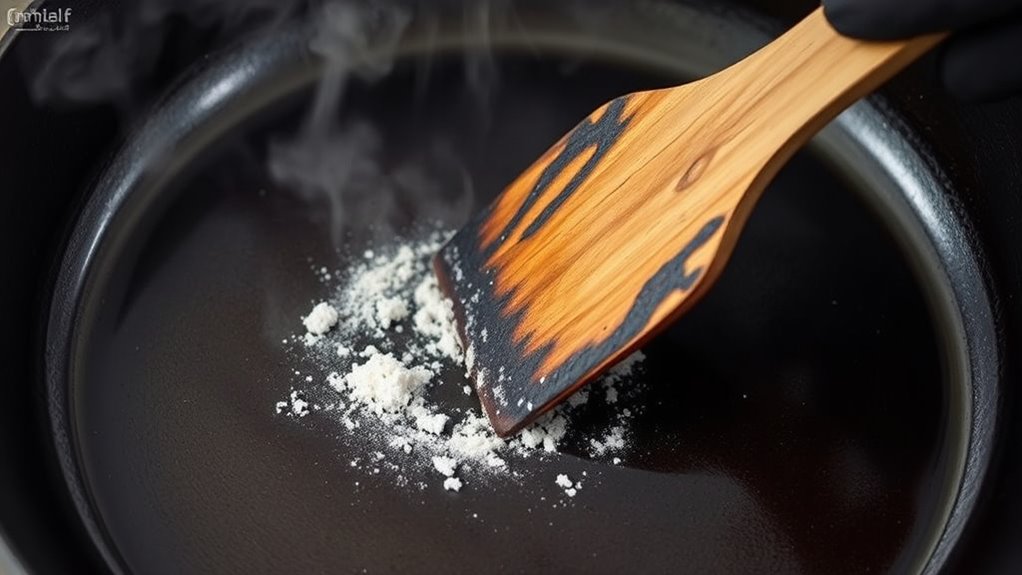
The condition of your cast iron’s seasoning directly influences how easily burnt flour can be cleaned off. If your seasoning has good durability, it creates a smooth, non-stick surface that resists burnt residues. Proper seasoning absorption ensures the oil bonds well with the cast iron, forming a resilient layer that protects the surface. When this layer is intact and well-maintained, burnt flour is less likely to cling stubbornly, making cleaning simpler without harsh scrubbing. Conversely, poor seasoning quality or damage can cause burnt flour to stick more firmly, complicating cleanup. Maintaining your seasoning by regularly applying thin coats of oil helps preserve its durability and absorption qualities, ensuring your cast iron remains easier to clean and less prone to stubborn burnt flour residues. Additionally, using best cleaning practices can help prevent burnt flour from becoming a persistent issue.
How to Prepare Your Cast Iron for Safe Cleaning
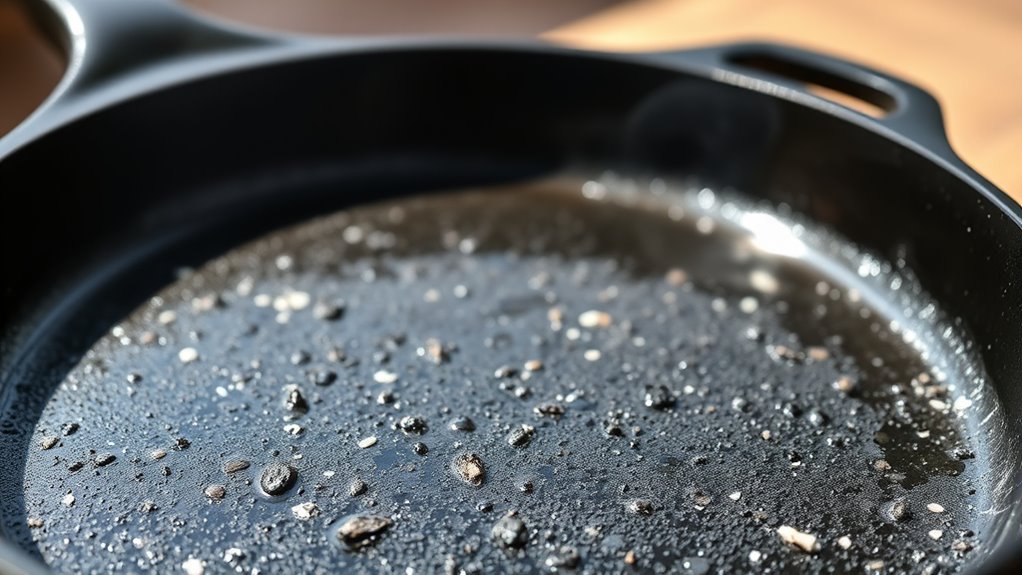
Before you start cleaning your cast iron, it’s essential to prepare it properly to guarantee safety and effectiveness. Proper preparation ensures your cast iron maintains its seasoning and prevents flour adhesion issues. First, inspect your skillet for any loose rust or debris. Next, dry it thoroughly to avoid moisture causing rust. Lightly apply a thin layer of oil to protect the surface during cleaning. This step is crucial for cast iron maintenance and helps keep the seasoning intact. Use a paper towel or cloth to spread the oil evenly. Here’s a quick visual guide:
| Step | Action |
|---|---|
| 1 | Inspect for rust or debris |
| 2 | Dry thoroughly |
| 3 | Apply a thin oil layer |
| 4 | Wipe off excess oil |
| 5 | Proceed with cleaning |
Additionally, understanding indoor air quality can help you create a healthier environment while maintaining your cookware. Ensuring proper ventilation can reduce cooking odors and airborne particles that may affect both your air quality and your cast iron’s condition. Good ventilation practices are especially important when cleaning your skillet to prevent moisture buildup and airborne contaminants, which can negatively impact both your home environment and your cookware’s longevity. Incorporating good ventilation practices can also help prevent moisture buildup, which is beneficial for both your home’s air purity and your skillet’s longevity. This preparation minimizes flour adhesion and preserves your skillet’s condition.
How Can Hot Water and Steam Soften Burnt Flour?
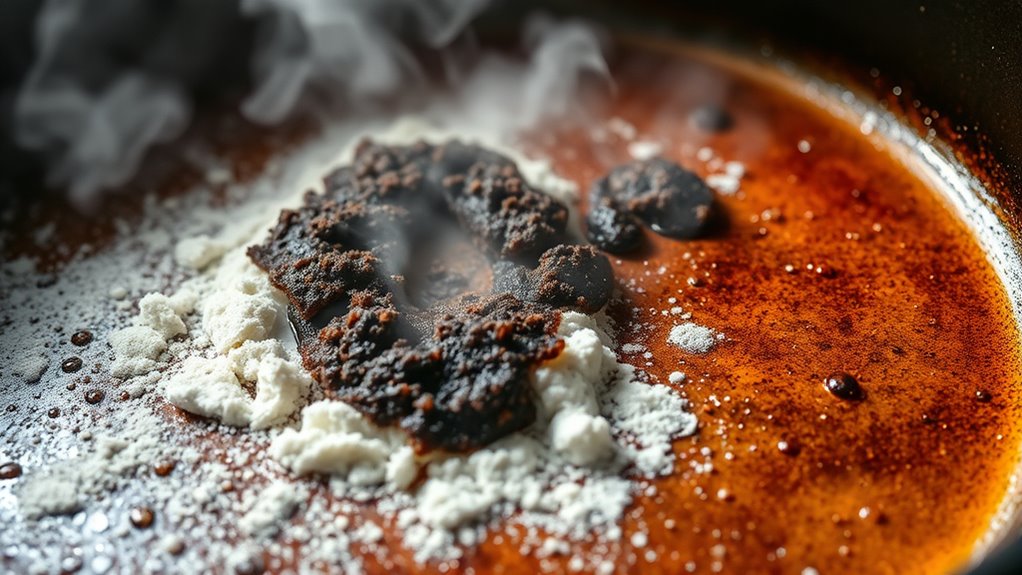
Heating your cast iron with hot water helps loosen the burnt flour. As the water heats, it creates steam that penetrates and softens the stubborn residue. This combination makes it easier to scrub away without damaging your pan. Additionally, using proper cleaning techniques ensures safe and effective removal of residual burnt flour. Incorporating gentle scrubbing methods can prevent surface damage while effectively cleaning. For best results, consider temperature control to avoid warping or damaging the cast iron surface.
Heating To Loosen Burnt Flour
Applying hot water and steam can be highly effective in loosening burnt flour from your cast iron pan. Heating helps break down stubborn residue, making it easier to remove without damaging the seasoning layer. To guarantee proper cast iron maintenance, always heat gradually to avoid warping or cracking. Use medium heat on your stovetop, adding hot water to the pan’s surface. The steam generated softens the burnt flour, loosening it from the surface. Remember, kitchen safety is key—never handle hot cookware without protection, and avoid sudden temperature changes. Heating to loosen burnt flour is a gentle, effective method to restore your cast iron’s cleanliness while preserving its seasoning. With patience and care, you can clean your pan without harsh chemicals or soap. Additionally, understanding the proper cleaning techniques can help maintain the pan’s non-stick surface and longevity. Regularly season your cast iron after cleaning to build up a protective layer that prevents future sticking and burnt residue buildup. Incorporating proper heating methods can also prevent food from sticking and burning in the first place, making cleanup easier in the long run. Moreover, being mindful of the seasoning layer helps ensure your pan remains non-stick and resistant to rust over time. Using appropriate cleaning tools such as non-metallic scrapers can further protect the seasoning during cleanup.
Generating Steam For Softening
Hot water and steam are powerful tools for softening burnt flour on your cast iron pan. To do this safely, guarantee you prioritize kitchen safety by handling hot water carefully to prevent burns. Fill your pan with hot water, enough to cover the burnt areas, and place it on the stove. As the water heats, it creates steam that penetrates the burnt flour, loosening it from the surface. Using cleaning tools like a brush or scraper afterward becomes easier once the burnt residue softens. Always monitor the process to avoid overboiling or splashing, which could cause injury or mess. Generating steam in this way is effective and safe when you follow proper kitchen safety procedures and use appropriate cleaning tools to remove the softened burnt flour efficiently. Proper safety precautions are essential when working with hot water and steam to prevent accidents. Additionally, understanding how steam penetrates stubborn residues can help optimize your cleaning process. Recognizing the thermal properties of water can further enhance your ability to control and utilize steam effectively during cleaning.
What Are Gentle Ways to Scrape Off Burnt Residue?
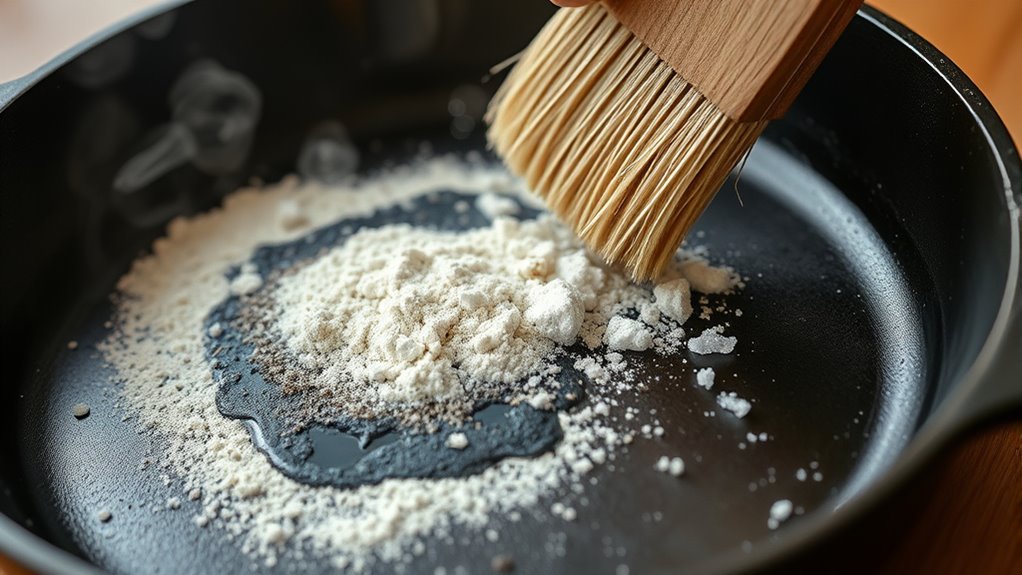
To gently remove burnt residue from your cast iron, you can try using salt scrubbing, which acts as a mild abrasive. Applying a baking soda paste can also loosen stubborn bits without damaging the surface. For even gentler scraping, a wooden scraper works well to lift residue without scratching your pan. Incorporating visual and auditory cues can help you better identify when the residue has been effectively removed. Additionally, understanding seasoning maintenance can prevent future sticking and burnt residues from forming. Regularly reconditioning your pan after cleaning ensures the seasoning remains intact and helps avoid buildup. Mastering proper home maintenance practices can extend the life of your cast iron and keep it in prime condition.
Use Salt Scrubbing
When dealing with burnt flour stuck to your cast iron, salt offers a gentle yet effective scrubbing option. Salt scrubbing provides abrasive cleaning without damaging your skillet’s surface. To use this method, sprinkle a generous amount of coarse salt onto the burnt areas. Using a damp cloth or a scrub brush, scrub the salt into the residue with circular motions. The abrasive texture of the salt helps lift burnt flour without scratching or stripping seasoning. Once the residue loosens, rinse the skillet with warm water. This method is simple, natural, and avoids harsh chemicals, making it ideal for maintaining your cast iron’s seasoning while effectively removing burnt flour. Salt scrubbing is a safe, eco-friendly way to keep your skillet clean and in top condition. Additionally, understanding the importance of seasoning maintenance can help prevent future sticking and burning issues.
Employ Baking Soda Paste
Applying a baking soda paste is a gentle yet effective way to loosen burnt flour residue from your cast iron skillet. It’s a smart method for cast iron maintenance, as it avoids harsh abrasives that can damage the seasoning. To create the paste, mix baking soda with a small amount of water until it reaches a thick consistency. Spread it over the affected areas and let it sit for 15-20 minutes. This allows the baking soda to break down burnt flour without scratching the surface. For best results, consider these tips:
- Use a non-metallic scrubber for gentle abrasion
- Focus on areas with stubborn burnt residue
- Avoid using excessive force to preserve seasoning
- Rinse thoroughly with water and dry immediately
- Proper cleaning techniques help prevent damage and maintain your cast iron’s quality. Regular cleaning and proper maintenance are essential for seasoning preservation, ensuring your skillet remains non-stick and rust-free. This method ensures efficient burnt flour removal while maintaining your cast iron’s integrity.
Try Wooden Scraper
A wooden scraper offers a gentle yet effective way to remove burnt flour residue from your cast iron skillet. Unlike metal scrapers, a wooden scraper provides gentle removal, preventing scratches or damage to the seasoning. To use it, grip the scraper firmly and carefully work it across the surface, applying light pressure to lift off burnt bits. This method is especially helpful if you want to avoid harsh abrasives or soap. The natural texture of the wood helps loosen burnt residue without compromising your skillet’s seasoning. Keep in mind, patience is key—work slowly and steadily for the best results. With a wooden scraper, you can effectively clean your cast iron while preserving its non-stick surface and overall integrity.
How Can Baking Soda and Salt Help Clean Burnt Flour?
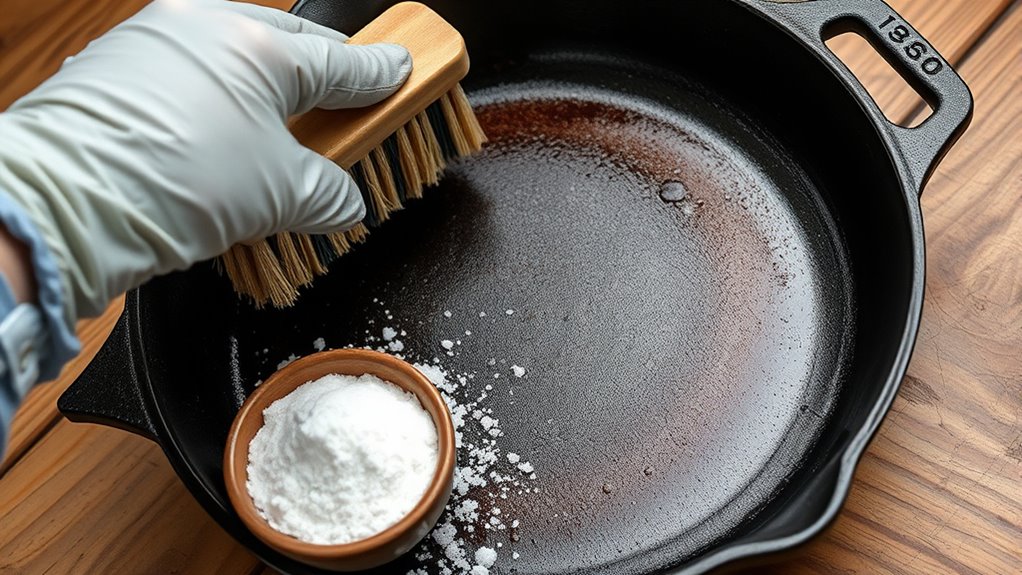
Baking soda and salt work together effectively to lift burnt flour from cast iron surfaces because their abrasive qualities help loosen stubborn residues. When combined, they serve as a natural cleaning method that promotes residue removal without harsh chemicals. To use them, sprinkle a generous amount of baking soda over the affected area, then add salt for extra scrubbing power. Use a damp cloth or scrub brush to work the mixture into the surface, focusing on burnt spots. The abrasive action gently breaks down the burnt flour without damaging the cast iron. Additionally, this method is cost-effective and eco-friendly. Incorporate these key points into your cleaning routine:
- Natural abrasive cleaning method
- Enhances residue removal
- Prevents damage to cast iron
- Easy, inexpensive solution
How Does Vinegar and Water Soak Break Down Burnt Flour?
Vinegar’s acidity helps weaken the bonds holding burnt flour to your cast iron. When you soak the pan, the vinegar loosens the burnt residue, making it easier to remove. This process effectively breaks down the flour, restoring your cookware’s surface.
Vinegar’s Acidic Action
How exactly does vinegar and water soak help break down burnt flour on cast iron? The answer lies in vinegar’s acidic action. The acidity helps loosen the burnt residue, making it easier to scrub away without damaging the pan. Vinegar benefits include breaking down stubborn food particles and neutralizing odors, all while being gentle on your cookware. When vinegar interacts with burnt flour, it:
- Loosens and softens the burnt layer
- Dissolves stubborn carbohydrates
- Penetrates tiny crevices for thorough cleaning
- Reduces the need for harsh scrubbing
This natural process leverages vinegar’s ability to break chemical bonds in burnt residues, making cleanup more efficient. Using an acetic acid solution is a safe, effective way to restore your cast iron without soap, preserving seasoning and avoiding damage.
Soaking Loosens Burnt Residue
Since vinegar’s acidity can break down burnt flour, soaking the pan in a vinegar and water solution allows the acid to penetrate and loosen stubborn residues. This method is a gentle, effective way to support cast iron maintenance without harsh scrubbing or soap. As the vinegar works on the burnt flour, it softens the layers, making removal easier and reducing the risk of damaging the seasoning. Soaking also promotes cookware safety by avoiding abrasive tools that can strip the pan’s protective coating. During this process, the acid interacts with the burn residue, breaking bonds and loosening stubborn bits. This simple step helps restore your cast iron’s surface, prepares it for re-seasoning, and keeps your cookware in ideal condition for future use.
Breaks Down Flour Bonds
When you soak a cast iron skillet in a vinegar and water solution, the acidity of the vinegar actively interacts with the burnt flour, breaking the strong bonds that hold the residue together. This process targets the flour bonds, which are often tough to dissolve using standard cleaning methods. Vinegar’s acidity weakens the molecular structure of the burnt flour, making it easier to remove without scrubbing aggressively. As a result, residues loosen and become more manageable. Understanding how vinegar interacts with burnt flour can improve your cleaning techniques. This approach not only preserves your skillet’s seasoning but also minimizes the need for harsh cleansers. Proper soaking assures the flour bonds break down efficiently, making your cast iron cleaning routine more effective and less stressful.
- Acidic properties weaken flour bonds at a molecular level
- Enhances the effectiveness of natural cleaning techniques
- Prevents damage caused by abrasive scrubbing
- Preserves the skillet’s seasoning and finish
Why Is Boiling Water Effective for Cleaning Cast Iron?
Boiling water is effective for cleaning burnt flour from cast iron because it helps loosen and lift stubborn residues without damaging the seasoning. When you boil water in your pan, the heat softens the flour bonding to the surface, making it easier to remove. This method is a key part of cast iron maintenance, as it avoids harsh scrubbing or soap that can strip away seasoned layers. The hot water penetrates into tiny pores, breaking down the burnt flour’s grip while preserving the seasoned coating that protects your pan. Plus, boiling water naturally loosens stubborn debris, preventing the need for abrasive tools. This simple, chemical-free approach keeps your cast iron in top shape, ready for your next cooking adventure.
How Do You Restore and Re-Season Your Pan After Cleaning?
After thoroughly cleaning your cast iron pan, the next essential step is restoring and re-seasoning it to maintain its non-stick surface and protect against rust. Proper seasoning maintenance ensures your pan performs well for years. Start by applying a thin layer of oil evenly across the entire surface, including the handle. Next, preheat your oven to around 375°F (190°C) and place the pan upside down on the middle rack, with a foil-lined baking sheet below to catch drips. Bake for about an hour, then let it cool inside the oven. This process helps bond the oil to the metal, creating a durable, non-stick coating. Regular oil application and seasoning maintenance keep your cast iron in top shape.
To restore your cast iron, apply a thin oil layer and bake at 375°F for an hour to create a durable non-stick coating.
- Thin, even oil layer
- Use high-smoke-point oils
- Bake at proper temperature
- Allow thorough cooling
How Can You Prevent Burnt Flour From Sticking Again?

To prevent burnt flour from sticking again, it’s essential to control the heat and use the right cooking techniques. Different flour types, like almond or wheat, have varying burning points, so adjust your heat accordingly. Use medium to low heat to cook flour-based mixtures slowly, reducing the risk of burning. Also, consider the pan shape; a wider, shallow pan distributes heat more evenly, preventing hotspots that cause sticking. Proper preheating ensures the pan is evenly heated before adding flour. Avoid overcrowding the pan, which can trap moisture and lead to uneven cooking. Stir frequently to prevent flour from settling and burning. By choosing appropriate flour types and using the right pan shapes, you’ll minimize sticking and keep your cast iron in top shape.
Frequently Asked Questions
Can I Use a Dishwasher to Clean My Cast Iron After Burnt Flour?
You shouldn’t use a dishwasher to clean your cast iron after burnt flour because dishwasher risks include damaging the seasoning and rusting the pan. Instead, try alternative cleaning methods like scrubbing with coarse salt or using a brush with hot water. These methods effectively remove burnt residue without harming your pan. Always dry thoroughly and re-season if needed to maintain its non-stick surface and longevity.
Is It Safe to Use Steel Wool on Seasoned Cast Iron?
You might wonder if steel wool is safe for seasoned cast iron, and it can be, but with caution. Steel wool effectively removes burnt flour and rust, yet it can scratch or strip your seasoning if used aggressively. To preserve your seasoning, opt for fine steel wool and gentle scrubbing. Always follow up with oil to maintain your cast iron’s protective layer, ensuring its longevity and continued non-stick performance.
How Often Should I Reseason My Cast Iron After Cleaning?
You should reseason your cast iron after each thorough cleaning, especially if you’ve used abrasive methods like steel wool. Regular seasoning maintenance helps keep the skillet non-stick and prevents rust. For routine cleaning, wipe it down and apply a light coat of oil, reseasoning only when the surface shows signs of wear or loss of seasoning. This guarantees your cast iron stays in top shape and ready for cooking.
Will Using Soap Damage the Cast Iron’s Seasoning?
Using soap on your cast iron isn’t likely to damage the seasoning if you do it occasionally. Soap safety has improved, and modern soaps are gentle enough to clean without stripping the seasoning when used sparingly. To preserve your seasoning, avoid excessive soap use and always reapply a light coat of oil afterward. This way, you keep your cast iron well-seasoned and in great condition, even after cleaning with soap.
Are Commercial Cleaners Recommended for Removing Burnt Flour?
You shouldn’t use commercial cleaners on your cast iron, especially chemical cleaners with abrasive agents. They can strip away the seasoning, causing more harm than good. Instead, try natural methods like baking soda or coarse salt. These gentle alternatives effectively loosen burnt flour without damaging your pan. Keep in mind, sticking to non-abrasive, seasoning-friendly solutions maintains your cast iron’s non-stick surface and ensures it stays in top shape.
Conclusion
Think of your cast iron as a trusted friend, weathered yet resilient. Cleaning away burnt flour without soap is like mending a bond—gentle effort restores its strength and shine. With patience and care, you renew your pan’s spirit, ready to create new delicious memories. Embrace this process as a symbol of renewal, where every scrape and soak breathes new life into your cookware—and your culinary journey.