
TL;DR

Get baking supplies delivered free with Prime
- Fast, free delivery on millions of items
- Prime Video, Amazon Music and more included
- Member-only deals all year
A Good Housekeeping report lists five kinds of freezer items professional cleaners recommend discarding or consolidating: messy open packages, old ice, expired or unwanted food, nearly empty containers and mystery items. The advice is based on cleaning professionals’ recommendations; it does not establish a universal safety deadline for frozen food.
Cleaning professionals recommend clearing out five types of freezer contents: messy open packages, old ice, expired or unwanted food, nearly empty containers and unidentified items. The advice, reported by Good Housekeeping, is aimed at making freezers easier to organize and helping people spot food they no longer plan to use.
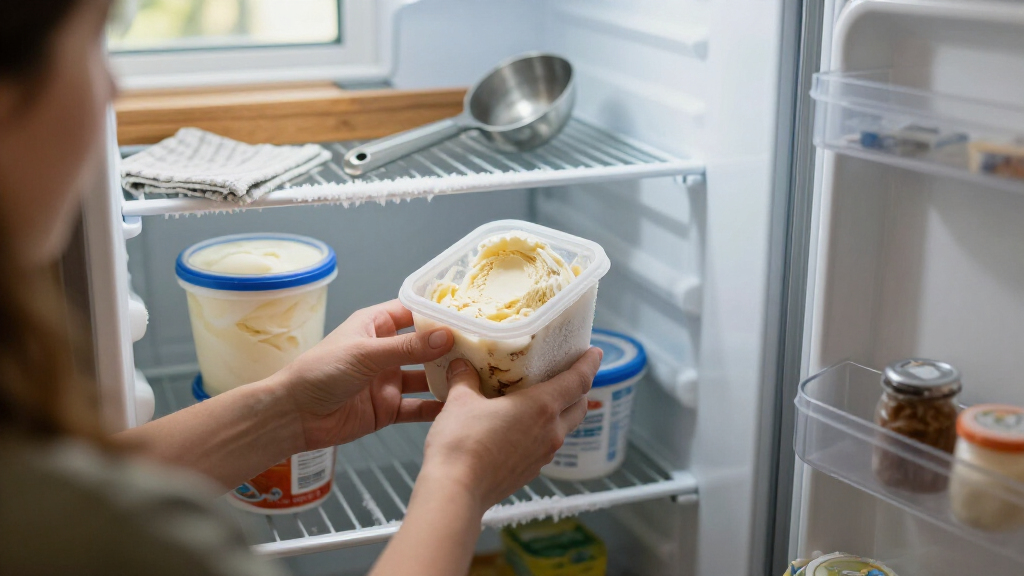
Rochelle Wilkinson, a professional cleaner and owner of Dirt Detective Cleaning, says open packages that spill or leak should be dealt with. If the food is still usable, Wilkinson recommends cleaning up the mess and transferring it to a freezer-safe, spill-proof container. Items with mold, freezer burn or a passed due date can be discarded, according to the report.
Old ice can pick up odors from other freezer contents, Logan Taylor, a cleaning professional and founder of The Dazzle Cleaning Company, told Good Housekeeping. Taylor recommends throwing it out and washing ice bins, trays and other containers. Wilkinson also advises tossing food that is past its date or that a household knows it will not use. When a date is unavailable, the report points to signs such as freezer burn, food frozen into one block or excessive ice buildup inside packaging as reasons to assess whether it has been stored too long.
The remaining categories are nearly empty containers and mystery items. The report suggests consolidating small amounts where practical, or removing bulky containers that are taking up space without a plan for use. Taylor advises discarding food when its identity, age or source is unknown. The recommendations are cleaning and decluttering guidance, not a food-safety ruling for every frozen product.
A Clearer, Easier-to-Use Freezer
Removing spills, old ice and food no one intends to eat can make it easier to see what remains and reduce clutter. That may help households use existing ingredients rather than buying duplicates, while keeping leaking packages from making a mess of nearby items.
The advice also draws a useful distinction: an unattractive or disorganized package is not automatically unsafe. The report says a messy item may be kept if it is still usable and can be repackaged cleanly. For food with uncertain age or condition, however, the source does not provide product-specific storage limits or a method to determine safety solely by appearance. Readers should not treat the list as a substitute for food-safety guidance.
spill-proof freezer storage containers
As an affiliate, we earn on qualifying purchases.
As an affiliate, we earn on qualifying purchases.
What the Cleanout List Covers
The report addresses a common household problem: frozen foods can remain out of sight for long periods, and their longer storage life can make it difficult to remember when they were put away. Its five categories focus on practical signs of clutter or uncertainty, rather than setting a single time limit for everything stored in a freezer.
Wilkinson’s recommendations cover unwanted or visibly compromised food, while Taylor’s comments address ice and unidentified items. The article also offers ways to avoid unnecessary waste: clean and repackage food that remains usable, and use leftover portions in a meal such as soup. It says items that are no longer wanted but are not expired may be donated or composted where appropriate.
“If you’re not quite sure what it is or how long it’s been there—or even possibly where they came from—then toss them.”
— Logan Taylor
As an affiliate, we earn on qualifying purchases.
No Universal Storage Cutoff Given
The source does not give a publication date, product-by-product freezer storage limits or a universal rule for deciding whether a particular item is safe. It also does not explain how local donation or composting options handle frozen food. The listed warning signs and cleaning recommendations are attributed to the professionals quoted in the report; they should not be read as laboratory findings or official food-safety determinations.
As an affiliate, we earn on qualifying purchases.
Label and Review Stored Food
The report does not announce a follow-up investigation or a scheduled next step. For readers acting on its advice, a practical approach is to review the freezer’s contents, identify and date items that will be kept, clean the bins and trays, and move usable open packages into suitable sealed containers. Items with uncertain contents or history can be set aside for a careful decision rather than returned to the freezer unmarked.
Households can then check the freezer periodically and plan meals around items they already have. The source offers no formal schedule for those checks; the frequency depends on how much food is stored and how often the freezer is used.
spill-proof food storage containers
As an affiliate, we earn on qualifying purchases.
As an affiliate, we earn on qualifying purchases.
Key Questions
Which five freezer items does the report recommend clearing out?
Messy open packages, old ice, expired or unwanted food, nearly empty containers and unidentified items. The report’s suggestions come from cleaning professionals quoted by Good Housekeeping.
Should I throw away every open package?
No. Wilkinson says that if the food is still usable, you can clean up the spill and place it in a freezer-safe, spill-proof container. The report recommends discarding items with mold, freezer burn or a passed due date.
Why replace old ice?
Taylor says ice can take on odors from other items in the freezer. He recommends discarding it and washing the ice bins and trays.
Does the report set a freezer storage deadline?
No. It gives no universal time limit or product-specific storage chart. Its advice is to consider dates, condition and whether the food is identifiable, while recognizing that the list is cleaning guidance, not a complete food-safety standard.
Source: rss
Halloween Picks
halloween
As an affiliate, we earn on qualifying purchases.