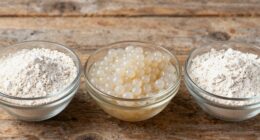
To swap butter in dairy-free baking, consider the role butter plays—adding moisture, richness, and structure—and select a suitable alternative like coconut oil, avocado, or vegan margarine. Measure carefully and adjust ingredients based on your recipe’s needs, such as slightly reducing oil if substituting for butter. For best results, understand how each substitute affects texture and flavor, and explore tips to ensure success. Keep going to discover more expert insights.
Key Takeaways
- Match butter’s role (moisture, fat, structure) with appropriate dairy-free alternatives like coconut oil or nut butters.
- Measure substitutes accurately using proper spoons and leveling techniques for consistent results.
- Adjust recipe moisture and fat content when replacing butter to prevent dryness or greasiness.
- Consider flavor profiles of substitutes, such as coconut or avocado, to enhance baked goods naturally.
- Read labels carefully and modify liquids or fats to maintain the batter’s balance and achieve the desired texture.
What Does Butter Do in Baking?

Butter plays an essential role in baking by adding richness and flavor to baked goods. Its butter flavor enhances the overall taste, making treats more appealing. When incorporated properly, butter also helps achieve the right baking consistency, ensuring your dough or batter isn’t too sticky or dry. The fat in butter creates a tender crumb and contributes to a flaky texture in pastries. Additionally, butter helps with leavening, as it traps air during creaming, which helps your baked goods rise evenly. Without butter, textures can become dense, and flavors may lack depth. Understanding how butter influences both flavor and consistency allows you to make better dairy-free substitutions that maintain the integrity of your baked creations. Recognizing the role of fats in baking can help you choose suitable alternatives that preserve the desired texture and flavor. A good grasp of baking fat functions can improve your substitutions and overall results. Incorporating knowledge of philosophical insights can deepen your appreciation for traditional baking techniques and their cultural significance.
What Are the Best Dairy-Free Butter Alternatives?

When choosing dairy-free butter alternatives, you’ll find popular plant-based options like margarine, coconut oil, and nut butters. Understanding their nutritional differences helps you pick the best fit for your baking, whether you need extra moisture or flavor. Keep in mind that each substitute can affect your baked goods’ texture and performance, so some baking tips can make a big difference. For instance, incorporating oils like eucalyptus oil can enhance flavor profiles, but be sure to choose options appropriate for baking and not just topical use.
Popular Plant-Based Options
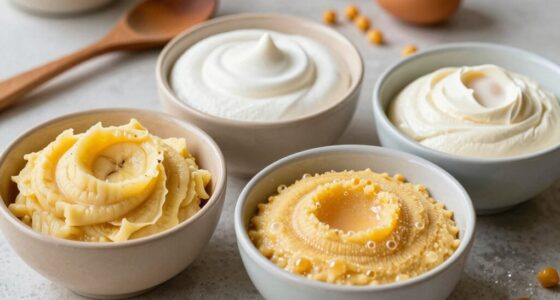
Finding the right dairy-free butter alternative can make a huge difference in your baking. Popular plant-based options include coconut oil, avocado, and vegan margarine. Coconut oil adds richness and a subtle sweetness, ideal for cookies and cakes. Avocado provides creaminess and healthy fats, great for muffins and brownies. Vegan margarine mimics traditional butter and works well in most recipes. You can also incorporate plant-based milks like almond or soy milk to enhance moisture. For savory dishes, vegan cheese spreads can replace butter for added flavor. Additionally, understanding plant-based fat sources can help you choose the best substitute for your specific baking needs. Here’s a quick comparison:
| Option | Best Used For | Key Benefit |
|---|---|---|
| Coconut Oil | Cookies, Cakes | Adds richness, flavor |
| Avocado | Muffins, Brownies | Creamy, healthy fats |
| Vegan Margarine | General baking, spreads | Mimics butter |
Nutritional Differences Explained
Are all dairy-free butter alternatives created equal when it comes to nutrition? Not quite. Their nutritional content varies considerably, affecting your health benefits. Some options, like coconut oil-based spreads, are high in saturated fats, which may influence cholesterol levels. Others, such as avocado or nut-based butters, offer healthy monounsaturated fats that support heart health. Many dairy-free alternatives are fortified with vitamins like B12 and D, providing added nutritional value. Keep in mind that some products contain added sugars or preservatives, which can diminish health benefits. When choosing a dairy-free butter, consider not just taste and texture but also nutritional content to ensure you’re making a beneficial swap for your overall well-being. Nutritional differences are important to understand for making the best choice.
Baking Performance Tips
Choosing the right dairy-free butter can substantially influence your baking results. To guarantee success, consider how dairy farming and milk processing affect available options. Many plant-based butters mimic the texture and flavor of traditional butter because they’re crafted to replicate dairy’s qualities. Look for products made from oils like coconut, palm, or avocado, which offer good melting points and moisture retention. Avoid substitutes that contain too much water, as they can alter batter consistency. When selecting dairy-free alternatives, check labels for minimal additives and preservatives. Properly choosing your dairy-free butter helps maintain the structure, tenderness, and flavor of baked goods, making your results more consistent. Additionally, understanding how dairy farming and milk processing influence these options helps you make better choices for ideal baking performance. Being aware of processing techniques also guides you in selecting products that closely resemble traditional butter’s baking qualities. Considering product formulation can further improve your baking outcomes by ensuring the butter’s texture and melting behavior align with your recipe needs. Furthermore, examining the ingredient sourcing can ensure you select options that align with your dietary and ethical preferences. A deeper understanding of dairy industry practices can also inform your choices, especially if you prefer products with sustainable and ethical origins.
How Do I Pick the Right Butter Substitute for My Recipe?

When selecting a butter substitute for your recipe, it’s important to take into account the role butter plays in the dish. Consider whether you need moisture, richness, or structure. For baked goods requiring creaminess or spreadability, plant-based oils like coconut or avocado oil work well. Nut butters add flavor and texture, especially in cookies or bars. Use the table below to choose based on your needs: Additionally, understanding the supernatural realm can inspire creative culinary ideas and unexpected flavor combinations. Being aware of halal ingredients and ensuring your substitutes meet halal standards can also enhance your confidence in your baking choices. Incorporating juice extraction techniques can sometimes provide natural flavor enhancers or moisture in your baking, expanding your ingredient options.
How Can I Use Dairy-Free Butter Substitutes in Baked Goods?

To use dairy-free butter substitutes effectively, start by choosing options that match your recipe’s needs. You may need to adjust measurements slightly to get the right consistency and flavor. Paying attention to how these substitutes affect texture can help you create delicious, dairy-free baked goods. Additionally, experimenting with effective email marketing strategies such as segmentation and personalization can help you share these baking tips more effectively with your audience. Being aware of product substitutions in baking can guide you in selecting the best dairy-free alternatives for different recipes.
Choose Suitable Dairy-Free Options
Dairy-free butter substitutes can seamlessly replace traditional butter in most baked goods, offering the same richness and moisture without dairy. When choosing the right option, consider your recipe’s needs. For added creaminess, using vegan yogurt can enhance texture and moisture, especially in muffins or cakes. Dairy free cheese works well in savory baked goods like bread or scones, providing flavor and structure. If you want a buttery taste, look for plant-based butters made from oils like coconut or avocado. Always check ingredient lists to avoid additives or preservatives that might affect your baked good’s outcome. Selecting the right dairy-free option depends on the desired flavor and texture, so experiment with different substitutes to find what best suits your recipe. Additionally, understanding market volatility and potential risks can help you choose the most stable dairy-free ingredients for your baking needs. Being aware of ingredient stability can help ensure your baked goods turn out as expected, especially when using new or less common substitutes. Incorporating proper storage methods can also extend the shelf life of your dairy-free ingredients and maintain their quality over time.
Adjust Baking Measurements
Replacing traditional butter with dairy-free alternatives often requires adjusting your recipe’s measurements to achieve the same result. Use proper measuring techniques, like spooning the substitute into measuring cups and leveling it off, to guarantee accuracy. Since dairy-free butters can vary in consistency and fat content, you might need to tweak the amount used. For example, if a recipe calls for one cup of butter, start by replacing it with a slightly smaller volume of dairy-free margarine or oil, then adjust as needed based on the batter’s texture. Keep in mind that ingredient substitutions can impact moisture and fat levels, so measuring precisely helps maintain the desired baking balance. Utilizing ingredient consistency assessment tools such as 16PF can help you understand how different ingredients affect your baking style. Carefully adjusting measurements ensures your baked goods turn out just as well as when using traditional butter.
Enhance Flavor and Texture
Using dairy-free butter substitutes doesn’t just keep your baked goods dairy-free; it also offers a chance to enhance their flavor and texture. To boost flavor, choose options like coconut oil or nut-based spreads, which add richness and depth. For better texture, consider blending different dairy-free fats—such as avocado or applesauce—to achieve a moist, tender crumb. Incorporating flavor enhancers like vanilla extract or a pinch of salt can also elevate the overall taste. Additionally, using dairy-free butter substitutes that contain added emulsifiers helps improve texture by creating a smoother batter. Experimenting with these swaps allows you to tailor your baked goods for both flavor enhancement and texture improvement, ensuring your treats are as delicious and satisfying as their dairy counterparts.
What Are Top Tips for Dairy-Free Baking Success?

To achieve successful dairy-free baking, it’s essential to understand how different substitutes behave and how they can best mimic dairy’s properties. If you’re baking for someone with dairy allergies, choose substitutes that provide similar moisture, fat, and structure, like coconut oil or vegan margarine. When making vegan substitutions, consider the role of each ingredient—such as replacing butter with applesauce for moisture or using plant-based butters for richness. Keep in mind that different dairy-free options can alter texture and flavor, so don’t be afraid to experiment to find what works best for your recipes. Also, read labels carefully to avoid hidden dairy ingredients, and always measure accurately to ensure consistent results. These tips will help you bake confidently and successfully without dairy.
Easy Dairy-Free Baking Recipes With Butter Substitutes

Discover how simple it can be to create delicious dairy-free baked goods by swapping traditional butter with easy-to-find alternatives. For baked treats, consider using coconut oil or applesauce to add moisture and richness, perfect for muffins and cookies. If you’re craving a dairy-free ice cream dessert, blend frozen bananas with a splash of almond milk for a creamy, healthy alternative. Vegan cheese can also be incorporated into savory baked dishes, adding flavor without dairy. These substitutes are versatile and straightforward, making your dairy-free baking both accessible and tasty. With a little experimentation, you’ll find the perfect butter alternative for every recipe, ensuring your baked goods are satisfying and free from dairy ingredients.
What Are Common Mistakes to Avoid in Dairy-Free Baking?

One common mistake in dairy-free baking is not adjusting for the different moisture and fat content of substitutes, which can lead to dry or greasy results. Many bakers overlook how ingredient missteps like using too much coconut oil or not enough liquid can throw off the batter’s balance. It’s important to understand the properties of your dairy-free alternatives and modify recipes accordingly. Avoid relying solely on traditional measurements; instead, tweak the amount of liquids or fats to match your specific substitute. Overlooking these differences is a common pitfall that can ruin your baked goods. Being mindful of ingredient interactions and making proper adjustments helps prevent common pitfalls, ensuring your baked treats turn out moist, tender, and delicious every time.
Frequently Asked Questions
Can Dairy-Free Butter Substitutes Alter the Flavor of Baked Goods?
Dairy-free butter substitutes can alter the flavor of your baked goods, mainly because of flavor differences and ingredient variations. You might notice a different taste or texture, especially if the substitute has added flavors or fats. To minimize this, choose neutral-tasting options like coconut oil or vegan margarine, and experiment with small batches. Adjusting your recipe slightly helps you find the best balance without compromising flavor.
Are There Any Health Benefits to Using Dairy-Free Butter Alternatives?
Using dairy-free butter alternatives can offer nutritional advantages like lower saturated fat and added plant-based nutrients. It also helps you avoid allergy concerns if you’re lactose intolerant or allergic to dairy. These options support a healthier lifestyle without sacrificing flavor or texture in your baked goods. By choosing the right dairy-free butter, you can enjoy the benefits of better health and allergy considerations, making your baking both delicious and mindful.
How Do Dairy-Free Substitutes Affect Baking Time and Texture?
Dairy-free substitutes can slightly alter your baked goods’ texture and may require baking time adjustments. Expect minor texture changes, like increased moisture or a softer crumb, depending on the alternative used. You might need to bake a little longer or shorter to achieve perfect doneness. Keep an eye on your baked goods and use visual cues like browning or firmness to adjust baking time accordingly.
Are All Plant-Based Butters Suitable for Baking?
Imagine baking a cake with a new plant-based butter alternative, and it turns out perfectly. Not all plant-based fats are suitable for baking, as some may alter texture or flavor. Look for butter alternatives specifically designed for baking, like coconut or avocado-based options. These butter alternatives provide the right fat content and consistency, ensuring your baked goods turn out just right without guessing.
How Long Do Dairy-Free Butter Substitutes Last Compared to Regular Butter?
Dairy-free butter substitutes typically last longer than regular butter, often up to 6-12 months in the freezer and about 1-3 months in the fridge if unopened. Once opened, store them in airtight containers and follow refrigeration tips like keeping them away from heat and light to maintain freshness. Regular butter usually lasts 1-2 months in the fridge, so dairy-free options offer a longer shelf life with proper storage.
Conclusion
Switching to dairy-free butter alternatives can be simple and rewarding. Did you know that over 70% of people with dairy allergies find baked goods just as delicious with substitutes? By choosing the right swap and following some easy tips, you’ll enjoy tasty, dairy-free treats without guesswork. With a little practice, baking dairy-free becomes second nature—so go ahead, experiment, and savor your allergy-friendly creations!