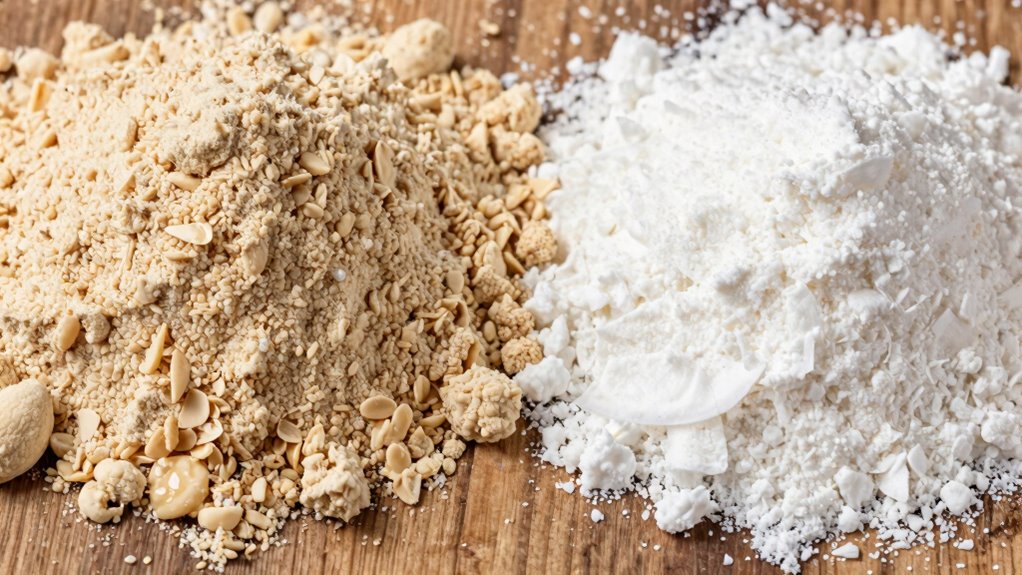

Almond flour and coconut flour can’t be swapped 1:1 because they have very different properties. Almond flour is high in fat, moist, and nutty, while coconut flour is very absorbent, low in fat, and has a strong coconut flavor. Using them interchangeably without adjustments can affect texture and taste. To learn how to successfully substitute or combine these flours, there’s more to contemplate.
Key Takeaways
- Almond flour has a moist texture and fat content, while coconut flour is highly absorbent and low in fat.
- Coconut flour requires more liquids and eggs due to its high fiber and absorption properties.
- Replacing almond flour with coconut flour can result in dry, dense baked goods without proper adjustments.
- Coconut flour’s strong flavor impacts the taste, unlike the more neutral almond flour.
- Proper recipe modifications are necessary; a 1:1 swap often leads to undesirable texture and consistency.
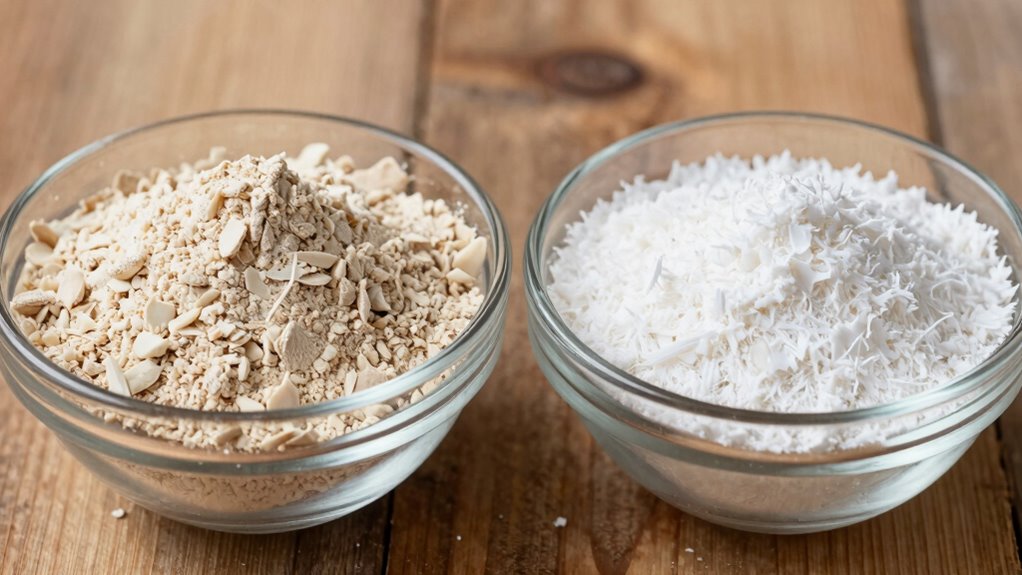
When choosing between almond flour and coconut flour, understanding their differences can help you make the best choice for your diet and recipes. Both are popular gluten-free alternatives to wheat flour, but they have distinct properties that affect how you use them in baking. A key factor is their nutrition comparison. Almond flour is made from finely ground almonds, making it high in healthy fats, protein, and vitamin E. It provides more calories per serving and contributes to sustained energy. Coconut flour, on the other hand, is derived from dried coconut meat. It’s low in fat, high in fiber, and contains medium-chain triglycerides (MCTs), which are known for their quick energy boost. Knowing these differences helps you tailor your recipes to your nutritional goals, whether you want more protein and healthy fats or a fiber-rich option.
Beyond nutrition, baking versatility is another critical aspect. Almond flour has a moist texture that’s similar to traditional flour, making it suitable for cookies, muffins, and cakes. It tends to produce baked goods with a tender crumb and a rich, nutty flavor. Coconut flour, however, is very absorbent. It absorbs a lot of moisture, which means recipes often need extra eggs or liquids to compensate. Its strong coconut flavor can also influence the final taste of your baked goods. Because of these differences, you can’t simply swap one for the other in recipes without adjustments. For example, replacing almond flour with coconut flour typically requires increasing the liquid content and eggs to achieve the right consistency. Conversely, substituting coconut flour with almond flour may result in a denser or drier product because of coconut flour’s absorbency. Additionally, understanding baking chemistry is essential for successful results when working with these flours.
In practical terms, your choice depends on what you’re baking and your dietary preferences. Almond flour lends itself well to recipes that benefit from its moistness and nutty flavor, while coconut flour is ideal for low-fat, high-fiber baked goods. However, you shouldn’t assume that one can stand in for the other without modifications. The differences in their texture, moisture absorption, and flavor mean that successful baking with either flour involves understanding their unique characteristics. When incorporating these flours into your recipes, always consider their nutrition comparison and baking versatility. Adjust ingredients accordingly, and don’t be discouraged by trial and error—each flour has its own strengths that can enhance your baking once you understand how to work with them.

Blue Diamond Almonds Almond Flour, Gluten Free, Blanched, Finely Sifted, 48 oz
Contains 1 – 3lb bag of Blue Diamond Almond Flour
As an affiliate, we earn on qualifying purchases.
As an affiliate, we earn on qualifying purchases.
Frequently Asked Questions
Can Almond or Coconut Flour Be Used in Savory Dishes Effectively?
Yes, you can use almond or coconut flour in savory baking, but with some adjustments. Almond flour adds a rich, nutty flavor that enhances savory dishes like bread or crackers, while coconut flour’s subtle sweetness might need balancing with herbs or spices. Keep in mind, these flours absorb liquids differently, so you’ll need to tweak your recipe for proper texture and flavor enhancement. Use them thoughtfully for best results.
How Do Storage Requirements Differ Between Almond and Coconut Flour?
You should store almond and coconut flour differently to maintain freshness. Almond flour needs to be kept in an airtight container in the refrigerator or freezer to prevent it from going rancid, especially in warm weather. Coconut flour, on the other hand, has a longer shelf life and can be stored at room temperature in a cool, dry place. Proper storage conditions extend their shelf life and keep your flours fresh longer.
Are There Allergen Considerations for Almond Versus Coconut Flour?
Your allergy concerns are serious—almond flour poses nut allergy risks that can be life-threatening, while coconut flour is generally safe unless you have a coconut allergy. notably, some people with shellfish allergies report cross-reactivity with coconut, making it a tricky choice. Always check labels carefully, and if you’re allergic to nuts or shellfish, consult your doctor before trying either flour, as reactions can be severe.
What Are the Cost Differences Between Almond and Coconut Flour?
You’ll find almond flour is generally more expensive than coconut flour, mainly due to the higher cost of almonds. For cost savings, consider bulk purchasing, which can notably reduce the price per pound. If you’re on a budget, coconut flour is a more economical choice, especially when buying in larger quantities. Keep in mind, the price comparison varies by brand and store, so shopping around helps you get the best deal.
How Does Each Flour Impact Blood Sugar Levels?
Blood sugar impact varies with each flour. Almond flour has a lower glycemic index, meaning it causes a slower, steadier rise in blood sugar. Coconut flour, however, has a higher glycemic index, which can lead to quicker spikes. When you bake or cook, consider these differences to keep blood sugar levels balanced. Choosing almond flour supports sustained energy, while coconut flour may cause more immediate sugar surges.

Viva Naturals Organic Coconut Flour, 4 lbs (1.81 kg) – Gluten Free Flour for Keto, Paleo & Vegan Baking, Good Source of Fiber, Low Fat, Non-GMO, Unbleached & Unrefined
✔️ FRESH & FLAVORFUL ORGANIC FLOUR – Gently milled from some of the freshest organic coconuts, our coconut…
As an affiliate, we earn on qualifying purchases.
As an affiliate, we earn on qualifying purchases.
Conclusion
When baking with almond or coconut flour, remember they’re like night and day—each brings its own unique flavor and texture. You can’t swap them 1:1 without adjustments, or your recipe might fall flat. Think of it like trying to fit a square peg in a round hole; understanding their differences helps you succeed. So, embrace their individuality, and your baked goods will turn out just right, as satisfying as a warm hug on a chilly day.

BetterBody Foods Organic Coconut Flour 2 Pound Jar, Gluten-Free White Flour Alternative with a Slight Coconut Taste and Aroma, 23% Dietary Fiber per Serving
A better CHOICE: Gluten-free and lightly textured, BetterBody Foods Organic coconut Flour makes for a delicious alternative to…
As an affiliate, we earn on qualifying purchases.
As an affiliate, we earn on qualifying purchases.

Simple Mills Almond Flour Crackers Snack Packs, Sea Salt, Healthy Snacks for Kids, Individual Packs, Gluten Free, 8 Ct (Pack of 1)
One (1) 6.5 oz box of Simple Mills Farmhouse Cheddar Crackers are almond flour crackers offering a nutritious,…
As an affiliate, we earn on qualifying purchases.
As an affiliate, we earn on qualifying purchases.