If your pastry cream lumps, quickly remove it from heat and whisk vigorously to break up the lumps. You can also blend it with an immersion blender or strain it through a fine sieve to smooth out the texture. For stubborn lumps, reheat gently while stirring or incorporate a bit of cold milk gradually to help dissolve the starch. Keep working with it, and you’ll discover even more tips to salvage the cream without starting from scratch.
Key Takeaways
- Remove the pan from heat and whisk vigorously to break up lumps immediately.
- Strain the pastry cream through a fine sieve or chinois to remove stubborn lumps.
- Use an immersion blender to blend lumps smoothly without starting over.
- Reheat gently over low heat, stirring constantly to restore a smooth texture.
- Incorporate cold milk or cream gradually to dissolve lumps and improve consistency.
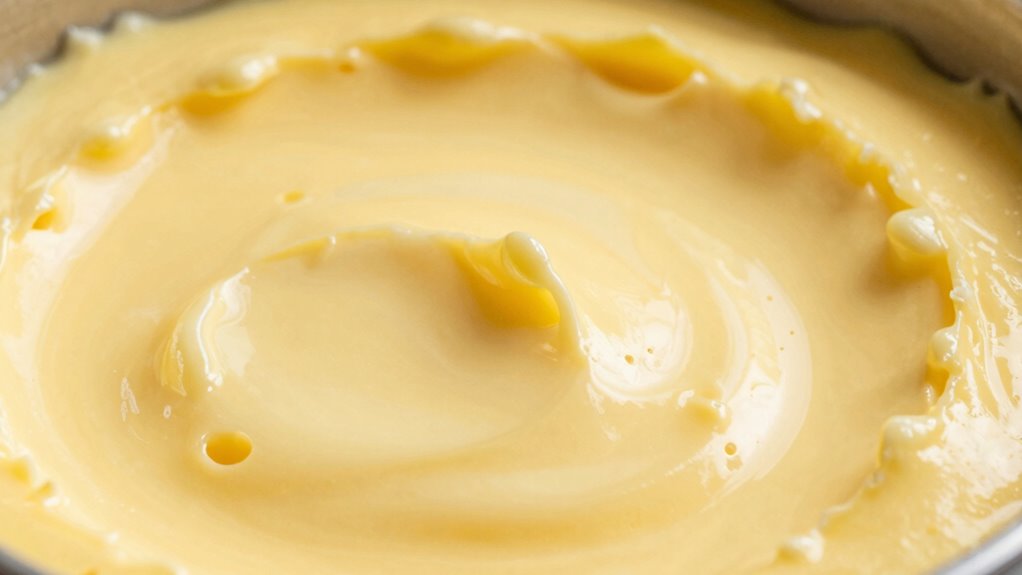
Pastry cream lumps can be frustrating, especially when you’re aiming for a smooth, silky filling. But before you consider starting over, know that there are effective ways to fix the problem without wasting ingredients or time. The key is to act quickly and use the right techniques to smooth out those lumps and salvage your pastry cream. One common cause of lumps is overcooking or uneven heating, which causes the starch to clump. If you notice lumps forming early on, try removing the pan from heat and whisking vigorously to break them apart. Sometimes, a quick blend with an immersion blender can do wonders, especially if the lumps are stubborn. Additionally, understanding heat control can help prevent future lumps by ensuring even cooking temperatures. If the lumps are persistent, you can strain the pastry cream through a fine sieve or chinois. This method helps catch the lumps and leaves you with a smooth filling. For recipe variations, consider adjusting the ingredients slightly next time. For example, using cornstarch instead of flour can sometimes reduce lump formation because it dissolves more easily. Also, adding a small amount of cold milk or cream gradually to the starch before cooking can help prevent clumping. When incorporating eggs, make sure to temper them properly—slowly whisking a bit of the hot mixture into the eggs before returning everything to the pan ensures even cooking and reduces lumps. Once you’ve fixed the lumps, proper storage tips are essential to keep your pastry cream smooth and fresh. Always store it in an airtight container in the refrigerator, and cover the surface with plastic wrap to prevent a skin from forming. If you notice the pastry cream thickening or developing lumps during storage, give it a gentle whisk before using. Reheating should be done carefully—preferably over low heat while whisking constantly—to restore its creamy texture without causing further lumps. Incorporating these tips into your process can improve your pastry cream results remarkably. Whether you’re experimenting with recipe variations or saving a batch of cream with lumps, quick fixes can save your dessert. With patience and the right techniques, you won’t need to start from scratch. Instead, you’ll learn how to troubleshoot and refine your process, making your pastry cream consistently smooth and delicious. Remember, the key is to stay calm, work quickly, and adapt your approach as needed. That way, you can enjoy flawless pastry cream, no matter the mishap.
Frequently Asked Questions
Can I Use Instant Pastry Cream Mix to Avoid Lumps?
Yes, using instant pastry cream mix is a quick fix to avoid lumps. When you’re short on time or want a smooth cream, just follow the package instructions carefully, mixing well to prevent clumps. The instant mix dissolves quickly, giving you a lump-free pastry cream without the hassle of fixing it later. It’s a simple solution that saves you effort and guarantees a silky, perfect texture every time.
How Do I Prevent Lumps When Making Pastry Cream for the First Time?
To prevent lumps when making pastry cream for the first time, you should whisk the custard constantly over medium heat until it thickens to a smooth, custard-like consistency. Use high-quality ingredients, especially fresh eggs and good vanilla, to guarantee a smooth texture. Gradually add the milk and sugar, and strain the mixture if needed. This careful process helps achieve a silky, lump-free pastry cream.
Is It Safe to Eat Pastry Cream With Lumps?
If your pastry cream has lumps, it’s generally safe to eat, but it might affect texture concerns. Studies show that improperly cooked cream can harbor bacteria if left at unsafe temperatures. To guarantee food safety, taste it first and check for any off flavors or unusual textures. If lumps bother you, strain or reheat gently to smooth it out. While it’s safe, smoothing improves the overall quality and enjoyment.
Can Refrigeration Cause Pastry Cream to Develop Lumps?
Refrigeration can cause pastry cream to develop lumps, as it affects the texture by causing the starches to thicken unevenly. When you refrigerate, the cream may become slightly grainy or lumpy, especially if it cools too quickly or isn’t stirred well. To prevent this, cover the cream tightly and stir it before use. If lumps form, gently reheat and whisk until smooth, restoring its silky texture.
What Tools Are Best for Smoothing Out Pastry Cream Lumps?
Did you know that using the right tools can cut your pastry cream fixing time by half? To smooth out lumps effectively, grab a silicone spatula for gentle mixing and a fine mesh strainer to catch any stubborn lumps. Use the spatula to press lumps through the strainer, ensuring a silky, lump-free pastry cream. These tools make the process quick and mess-free, so you’ll have perfect cream every time.
Conclusion
Don’t let lumps ruin your pastry cream. With these quick fixes, you can salvage your dessert without starting from scratch. Remember, over 60% of home bakers experience lumps at some point—you’re not alone! By gently whisking or sieving, you’ll achieve silky smooth pastry cream every time. Next time, try these tips first—you’ll save time and impress everyone with your perfectly creamy filling. Happy baking!