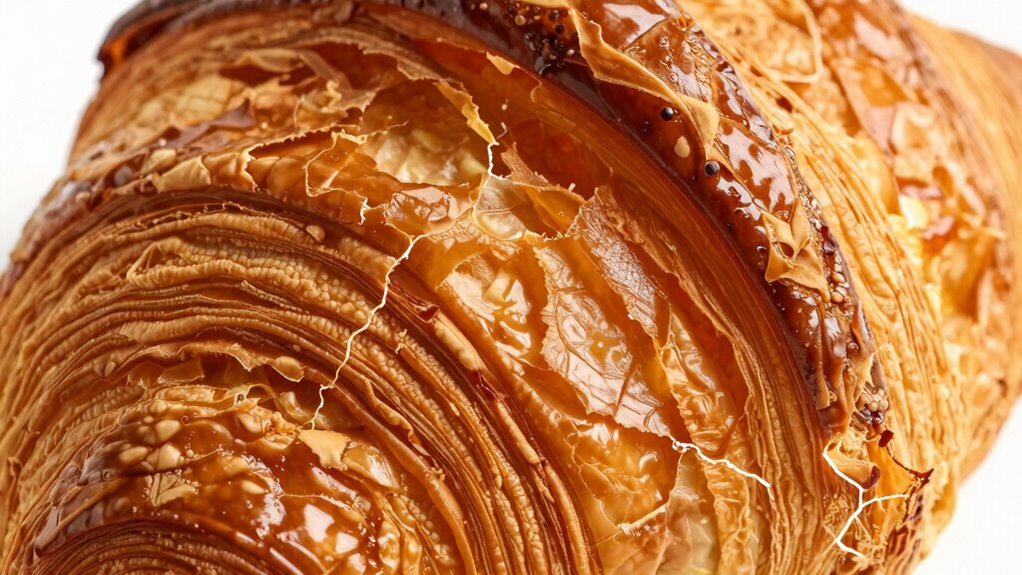

Layer breaks happen when dough and butter aren’t handled carefully. If the butter is too warm or soft, it leaks out and causes weak spots. Overworking or rushing the lamination process can tear the layers apart. Also, using dough that’s too warm or not resting enough makes it harder to roll, increasing tears. Maintaining cold ingredients, proper technique, and patience is key. Stick with it, and you’ll discover how to perfect your croissants.
Key Takeaways
- Use cold, firm butter that resembles cold peanut butter to maintain distinct layers during lamination.
- Ensure dough has proper elasticity through gentle kneading and resting, preventing tears during rolling.
- Maintain consistent, cold temperatures for ingredients and dough to prevent butter from melting and layer breakdown.
- Handle the dough gently and avoid overworking to preserve layer integrity and prevent tearing.
- Take your time with precise folding and avoid rushing to ensure even layers and prevent layer separation.
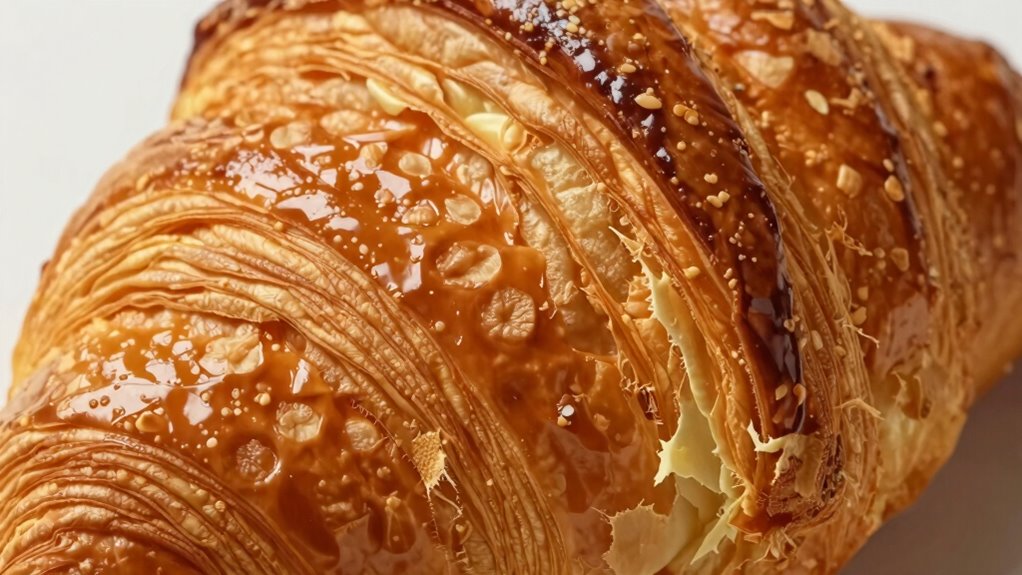
Have you ever wondered what makes a perfect croissant so flaky and tender? The secret lies in the delicate process of lamination, where layers of butter and dough are folded and rolled to create that signature texture. One of the most common issues bakers face is layers breaking or collapsing during baking, which can ruin the entire pastry. To prevent this, understanding the importance of butter consistency and dough elasticity is vital.
First, let’s talk about butter consistency. The butter used in lamination needs to be just right—firm enough to hold its shape but pliable enough to spread evenly between the dough layers. If the butter is too soft or melty, it will seep into the dough, making it difficult to maintain clean layers and risking them breaking apart. Conversely, if the butter is too cold and hard, it won’t spread smoothly, leading to uneven layers that can tear during rolling. The ideal butter should be chilled but pliable, similar to the consistency of cold peanut butter. This allows you to incorporate it seamlessly into the dough without it melting or cracking, guaranteeing even layers that bake into flaky layers.
Dough elasticity also plays a critical role. When you prepare your dough, it needs to be elastic enough to withstand multiple folds and rollings without tearing. If the dough is too stiff, it will resist shaping, and layers can snap or break. On the other hand, if it’s too soft or sticky, it won’t hold its shape, making it hard to create neat, even layers. Proper kneading and resting are essential to develop the right elasticity. Resting the dough in the fridge helps relax gluten, making it easier to roll out thinly and evenly without tearing. During rolling, aim for gentle, even pressure, and avoid overstretching the dough, which can cause weak spots that break during baking.
Temperature control is another key factor. Keep your ingredients, especially butter and dough, cold throughout the process. Warm ingredients cause the butter to soften excessively, leading to uneven layers, while cold ingredients help maintain structure and prevent layer separation. When layering, take your time and ensure each fold is precise. Overworking the dough or rushing the process increases the risk of tearing and broken layers.
Amazon Product B09BVDKSTN
As an affiliate, we earn on qualifying purchases.
Frequently Asked Questions
Can Overproofing Cause Lamination Issues?
Yes, overproofing can cause lamination issues. When you overproof, you weaken the dough’s elasticity, making it more prone to tearing during lamination. This results in layers breaking or not forming properly. To prevent this, keep an eye on proofing times, and don’t let the dough rise too much. Properly proofed dough maintains its elasticity, ensuring smooth lamination and well-defined layers in your croissants.
Does the Type of Butter Affect Lamination Quality?
Yes, the type of butter considerably affects lamination quality. You should choose butter with the right consistency and keep the butter temperature consistent—ideally cold but pliable. If the butter is too soft or too hard, it won’t layer properly, causing layers to break. Using high-quality, high-fat butter ensures even layering and crisp, flaky croissants. Always maintain proper butter temperature throughout the process for the best lamination results.
How Does Humidity Impact Croissant Lamination?
Humidity effects in your kitchen are like a puppeteer’s strings, subtly influencing your croissant dough. High humidity can cause excess moisture, leading to over-hydrated dough that’s sticky and hard to handle, risking broken layers. Conversely, low humidity dries out the dough, making it brittle and prone to cracking. Controlling humidity helps maintain ideal dough hydration, ensuring smooth lamination and perfectly layered croissants every time.
Is Temperature Crucial During the Lamination Process?
Yes, temperature control is vital during lamination because it directly affects dough consistency. If the dough gets too warm, the layers can soften and stick together, causing layers to break. Keep your environment cool and make sure your butter stays firm to maintain proper dough texture. Consistent temperature helps you achieve even, flaky layers, making your croissants perfect every time. Proper temperature management is key to successful lamination.
Can Using a Different Flour Type Improve Lamination?
Think of using a different flour as giving your dough a fresh set of shoes—better support can make all the difference. Yes, alternative flour can improve lamination by enhancing gluten development, leading to stronger, more elastic layers. Whole wheat or pastry flour, for example, can create a more tender yet resilient dough. Experimenting with different flours helps you fine-tune gluten development, resulting in beautifully laminated croissants with perfect layers.

Ooni Halo Pro Spiral Mixer - Dough Stand Mixer with Attachments, 7.3 Quart Capacity and 58 Speed Settings - Charcoal Grey
Better Dough at Home - Make bakery-quality dough at home with groundbreaking spiral mixing technology used in professional...
As an affiliate, we earn on qualifying purchases.
Conclusion
Understanding why layers break during croissant lamination helps you perfect your baking. Remember, even a tiny tear can cause layers to collapse, so handle your dough gently. Did you know that over 60% of bakers report lamination issues at least once? By maintaining proper temperature and careful folding, you’ll reduce this risk considerably. Keep practicing, stay patient, and soon you’ll achieve those beautifully flaky, perfectly layered croissants you’ve been dreaming of!

Honinst Stand Mixer, 6.5QT 10-Speed Tilt-Head Electric Stand Mixer, 3-In-1 Kitchen Mixer with Bowl, Dough Hook, Whisk and Beater, Food Mixer for Baking, Cake and Most Home Cooks, Beige
【Pure copper motor & 10 Speed Control】Powerful pure copper motor with multi-speed adjustment and 6.5QT bowl, access to...
As an affiliate, we earn on qualifying purchases.
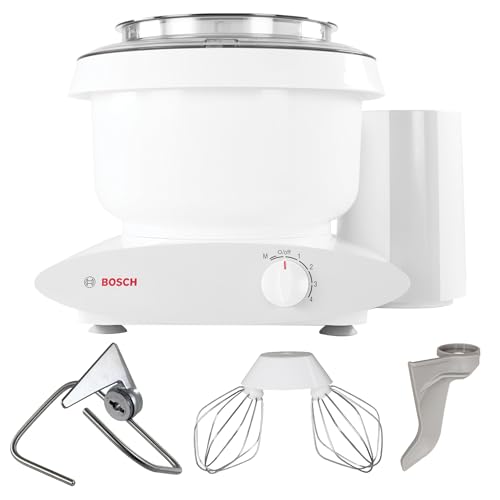
Bosch Universal Plus Stand Mixer 500 Watt, 6.5 Quarts with Wire Whips, Dough Hook & NutriMill Dough Hook Extender Bundle
Lightweight 6.5-quart plastic BPA-free bowl with easy-grip handle and removable drive shaft for easy cleaning; bowl is dishwasher...
As an affiliate, we earn on qualifying purchases.