To prevent split batter, guarantee your ingredients are at proper temperatures, like room temperature, to promote emulsion stability. Incorporate ingredients gradually and use gentle mixing techniques to avoid breaking the emulsion. Adding stabilizers or emulsifiers like lecithin or xanthan gum can also help keep everything together. Watch for signs of separation and act quickly by folding in a bit of liquid if needed. Keep practicing these tips to master a smooth, stable batter—more helpful ideas are ahead.
Key Takeaways
- Incorporate room temperature ingredients and gradually add fats or liquids to maintain stable emulsions.
- Use gentle, steady mixing techniques and avoid overmixing to prevent breaking the emulsion.
- Select appropriate stabilizers or emulsifiers like lecithin, eggs, or xanthan gum for better emulsion stability.
- Maintain consistent oven and ingredient temperatures to prevent separation during mixing and baking.
- Recognize early signs of splitting and re-emulsify by folding in small amounts of liquid if separation occurs.
What Are Emulsions and Why Do They Matter in Baking?

Emulsions are mixtures of two liquids that typically don’t blend together, such as oil and water. In baking, they’re essential for creating smooth, stable textures. Milk proteins play a key role in stabilizing fat emulsions by surrounding fat droplets, preventing them from separating. When you mix ingredients like eggs, milk, or butter with liquids, you form an emulsion that disperses fat evenly throughout the batter. This process enhances the batter’s consistency, improves shelf life, and contributes to a tender crumb. Proper emulsification techniques ensure uniform distribution of fats and liquids, resulting in better baked goods. Additionally, understanding the role of milk proteins helps you control the stability of emulsions and achieve consistent results. Incorporating techniques for stable emulsions can significantly improve the quality of your baked products. Without proper emulsification, baked goods can turn out dense or greasy. Being aware of the stability factors in emulsions helps prevent splitting or separation in your batter, ensuring a desirable texture and appearance. Recognizing how water and fat interactions influence emulsion stability allows bakers to troubleshoot issues more effectively. Understanding how milk proteins and fat emulsions work helps you control texture and prevent issues like splitting or separation in your baked creations.
What Causes Batter to Split During Mixing?
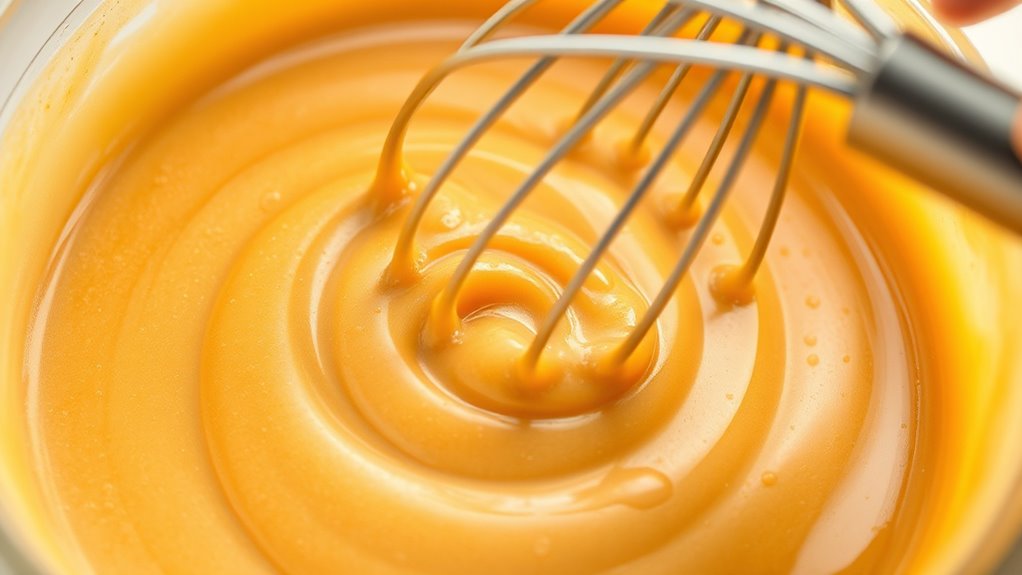
Batter can split during mixing when ingredients aren’t at the right temperatures or when you mix too fast. Using unequal ingredient ratios can also cause instability, making the batter separate. Paying attention to these factors helps keep your mixture smooth and well-emulsified. Additionally, ensuring proper ingredient ratios and maintaining a clean mixing environment can further prevent splitting. Monitoring the lifecycle and performance metrics of your batter can help identify when it’s at risk of splitting before it occurs. Being mindful of piercing care and hygiene practices can also help maintain the integrity of your ingredients and prevent contamination that might affect batter consistency. Incorporating adaptive mixing techniques can optimize the process and reduce the likelihood of separation.
Improper Ingredient Temperatures
When ingredients are too cold or too hot, they can cause the mixture to split during mixing. Temperature imbalances disrupt the emulsion, making it difficult to maintain proper ingredient ratios. Cold ingredients—like butter or eggs—can cause fats to solidify, preventing smooth blending. Hot ingredients may cause fats to melt too quickly, breaking the emulsion. To prevent this, verify all ingredients are at room temperature before mixing. Pay attention to mixing speed; overly aggressive mixing with improperly tempered ingredients can further destabilize the batter. Temperature control is crucial for maintaining emulsion stability and achieving a smooth batter. Proper temperature control allows fats and liquids to combine seamlessly, reducing the risk of splitting. Always measure ingredients accurately and adjust temperatures accordingly to keep your batter smooth and well-emulsified. Understanding ingredient management is essential for achieving consistent baking results.
Excessive Mixing Speed
Mixing at too high a speed can quickly destabilize your emulsion, causing the batter to split. When you don’t control your speed, the vigorous agitation can break the delicate balance between fats and liquids. To prevent this, use slow to medium speeds during initial mixing, especially when combining ingredients that form emulsions. Employ proper mixing techniques, such as gradually increasing speed and stopping frequently to check consistency. This careful approach helps maintain emulsion stability and prevents separation. Remember, the goal is to blend ingredients evenly without overworking the batter. Speed control is key; rushing can lead to separated, split batter, ruining your baked goods. Focus on gentle, steady mixing to keep your emulsion intact and achieve the best results. Detecting passive voice can also improve clarity and ensure your instructions are direct and easy to follow.
Unequal Ingredient Ratios
Unequal ingredient ratios can cause your emulsion to break during mixing because the imbalance prevents fats and liquids from blending smoothly. When the proportions of ingredients are off, the mixture can become unstable, leading to a split batter. An ingredient imbalance disrupts the natural emulsion, making it harder for fats, liquids, and other components to combine properly. To prevent this, use precise measuring and follow recommended mixing techniques, ensuring ingredients are added gradually and evenly. Properly balanced ratios promote a stable emulsion, reducing the risk of separation. Pay close attention to your recipe and avoid rushing the process, as improper ingredient ratios and hasty mixing are common causes of split batter in baking. Additionally, understanding the importance of vetted deals on buy products can help you find quality kitchen tools that assist in achieving consistent mixing results. Being aware of how emulsions work can also help troubleshoot issues if your batter begins to split during preparation. Understanding the science of emulsification can further enhance your ability to maintain a stable batter.
How Temperature Impacts Emulsion Stability in Baking

Temperature plays a vital role in keeping your emulsion stable during baking. If the oven is too hot, the emulsion can break down, causing separation and affecting texture. Finding the ideal baking temperature helps guarantee your batter stays cohesive and produces the best results. Additionally, maintaining a consistent temperature minimizes the risk of air quality issues, which can influence overall baking outcomes. Proper oven calibration and understanding thermal stability are essential for successful baking with emulsions. Being aware of ingredient temperatures during mixing can also help maintain emulsion integrity throughout the process, as understanding emulsion chemistry can further optimize your baking results. Moreover, fluctuations in temperature control can lead to inconsistent results, emphasizing the importance of precise oven settings.
Temperature and Emulsion Breakdown
When heat rises during baking, it can cause emulsions to break down if they aren’t stable enough. Temperature fluctuation and ingredient temperature play vital roles in this process. To prevent emulsion breakdown, keep these points in mind:
- Maintain consistent ingredient temperature before mixing to guarantee emulsion stability.
- Avoid sudden temperature changes during baking, as they can destabilize the emulsion.
- Use precise oven temperatures to prevent overheating, which can cause fats and liquids to separate.
- Incorporating connected equipment such as smart ovens can help monitor and control temperature fluctuations more accurately. Additionally, understanding emulsion stability and how it responds to temperature variations can help bakers better predict and prevent split batter.
Optimal Baking Temperatures
Maintaining the right baking temperature is essential for keeping emulsions stable throughout the process. Too high, and heat can cause fats and liquids to separate, leading to split batter and loss of fruit flavor. Too low, and gluten development may be insufficient, affecting texture and structure. Ideal temperatures ensure even heat transfer, preserving emulsion stability. Proper temperature control is also crucial for achieving consistent results and preventing batter split during baking.
How to Create Stable Emulsions for Smooth Batters

Creating a stable emulsion is key to achieving smooth, well-textured batters. To do this, focus on these three essential tips:
- Use Proper Technique: Whisk ingredients vigorously to break fats into tiny droplets, encouraging a uniform mixture.
- Select Compatible Flavors: Pair ingredients like vanilla with butter or citrus with oil to enhance stability and flavor harmony.
- Consider Ingredient Substitution: Swap out oils for emulsifiers like lecithin or eggs, which naturally stabilize emulsions.
Why Gradual Ingredient Addition Prevents Batter From Splitting

Adding ingredients gradually is essential because it allows the fats and liquids to combine smoothly, preventing the batter from splitting. When you add ingredients slowly, you give the mixture time for proper ingredient integration, which maintains a stable emulsion. Sudden addition of fats or liquids can overwhelm the existing mixture, causing the fats to separate and the batter to split. By practicing gradual addition, you ensure each new ingredient is fully incorporated before adding more, promoting even distribution. This method helps keep the batter cohesive and prevents undesirable separation. Consistent ingredient integration is key to achieving a uniform texture and preventing split batter, especially when working with delicate emulsions. Take your time with ingredient addition to maintain emulsification and baking success.
How to Use Stabilizers and Emulsifiers Effectively in Baking

Using stabilizers and emulsifiers effectively can substantially improve your baking results by ensuring your batter stays cohesive and stable. To avoid emulsion breakdown, choose the right stabilizer types, like gelatin, xanthan gum, or lecithin. Here are three tips:
- Select the appropriate stabilizer based on your recipe’s fat and liquid content.
- Add stabilizers gradually, mixing thoroughly to prevent emulsion breakdown.
- Use emulsifiers in the right proportions; too much can cause unwanted texture or separation.
How to Recognize and Fix Split Batter While Mixing?

Recognizing split batter early is essential to preventing wasted ingredients and compromised baked goods. If your batter appears curdled or separated during mixing, it’s a sign it has split. To fix this, first stop mixing immediately. For egg substitution issues, adding a small amount of warm water or milk can help bring the emulsion back together. If you used oil alternatives like applesauce or yogurt, ensure they’re well incorporated and at room temperature. Gently fold in a tablespoon of liquid, such as milk or water, to re-emulsify the mixture. Avoid overmixing, which worsens separation. Keeping ingredients at similar temperatures and adding liquids gradually also helps prevent splitting. Recognizing these signs early allows you to correct the emulsion before it affects the final product.
Tips to Prevent Batter Splitting in Different Recipes
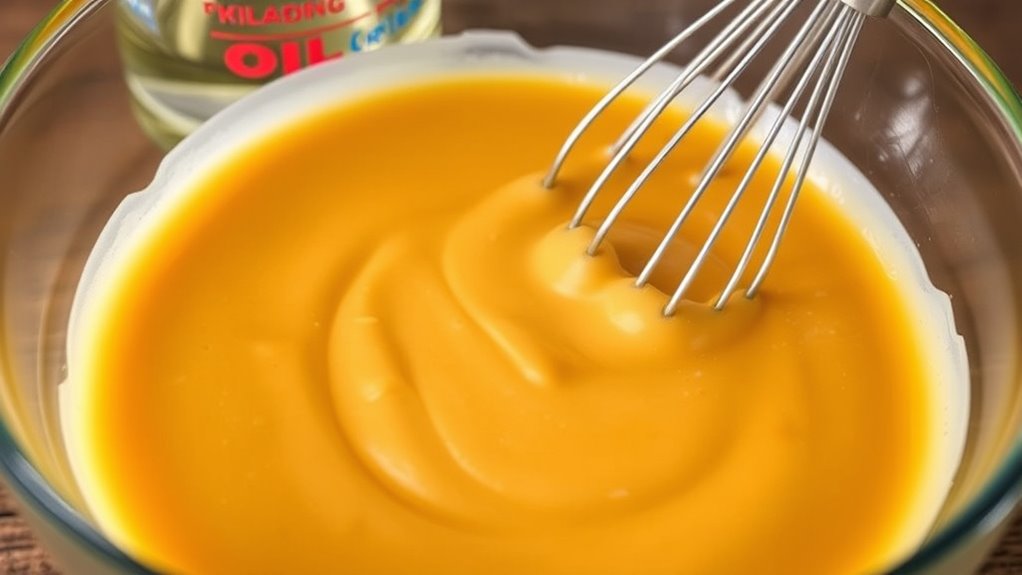
To prevent batter splitting across various recipes, maintaining proper ingredient temperatures and ratios is key. Ensuring ingredients are at the right temperature promotes emulsion stability and improves ingredient interactions. Here are three essential tips:
- Use room temperature ingredients—cold or hot ingredients can disrupt emulsion stability, leading to splitting.
- Blend gradually—add liquids slowly while mixing to foster better ingredient interactions.
- Balance ratios carefully—too much oil or fat can overpower other ingredients, destabilizing the emulsion.
How to Keep Emulsions Stable Throughout the Baking Process
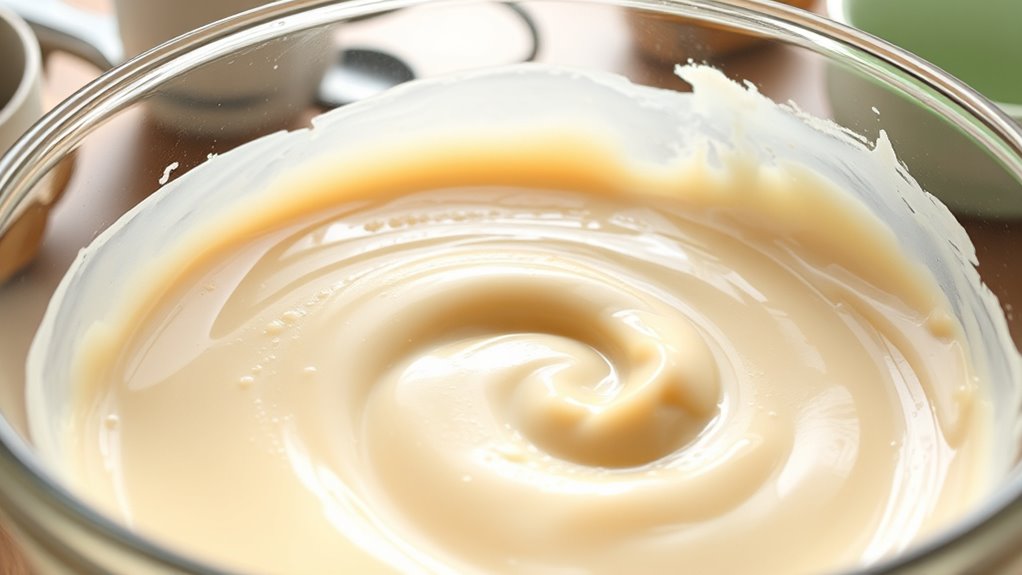
Maintaining emulsion stability during baking requires careful attention to how ingredients interact under heat. To achieve this, focus on the creaming technique, which ensures even fat incorporation into the batter. Proper creaming creates a stable foundation by evenly distributing butter or oil with sugar, helping the emulsion resist breaking when heated. When incorporating fats, add them gradually and mix thoroughly to maintain a uniform emulsion. Avoid abrupt temperature changes or overmixing, as these can destabilize the emulsion. Using room temperature ingredients also helps fats blend smoothly, preventing separation. Keep an eye on baking temperature; moderate heat preserves emulsion integrity longer. By mastering creaming and careful fat incorporation, you can keep your emulsion stable throughout the baking process, resulting in a smooth, well-structured batter.
Frequently Asked Questions
Can Substitution of Ingredients Increase the Risk of Batter Splitting?
Yes, ingredient swaps can increase the risk of batter splitting if you’re not careful. Substitution risks include altering the fat, liquid, or emulsifier balance, which can destabilize the emulsion. For example, replacing butter with oil may weaken the batter’s structure, leading to splitting. Always consider how each ingredient interacts, and try to match their properties closely to maintain a stable emulsion and prevent split batter.
How Does Overmixing Affect Emulsion Stability in Baking?
Overmixing is like stirring a pot too vigorously—it can cause emulsion breakdown. When you mix at high speed, the fats and liquids struggle to stay united, risking the batter splitting. To keep the emulsion stable, mix gently and just until ingredients are combined. This prevents the proteins from overworking, helping your batter stay smooth and cohesive, ensuring your baked goods turn out perfect every time.
Are There Specific Types of Fats That Promote Better Emulsification?
Certain types of fats, like melted butter, vegetable oils, and shortening, promote better fat emulsification because they blend easily with liquids and help stabilize the batter. Using these fats guarantees smoother emulsions, preventing separation and resulting in a more uniform batter. Keep in mind, fats with a balanced fatty acid composition work best for emulsification, making your baked goods tender and consistent.
What Role Does pH Play in Emulsion Stability During Baking?
Ever wonder what’s behind a stable batter? It’s the pH balance that keeps your emulsion stable during baking. When the pH is just right, fats and liquids bond seamlessly, preventing split batter. Too acidic or alkaline, and stability breaks down, risking separation. By maintaining proper pH levels, you guarantee your mixture stays smooth, yielding perfect baked goods every time. Stay attentive—pH truly controls your emulsion’s fate!
Can Refrigeration or Resting Time Impact Batter Emulsions?
Refrigeration effects can help stabilize your batter emulsion by slowing down ingredient separation and allowing flavors to meld. Resting time benefits include improved emulsion stability as fats and liquids integrate better, reducing the risk of splitting. During this period, the batter’s ingredients can fully combine, making the mixture smoother and more uniform. So, refrigerate and rest your batter to enhance stability and achieve better baking results.
Conclusion
Understanding emulsions is key to preventing split batter, ensuring your baked goods turn out perfect. Did you know that using proper techniques can reduce batter splitting by over 60%? By controlling temperature, adding ingredients gradually, and using stabilizers correctly, you can achieve smooth, stable emulsions every time. Master these tips, and you’ll boost your baking success, creating delicious treats with consistent texture and quality. Happy baking!