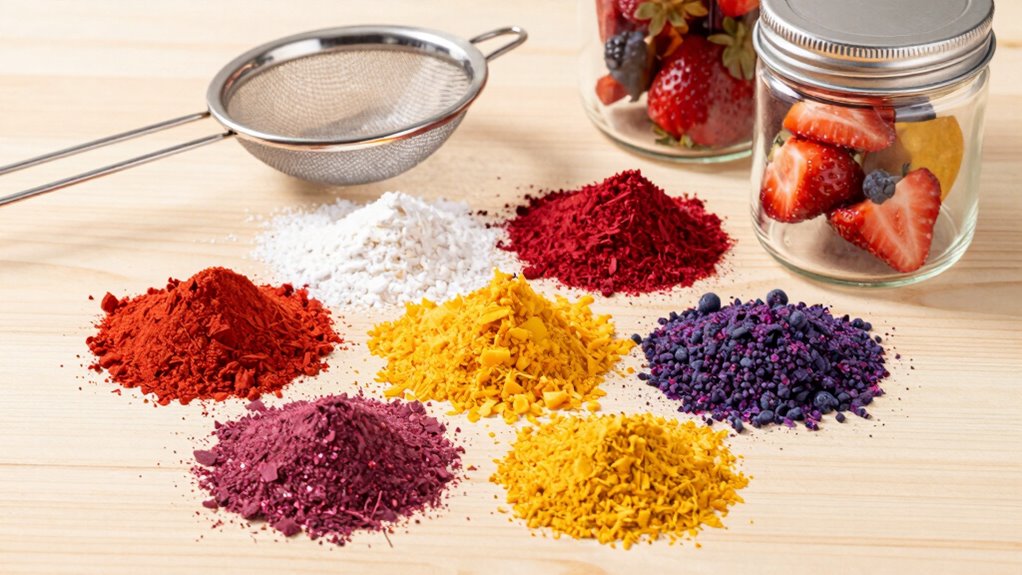

To make fruit powders that don’t clump, start by choosing ripe, fresh fruits and dry them thoroughly using a dehydrator or low-temperature oven. Grind the dried fruit finely and sift to remove lumps, ensuring a smooth, uniform powder. Store the powder in airtight, moisture-proof containers with desiccants, and control humidity levels to keep moisture out. Using natural anti-caking agents can help too. For more tips on keeping your fruit powder free-flowing, keep exploring these steps.

Get baking supplies delivered free with Prime
- Fast, free delivery on millions of items
- Prime Video, Amazon Music and more included
- Member-only deals all year
Key Takeaways
- Use properly dried, brittle fruits to prevent excess moisture that causes clumping.
- Sift and grind fruit powders finely, re-sieving to eliminate clumps and ensure uniformity.
- Store powders in airtight, moisture-resistant containers with desiccants to maintain dryness.
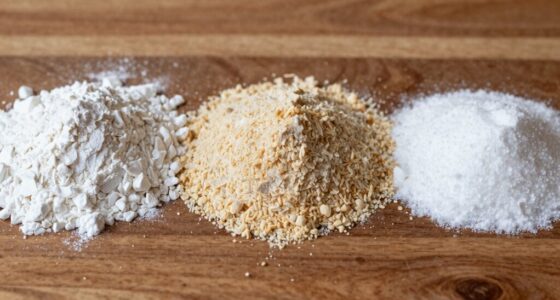
- Incorporate natural anti-caking agents like rice flour or silica, mixing thoroughly for even distribution.
- Keep storage environments cool, dry, and well-ventilated, regularly inspecting seals and humidity levels.
fruit dehydrator for drying fruits
As an affiliate, we earn on qualifying purchases.
As an affiliate, we earn on qualifying purchases.
How to Choose and Prepare Fruits for Perfect Powdering
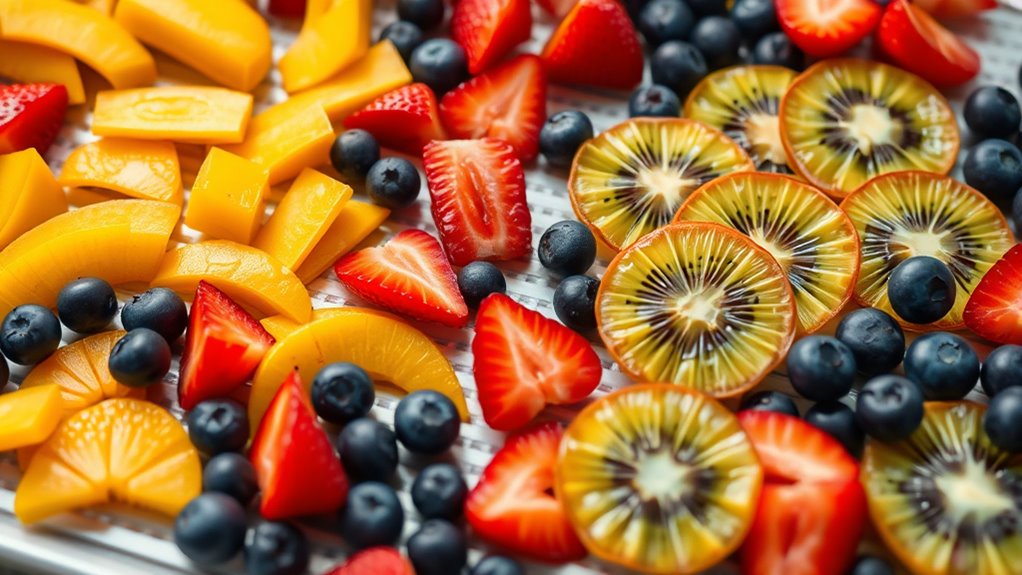
To achieve the best fruit powder, you need to start with selecting ripe, fresh fruits. Focus on good fruit selection by choosing fruits that are free from bruises, mold, or blemishes. Ripeness assessment is key; ripe fruits will be sweeter, more flavorful, and easier to process. Check for vibrant color, firm texture, and a fragrant aroma to determine ripeness. Avoid underripe or overripe fruits, as they can affect the powder’s quality and shelf life. Properly selected fruits will yield a finer, more consistent powder. When preparing, wash and remove stems or pits, ensuring all contaminants are eliminated. Using ripe, fresh fruits from the start guarantees your fruit powder will be flavorful, aromatic, and free of clumps.
silica gel desiccant packs for food storage
As an affiliate, we earn on qualifying purchases.
As an affiliate, we earn on qualifying purchases.
Dry Fruits Properly for Fine, Fluffy Fruit Powders
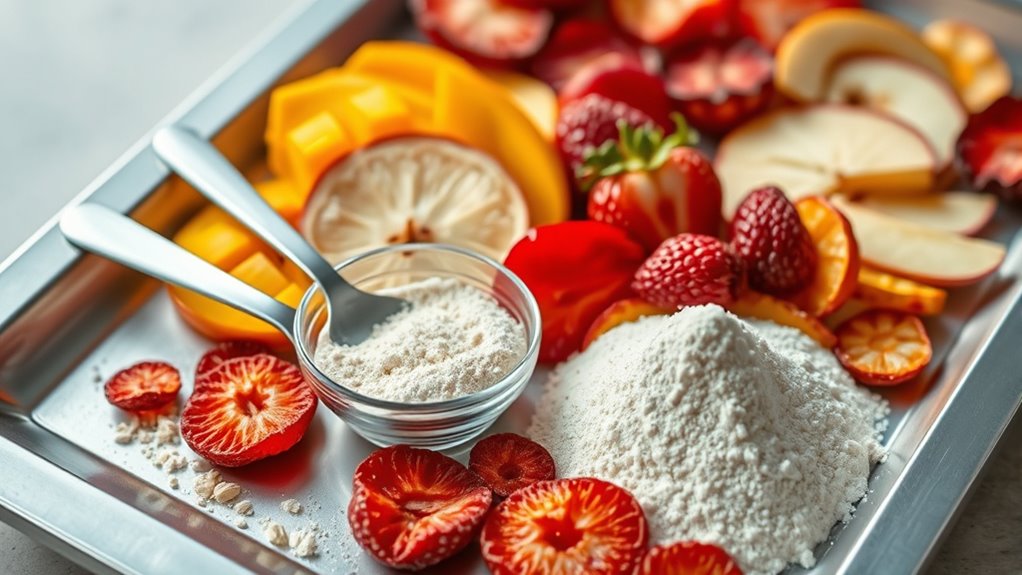
Ensuring your fruit is thoroughly dried is essential for achieving a fine, fluffy powder. Proper fruit drying prevents moisture from causing clumping and helps maintain a consistent powder texture. Use a dehydrator or low-temperature oven to dry the fruit evenly, avoiding over-drying or uneven spots. The goal is to remove all moisture without burning or damaging the fruit’s natural flavor. Check the fruit regularly and feel for brittleness; it should snap easily when fully dried. Properly dried fruit reduces the risk of moisture retention, which can negatively impact powder consistency. Once dried, store the fruit in an airtight container to preserve its dryness before grinding. Taking these steps ensures your fruit powder remains smooth, free-flowing, and clump-free. Using sizing and load‑planning tools can help determine the optimal drying time and temperature, ensuring consistent results. Additionally, understanding fruit dehydration techniques can further improve the quality of your powders. Proper drying techniques are also crucial for preventing clumping caused by residual moisture. Incorporating moisture measurement methods can help verify that the fruit is adequately dried before processing. Implementing proper drying equipment can also enhance efficiency and consistency in your drying process.
natural anti-caking agents for powders
As an affiliate, we earn on qualifying purchases.
As an affiliate, we earn on qualifying purchases.
Grind and Sift Your Fruit to Keep Clumps at Bay
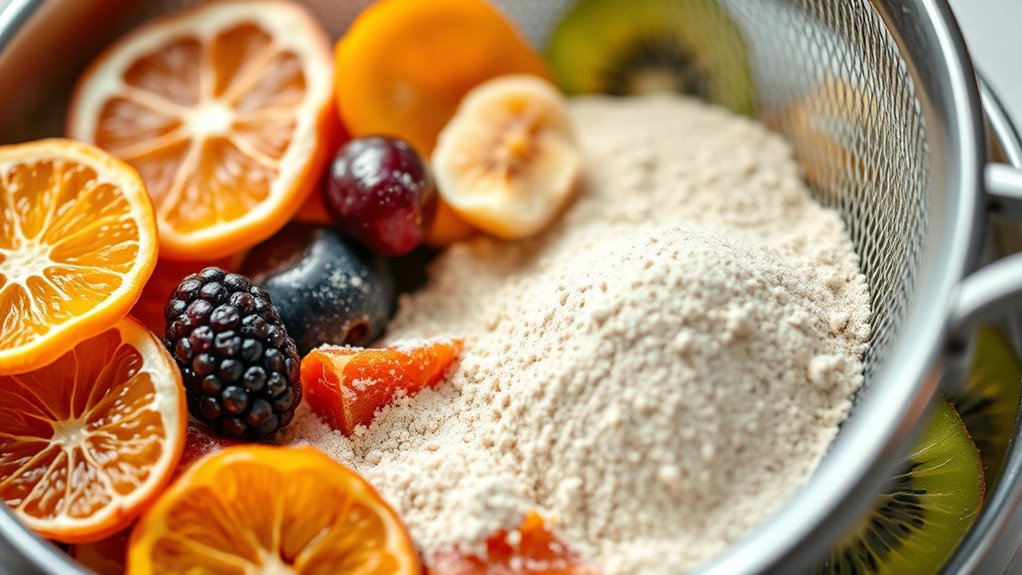
To keep your fruit powder smooth and free of clumps, you need to grind it finely and sift out any larger pieces. Using the right sifting tools makes this step quick and effective. Once your powder is perfect, store it in airtight containers to maintain its freshness and prevent clumping. For optimal results, consider how your storage containers can contribute to clump prevention and overall powder stability. Incorporating techniques from sensory processing strategies can also help in managing moisture and environmental factors that lead to clumping. Additionally, understanding the importance of proper maintenance costs and environmental compliance can influence the longevity and quality of your stored powders. Paying attention to environmental factors like humidity and temperature can further ensure your fruit powders stay dry and free-flowing.
Choose Fine Fruit
Choosing the right fruit is essential for producing smooth, high-quality powders. Fine fruit guarantees your powder has a consistent texture and preserves its fruit flavor. Select ripe, firm fruit with minimal moisture to prevent clumping. When you start with finely textured fruit, grinding becomes easier and results in a finer powder. This also helps retain the nutritional value, as less moisture and larger particles can degrade nutrients. If your fruit is too coarse, it may cause lumps that are hard to break apart later. By choosing small, uniform pieces, you’ll achieve a smoother, more even powder. Remember, quality starts with your fruit selection. The better the fruit’s texture and ripeness, the better your final powder will be—flavorful, nutritious, and clump-free. Additionally, understanding the Vetted – Flat Iron Bike can help you diversify your investments for financial stability, and paying attention to sound vibrations in processing can improve the overall quality of your powders. Proper dehydration techniques also play a crucial role in preventing clumping and maintaining powder quality.
Use Proper Sifting Tools
Once you’ve prepared your fruit, the next step is to use the right sifting tools to achieve a smooth, even powder. Proper sifting guarantees your fruit powder remains free of clumps, making it ideal for baking techniques and flavor pairing. Use a fine mesh sieve or flour sifter to break up any larger pieces and aerate the powder. For best results, consider these tips:
- Use a sturdy, fine mesh sieve for consistent results
- Tap or shake gently to avoid damaging delicate fruit particles
- Re-sift the powder if clumps form during mixing
- Employ a small spatula to help push powder through the sieve
- Combine sifting with a gentle grind for finer texture and better mixing
- Remember that clump prevention is essential for maintaining the quality of your fruit powder. Additionally, incorporating proper storage methods can help preserve the powder’s freshness and prevent future clumping. Proper storage techniques also involve controlling humidity and temperature, which are crucial for preserving freshness. To further improve your results, consider using appropriate grinding techniques to enhance the powder’s consistency. This process guarantees a uniform, clump-free fruit powder perfect for your recipes. Maintaining proper storage conditions and understanding powder preservation are vital steps for long-term quality.
Store in Airtight Containers
After grinding and sifting your fruit into a fine powder, storing it in airtight containers is essential to prevent moisture from causing clumps. Proper packaging materials help maintain fruit preservation by keeping humidity out and protecting the powder from air exposure. Choose containers with tight-fitting lids, such as glass jars or plastic containers designed for food storage. Avoid using porous or flimsy packaging that can let in moisture or odors. Label your containers clearly to track freshness and batch dates. Keeping your fruit powders in airtight containers ensures they stay dry, free-flowing, and easy to use over time. This simple step preserves the quality, flavor, and texture, making your fruit powders long-lasting and clump-free. Incorporating smart storage solutions can further optimize your preservation process by monitoring humidity levels and maintaining optimal storage conditions. Additionally, selecting appropriate storage containers can significantly extend shelf life and prevent accidental exposure to environmental factors. Using containers made from non-porous materials also helps minimize moisture transfer and maintain powder integrity over time, especially when combined with proper humidity control methods to ensure optimal storage conditions.
fine mesh sifting sieve for powders
As an affiliate, we earn on qualifying purchases.
As an affiliate, we earn on qualifying purchases.
Use Anti-Caking Agents Correctly to Prevent Clumping
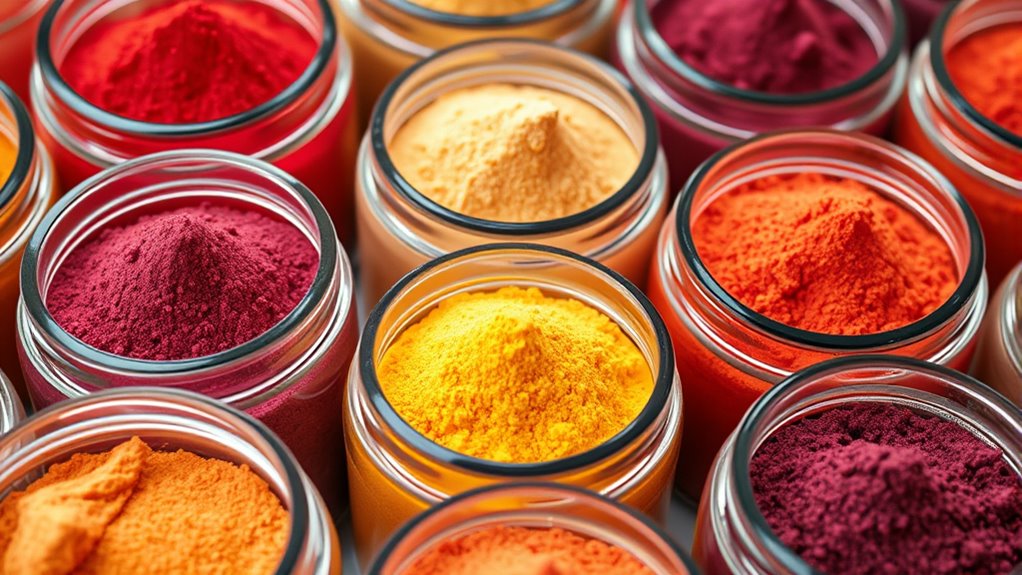
Anti-caking agents are vital for keeping fruit powders free-flowing and easy to use. When applying anti-caking agents, make sure you follow the recommended amount—too much can affect flavor, while too little won’t prevent clumping. Use natural additives like rice flour or silica, which are effective anti caking agents. Proper mixing is essential; evenly distribute these agents throughout the powder to prevent clumps from forming. Store your fruit powder in a cool, dry place after incorporating anti-caking agents to maintain their effectiveness. Here are some key tips:
Use natural anti-caking agents and store in a cool, dry place for best results.
- Measure anti-caking agents accurately
- Use natural additives for cleaner labels
- Mix thoroughly for even distribution
- Avoid moisture exposure
- Maintain proper storage conditions
Ensuring you use vetted anti-caking agents helps keep your fruit powders free-flowing and clump-free, and understanding how air quality benefits from aroma diffusers can also contribute to a better environment during storage.
Store Your Fruit Powder in Conditions That Keep It Flowing
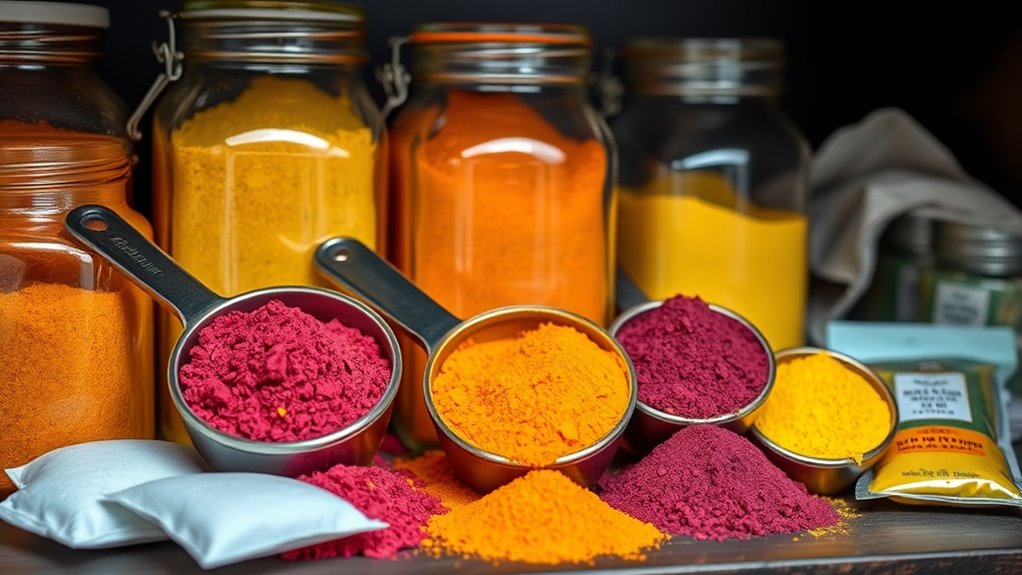
To keep your fruit powder flowing smoothly, you need to control humidity levels and store it in a cool place. Using airtight containers helps prevent moisture from getting in and causing clumping. Make sure to choose a storage spot that’s consistently cool to maintain its quality and flow.
Control Humidity Levels
Have you considered how humidity can affect your fruit powder’s flowability? Excess moisture can cause clumping, making your powder hard to handle. To prevent this, prioritize humidity control and moisture management in storage. Keep your powders in a cool, dry environment where humidity levels are stable. Using desiccants or silica gel packs inside storage containers helps absorb excess moisture. Avoid storing near heat sources or in humid areas like bathrooms or kitchens. Ensure your storage area has proper ventilation to reduce humidity buildup. Regularly check your storage conditions to maintain low humidity, preventing clumping and ensuring your fruit powder remains free-flowing.
- Store in a cool, dry place
- Use desiccants or silica gel packs
- Avoid humid areas like kitchens or bathrooms
- Ensure proper ventilation
- Regularly monitor humidity levels
Use Airtight Containers
Using airtight containers is essential for maintaining your fruit powder’s flowability. These containers prevent moisture from seeping in, which is critical for effective moisture control. When moisture enters, it can cause clumping and spoilage, ruining your powder’s smooth texture. Choose containers with secure seals that keep out air and humidity. Make sure they’re clean and dry before filling to avoid introducing unwanted moisture. Label your containers clearly for easy identification and storage. Storing your fruit powder in airtight containers also helps preserve its flavor and freshness over time. Regularly check the seals and lids for wear, replacing them if needed. Proper storage in airtight containers ensures your fruit powder stays loose, dry, and easy to use whenever you need it.
Store in Cool Area
Storing your fruit powder in a cool area helps maintain its flowability and prevents it from clumping or spoiling. Cooler temperatures slow moisture absorption and inhibit mold growth, keeping your powder fresh longer. Use seasonal fruit options to vary flavors and guarantee quality. Proper packaging techniques, like sealed containers, are essential to protect against humidity. Choose a location away from direct sunlight and heat sources. Consider these tips for ideal storage:
- Keep in a pantry or cupboard away from heat
- Use airtight, moisture-proof containers
- Add silica gel packs to absorb humidity
- Store in a dark, cool corner
- Rotate stock regularly to maintain freshness
Maintaining a cool environment ensures your fruit powders stay free-flowing and shelf-stable.
Handle and Pack Your Fruit Powder to Avoid Moisture
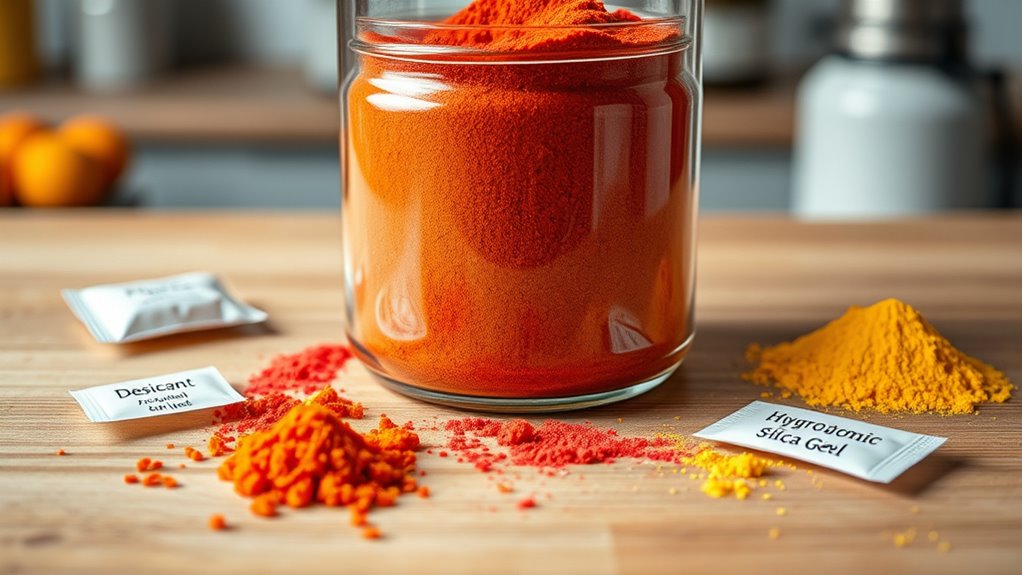
To keep your fruit powder dry and preserve its quality, you need to handle and pack it carefully to prevent moisture from entering. Moisture absorption can quickly cause clumping and spoilage, so use proper packaging techniques. Store your powder in airtight containers made of moisture-resistant materials like glass or high-quality plastic. Before sealing, ensure the container is completely dry and free of any residual moisture. When transferring the powder, do so with clean, dry tools to avoid introducing humidity. Consider adding desiccant packets inside the packaging to absorb any residual moisture. Always store the packed powder in a cool, dry place away from humidity sources. Proper handling and packaging techniques are vital to maintaining the powder’s free-flowing texture and extending its shelf life.
What Are the Best Fixes for Common Clumping Problems?
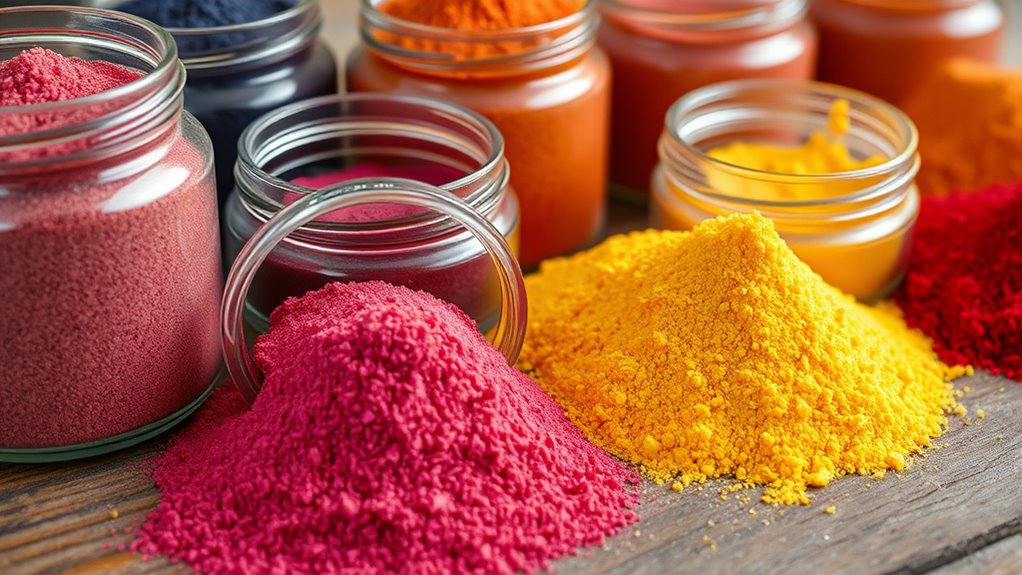
Clumping is a common issue that can ruin the texture and usability of your fruit powder. To fix this, focus on methods that improve flow and preserve flavor. You can try adding natural anti-caking agents like rice flour or silica gel packs to absorb moisture. Using packaging innovations such as vacuum-sealing or airtight containers keeps humidity out. Consider incorporating flavor enhancement techniques, like mixing in small amounts of sugar or salt to prevent moisture absorption. Regularly stirring or breaking up clumps during storage can also help maintain powder consistency. Finally, make sure your storage area is cool and dry. Here are some effective fixes:
- Add natural anti-caking agents
- Use airtight or vacuum-sealed packaging
- Incorporate flavor enhancers like sugar or salt
- Store in a cool, dry place
- Regularly break up clumps
Frequently Asked Questions
Can I Make Fruit Powders From Frozen Fruits?
Yes, you can make fruit powders from frozen fruits. First, you need to go through the freezing process to preserve the fruit’s texture. Once frozen, let the fruit thaw slightly or dry it thoroughly to remove excess moisture. Then, blend or grind it into a fine powder. Keep in mind that frozen fruits may be more moist, so make certain they’re properly dried to prevent clumping in your powder.
What Are Natural Alternatives to Anti-Caking Agents?
Did you know that over 80% of consumers prefer natural ingredients? To replace anti-caking agents, you can use natural preservatives like rice flour or arrowroot powder, which absorb moisture and prevent clumping. Additionally, natural flavor enhancers such as seaweed extracts or dried herbs can improve taste without additives. These options keep your fruit powders free-flowing and flavorful, satisfying health-conscious customers who seek clean labels and natural solutions.
How Long Can Fruit Powder Be Stored Safely?
You can safely store fruit powder for up to a year if kept in an airtight container in a cool, dark place. Proper storage minimizes spoilage risks and preserves flavor. However, if you notice any off smells, discoloration, or clumping, it’s best to discard it. To extend its shelf life, consider adding natural desiccants or using vacuum-sealed containers, ensuring freshness and safety over time.
Does the Type of Fruit Affect Clumping?
Yes, the type of fruit affects clumping because different fruit consistency and moisture content influence drying methods. Fruits with higher water content, like berries or peaches, tend to clump more if not dried thoroughly. Low-moisture fruits, such as bananas or apples, dry evenly and resist clumping better. To avoid clumping, you should adjust your drying methods based on each fruit’s unique moisture level and guarantee complete dehydration before grinding into powder.
Can Adding Sugar Prevent Fruit Powder From Clumping?
Ever wondered if adding sugar prevents clumping? Sugar can help by inhibiting moisture absorption and reducing sugar crystallization, which causes clumping. It acts as a natural anti-caking agent, keeping your fruit powder free-flowing. However, too much sugar might alter flavor or texture. So, a small amount can be beneficial, but guarantee you balance it correctly to maintain the powder’s quality and prevent unwanted clumping.
Conclusion
Remember, patience and proper care are key—like tending a delicate garden. By choosing the right fruits, drying them thoroughly, and storing your powder properly, you’ll keep clumps at bay. Sift and handle your powder gently, and use anti-caking agents wisely. With these steps, your fruit powders will flow smoothly, ready to add flavor and color whenever you need. After all, a well-made powder is like a well-tended garden—beautiful and effortless to enjoy.
Columbus Day / Indigenous Peoples' Day Picks
long weekend sales
As an affiliate, we earn on qualifying purchases.