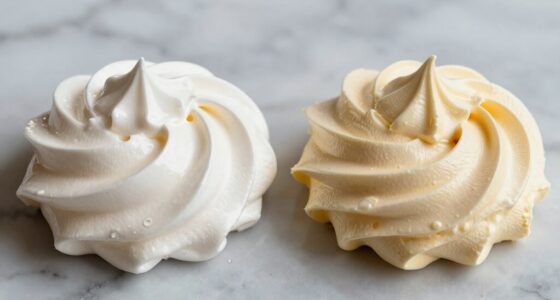
To color frosting without turning it bitter, opt for natural, food-safe colorants like beet juice, spinach extract, or turmeric, and add them gradually to avoid overwhelming flavors. Using gel food colors instead of liquid dyes helps maintain consistency and vibrant hues without thinning the frosting. Stir continually to guarantee even distribution and prevent color bleeding. For more tips on achieving beautiful, flavor-preserving colors, keep exploring the best techniques and ingredient choices.
Key Takeaways
- Use natural, food-safe colorants like beet juice, turmeric, or spinach powder to avoid bitterness.
- Add coloring gradually in small amounts to prevent overpowering flavors and bitterness.
- Choose gel or paste colorings over liquid dyes for vibrant hues without diluting or altering taste.
- Incorporate natural colorants that blend seamlessly, preserving frosting flavor and avoiding chemical aftertastes.
- Test color intensity before full addition to ensure vibrant color without excess dye that could cause bitterness.
What Are the Types of Food Coloring, and How Do They Affect Taste?
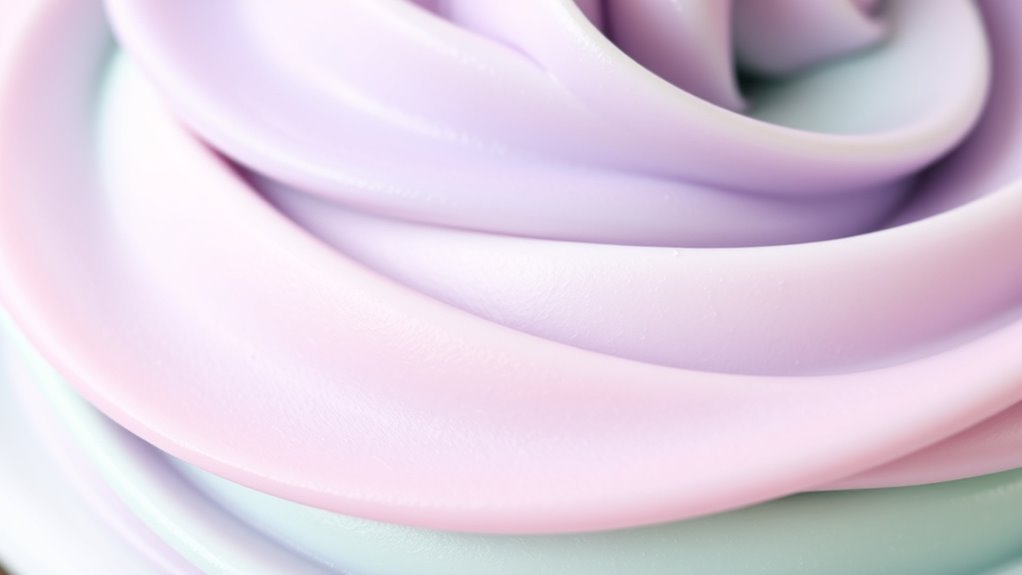
There are several types of food coloring, each with different ingredients and impacts on taste. Natural alternatives are popular because they add color without synthetic chemicals, making them a healthier choice. These include options like beet juice, turmeric, and spinach powder, which provide vibrant shades while remaining taste neutral options—meaning they won’t alter your frosting’s flavor. Synthetic food colorings are more common and come in liquid, gel, or powder forms; however, they sometimes introduce a slight chemical taste. When choosing a coloring, consider how it might affect taste. Natural alternatives tend to blend seamlessly, preserving your frosting’s original flavor, while artificial options might require careful use to avoid bitterness or unwanted aftertastes.
How Do I Choose the Best Frosting Base for Coloring?
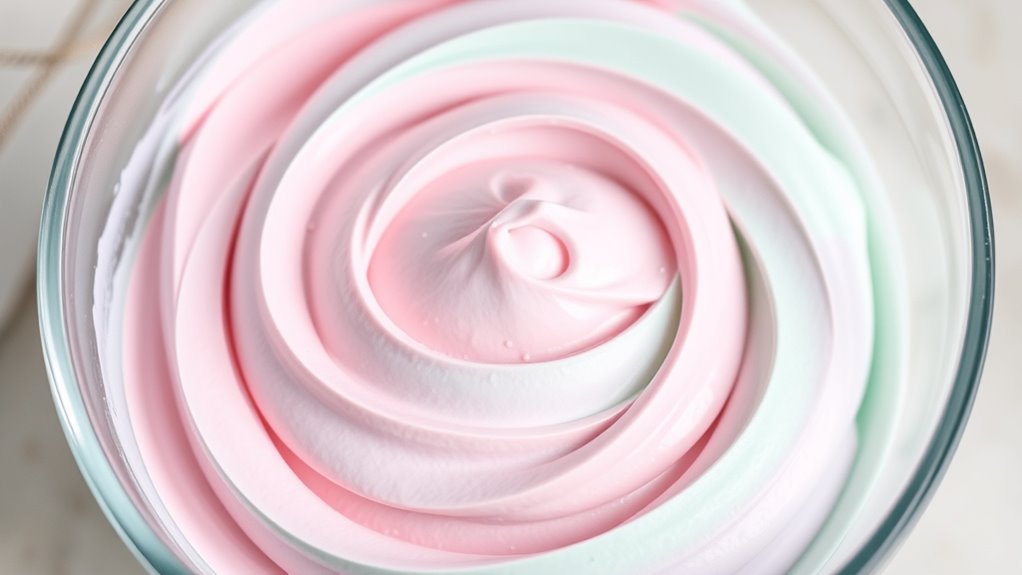
Choosing the right frosting base is essential to achieve vibrant colors without compromising flavor. The frosting consistency influences how easily you can blend colors; a smooth, creamy base works best for even coloring. Buttercream is popular because it’s versatile and holds color well, but it can sometimes turn bitter if overcolored. To keep flavors fresh and natural, consider using cream cheese or Greek yogurt-based frostings, which also offer good consistency. Natural coloring options like beet juice, spinach, or turmeric can provide color without adding bitterness or artificial flavors. Always start with a small amount of coloring and gradually build up to your desired shade. Selecting a frosting base that balances smoothness and flavor stability ensures your colors stay vibrant without sacrificing taste. Proper tool selection and technique can also help achieve more consistent and vivid results. Additionally, experimenting with natural colorants can help you avoid bitterness while maintaining a beautiful hue. Incorporating high-quality ingredients can further enhance both flavor and color stability in your frosting. Using stabilizers or thickeners can also improve the texture and help prevent color bleeding or uneven coloring. To ensure the best results, understanding the frosting’s pH level can be crucial, as it can influence how the colors develop and stay vibrant.
What Are Simple Ways to Color Frosting Without Adding Bitterness?
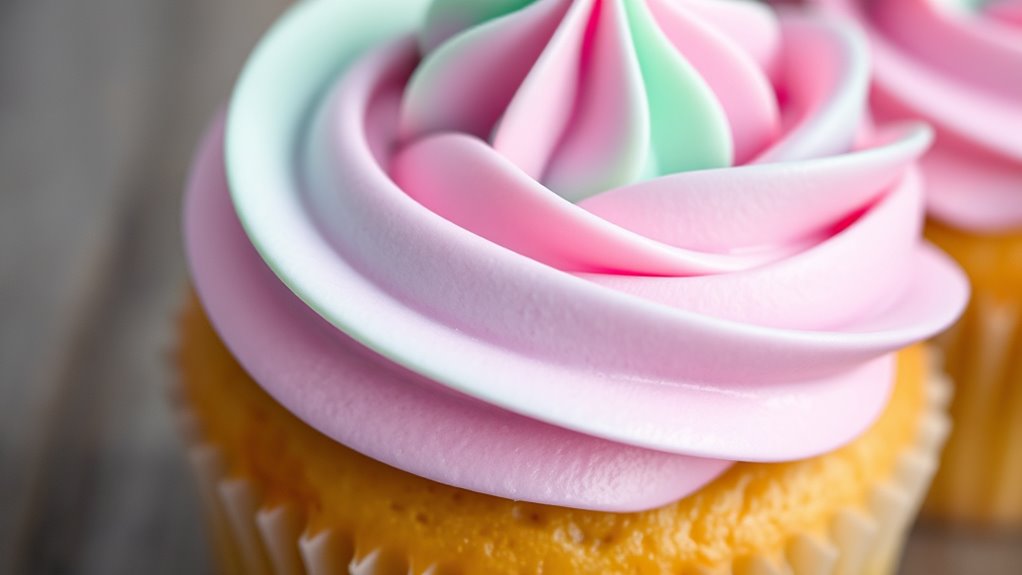
To add vibrant colors to your frosting without introducing bitterness, opt for natural, food-safe coloring agents instead of artificial dyes. Natural alternatives like beet juice, spinach extract, turmeric, or berry purees provide gentle color without harsh chemicals or bitterness. Use these ingredients in small amounts and gradually increase until you reach your desired shade. Employ color mixing techniques by blending different natural options to achieve a broader palette. For example, combining red beet juice with a touch of turmeric can produce warm orange tones. Remember, natural colors often produce softer hues, so patience and careful adjustments are key. Incorporating color stability techniques can help prevent bleeding or fading over time, ensuring your frosting remains vibrant. Utilizing food-grade dyes can also help maintain the integrity and safety of your frosting, keeping it both colorful and delicious. Additionally, choosing natural coloring agents that are less acidic can help preserve the frosting’s flavor and texture. Being aware of pH levels in your ingredients can help prevent unintended color changes and maintain the desired appearance. These methods ensure your frosting stays delicious and beautifully colored without the unwanted bitterness that artificial dyes can cause.
How Can I Get Bright, Vibrant Colors Without Overdoing It?

Getting bright, vibrant colors in your frosting without overdoing it requires a delicate balance. To achieve this, consider using natural alternatives like fruit purees, beet juice, or matcha powder, which can enhance color intensity without overpowering the flavor or turning your frosting bitter. Start with small amounts and gradually add more, testing the color as you go. Remember, a little goes a long way with natural dyes, so patience is key. If you want a more vivid hue, you can also mix in high-quality gel food colors, which provide intense pigmentation without thinning your frosting. By carefully controlling the amount and choosing natural options, you’ll get eye-catching colors that stay vibrant without sacrificing taste or texture.
What Are Common Frosting Coloring Problems and How Can I Fix Them?
Coloring frosting can sometimes lead to common issues like uneven color distribution, dull hues, or unintended color changes. One typical problem is color bleeding, where the dye spreads into neighboring areas, causing uneven shading. To fix this, use gel food coloring instead of liquid, which minimizes bleeding and helps control the shade. If your frosting appears dull, add more color gradually rather than all at once, ensuring even shading. Stir thoroughly after each addition to prevent streaks. For unintended color changes, such as purple turning blue or pink, avoid overmixing and consider starting with a base color that won’t react unpredictably. Incorporating proper coloring techniques can also improve results. Additionally, understanding how different color reactions can affect the final hue helps in troubleshooting. Being aware of food coloring properties enables you to choose the best type and amount for consistent results. Using a color mixing chart can help you better predict how colors will blend and develop, leading to more accurate coloring outcomes. Use the table below to troubleshoot and fix these common frosting coloring problems effectively.
Frequently Asked Questions
Can Natural Food Coloring Produce the Same Vibrant Hues as Synthetic Dyes?
Natural dyes can produce vibrant hues, but their vibrancy comparison to synthetic dyes varies. You might find that natural food coloring offers softer, more muted tones, which can be perfect for a subtle look. To enhance vibrancy, use concentrated extracts or powders. Keep in mind, natural dyes often fade faster over time, so if you need bold, lasting colors, synthetic dyes may be more reliable.
How Does the Type of Frosting Impact Coloring Options and Outcomes?
The type of frosting affects your coloring options and results because frosting consistency influences how well color absorbs. Buttercream, with its smooth, creamy texture, absorbs colors evenly, giving vibrant results. Fondant, being dense, requires more color for intensity. Whipped cream or cream cheese frosting may not hold color as vividly. Consider frosting consistency to achieve your desired hue, and adjust your coloring method accordingly for the best outcome.
Are There Specific Brands of Food Coloring Known for Better Taste and Color?
Some food coloring brands, like Wilton and AmeriColor, are known for better taste and vibrant colors. Natural dyes, such as beet juice or turmeric, also offer great options that don’t compromise flavor. When choosing, look for brands that focus on natural ingredients or those with a reputation for minimal aftertaste. This way, you get beautiful, colorful frosting without sacrificing taste or introducing bitterness.
What Are Alternative Methods to Achieve Pastel Shades Without Added Coloring?
You can achieve pastel shades using natural color extraction or plant-based dyes. Try mixing in pureed fruits, vegetables, or herbs—like beet juice for pink, spinach for green, or turmeric for yellow. These natural options offer soft, subtle colors without added synthetic dyes. Keep in mind, natural dyes might be less intense, so you may need to experiment with quantities to get the perfect pastel hue for your frosting.
How Long Does It Take for Coloring to Fully Incorporate Into Different Frosting Types?
It usually takes about 5 to 10 minutes for coloring to fully incorporate into different frosting types, depending on the consistency and amount used. To guarantee ideal color blending and stability, stir thoroughly and let the frosting sit for a few minutes. If you want a more intense hue, add color gradually, allowing time for even distribution. Patience helps achieve vibrant, well-blended shades without compromising texture.
Conclusion
By choosing the right food coloring and frosting base, you can achieve vibrant hues without bitterness. Remember, over 80% of bakers report difficulty in maintaining color brightness without sacrificing flavor. So, experiment with natural options and gentle mixing techniques to keep your frosting delicious and colorful. With a little patience, you’ll create stunning treats that taste as good as they look, impressing friends and family alike. Happy decorating!