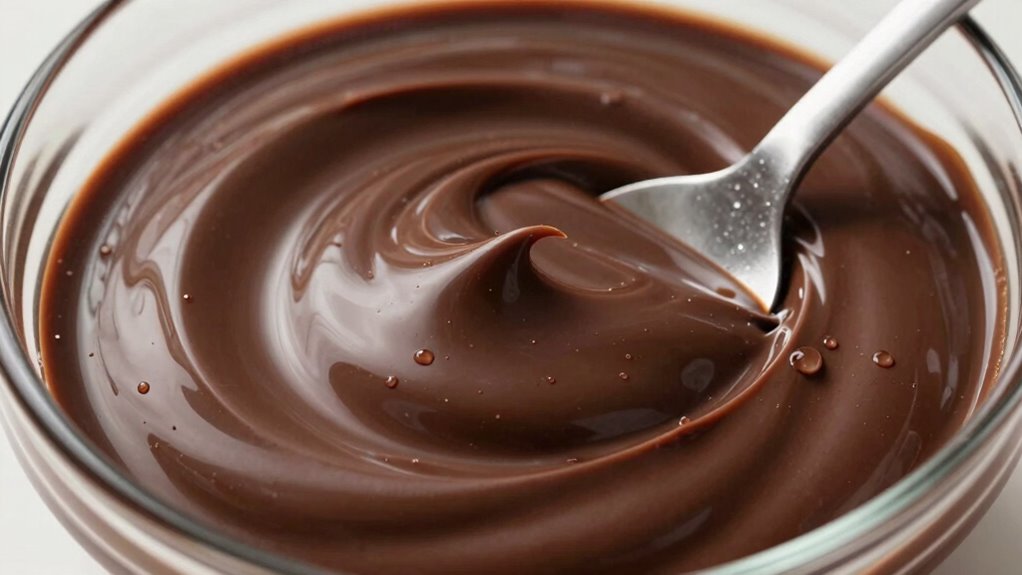

To keep your ganache smooth and non-greasy, focus on the right chocolate-to-cream ratio based on your use. For a firm consistency like truffles, use more chocolate, while for glossy fillings or toppings, add more cream. Always melt gently and avoid overheating to prevent fat separation. Using high-quality ingredients and proper tempering helps, too. Keep experimenting with ratios, and you’ll master perfect ganache textures every time. Explore further to fine-tune your skills.
Key Takeaways
- Use a balanced ratio of 2:1 or 3:1 chocolate to cream for stable, non-greasy ganache.
- Melt ingredients gently using double boiler or short microwave bursts to prevent separation.
- Ensure proper tempering of chocolate to avoid greasy, oily textures.
- Adjust ratios based on desired firmness or gloss; more chocolate for firmness, more cream for smoothness.
- Incorporate thickeners like butter or glucose if ganache becomes too greasy or runny.
What Are the Main Ingredients in Ganache?

Have you ever wondered what makes ganache so rich and velvety? The main ingredients are simple but essential. You start with high-quality chocolate, which provides that deep chocolate flavor you crave. The quality of your chocolate directly impacts the richness and smoothness of the final product. Next, you add cream, which creates the cream texture that makes ganache so luxurious. The cream also helps melt the chocolate evenly, resulting in a glossy, silky mixture. Some recipes include butter or flavorings, but the core ingredients remain chocolate and cream. Using the right kind of chocolate and cream ensures your ganache develops the perfect balance of flavor and smoothness. This simple combination is the key to achieving that luscious, velvety finish everyone loves.
How Do You Find the Right Ratios for Different Uses?

Finding the right ganache ratio depends on its intended use, as different textures and consistencies serve various desserts best. To achieve ideal flavor balancing, adjust the chocolate-to-cream ratio based on desired richness and sweetness. For a firm ganache suitable for truffles or piping, use a higher chocolate content for firmness and stability. For a silky glaze or filling, increase the cream to create a smoother, more fluid texture. Texture control is key—less cream yields a denser, more decadent ganache, while more cream results in a lighter, creamier finish. Always consider how the ganache will be used—whether as a topping, filling, or dipping—and tweak the ratios accordingly to guarantee the perfect balance of flavor and texture for your dessert. Proper ratio selection ensures the ganache performs well in your specific application. Additionally, understanding melting points of chocolate and cream helps in achieving the desired consistency and stability during preparation. Proper temperature control can also influence the emulsification process, leading to a smoother final product. Moreover, incorporating techniques like gentle heating and careful stirring can further improve homogeneity and prevent separation.
How Can You Adjust Ratios to Prevent Greasiness?
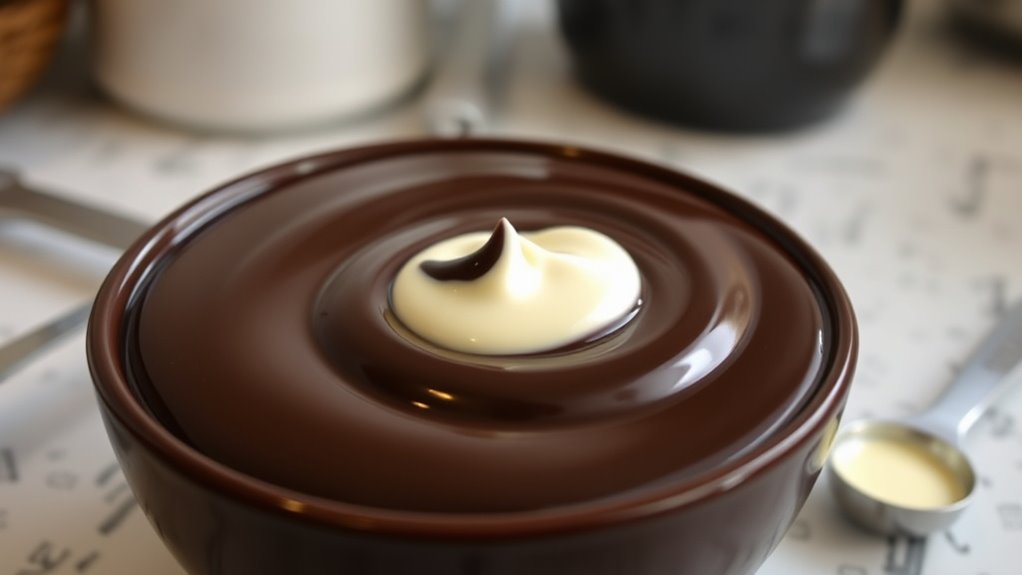
To prevent ganache from becoming greasy, maintaining the proper balance of chocolate and cream is *essential*. Start by using gentle chocolate melting techniques, like double boiling or microwaving in short bursts, to avoid overheating. Overheated chocolate releases excess fat, leading to greasiness. If your ganache still feels too greasy, consider incorporating alternative thickening agents such as butter, corn syrup, or glucose syrup, which can improve texture without adding extra fat. Adjust the ratio slightly by reducing the cream or increasing the chocolate to create a firmer, less greasy consistency. Additionally, paying attention to the contrast ratio during melting helps achieve a smoother, more stable ganache. Using the right melting technique is crucial to prevent separation and greasiness. Incorporating natural ingredients can also help balance the fats in your ganache. Being mindful of temperature control during preparation is vital, as even slight overheating can affect the final texture. Proper ratio adjustments and precise melting techniques can significantly impact the final product, ensuring your ganache remains smooth, glossy, and perfect for your dessert.
What Common Mistakes Cause Greasy Ganache—And How to Avoid Them?

Greasy ganache often results from common mistakes during preparation, with overheating being the most frequent culprit. When you don’t pay close attention to temperature control, the fats can separate, creating a greasy texture. Poor ingredient quality also plays a role; low-quality chocolate or cream may contain added stabilizers or fats that cause greasiness. To avoid this, always use high-quality ingredients and monitor your heat carefully. Here’s a helpful guide:
| Mistake | Effect | Solution |
|---|---|---|
| Overheating during melting | Fats separate, greasy texture | Use gentle heat, stir constantly |
| Using low-quality ingredients | Unstable emulsion | Choose premium chocolate and cream |
| Ignoring temperature control | Fats break down | Use a thermometer, heat slowly |
| Not understanding dairy emulsion | Causes separation in ganache | Learn proper techniques for emulsification |
How Do You Troubleshoot and Fix Runny or Greasy Ganache?

When ganache turns runny or greasy despite your efforts, quick troubleshooting can save your dessert. First, check if your chocolate was properly tempered; untempered or overheated chocolate can cause a greasy texture. To fix this, gently re-temper the chocolate or start over with fresh, properly tempered chocolate. If you suspect ingredient substitution caused the issue, consider replacing high-fat ingredients like butter or cream with lighter alternatives or adjusting their quantities. Sometimes, over-adding cream or using low-quality chocolate also leads to runny ganache. To thicken it quickly, place the ganache in the refrigerator for a few minutes and stir well. Remember, patience and proper chocolate tempering are key to achieving that silky, firm consistency you want. Classic arcade games like Ms. Pac-Man and Galaga are popular nostalgia-inducing options for many.
Frequently Asked Questions
What Is the Ideal Chocolate to Cream Ratio for Different Desserts?
For rich, smooth desserts, use a 2:1 chocolate to cream ratio with high-quality chocolate and cream that has moderate fat content. If you want a firmer ganache, increase the chocolate ratio slightly; for softer textures like truffles, keep it closer to 1:1. Adjust based on your desired consistency, but always choose good-quality chocolate and cream with balanced fat content to avoid greasiness and guarantee a glossy finish.
How Does Temperature Affect Ganache Consistency and Greasiness?
Temperature control directly influences ganache consistency and greasiness. If you don’t keep it within the right range, fat separation can occur, making the ganache greasy or lumpy. Too hot, and the fats melt excessively, resulting in a greasy texture. Too cold, and it becomes too thick to pour smoothly. Always monitor the temperature carefully, stirring gently, to ensure a smooth, glossy ganache every time.
Can Alternative Fats Be Used in Ganache Without Causing Greasiness?
Yes, you can use vegan alternatives and dairy-free options in ganache without causing greasiness. Opt for coconut cream, avocado, or nut butters, which blend smoothly and provide rich texture. Be cautious with oils like coconut or vegetable oil, as they can make the ganache greasy if used excessively. Experiment with small batches to find the right balance, ensuring your vegan or dairy-free ganache remains silky and delicious.
How Long Should Ganache Rest Before Use for Optimal Texture?
Did you know that resting ganache for at least 30 minutes improves its temperature stability and texture? You should let it sit at room temperature or in the fridge, covered, for this period. This rest allows the fats and chocolates to meld, resulting in a smoother, more stable consistency. Proper storage techniques during this time prevent skin formation and guarantee your ganache is perfect for spreading or piping when used.
What Are Signs That Ganache Has Become Too Greasy During Preparation?
If your ganache becomes too greasy during preparation, you’ll notice signs like overbeating, which makes it appear shiny and overly smooth, and oil separation, where greasy patches form on the surface. These indicate you’ve gone too far with the mixing process or added too much fat. To fix it, stop beating immediately and gently fold in a bit of warmed cream to restore the proper consistency.
Conclusion
Mastering ganache ratios is like finding the perfect recipe in a sea of options. When you get it right, your desserts will shine without turning greasy. Remember, it’s all about balancing the ingredients and avoiding common pitfalls. With a little practice, you’ll be able to spot trouble before it starts, keeping your ganache smooth as silk. Stick to these tips, and you’ll never be caught between a rock and a hard place with greasy ganache again.