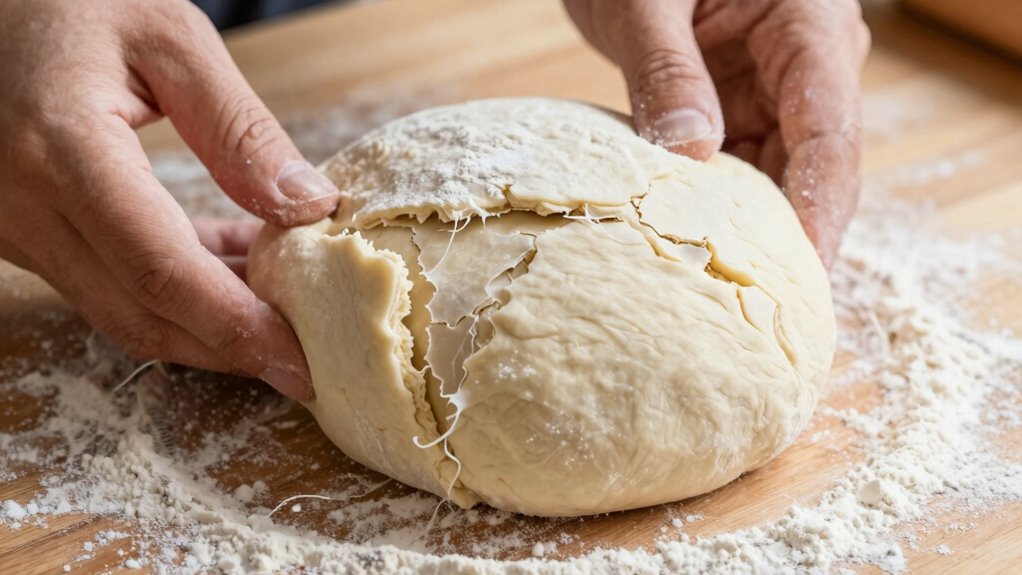
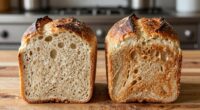
If your dough tears during shaping, it usually means the gluten hasn’t developed enough to give it proper elasticity and strength. This can happen if you haven’t kneaded it thoroughly or if it hasn’t rested enough for the gluten network to form properly. Poor hydration, overworking, or handling too roughly can also weaken dough. Keep working on gluten development and handling techniques, and you’ll discover ways to improve your dough’s resilience and flexibility.
Key Takeaways
- Insufficient gluten development results in weak dough that tears easily during shaping.
- Underhydrated dough lacks elasticity, increasing the risk of tearing when stretched.
- Overworking or underresting dough prevents proper gluten relaxation, causing tearing.
- Handling dough too roughly or quickly can damage the gluten network, leading to tears.
- Proper kneading, resting, and hydration improve gluten strength and elasticity, reducing tearing.
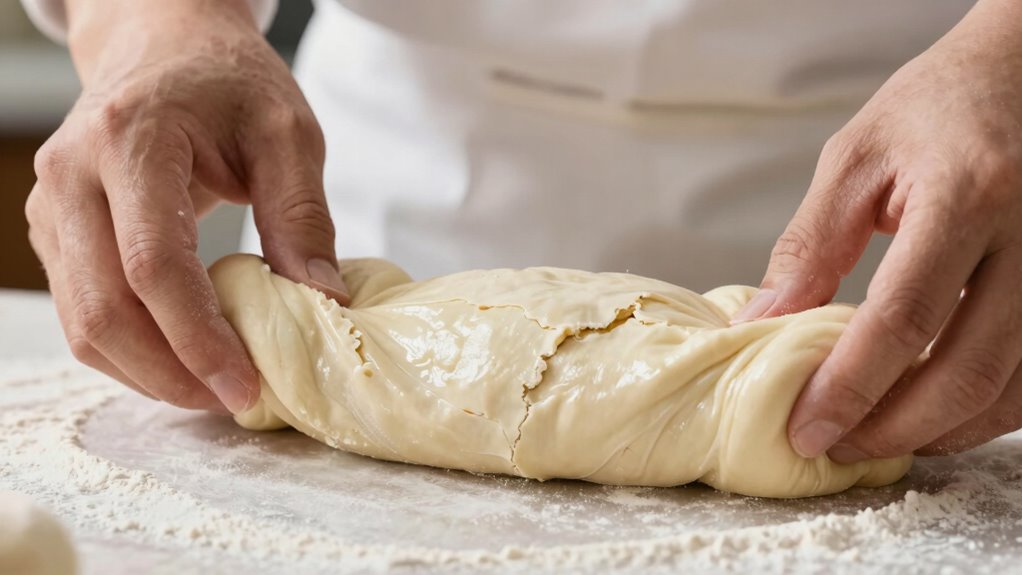
If your dough tears when you’re shaping it, understanding the cause can help you achieve a smoother, more pliable dough. One common reason for tearing is insufficient gluten development. Gluten is the protein matrix that provides structure and elasticity to your dough. When gluten strands are underdeveloped, the dough lacks the necessary strength and stretchability, making it prone to tearing under gentle pressure. To improve gluten development, knead your dough thoroughly, ensuring all ingredients are well incorporated. Proper kneading aligns gluten strands, creating a network that can stretch without breaking. If you notice your dough tearing early in the shaping process, it might be a sign that you haven’t kneaded enough or that the dough hasn’t rested long enough for gluten to strengthen. Additionally, gluten network formation can be enhanced by allowing the dough to rest, which helps develop its elasticity and resilience.
Insufficient gluten development causes dough to tear when shaping; thorough kneading and proper resting strengthen the gluten network.
Dough elasticity also plays a crucial role. Elasticity is the dough’s ability to stretch without tearing, and it’s directly related to gluten’s strength. If your dough feels stiff or resists stretching, it may be overworked or too dry. Conversely, if it’s too sticky and tears easily, it might lack enough gluten development or hydration. Adjusting hydration levels by adding small amounts of water or flour can make a significant difference. A well-hydrated dough tends to be more elastic and easier to handle. Resting the dough allows the gluten strands to relax and strengthen, making it more pliable when you start shaping. Incorporate a resting period, often called autolyse, which helps improve dough elasticity and reduces tearing.
Temperature also influences gluten development and elasticity. Warmer temperatures encourage gluten formation, making the dough more stretchable. If your dough is too cold, it may be stiff and prone to tearing; if it’s too warm, it can become overly sticky and difficult to handle. Use your hands or a thermometer to keep your dough within an ideal temperature range, usually around room temperature or slightly warmer, depending on the recipe. Finally, handling techniques matter. Gentle, gradual stretching prevents tearing. Avoid pulling too quickly or forcefully; instead, work slowly and evenly. Use your hands to gently coax the dough into its shape, giving the gluten time to stretch without breaking. If tearing persists, consider letting the dough rest longer, which allows gluten to relax and makes shaping easier. By focusing on gluten development and dough elasticity, you’ll gain better control over your dough, resulting in a smoother shaping experience free of tears.
Frequently Asked Questions
Can Cold Dough Be More Prone to Tearing?
Yes, cold dough can be more prone to tearing. When your dough is too cold, its dough temperature is lower, which slows down gluten development. As a result, the dough becomes less elastic and more fragile, making it prone to tearing during shaping. To prevent this, let the dough warm up slightly before working with it, ensuring proper gluten development and better elasticity for easier shaping.
Does Over-Kneading Affect Dough Elasticity?
Over-kneading your dough is like over-messing with a good thing—gluten development turns into a gluten nightmare, crushing dough elasticity. Instead of a supple, stretchy masterpiece, you end up with a tough, tear-prone mess. So, stop when the dough feels just right, not like a cement block. Trust me, your bread will thank you, and you’ll avoid that humiliating “tearing during shaping” disaster.
How Does Hydration Level Impact Dough Tearing?
Higher hydration levels make your dough more prone to tearing because the increased moisture weakens the gluten structure, affecting its stretchability. If your hydration consistency is too high, the dough becomes sticky and difficult to handle, leading to tears when you try to stretch it. To prevent tearing, ensure your dough has the right hydration balance for ideal dough stretch without compromising strength.
Is Tearing More Common With Certain Types of Flour?
Yes, tearing is more common with low-protein flours like cake or pastry flour. For example, a baker using low-gluten flour noticed her dough kept tearing during shaping. This happens because lower flour protein results in less gluten development, making dough less elastic. Higher-protein flours like bread flour develop stronger gluten, providing better stretch and reducing tearing. So, choose your flour based on your desired dough elasticity and shaping needs.
Can Resting the Dough Prevent Tearing During Shaping?
Resting your dough can indeed help prevent tearing during shaping. When you let it rest, the dough’s elasticity improves because gluten development continues, making it more pliable. This relaxation process allows the dough to stretch more easily without tearing. So, if your dough keeps tearing, give it a rest period to enhance gluten structure, resulting in better shaping and a smoother finished product.
Conclusion
So, next time your dough tears unexpectedly, don’t panic. It’s a sign to pay closer attention to its texture and handling. Sometimes, the tiniest adjustment—like resting the dough a bit longer or gently stretching it—can make all the difference. But what if there’s an even deeper reason behind those tears? Keep experimenting, stay curious, and you might just uncover secrets that will transform your baking forever. The answer is closer than you think—are you ready to discover it?