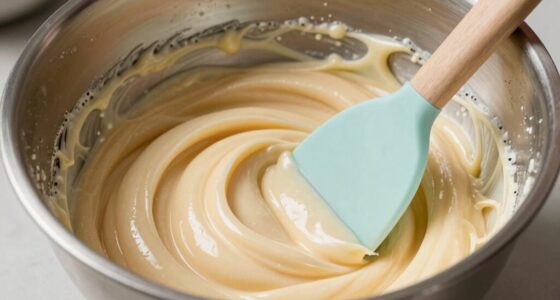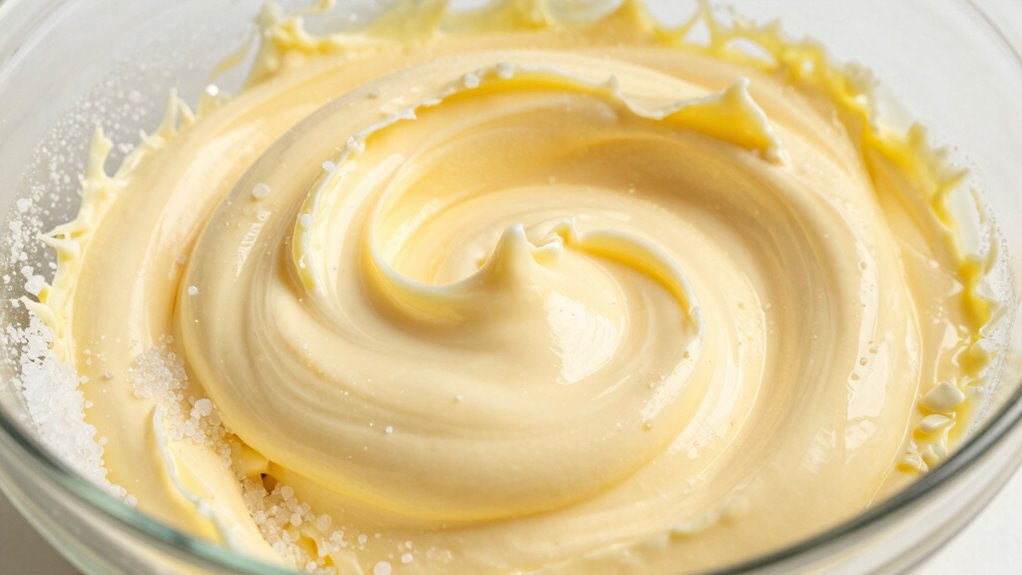

To get the right creaming texture, use softened, room temperature butter, and mix until the mixture becomes light, fluffy, and pale—this indicates proper aeration. Be patient and focus on dissolving the sugar completely while avoiding overmixing. Proper technique ensures a tender crumb and perfect final results. If you’re unsure whether your creaming is just right, pay attention to the visual and tactile cues; more details will help you master this fundamental step.
Key Takeaways
- Aim for a light, fluffy, and pale mixture to indicate proper creaming and optimal air incorporation.
- Use room temperature butter that is soft enough to blend smoothly without melting or being too cold.
- Mix until the mixture increases in volume and achieves a smooth, airy, and slightly pale appearance.
- Avoid overmixing to prevent breaking down the butter’s structure, which can cause greasiness or dense textures.
- Adjust creaming time based on recipe needs, longer for lighter textures and shorter for denser baked goods.
Why Is Creaming Butter and Sugar So Important?
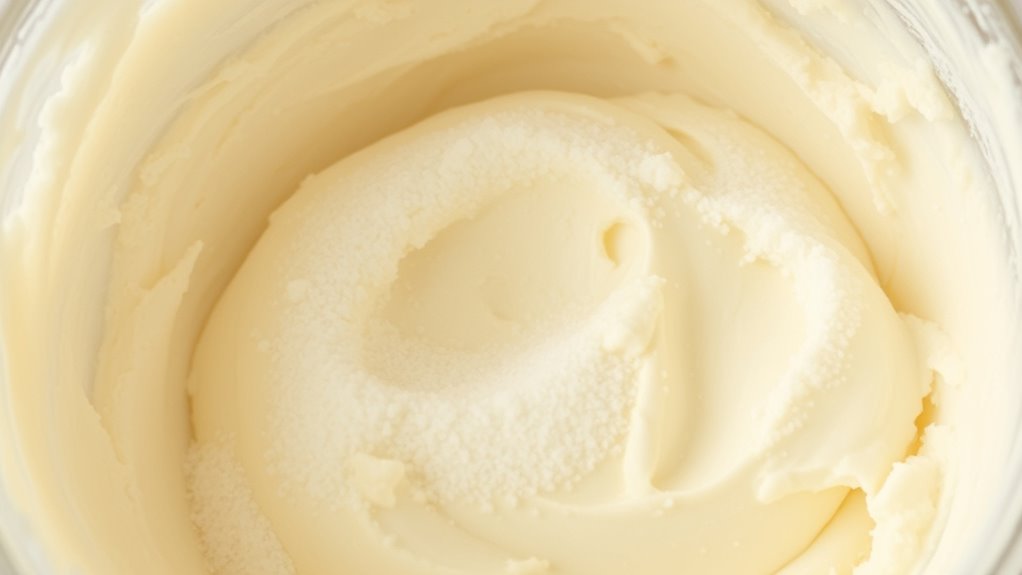
Cremicing butter and sugar is a essential step because it creates a light, airy mixture that forms the foundation for a tender baked good. Achieving the right butter consistency is critical; you want it soft enough to blend easily but not melted. As you cream, the sugar granularity helps to cut into the butter’s fat, incorporating air and increasing volume. This process guarantees your baked goods will be moist and tender, with a fine crumb. Proper creaming also helps distribute sugar evenly, preventing uneven texture. Skipping or rushing this step can lead to dense, heavy results. So, take your time, beat until the mixture is fluffy and pale, and you’ll set yourself up for baking success.
What Different Textures Can You Get When Creaming?
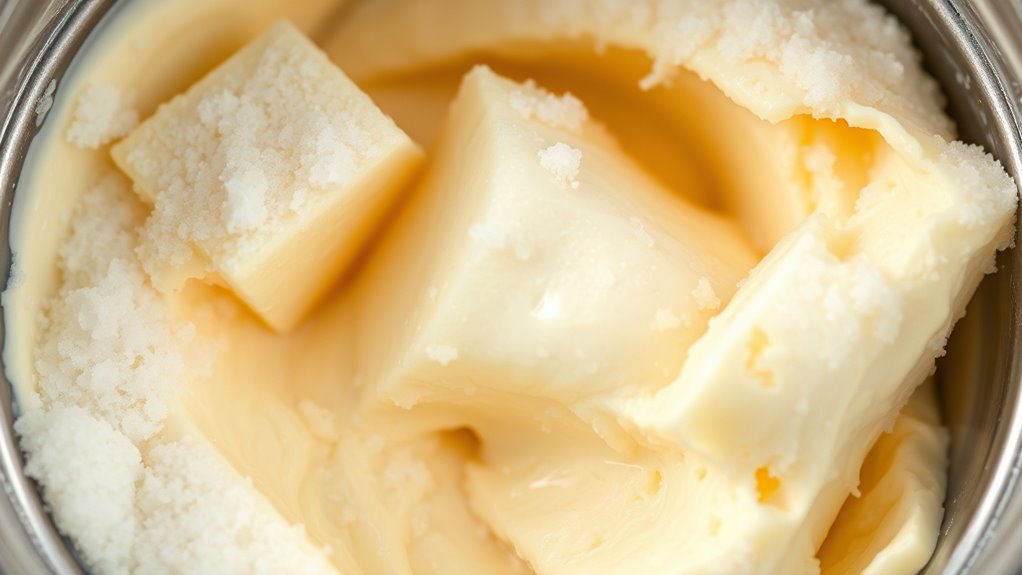
When you start creaming butter and sugar, the texture you achieve depends on how long and vigorously you mix. You can end up with a range of butter consistency, from slightly grainy to smooth and fluffy. If you don’t mix enough, the sugar granularity remains visible, resulting in a coarse, gritty texture. This may cause uneven incorporation of air, affecting your batter’s rise. On the other hand, creaming longer and faster creates a light, airy mixture with a pale, creamy appearance. The sugar dissolves more thoroughly, reducing graininess. Achieving the optimal creaming technique involves understanding the importance of butter temperature and how it influences the final texture of your mixture, ensuring your baked treats are tender and evenly risen. Proper mixing speed can also impact the final consistency, helping you reach the ideal lightness and smoothness. Using the right mixing tools can make a significant difference in achieving a uniform texture. The ideal texture is smooth and fluffy, where the butter is well aerated and sugar is mostly integrated. Understanding these variations helps you control the final outcome of your baked goods.
How Do You Properly Cream Butter and Sugar?

Start by ensuring your butter is at room temperature so it creams smoothly. Mix the butter and sugar together, beating until the mixture becomes light and fluffy. This step is key to creating a good base for your baked goods. Using the right texture ensures even mixing and better incorporation of ingredients. Proper product formulation can also influence the final consistency of your creamed mixture. Achieving the ideal contrast ratio can contribute to better visual cues during the creaming process, indicating proper development of the mixture. Additionally, understanding piercing healing times can help you plan your baking schedule to avoid disruptions. Being aware of the energy-efficient aspects of your baking process can further enhance your overall approach to sustainable cooking.
Use Room Temperature Butter
Using room temperature butter is essential for achieving the perfect creamed mixture. When your butter is soft, it mixes easily with sugar, creating a smooth, even base. Cold butter won’t incorporate fully, resulting in a dense texture, while overly melted butter can ruin the process altogether. The ideal butter temperature is slightly softened—soft enough to indent with your finger but not greasy. This consistency helps the sugar, whether granulated or a finer sugar type, dissolve more effectively, leading to a lighter, fluffier batter. Properly softened butter ensures you can achieve that desirable airy structure in your baked goods. Additionally, butter’s temperature plays a crucial role in controlling the final texture of your baked treats. Always plan ahead to let your butter sit out for about 30 minutes before you start mixing, ensuring perfect results. Maintaining the correct butter consistency is also important for even mixing and consistent baking outcomes. Achieving the right creaming process is vital for trapping air and creating a tender crumb in your baked products. Ensuring your butter is at the proper softness level makes the creaming process more efficient and consistent.
Mix Until Light and Fluffy
To properly cream butter and sugar, you need to beat them together until the mixture becomes light and fluffy. This process guarantees the butter reaches the right consistency, soft and airy, which helps incorporate air into your batter. As you mix, you’ll notice the sugar granularity diminishes, and the mixture gains volume and a pale color. Keep beating until you see a noticeable change: the butter should look smooth and slightly increased in size. The key is to mix long enough to break down the sugar’s coarse grains, allowing them to blend seamlessly into the butter. This step creates a tender crumb in your baked goods and promotes even texture. Proper creaming also involves understanding the chemical reactions that occur during mixing, which is essential for achieving the desired rise and texture. Be patient—rushing this step can affect the final result. Proper creaming sets the foundation for a perfect bake.
What Common Mistakes Can Ruin Your Creaming?
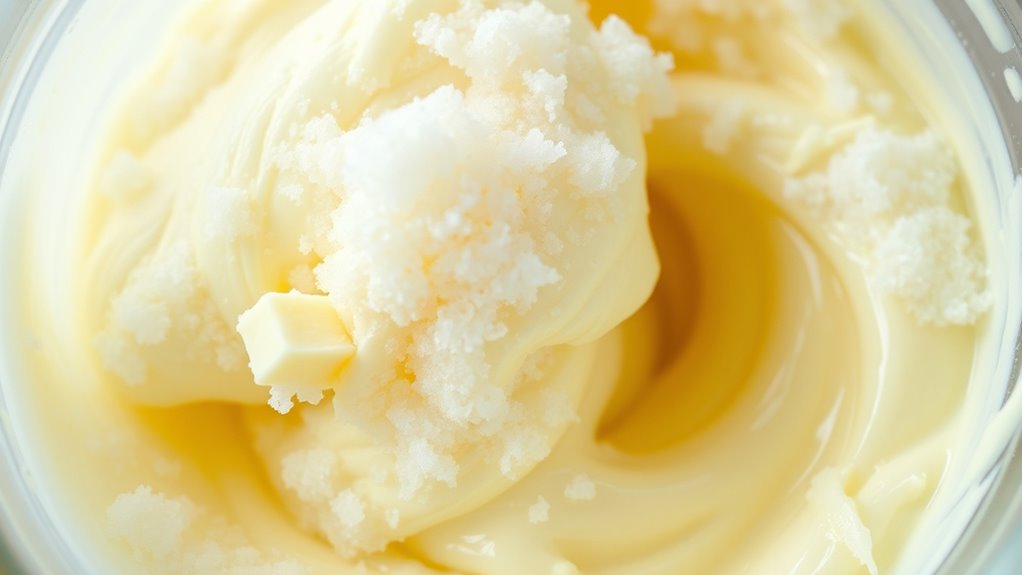
One common mistake is overmixing or undermixing your butter and sugar, which can affect the texture of your baked goods. Using the wrong ingredients, like cold butter or incorrect types of sugar, can also prevent proper creaming. Paying attention to these details helps guarantee your mixture turns out perfect. Additionally, understanding the proper creaming technique is essential for achieving the ideal light and airy consistency. Proper ingredient temperature is crucial because it influences how well the butter and sugar combine and aerate, impacting the final texture. Failing to recognize the importance of proper ingredient temperature can undermine the entire process and result in a less desirable texture. Proper ingredient quality also plays a significant role in the final outcome, ensuring your baked goods have the best possible texture.
Overmixing and Undermixing
Overmixing or undermixing your butter and sugar can seriously affect the texture of your baked goods. If you overmix, you risk breaking down the butter’s structure, leading to a greasy or dense final product. Conversely, undermixing prevents the ingredients from fully combining, resulting in uneven sugar granularity and inconsistent texture. Achieving the right butter consistency is essential; it should be smooth and creamy, not melted or lumpy. When mixing, aim for a light, fluffy mixture that incorporates air without overworking the ingredients. Pay attention to the mixing technique as you go—stop once the sugar is well incorporated and the mixture looks uniform. Proper mixing ensures a stable base for your batter, giving you tender, evenly textured baked goods. Understanding the ideal texture helps you achieve consistent results every time. Additionally, controlling the exfoliation process with glycolic acid can enhance skin smoothness, which parallels achieving the perfect batter texture in baking. To further refine your baking skills, paying attention to ingredient temperature can make a significant difference in achieving the perfect creaming consistency.
Using Wrong Ingredients
Using wrong ingredients during creaming can sabotage your effort and ruin the final texture of your baked goods. Substituting ingredients like margarine for butter or using cold butter instead of softened can hinder proper mixing and cream formation. This affects not only texture but also flavor enhancement. For example, choosing a low-fat substitute may result in a less tender crumb, while adding too much salt can overpower sweetness. Be mindful of ingredient choices to guarantee ideal creaming. Additionally, understanding the importance of proper ingredient temperature and quality can make a significant difference in achieving the desired texture and consistency. Here’s a quick comparison:
| Ingredient Choice | Potential Impact |
|---|---|
| Butter (softened) | Creams well, rich flavor |
| Margarine/substitutes | May hinder creaming, less flavor |
| Cold butter | Difficult to cream, uneven texture |
| Unsalted vs. salted | Salt affects flavor, not creaming |
| Extra sugar or flour | Alters texture and structure |
Choose ingredients carefully for the best results.
How Can You Adjust Creaming Time for Different Recipes?
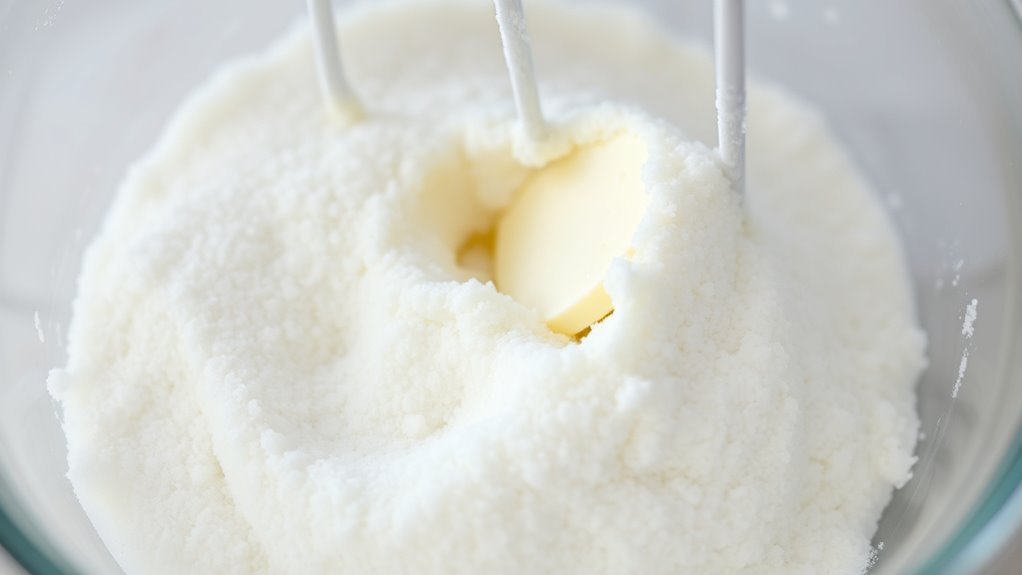
Adjusting creaming time for different recipes requires paying close attention to the desired texture and consistency. To do this, you should modify the adjusting creaming duration based on the recipe’s needs. For lighter, airier baked goods, creaming longer until the mixture is pale and fluffy. For denser treats like cookies, shorten the creaming process to prevent over-aerating. Use recipe specific techniques, such as adjusting speed or duration, to achieve the right outcome. Keep an eye on how the mixture looks and feels—staying too long can cause overly soft butter, while too short may not incorporate enough air. By tailoring your creaming approach, you ensure your baked goods develop the perfect texture every time.
Why Does Temperature Matter in the Creaming Process?
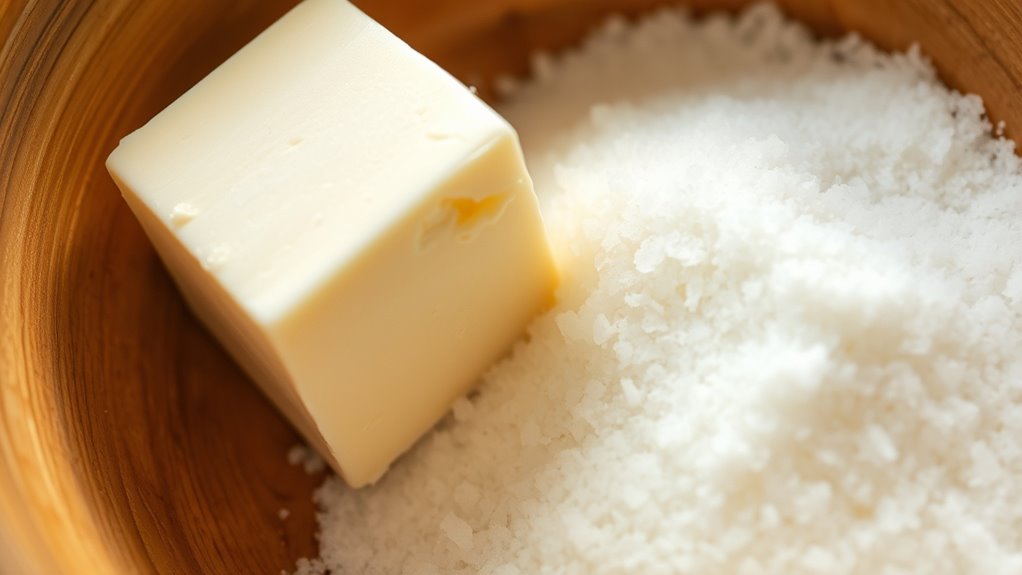
Temperature plays a key role in the creaming process because it directly affects how butter and sugar combine and trap air. Proper temperature control ensures the butter reaches the ideal butter consistency—soft but not melted—which is vital for creating a light, airy texture. If the butter is too cold, it won’t blend smoothly, making it difficult to incorporate air effectively. Conversely, if it’s too warm, the butter becomes greasy and loses its structure, preventing proper aeration. Maintaining consistent temperature helps you achieve the right creaming texture. When the butter is at the right temperature, it allows for better incorporation of sugar and air, resulting in a delicate, fluffy mixture essential for successful baking. Temperature control is essential to mastering the creaming process.
How Do You Know When the Texture Is Just Right?
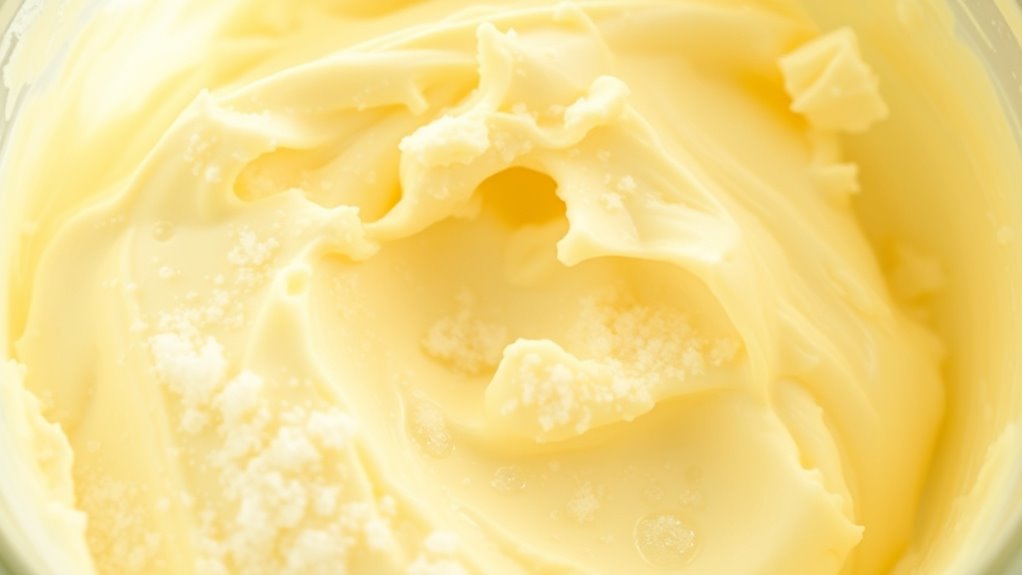
How can you tell when the creamed butter and sugar have reached the perfect texture? You’ll notice the butter’s consistency is light and fluffy, not greasy or dense. The sugar granularity should be mostly dissolved, creating a smooth, airy mixture. Look for a pale, creamy color and a slight increase in volume. To help visualize, here’s a quick guide:
| Indicator | Description | Result |
|---|---|---|
| Butter consistency | Light, fluffy, not greasy | Proper aeration |
| Sugar granularity | Dissolved, no grittiness | Smooth mixture |
| Color | Pale and creamy | Even incorporation |
| Volume | Slightly increased from original | Well-whipped |
| Texture | Soft but not runny | Ideal for baking |
When these signs appear, your creaming is just right.
What Are Best Tips for Troubleshooting Your Creaming Technique?
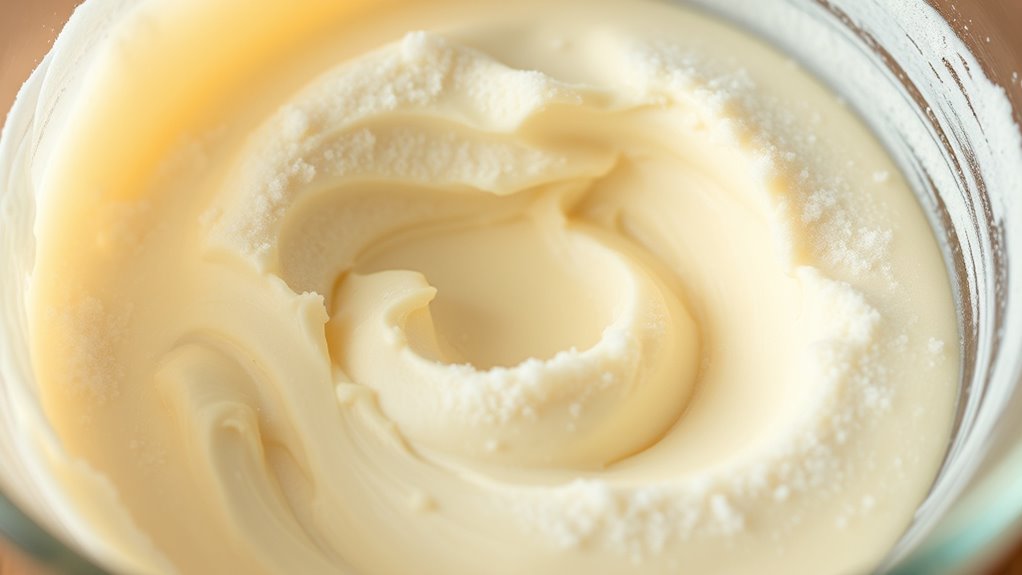
Even when you think your creaming process is going smoothly, issues can still arise that affect the final texture of your baked goods. To troubleshoot, check your ingredient pairing—using cold butter or sugar can impede creaming, so verify ingredients are at room temperature. Make sure your baking equipment is appropriate; a stand mixer with a paddle attachment often produces more consistent results than hand mixing. If your mixture isn’t reaching the desired lightness, increase the mixing time slightly or adjust your speed. Watch for over-creaming, which can incorporate too much air and cause a crumbly texture. Also, consider using fresh ingredients, as old butter or sugar may not cream properly. These tips help maintain control and improve your creaming technique.
Frequently Asked Questions
Can You Over-Cream Butter and Sugar?
Yes, you can over-cream butter and sugar. If the butter is too warm or the sugar granularity is too fine, you’ll beat in excess air, making baked goods dense or crumbly. To avoid this, use room temperature butter and avoid overmixing once the mixture is light and fluffy. Keep an eye on the texture, and stop when it’s smooth, creamy, and slightly fluffy for the perfect base.
Does the Type of Sugar Affect Creaming?
Yes, the type of sugar affects creaming. Finer sugar granularity, like superfine or caster sugar, blends more easily with butter, creating a smooth, airy mixture. Coarser sugars or alternative sweeteners may not cream as well, resulting in a different texture. If you use alternative sweeteners, choose those suitable for baking, as they may impact the creaming process and final cake quality.
How Does Creaming Influence Baking Outcomes?
Creaming influences baking outcomes by incorporating air into your batter, which helps your baked goods rise and become tender. To accomplish this, you should use softened butter at the right temperature and mix for the appropriate duration. If you overmix or use cold butter, your texture may be dense. Proper creaming ensures a light, fluffy crumb and a better overall texture in your final product.
Can CreamIng Be Done With Alternatives Like Margarine?
Sure, you can cream margarine instead of butter—it’s practically a culinary rebellion! Just remember, dairy-free options and vegan substitutions like margarine work fine, but the texture might differ slightly. So, go ahead, give it a whirl; creaming margarine creates that fluffy base you need for perfect baked goods. Just keep in mind, some brands melt faster, so beat it well to get that ideal airy consistency.
What’s the Best Equipment for Creaming?
You should use a stand mixer or hand mixer for creaming, as they provide consistent mixing techniques and make the process easier. Make certain your equipment is well-maintained, with clean beaters and a smooth bowl, to achieve the best results. A paddle attachment works best for creaming butter and sugar, helping you create the ideal texture. Regularly check and clean your equipment to keep it in top shape for perfect creaming every time.
Conclusion
Mastering the art of creaming butter and sugar is like revealing a secret ingredient for perfect baked goods. When you pay attention to texture, temperature, and timing, you turn simple ingredients into a silky foundation for delicious treats. Keep practicing, troubleshoot with patience, and remember—your creaming technique shapes the magic inside your oven. With each batch, you’ll get closer to baking perfection, revealing that great desserts are just a well-creamed mixture away.