
TL;DR

Get baking supplies delivered free with Prime
- Fast, free delivery on millions of items
- Prime Video, Amazon Music and more included
- Member-only deals all year
A Good Housekeeping report cites AO.com appliance expert Jade Golding-Gault advising households to remove stored trays and pans before using an oven. She says they can disrupt heat circulation, contribute to longer cooking times and add wear to appliance components; forgetting other items in the oven can create damage or fire risks. The report recommends checking that any reusable oven liner is compatible with the appliance.
Good Housekeeping has reported advice from AO.com appliance expert Jade Golding-Gault to take baking trays and pans out of the oven before switching it on. She says cookware left inside can interfere with airflow and heat circulation, potentially affecting cooking and placing additional demands on the appliance.
Golding-Gault told Good Housekeeping that trays or pans can change how heat moves through an oven. In a fan-assisted model, a large pan on the oven floor may obstruct circulating air. In a conventional oven, a tray on the lowest shelf may absorb heat from below. The effect depends on the item’s size and position and the selected setting, she said.
The report links obstructed heat circulation to possible longer cooking times and higher energy use. It cites Go Compare’s estimate that a 2,000-watt electric oven costs 53 pence per hour to run, or £192.36 per year. The article estimates that an additional 10 minutes of operation per hour could add about £30 to annual bills. Those figures are estimates in the report, not a measured result for every household or oven.
Golding-Gault also said repeated use with items inside may add demand to heating elements and fan systems. Cookware subjected to unintended, repeated heating may discolor or degrade, particularly if it is not designed for prolonged high temperatures. The report warns that items with plastic or rubber handles, packaging and other non-oven-safe objects can melt or be damaged; in some cases, they may create a fire risk.
How Stored Pans Can Affect Cooking
The advice concerns a common space-saving habit: keeping cookware in an oven between meals. The immediate issue identified by the expert is that an object inside the cooking cavity can alter heat distribution. Depending on the oven and placement, that may contribute to uneven results or longer cooking.
There may also be household costs if cooking takes longer, and added wear if components work harder over time. The report does not quantify how often this happens or establish a typical repair cost. Its practical point is narrower: an oven should be cleared before use, and stored items should not be assumed harmless just because the cookware itself can tolerate oven heat.
Why the Oven Floor Matters
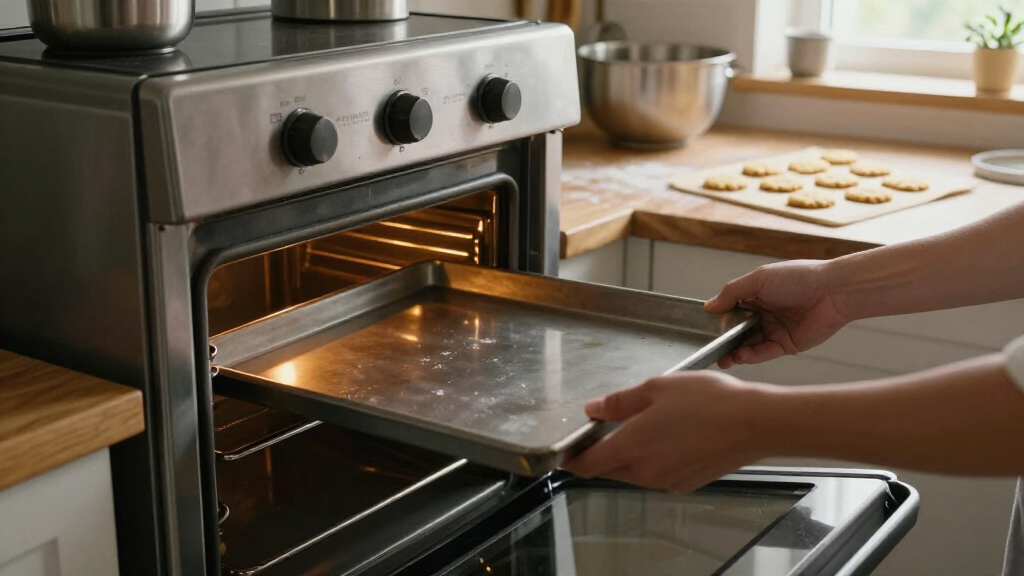
Some people place a spare baking tray on the oven floor to catch drips and spills. Golding-Gault advises against that practice because a tray can affect airflow or absorb heat. The report says a reusable oven liner may serve as an alternative for collecting residue, but users should check that the liner is compatible with their specific oven.
The article says liners should be replaced as often as the maker recommends, with around six months given as a usual lifespan in the source report. It also advises replacement if a liner becomes warped or damaged. The supplied material does not specify one liner type suitable for every oven, so the appliance and liner instructions remain relevant.
““If items, such as baking trays or pans, are left inside the oven when it’s in use, they can restrict airflow and prevent heat from circulating as efficiently around the space.””
— Jade Golding-Gault, AO.com appliance expert, quoted by Good Housekeeping
How Much Difference It Makes
The report does not provide controlled testing that measures how much a stored pan changes cooking time, energy use or the likelihood of a breakdown. The effect will vary by oven design, cookware size and placement, and cooking setting, according to Golding-Gault. The annual cost example is an estimate based on figures cited by the article; it does not establish that every oven user will spend an extra £30.
The source also does not identify a single compatible liner for all appliances or provide a universal replacement schedule. Readers should consult their oven maker’s guidance and the liner manufacturer’s instructions.
Clear the Oven Before Heating
The immediate step in the report is to check that the oven is empty before turning it on, including checking for cookware and other stored objects. Households using a liner should confirm compatibility, follow the product instructions and replace it if it is warped or damaged. No further announcement or scheduled follow-up was included in the supplied source material.
Key Questions
Can I leave a baking tray in the oven while cooking?
Golding-Gault advises removing trays and pans before using the oven because they may restrict airflow or affect heat distribution. The impact depends on the oven, setting and item placement.
Can a tray on the oven floor affect cooking?
According to the expert quoted in the report, a tray on the floor may block circulating air in a fan-assisted oven or absorb heat from below in a conventional oven.
What can I use to catch oven spills?
The report suggests considering a reusable oven liner, provided it is compatible with the oven. Follow the liner maker’s instructions and replace it if warped or damaged.
Will storing pans in the oven raise my energy bill?
The report says cookware may contribute to longer cooking and cites an estimate of about £30 more per year if an oven runs an extra 10 minutes per hour. That is an example, not a measured bill increase for every household.
Source: rss
Fall Picks
fall essentials
As an affiliate, we earn on qualifying purchases.