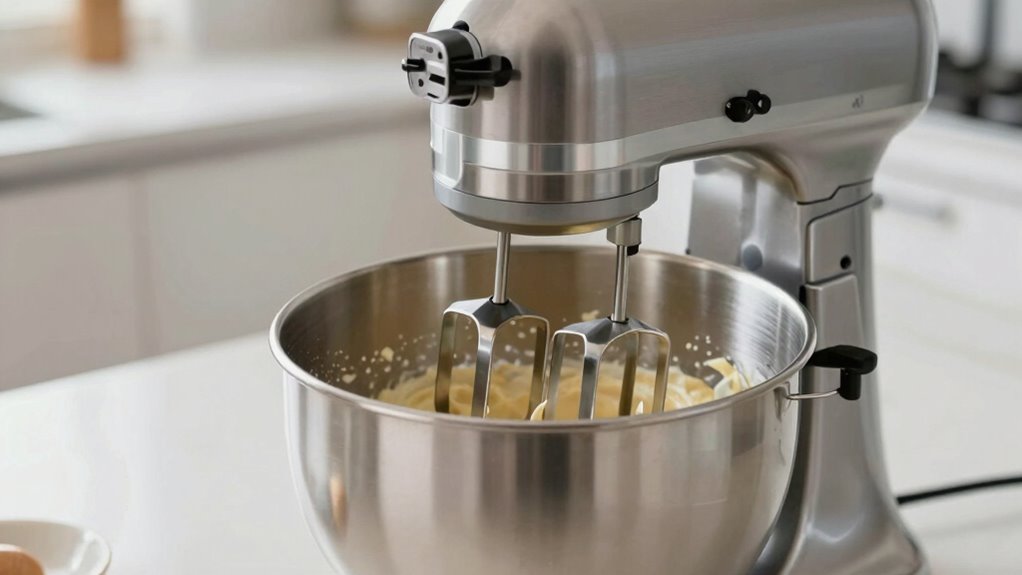

Wattage indicates a mixer’s potential power, but it doesn’t tell you how well it handles tough ingredients. Torque is what truly measures its ability to knead dense doughs or mix heavy batters, making it more important than wattage alone. Higher wattage can be misleading because it doesn’t account for motor efficiency. To pick the right mixer, focus on torque and performance features. Stay tuned—there’s more to know about choosing the best mixer for your baking needs.
Key Takeaways
- Wattage only indicates potential power, not real mixing capability or performance under load.
- Torque reflects the motor’s rotational force, crucial for kneading dense doughs and heavy ingredients.
- High wattage can be misleading; a mixer with lower wattage but higher torque may perform better.
- Motor efficiency and design influence actual power delivery, affecting how well a mixer handles tough tasks.
- Relying solely on wattage overlooks important factors like torque and motor quality for informed choices.
What Does Wattage Really Mean for Stand Mixers?
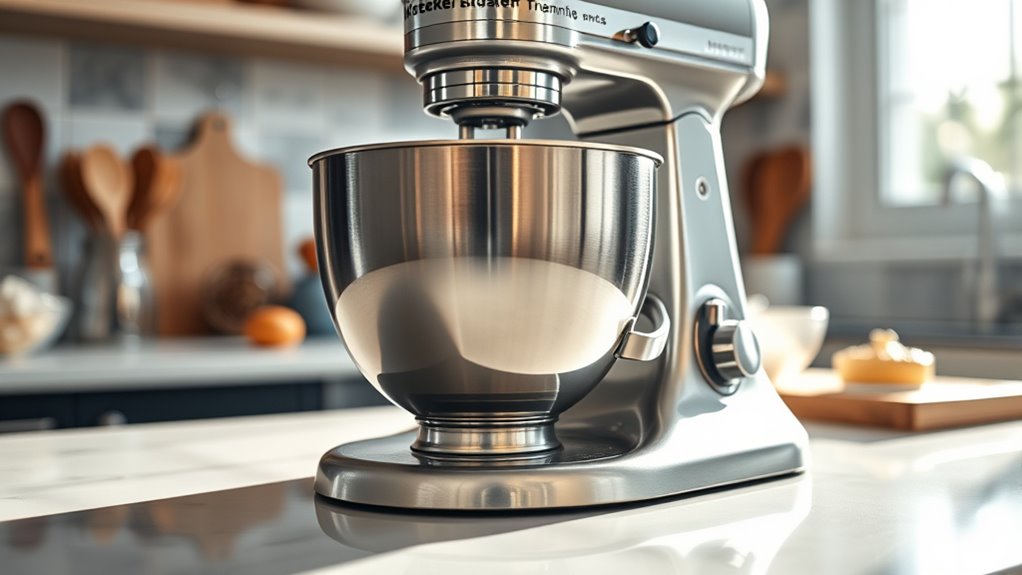
Wattage is often used as a quick way to gauge a stand mixer’s power, but it doesn’t tell the whole story. While higher wattage suggests a more powerful motor, it doesn’t account for motor efficiency, which affects how effectively the mixer converts electrical energy into mechanical work. A more efficient motor uses less energy to perform the same tasks, which can lead to energy savings and potentially extending the machine’s lifespan. Additionally, motor efficiency varies among models and greatly influences overall performance and energy consumption. A high-wattage motor that’s inefficient may consume more electricity without providing markedly better performance. So, don’t rely solely on wattage when choosing a stand mixer. Instead, consider how motor efficiency ratings impact energy use and overall effectiveness, ensuring you get a model that balances power with smart energy consumption. Understanding performance metrics can help you make a more informed decision.
Why Torque Matters More Than Power in Mixers?

While high power may sound impressive, it’s actually torque that determines a stand mixer’s real performance when handling tough ingredients. Torque reflects the motor’s ability to generate rotational force, which is vital for kneading dense dough or mixing thick batters. A motor’s efficiency ensures that this torque is delivered effectively without overworking or overheating, leading to better durability and consistent results. When evaluating mixers, you should consider brand reputation, as trusted brands tend to produce motors optimized for high torque and efficiency, giving you confidence in their capability. Relying solely on wattage can be misleading, since a high-watt motor may still lack the torque needed for challenging tasks. Ultimately, a mixer with strong torque and efficient motor design will serve you better in the long run.
How Wattage Can Mislead You About Mixer Strength?

Many people assume that a higher wattage automatically means a more powerful mixer, but this can be misleading. Motor efficiency plays a big role here; two mixers with the same wattage can perform differently because of how well their motors convert energy into work. A higher wattage doesn’t always equate to better performance if the motor isn’t efficient. Additionally, wattage can hide variations in energy consumption—some models use more power without delivering proportional strength. Instead of focusing solely on wattage, look at how the mixer’s motor is designed and rated for efficiency. This is where understanding Motor efficiency becomes crucial to making an informed choice. Furthermore, evaluating power-to-torque ratios can give you better insights into a mixer’s true capabilities. Recognizing that amperage also impacts performance can help you select a model that balances power and efficiency effectively. Being aware of energy consumption patterns can further aid in choosing a mixer that performs reliably without wasting electricity.
How Torque Impacts Your Mixer’s Ability to Handle Heavy Doughs?
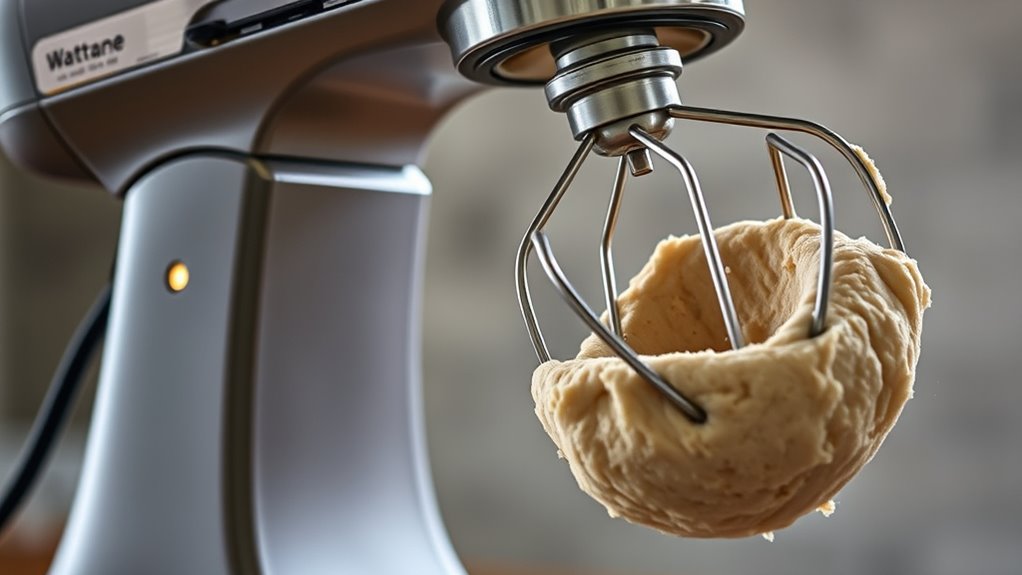
Torque plays a crucial role in a mixer’s ability to handle heavy doughs because it measures the rotational force the motor can deliver. Higher torque means your mixer can knead dense doughs without stalling or overheating. If the torque is insufficient, your motor may strain, reducing motor durability and risking damage. When choosing a mixer, focus on torque ratings to ensure it can handle frequent dough kneading tasks. The right torque ensures consistent performance and longer lifespan. Additionally, understanding body jewelry measurements can help you select the appropriate attachments if you plan to customize your mixer with accessories. Recognizing the importance of performance cookies can also assist in monitoring your mixer’s efficiency during extended use.
Is Power the Same as Efficiency—And Why It Matters?
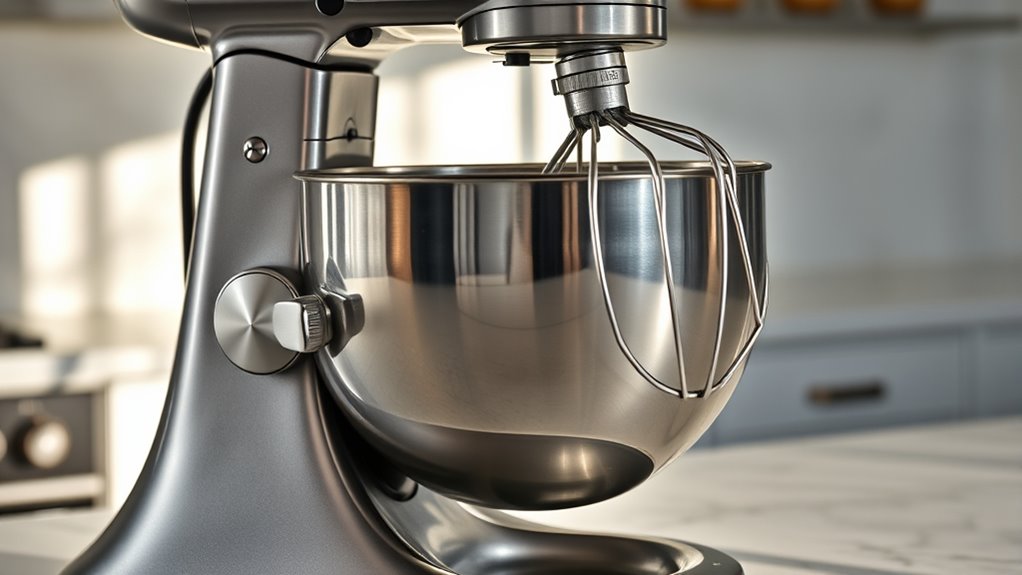
Power and efficiency are often confused, but they serve different purposes in a stand mixer. Power measures how much work the motor can perform at a given moment, while efficiency pertains to how well that power is converted into useful energy without wasting it. Understanding energy efficiency helps you choose a mixer that uses less electricity for the same performance. Good motor design minimizes energy loss, so your mixer can run longer and handle tough tasks better. Reliable backup power, such as a well-designed motor, can ensure consistent performance over time. Efficient motors reduce electricity consumption, better motor design means less heat and waste, high efficiency extends your mixer’s lifespan, and power ratings don’t always reflect actual energy use. Focusing on motor efficiency ensures you’re getting a mixer that’s both powerful and economical to run.
Common Myths About Stand Mixer Power Debunked?

Many believe that higher wattage means better performance, but that’s not always true. Power isn’t the only factor that determines how well a stand mixer works. Let’s clear up some common myths so you can choose the right mixer for your needs. For example, understanding Free Floating mechanisms can help you appreciate how certain mixers operate efficiently without excessive power.
Wattage Isn’t Everything
While higher wattage might suggest a more powerful stand mixer, it doesn’t tell the whole story. Wattage mainly indicates potential power, but it doesn’t account for actual performance or energy efficiency. A mixer with high wattage can still be inefficient, consuming more power without delivering better results. Focus on how the motor’s design and torque handle tough tasks rather than just wattage. Additionally, a motor’s design and engineering significantly influence its overall performance and durability. Remember:
- Power consumption varies with efficiency, not just wattage
- Higher wattage doesn’t guarantee better mixing performance
- Energy efficiency can save you money over time
- A motor’s performance characteristics are crucial for optimal operation
Ultimately, wattage alone isn’t a reliable measure of a mixer’s real-world capabilities or efficiency.
Power vs. Performance
Despite common beliefs, higher wattage doesn’t always mean better performance in a stand mixer. You might think a more powerful motor automatically handles tougher tasks, but that’s not always true. Power efficiency matters more; a motor with good efficiency delivers consistent results without wasting energy. It also reduces heat, which helps maintain motor durability over time. A mixer with a lower wattage but better design can outperform a higher-wattage model in real-world use. Focus on how the motor performs under load, not just its power rating. This ensures you get reliable performance without risking early wear or breakdown. Ultimately, a well-designed, efficient motor offers a balance of power and longevity, delivering the performance you need without misleading wattage claims.
How to Determine a Mixer’s Actual Strength in the Kitchen?
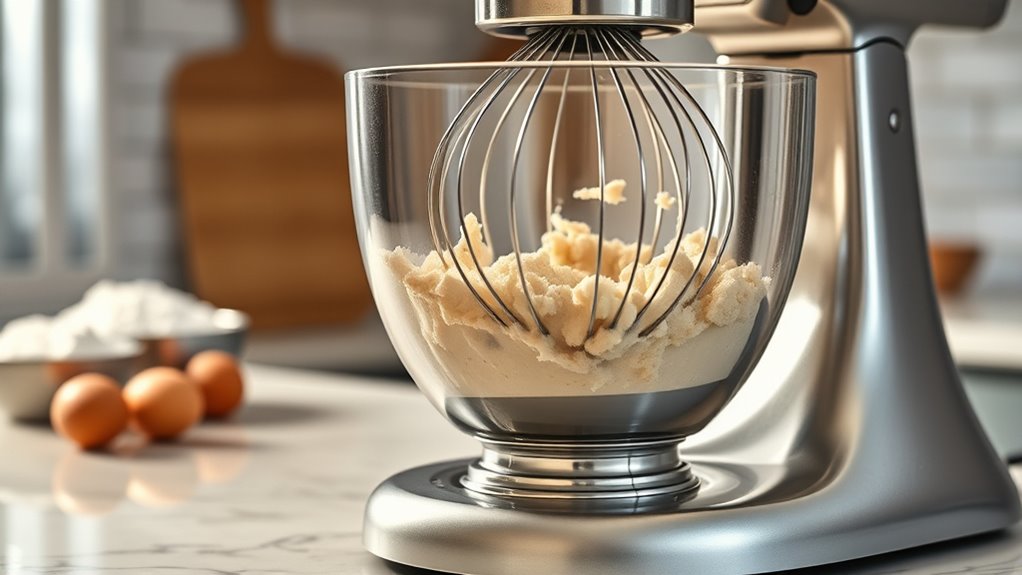
Ever wonder how to really gauge a mixer’s power in your kitchen? It’s not just about wattage. Instead, focus on factors like:
- How well it handles dense doughs or thick batters without stalling
- Its ability to maintain consistent speed under load
- The build quality and durability, often linked to brand reputation
- How it complements your kitchen aesthetics without sacrificing performance
- Understanding motor specifications can help you better assess a mixer’s true capabilities beyond just wattage.
- Considering performance testing or reading real user reviews can provide practical insights into how a mixer performs under various baking conditions.
- Paying attention to motor design and cooling systems can also influence the mixer’s ability to sustain power during prolonged use.
- Additionally, examining power-to-weight ratio offers a more nuanced view of the mixer’s strength relative to its size and design, giving you a clearer picture of its actual performance potential.
- Evaluating motor efficiency can reveal how well the mixer converts electrical power into effective mixing strength, ensuring you get optimal performance without excess energy consumption.
Key Features That Signal a High-Performance Stand Mixer?

A high-performance stand mixer displays several key features that set it apart from basic models. First, look for motor efficiency, which ensures powerful performance without overheating or wasting energy. An efficient motor delivers consistent mixing, even under heavy loads, making your baking smoother and more reliable. Energy savings can also be achieved through a motor that balances power with low energy consumption, reducing long-term costs. Second, pay attention to the user interface—simple controls, clear settings, and intuitive operation make your experience more enjoyable. High-end mixers often feature digital displays or multiple speed options, giving you precise control over your mixing process. These features indicate a machine built for durability and ease of use, helping you achieve professional results. When both motor efficiency and a user-friendly interface are present, you’re more likely to enjoy consistent, high-quality baking outcomes. Additionally, attention to detail in design and build quality can significantly impact the mixer’s longevity and performance over time. Furthermore, motor efficiency is closely linked to energy consumption, meaning a more efficient motor can save you power in the long run.
How to Pick a Mixer That Meets Your Baking Needs?

Choosing the right stand mixer depends on understanding your specific baking needs. Consider your typical cooking techniques and the recipe complexity you’ll handle. If you often bake dense bread doughs or thick batters, look for a mixer with higher torque and sturdy build. For lighter tasks like whipping cream or making cookies, a lower wattage model may suffice. To select the best fit:
- Match mixer power to your recipe types
- Prioritize durability for frequent, heavy-duty use
- Check for adjustable speed settings for versatility
- Consider attachment options for different techniques
Why Performance Matters More Than Wattage When Choosing a Mixer?

Wattage alone doesn’t tell you how well a mixer handles tough ingredients or maintains consistent power. Instead, look at its real power delivery and torque to see how it performs under pressure. A mixer with strong performance can tackle heavy doughs and dense mixtures more effectively than just one with higher wattage.
Real Power Delivery
While high wattage might seem like the key to a powerful stand mixer, it’s actually the quality of the power delivery that determines how well it performs. A mixer’s ability to handle tasks depends on consistent, reliable power, not just peak wattage. Voltage fluctuations can cause uneven performance, making your mixer stall or struggle with tough ingredients. Brand reputation often reflects how well a manufacturer manages power stability and durability. Look for models with:
- Stable voltage regulation
- Consistent torque delivery
- Good reviews on reliability
- Proven track record in performance
These factors ensure your mixer responds smoothly, keeps up with demanding recipes, and lasts longer. Performance isn’t just about raw wattage — it’s about how effectively power is supplied under real-world conditions.
Handling Tough Ingredients
When tackling tough ingredients like thick doughs or dense batters, performance matters more than raw wattage. A mixer with strong torque and precise speed control handles these tasks better, preventing stalling or overheating. Look for models with adjustable speed options to switch seamlessly between mixing stages. Color options might catch your eye, but durability and power consistency are key.
| Feature | Benefit |
|---|---|
| High torque | Easily handles dense ingredients without strain |
| Variable speed | Fine control for different mixing stages |
| Robust motor | Supports tough loads over longer periods |
| Quality build | Ensures longevity and reliable performance |
| Color options | Personalize your kitchen aesthetic |
Frequently Asked Questions
How Does Motor Design Influence Mixer Performance Beyond Wattage?
Motor design influences your mixer’s performance through efficiency and optimization. A well-designed motor delivers more torque at lower wattage, allowing you to knead heavy dough or whip ingredients smoothly. Design aspects like cooling systems, gear mechanisms, and materials enhance power transfer and durability. So, even if wattage seems low, a motor with smart design and high efficiency guarantees reliable, consistent results, making your baking experience more effective and enjoyable.
Can a Lower-Wattage Mixer Outperform a Higher-Wattage One?
Yes, a lower-wattage mixer can outperform a higher-wattage one if it’s designed for power efficiency and motor longevity. Don’t be fooled by wattage alone; a well-engineered motor delivers more consistent performance and lasts longer. You’ll enjoy better mixing, fewer breakdowns, and a happier wallet. Remember, it’s not about how many watts you have, but how wisely you use them. Efficiency wins the baking race.
What Role Does Gear Ratio Play in a Stand Mixer’s Effectiveness?
You should know that the gear ratio and transmission system substantially influence a stand mixer’s effectiveness. A higher gear ratio means the mixer delivers more torque at lower speeds, making it better at handling heavy doughs. The transmission system ensures smooth power transfer, preventing strain on the motor. Together, these factors determine how well your mixer performs, often more than wattage alone, helping you achieve consistent, professional results.
How Important Is Build Quality Versus Wattage in Durability?
Build quality is vital for durability, often more so than wattage. You should focus on material durability and component quality, as sturdy metals and well-made parts withstand daily use and heavy mixing better. A mixer with high wattage but low-quality components may fail sooner, whereas a device built with durable materials and precise components lasts longer, saving you money and frustration in the long run.
Are There Specific Brands Known for Better Torque-To-Wattage Ratios?
Some brands are known for better torque-to-wattage ratios, thanks to their reputation for quality and honest marketing claims. You’ll often find KitchenAid and Cuisinart stand mixers perform reliably, offering strong torque without excessive wattage. These brands prioritize build quality and actual performance, so you get more consistent results. Be cautious of lesser-known brands that may exaggerate marketing claims, leading you to believe they have higher torque than they actually do.
Conclusion
Remember, wattage alone doesn’t tell the whole story. For example, if you’re kneading dense bread dough, a mixer with high torque will perform better than one with just high wattage. Focus on torque, build quality, and features that match your baking style. Choosing a mixer with the right balance guarantees you won’t struggle with tough recipes or waste money on power that doesn’t translate to real performance—so pick wisely for your baking adventures.