
Your flour storage system directly impacts its moisture, temperature, and contamination levels, which all influence baking consistency. Poor storage allows moisture or pests to enter, causing spoilage, mold, or rancidity. Fluctuations in temperature and humidity can change flour’s texture and performance, making your baked goods unpredictable. Using airtight containers in a climate-controlled environment helps maintain quality over time. Keep these factors in check, and you’ll guarantee reliable results every time — discover how to optimize your system further.

Get baking supplies delivered free — and shop member deals
- Fast, free delivery on millions of items
- Access to Prime Big Deal Days deals on October 6–7
- Prime Video, Amazon Music and more included
Key Takeaways
- Proper storage systems regulate humidity and temperature, preventing moisture fluctuations that alter flour’s consistency.
- Airtight containers and climate control reduce exposure to environmental factors that cause clumping or drying.
- Consistent storage conditions maintain flour’s natural moisture levels, ensuring uniform baking performance.
- Effective storage minimizes pest and mold contamination, preserving flour quality and consistency over time.
- Monitoring environmental parameters helps prevent spoilage and ensures reliable, predictable baking results.
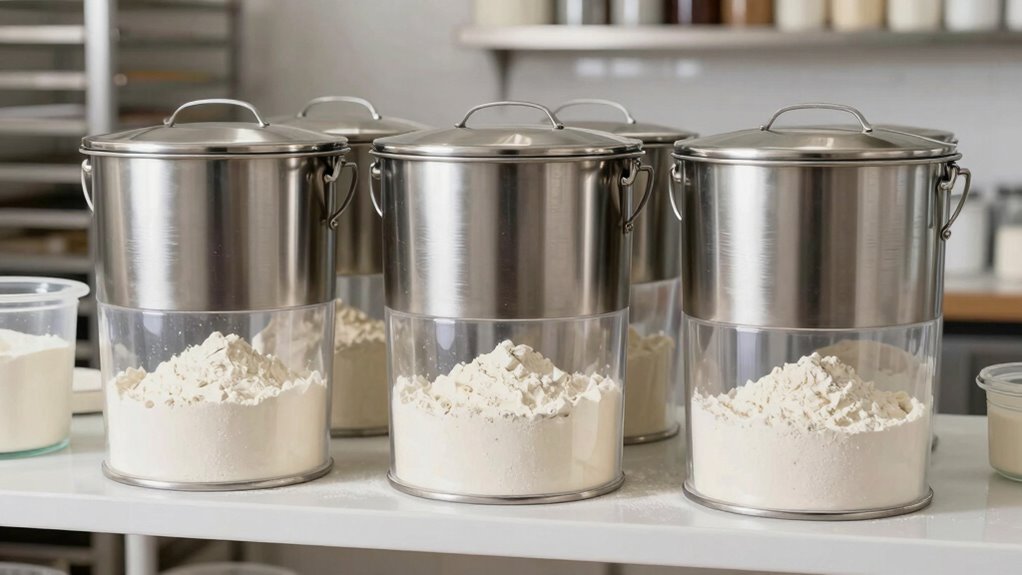
Ever wondered how to keep your flour fresh and free from pests for longer? The secret lies in understanding how your storage system influences its quality. Flour’s consistency depends heavily on how well you manage two key factors: grain moisture and storage temperature. When these aren’t controlled properly, you risk altering the flour’s natural properties, which can impact baking results and overall shelf life.
Grain moisture plays an essential role in maintaining flour’s integrity. If the moisture level in your storage environment is too high, it creates a perfect breeding ground for mold, bacteria, and pests. These pests not only contaminate your flour but also degrade its texture and flavor, making it less predictable in recipes. On the other hand, if the moisture is too low, the flour can become overly dry and prone to crumbling, which affects how it measures and mixes. To keep moisture levels balanced, you need a storage system that prevents excess humidity from seeping in while avoiding overly dry conditions. Proper sealing containers and climate-controlled storage rooms help maintain ideal grain moisture levels, guaranteeing your flour remains consistent every time you bake. Additionally, moisture control techniques can help ensure the environment stays within optimal ranges for flour preservation. Regular monitoring of humidity levels is vital, as even slight fluctuations can compromise flour quality over time. Implementing environmental management practices is key to maintaining stability and prolonging shelf life. Incorporating proper storage practices can further support the longevity of your flour by minimizing environmental exposure and maintaining its natural qualities. Using adequate ventilation can also help regulate moisture and prevent mold growth, which is crucial for long-term storage.
Maintaining balanced grain moisture prevents mold, pests, and crumbling, ensuring consistent, high-quality flour for perfect baking every time.
Storage temperature also impacts flour’s quality and performance. Fluctuations in temperature can cause the starches and proteins within the flour to change, leading to inconsistent baking results. For example, high temperatures can accelerate the degradation of fats in the flour, causing it to develop off-flavors and rancidity. Conversely, cold storage can slow down these processes but may also cause moisture condensation if temperature changes aren’t managed carefully. A stable, cool storage environment helps preserve flour’s natural properties and keeps it from clumping or developing an uneven texture. This consistency is essential, especially if you’re aiming for precise baking outcomes, since even slight variations in flour quality can alter the rise, crumb, and overall structure of baked goods. Proper temperature regulation is a key component in maintaining flour’s optimal condition. Maintaining consistent storage conditions is also important because frequent temperature fluctuations can accelerate spoilage and reduce shelf life.
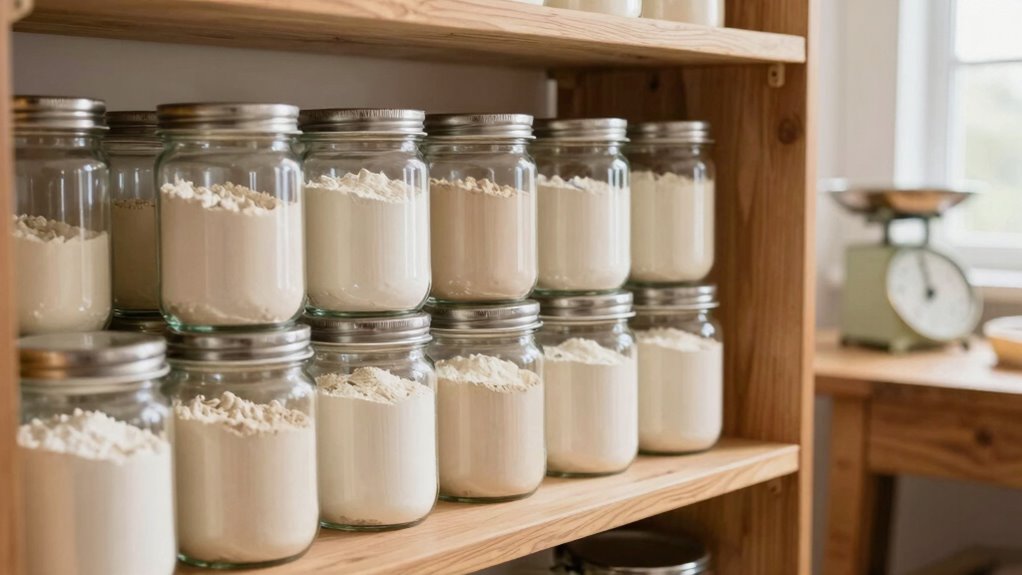
Choosing the right flour storage system means paying attention to both grain moisture and temperature control. An airtight container placed in a cool, dry place can greatly extend the shelf life and maintain the quality of your flour. Investing in temperature and humidity monitors allows you to keep these factors within ideal ranges, safeguarding your flour’s consistency. When you control these environmental conditions, you guarantee that each batch of flour performs predictably in your recipes, leading to better, more reliable baking results. Ultimately, a well-designed flour storage system isn’t just about keeping pests away—it’s about preserving the natural qualities of your flour so that every loaf, cake, or pastry turns out just right.
airtight flour storage container
As an affiliate, we earn on qualifying purchases.
As an affiliate, we earn on qualifying purchases.
Frequently Asked Questions
How Often Should Flour Storage Containers Be Cleaned?
You should clean your flour storage containers every 3 to 4 weeks to maintain freshness and reduce contamination risk. Regular cleaning helps extend the shelf life of your flour by preventing mold, pests, and bacteria buildup. If you notice any moisture or pests, clean immediately. Using hot, soapy water and thoroughly drying the containers guarantees your flour stays fresh and safe for baking, keeping your baked goods consistent in quality.
What Is the Ideal Temperature for Flour Storage?
Ever wondered what the ideal temperature for flour storage is? Keep it between 60-70°F for effective temperature control and storage stability. Why risk spoilage or pests by storing flour at improper temperatures? Cooler environments slow down spoilage, while consistent temperatures prevent clumping and insect infestations. You should avoid humid or hot areas, as fluctuations can compromise flour quality. Proper storage ensures your flour stays fresh and ready whenever you need it.
Can Improper Storage Cause Flour to Spoil Faster?
Improper storage can definitely cause flour to spoil faster. When you don’t keep flour in a cool, airtight environment, its shelf life shortens, and contamination risks increase. Exposure to heat, moisture, or pests can lead to mold, rancidity, or bugs. To keep flour fresh and safe longer, store it properly in a sealed container in a cool, dry place, and check regularly for signs of spoilage.
Are There Specific Materials Better for Flour Storage?
You should choose storage materials that boost shelf life and have strong material durability. Airtight containers made of metal, glass, or sturdy plastic are ideal because they protect flour from moisture, pests, and air exposure. These materials prevent spoilage and preserve freshness, ensuring consistent quality. Avoid flimsy or porous containers, as they compromise storage conditions and can shorten flour’s shelf life, impacting your baking results.
How Does Humidity Affect Flour Quality Over Time?
Imagine you leave flour in a humid environment; moisture absorption increases, making it prone to mold growth. Over time, high humidity deteriorates flour quality, resulting in clumping, off-flavors, and spoilage. You might notice a musty smell or visible mold. To prevent this, use airtight storage with humidity control. Proper storage guarantees your flour stays fresh, maintains consistency, and avoids the risks associated with moisture-induced spoilage.
climate-controlled flour storage cabinet
As an affiliate, we earn on qualifying purchases.
As an affiliate, we earn on qualifying purchases.
Conclusion
Proper flour storage isn’t just about keeping it fresh; it directly impacts your baking consistency. If you think it’s too much trouble, remember that a simple airtight container can prevent spoilage and clumping, saving you time and disappointment later. By investing a little effort now, you’ll enjoy reliably perfect baked goods every time. Don’t let poor storage sabotage your baking—your delicious results depend on the right system in place.
moisture control flour storage bag
As an affiliate, we earn on qualifying purchases.
As an affiliate, we earn on qualifying purchases.
As an affiliate, we earn on qualifying purchases.
Halloween Picks
halloween
As an affiliate, we earn on qualifying purchases.