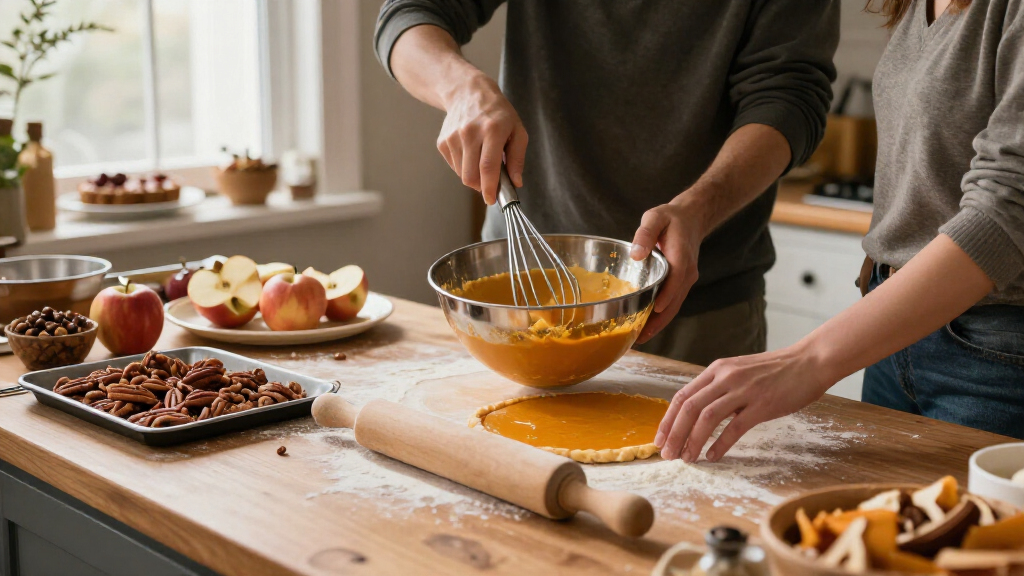

TL;DR
For Thanksgiving desserts, start with accurate measuring tools or a digital scale, sturdy bowls and spatulas, the right pans, parchment, and cooling racks. Add pie weights, a thermometer, or a mixer to match your menu, and check pan sizes and oven temperature before the holiday rush.
Thanksgiving dessert trouble often starts before the timer rings: the pie plate is the wrong size, the oven runs hot, or you can’t find the whisk under a pile of mixing bowls. A few dependable baking tools for Thanksgiving desserts can turn that scramble into a calmer afternoon.

Get baking supplies delivered free with Prime
- Fast, free delivery on millions of items
- Prime Video, Amazon Music and more included
- Member-only deals all year
This guide helps you choose gear for pies, cookies, cakes, and custards, then match each tool to the job it does best. You’ll learn where a digital scale earns its space, which pie tools help a crust hold its shape, and what you can skip when you only bake once or twice a year. The aim is practical: make several desserts with tools you can actually use again.
Thanksgiving baking often means preparing several desserts at once, sometimes in a kitchen where every inch of counter space already has a job. Think of your tool kit as a well-packed drawer, not a professional bakery: the right basics keep the day moving without crowding out the cranberry sauce.
Use a digital scale for recipe weights, especially when flour measurement affects pastry or bread texture.
Add pie weights or reserved dry beans and rice when you need to blind bake an empty crust.
Check pan size and material before baking; dark pans may brown desserts faster than light pans.
Use an oven thermometer to spot heat differences and an instant-read thermometer when a recipe provides food-temperature guidance.
Set out tools and plan cooling space ahead, while storing perishable fillings according to the recipe.
Start with measuring tools that make recipes repeatable
Baking tools for Thanksgiving desserts should start with accurate measuring tools, because small measurement differences can change pastry texture, cake rise, and cookie spread. A digital scale that switches between grams and ounces gives you a consistent way to weigh flour and sugar. For liquids such as milk or water, use a clear liquid measuring cup; for dry ingredients, use dry cups or the scale.
Flour shows why that choice matters. A cup scooped straight from a bag can hold more flour than a cup spooned in lightly, leaving pie dough dry or cookies dense. The scale reduces that variation, especially when you’re making several batches and need the same result each time. The tradeoff is that a scale adds one more tool to wash and requires a recipe with weights; when a recipe gives only cup measures, use its stated method rather than guessing at a conversion.
Pair measuring tools with a few mixing bowls and a flexible spatula. Separate bowls let you prepare ingredients in advance, which helps when one recipe needs the mixer while another filling waits. A spatula scrapes the bowl clean and folds ingredients without knocking out as much air as vigorous stirring. That gentle handling matters for batters whose rise depends partly on keeping air in the mixture.
Keep a whisk nearby for custards and small batches, and choose a hand mixer or stand mixer based on how much you bake. You don’t need a stand mixer for one pumpkin pie; it takes space and adds cleanup. It earns that space when you’re creaming butter for multiple cookie batches or whipping cream while another dessert cools. A hand mixer costs less and stores more easily, though it asks you to hold and guide it throughout the mixing.
Products Worth Considering

Vitamix VX1 Professional-Grade Blender, 64 oz, Black

Cuisinart TOA-70NAS Air Fryer Toaster Oven, 1800W, 8-in-1, Stainless Steel

Instant Pot Pro 8 Qt 10-in-1 Electric Pressure Cooker, Black
As an affiliate, we earn on qualifying purchases.
Give pie crusts the tools to bake crisp and hold their shape
Baking tools for Thanksgiving desserts include a rolling pin, a sturdy pie plate, and pie weights if you plan to blind bake. A rolling pin helps you shape dough to an even thickness, so thinner spots are less likely to tear or bake through before the rest. A bench scraper can lift sticky pastry without stretching it. Pie weights hold an empty crust in place as it bakes, limiting air pockets and slump; without them, a crust may need more patching or lose the shape you carefully formed.
For instance, if your pumpkin pie recipe calls for a pre-baked shell, line the dough with parchment and fill it with pie weights before baking. Dry beans or uncooked rice can serve the same purpose, which saves money if you blind bake only occasionally. Keep substitutes labeled for baking because they may not cook evenly for eating after repeated oven use. A pastry brush helps apply an egg wash for color and adhesion, while a sharp knife trims the rim without tugging at the dough.
Pan material affects browning, so follow your recipe’s recommendation when you can. Glass and metal pie plates can both work, but they transfer heat differently; watch the crust rather than assuming every plate needs the same baking time. Dark pans brown more quickly than light ones, which can be useful when a recipe calls for a crisp base but leaves less margin before the edge darkens. If you switch materials, check the crust early and use the recipe’s visual cues to guide the bake.
If the rim turns golden before the filling finishes, cover the edge with a pie shield or strips of foil. Leave the center exposed unless the recipe says otherwise. This lets the filling continue baking while slowing browning at the most exposed part of the crust. A shield is especially handy when you’re baking a pecan pie and want a deeply toasted top without a scorched edge.
Pick pans and liners that suit cookies, cakes, and bars
Baking tools for Thanksgiving desserts work best when you match the pan to the recipe instead of improvising at the last minute. Keep a sheet pan for cookies, the specified cake pan for layer cakes, and a muffin tin if you’re making individual pies or cupcakes. A pan’s size changes batter depth: a wider pan makes a shallower layer that may bake faster, while a smaller pan can leave the center underdone as the edges set. Material also affects how quickly heat reaches the batter, so changing pan size or type can change both timing and texture.
A cookie scoop makes portions more even, which helps cookies bake at a similar rate across the tray. Similar sizes also make it easier to tell when they’re done: one oversized cookie won’t still be soft while the rest are ready to move. For bars, parchment can form a sling: leave extra paper over two sides, cool the bars, then lift them out for cleaner cuts. An offset spatula spreads batter into corners and helps lift the first square without tearing the rest.
Parchment and silicone mats each have a place. Silicone mats are reusable and useful for many cookies and sheet-pan bakes, but their surface and thickness can affect browning compared with a bare pan or parchment. Parchment is disposable, but it makes it easier to line a cake pan or lift bars. They are not interchangeable for every recipe, so follow the method you’re using. A cooling rack lets air move beneath warm cookies, releasing steam instead of trapping it against the pan; that helps preserve a crisp bottom. If counter space is tight, a rack also frees the sheet pan sooner for the next batch.
Before Thanksgiving, slide your pans into the oven to check that they fit without blocking airflow. Crowded pans can bake unevenly because hot air cannot circulate well, and a pan that barely clears the door makes swapping batches awkward. That quick check can help you plan the number and order of batches before dough is ready, rather than reshaping it or borrowing a smaller pan mid-bake.
Use thermometers to solve stubborn baking surprises
Baking tools for Thanksgiving desserts include two thermometers with different jobs: an oven thermometer checks the heat inside the oven, and an instant-read thermometer checks the food. An oven dial can show one temperature while the oven runs warmer or cooler, and the temperature can fluctuate as the heating element cycles. A thermometer placed inside helps you spot a persistent difference and decide whether to adjust the setting or allow extra time before a batch of pies bakes unevenly.
Imagine your pecan pie browns on top while its crust stays pale. The oven may be running cool, or the pie may sit in a cooler area; an oven thermometer gives you one useful clue about the first possibility. It won’t identify every cause or replace the recipe’s visual cues, but it helps separate a temperature problem from a timing or pan problem. That makes your next adjustment more targeted than simply adding time, which could overbake the filling.
An instant-read thermometer can help with bread and some custards, but use the recipe’s temperature guidance rather than treating one number as universal. Different recipes and ingredients call for different targets, and a thermometer reading is only useful when taken where the recipe specifies. Custard pies often continue setting as they cool, so a center that looks slightly wobbly may be ready. Baking until it feels completely firm can leave you with a dry, cracked filling.
Food safety matters during a busy bake. Follow the recipe’s guidance for egg-based fillings and other perishable ingredients, and refrigerate custard pies and leftovers promptly. Don’t leave perishable desserts sitting at room temperature for more than two hours.
For example, once the pie has cooled enough for safe handling, cover and chill it if the recipe calls for refrigeration. A thermometer can help with a recipe that gives a target temperature, but it does not replace the recipe’s storage instructions or the need to refrigerate perishable food promptly.
Set up your tools before the holiday kitchen fills
Baking tools for Thanksgiving desserts are most useful when they’re ready before flour dusts the counter. Lay out the pans, spatulas, whisk, and mixer attachments you’ll need, then check that each pan fits your oven and that you have enough space for cooling racks. A little setup can prevent a search for the rolling pin while the butter softens on the counter.
Use this short sequence to prepare for a multi-dessert day:
- Read each recipe and note pan dimensions, oven temperature, and cooling or chilling time.
- Check your tools by setting out the needed bowls, measuring gear, attachments, parchment, and pans.
- Measure dry ingredients into labeled bowls or containers, using a scale when the recipe gives weights.
- Plan the oven order around the temperature each dessert needs and the amount of cooling space you have.
For example, you might mix cookie dough the night before, chill it as directed, and bake it while a pie cools. Chilling can firm the dough and make portions easier to handle, but it also means you need fridge space and time to bring the dough to a scoopable consistency if it becomes very firm. Keep perishable ingredients and prepared fillings stored according to the recipe; don’t leave eggs, dairy, or custard mixtures sitting out through a long afternoon.
Prioritize tools that earn their keep across recipes: a scale, sturdy pans, mixing bowls, and a good spatula. Borrow a specialty tart pan or use a recipe-approved substitute if you only need it once; a substitute may change the shape or bake time, so check the result as it cooks. A planned counter is like a clear runway: there’s room to land the pie, set down the mixer, and keep the next batch moving.
Frequently Asked Questions
What baking tools do I really need for Thanksgiving desserts?
Start with measuring tools or a scale, mixing bowls, a whisk, a spatula, suitable pans, parchment, and cooling racks. Add a rolling pin and pie weights if pastry is on your menu. For example, a cookie-and-pie day needs more than one pan, but it may not need a stand mixer.
Is a kitchen scale worth buying for baking?
Yes, especially if you bake pastry or follow recipes with ingredient weights. Weighing flour reduces variation from scooping or packing it into a cup. If a recipe calls for 250 grams, the scale helps you measure that amount directly.
Do I need a stand mixer for holiday baking?
No. A hand mixer or sturdy whisk handles many recipes, including a single pie filling. A stand mixer helps when you bake often, make large batches, or need extended mixing, such as creaming butter for several trays of cookies.
What can I use instead of pie weights?
Dry beans or uncooked rice can weigh down a crust during blind baking. Line the pastry with parchment first, then add the weights. Keep those beans or rice for baking use rather than cooking them afterward.
How do I keep a pie crust from burning?
Check the crust as it bakes and cover the edge with a pie shield or strips of foil if it browns too quickly. Leave the filling exposed unless the recipe directs otherwise. This is useful when a pecan pie needs more time after its rim has turned golden.
Do silicone mats replace parchment paper?
They work well for many cookies and sheet-pan bakes, but they don’t suit every recipe. Parchment is often easier for lining cake pans or lifting bars out of a pan. Follow the recipe’s instructions if it names a specific liner.
How should I store Thanksgiving custard pies?
Follow the recipe’s storage directions and refrigerate custard pies and other perishable desserts promptly. As a general food-safety rule, don’t leave perishable food at room temperature for more than two hours. Cover the pie once it has cooled enough for safe handling.
Conclusion
Choose tools around the desserts you’re actually making: accurate measuring gear, the right pans, a few sturdy bowls, and enough cooling space will cover much of the work. Add pie weights or a thermometer when your menu calls for them, then check your oven and pan sizes before the holiday rush.
On Thanksgiving, the best tool may be the one that lets you set a golden pie on a rack and reach for the next recipe without losing your place.