Dough hooks improve gluten development by mimicking the kneading process through continuous stretching and folding. They create tension in the dough, aligning gluten strands evenly and strengthening the network. This mechanical action results in a more elastic dough that can trap gases better, helping your bread rise. Using hooks saves time and prevents overworking the dough, giving you consistent results. Keep exploring to discover how to optimize this process for perfect baking outcomes.
Key Takeaways
- Dough hooks mimic hand-kneading by continuously stretching and folding the dough, promoting gluten formation.
- They create uniform tension, ensuring even gluten development throughout the dough.
- Mechanical action from hooks develops gluten networks more consistently than manual kneading.
- Proper use prevents overworking, resulting in a smooth, elastic dough with optimal gluten structure.
- Enhanced gluten development improves dough elasticity, rise, and overall baking quality.

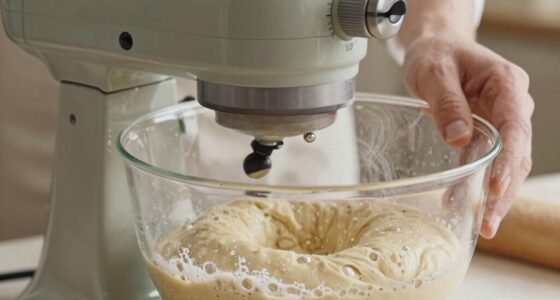
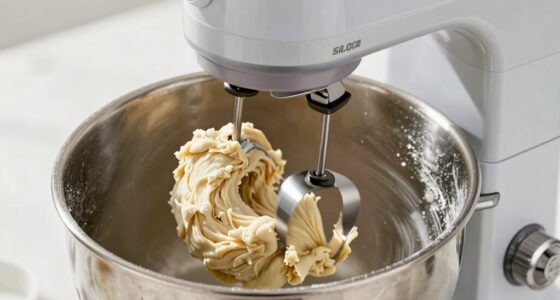
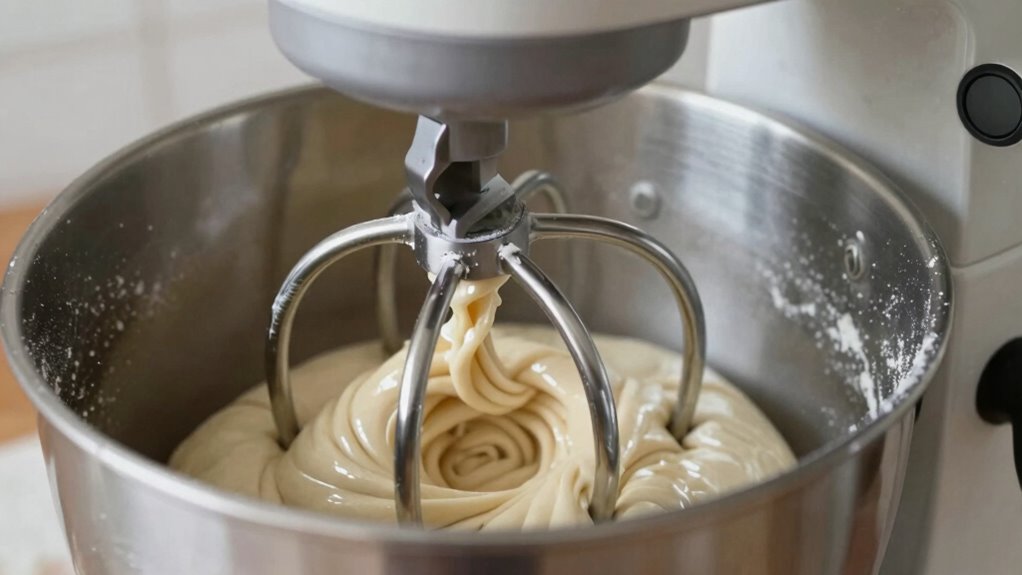
Dough hooks work by mimicking the kneading motion, continuously stretching and folding the dough. This mechanical action helps develop the gluten network more thoroughly and evenly than some traditional hand-kneading methods. As the hooks turn, they create tension within the dough, encouraging gluten strands to align and strengthen. The kneading mechanics of dough hooks ensure that the dough is consistently worked, which enhances elasticity without overworking it. Overkneading can cause the gluten to become too tight, resulting in a tough, chewy texture. Proper use of dough hooks prevents this by providing controlled, even kneading, leading to a balanced dough that is elastic yet tender.
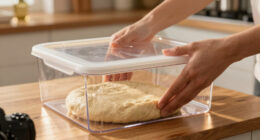
The impact on dough elasticity is significant. When the gluten network develops properly, the dough becomes stretchable and resilient, which is vital for trapping gases during fermentation. This elasticity results in a better rise and a softer crumb. Dough hooks facilitate this by applying repetitive, gentle tension, allowing the gluten to develop gradually. You’ll notice that with the right kneading mechanics, the dough becomes smooth and elastic, bouncing back when pressed. This indicates that the gluten structure is well-formed and ready for shaping or proofing. Additionally, proper gluten development can help prevent overworking the dough, which can negatively affect its texture. Achieving optimal gluten formation is essential for achieving bakery-quality results at home. Understanding the principles of dough elasticity can further improve your baking outcomes.
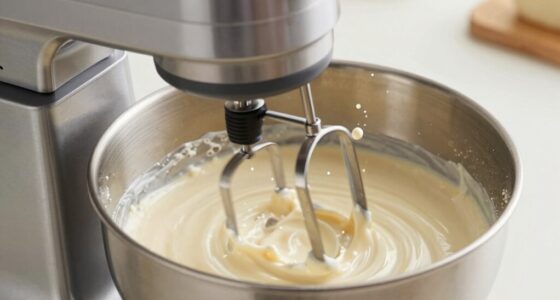
Using dough hooks also saves you time and effort. Instead of kneading for several minutes by hand, a mixer with dough hooks can achieve the same gluten development in a shorter period. This efficiency doesn’t compromise the quality; in fact, it often produces more consistent results because the mechanical action is uniform. The key is to monitor the dough’s texture and elasticity during mixing, stopping when it reaches the ideal balance—not too sticky, yet not overly stiff. Proper dough mixing techniques can further enhance gluten development and overall dough quality. Moreover, understanding the mechanics of dough kneading can help you fine-tune your process for optimal results.

Hamilton Beach Electric Stand Mixer, 4 Quarts, Dough Hook, Flat Beater Attachments, Splash Guard 7 Speeds with Whisk, Black
THOROUGH MIXING AND COMPLETE BOWL COVERAGE. As you mix, each stand mixer attachment rotates around the entire bowl…
As an affiliate, we earn on qualifying purchases.
As an affiliate, we earn on qualifying purchases.
Frequently Asked Questions
Do Dough Hooks Work Better With All Types of Flour?
Dough hooks work well with many flour types, especially higher-gluten flours like bread or bread flour, because they develop gluten more effectively. For lighter flours like cake or pastry, traditional mixing techniques might be better. You should adjust your mixing techniques based on the flour type you’re using. The dough hook’s efficiency depends on the flour’s gluten content, ensuring you get the best results for your baked goods.
How Do Dough Hooks Compare to Traditional Kneading Methods?
Did you know that dough hooks can mix and knead dough up to 50% faster than hand kneading? Compared to traditional methods, dough hooks offer consistent mixing at higher speeds, reducing effort and time. While hand kneading provides a tactile experience, dough hooks streamline the process, creating uniform gluten development efficiently. If you prefer convenience and speed, dough hooks are a great alternative to traditional kneading, especially for large batches.
Can Dough Hooks Prevent Over-Kneading?
Dough hooks can help prevent over-kneading risks by stopping once the dough reaches the right gluten development, but they do have limitations. If you’re not careful, you might still over-knead if you leave the mixer running too long. Keep an eye on your dough’s texture, and don’t rely solely on the hooks—they’re helpful tools, but they don’t eliminate the need for monitoring to avoid over-kneading.
Do Dough Hooks Affect Fermentation Time?
Dough hooks can influence fermentation time by affecting yeast activity. When you use dough hooks, they create a gentle kneading action that encourages even gluten development without overly stressing the dough. This ideal gluten structure allows yeast to ferment efficiently, potentially speeding up fermentation. However, if you knead too much or too little, it can either slow down or accelerate fermentation, so adjusting your process based on dough response is key.
Are Dough Hooks Suitable for Gluten-Free Doughs?
Dough hooks aren’t suitable for gluten-free doughs because gluten-free alternatives require gentle mixing and specific textures, which dough hooks can’t provide. You might consider dough hook modifications or alternative tools designed for gluten-free recipes. Using a paddle attachment or mixing by hand often yields better results, ensuring your gluten-free doughs aren’t overmixed and maintain the desired consistency. Stick with tools tailored for gluten-free baking for best outcomes.

Ezato K45DH Coated Dough Hook for KitchenAid 4.5-5QT Tilt-Head Stand Mixers, Dishwasher Safe, Dough Hook Attachment – Efficient Kneading for Bread, Pizza, Pasta, Cookies
𝐖𝐢𝐝𝐞 𝐂𝐨𝐦𝐩𝐚𝐭𝐢𝐛𝐢𝐥𝐢𝐭𝐲 & 𝐃𝐨𝐮𝐠𝐡 𝐇𝐨𝐨𝐤 𝐑𝐞𝐩𝐥𝐚𝐜𝐞𝐦𝐞𝐧𝐭: This K45DH White dough hook is a perfect replacement attachment. It's tailored…
As an affiliate, we earn on qualifying purchases.
As an affiliate, we earn on qualifying purchases.
Conclusion
So, don’t worry if you think dough hooks might overmix your bread. They’re designed to efficiently develop gluten without overdoing it, making baking easier and more consistent. Plus, their gentle yet thorough kneading helps you achieve perfect texture every time. With a dough hook, you save time and effort, and your bread turns out delicious and well-structured. Give it a try—you might find it’s your new favorite baking tool!

Electric Stand Mixer with 6.5QT Bowl with Handle, Kitchen Mixer with Tilting Head for Bread Dough and Cake with Dough Hook, Whisk, Splash Guard and Egg Separator (Black)
POWERFUL 660W MOTOR: Pure-copper motor kneads 2.2 lbs flour or 3 loaves without effort; 10 speeds plus pulse…
As an affiliate, we earn on qualifying purchases.
As an affiliate, we earn on qualifying purchases.

COOKSURE Danish Dough Whisk for Sourdough Bread – 13 Inch Bread Whisk with Wooden Handle – 304 Stainless Steel Hook for Heavy Dough Baking, Swedish Dough Whisk Tool
Professional Performance – Premium 304 stainless steel dough whisk designed for sourdough, artisan dough, and bread baking supplies….
As an affiliate, we earn on qualifying purchases.
As an affiliate, we earn on qualifying purchases.