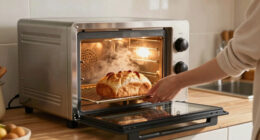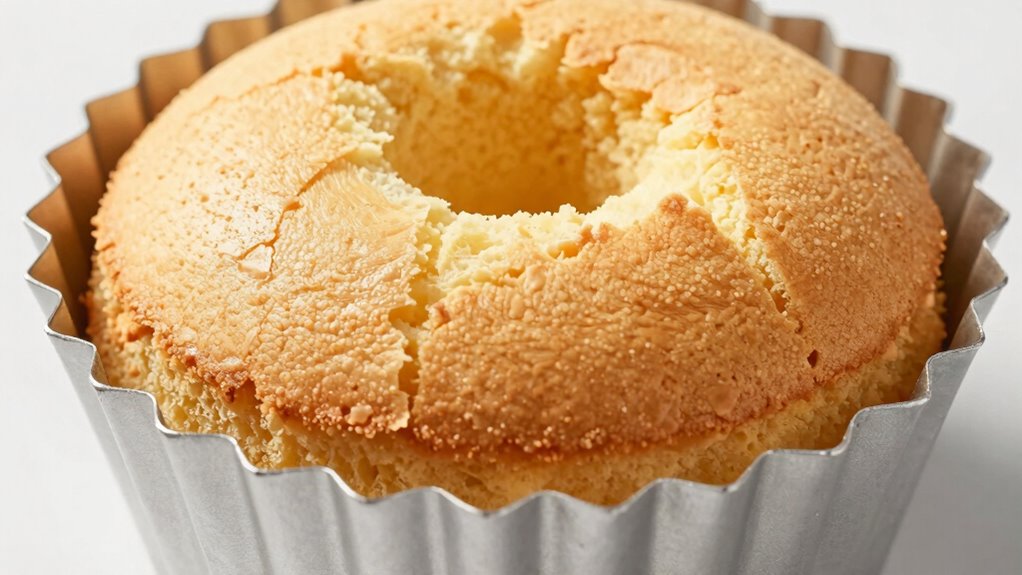

The secret to a perfect chiffon cake’s airy structure is in choosing the right pan. A chiffon pan with tall sides and a removable bottom helps guide the batter’s upward rise while supporting delicate air pockets. Its shape allows the cake to expand evenly, preventing sinking. Proper pan choice, combined with the right batter and baking technique, creates that light, fluffy texture you crave. Keep exploring to learn how to master every step for flawless results.
Key Takeaways
- A chiffon pan with tall sides and a removable bottom supports even upward rise and preserves delicate air pockets.
- Properly filling the pan allows the batter to expand freely without overflowing or collapsing.
- Turning the pan upside down post-baking stabilizes the structure and prevents collapsing.
- The pan’s shape guides the batter’s expansion, promoting a uniform, airy crumb.
- Using the right pan helps maintain the internal airflow circulation essential for a light, fluffy chiffon cake.

Understanding the structure of chiffon cake is essential for baking a light, airy dessert with the perfect rise. The key to achieving that delicate, fluffy texture lies in how well you manage airflow circulation inside the batter and ensure the ingredient ratios are just right. When you prepare your batter, you want to pay attention to how ingredients interact, especially the balance between liquids, fats, and leavening agents. Too much liquid can make the cake dense, while too little can prevent proper expansion. Similarly, the right amount of oil and eggs helps create a tender crumb without weighing it down. Mastering these ratios allows your cake to rise evenly and maintain that airy interior.
Balancing ingredients and managing airflow are key to perfect chiffon cake structure and lightness.
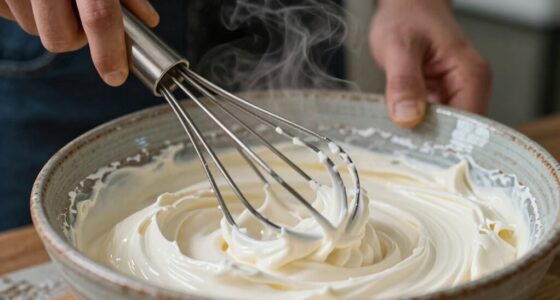
Airflow circulation is another critical factor in creating the signature lightness of chiffon cake. Once you’ve mixed your batter, it’s crucial to incorporate air effectively. Be gentle when folding in whipped egg whites, as they are your primary leavening agent. Proper folding preserves the air bubbles, which expand during baking and give the cake its lift. If you overmix, you risk deflating these bubbles, resulting in a dense cake. Conversely, under-mixing can leave uneven distribution of leavening, causing irregular rises. The way you handle the batter and your choice of mixing techniques directly influence airflow circulation within the mixture, impacting the final structure.
Choosing the right pan is equally important. A chiffon pan, typically with a removable bottom and a tall, straight sides, is designed to support the cake’s structure during baking. Its shape encourages the batter to rise upward evenly, guiding the expansion of air pockets. When you pour the batter into the pan, avoid overfilling; leaving space at the top allows the cake to rise freely without overflowing. After baking, turning the pan upside down helps stabilize the structure as the cake cools, preventing collapsing. This method preserves the delicate air pockets that make chiffon cakes so light.
In addition, ensuring your oven temperature is accurate is vital for proper airflow circulation and ingredient activation. Too high, and the outside may set before the inside can expand fully; too low, and the batter might not rise enough. Properly calibrated heat ensures that the leavening action occurs gradually and evenly. When all these elements—ingredient ratios, airflow circulation, pan shape, and temperature—come together, you create the perfect environment for your chiffon cake to develop its characteristic lightness and airy structure. Paying close attention to these details transforms your baking process and guarantees a stunning, well-structured chiffon cake every time.
Top picks for "chiffon cake structure"
Open Amazon search results for this keyword.
As an affiliate, we earn on qualifying purchases.
Frequently Asked Questions
Can I Make Chiffon Cake Without a Tube Pan?
Yes, you can make chiffon cake without a tube pan by using alternative pans with non-stick coatings, but it’s trickier. A regular round or square pan may not support the cake’s structure as well, so you might need to adjust baking time and be gentle when removing. Using a well-greased, non-stick pan can help prevent sticking, but for best results, a tube pan is still recommended to achieve the classic rise and texture.
How Does Pan Material Affect Chiffon Cake’s Rise?
Think of your pan as the stage where your cake performs. The pan material affects heat conduction, which directly influences how well your chiffon cake rises. Metal pans, especially aluminum, conduct heat evenly and help the cake lift beautifully. Glass or ceramic pans, on the other hand, may cause uneven heat distribution, leading to less rise. Choose a pan with good heat transfer to guarantee your cake reaches its full soaring potential.
Is It Necessary to Invert the Pan After Baking?
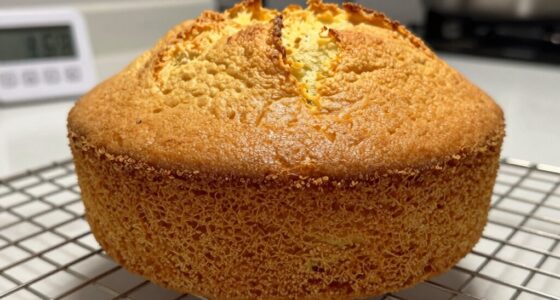
Yes, you should invert the cake after baking to help it cool properly. This prevents the cake from collapsing, maintaining its airy structure. During cake cooling, avoid greasing the pan, as it can interfere with the cake’s rise and texture. Instead, let it cool upside down on a wire rack, which supports the delicate chiffon and ensures it stays light and fluffy.
What Size Pan Is Best for Perfect Chiffon Cake?
You should use a 9-inch tube pan for the best chiffon cake. Make certain your cake batter consistency is smooth but not overmixed, which helps it rise evenly. Proper pan preparation techniques, like greasing only the sides and not the bottom, prevent sticking. Using this size and following these steps ensures your cake maintains the perfect structure and light, airy texture.
How Do I Prevent Sticking in the Chiffon Pan?
To prevent sticking in your chiffon pan, use proper greasing techniques by lightly brushing the bottom and sides with oil or non-stick spray. Lining tips include placing parchment paper on the bottom to create a barrier, but avoid greasing the paper. Guarantee the pan is completely cooled before removing the cake, and don’t forget to loosen the edges gently with a spatula to keep your chiffon cake intact.
Conclusion
Think of making chiffon cake like building a delicate skyscraper. Your pan is the sturdy foundation that holds everything in place, preventing the structure from collapsing under its own weight. Without it, your tower of fluff risks toppling. So, remember—your pan isn’t just a vessel; it’s the silent architect behind that airy, perfect chiffon. Keep it strong and true, and your cake will rise to new heights, beautifully stable and irresistibly light.