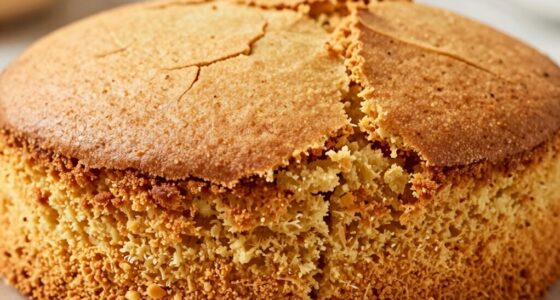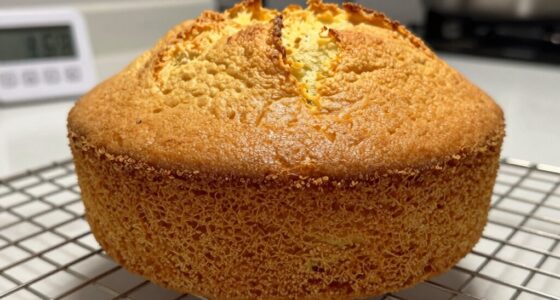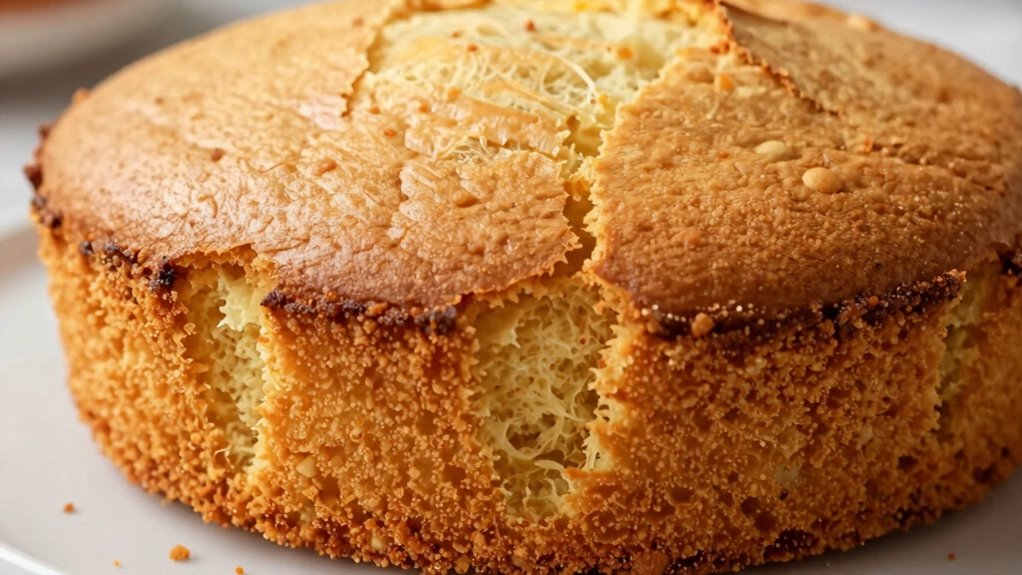
Cake shrinkage happens when the edges pull away or crack as the cake cools, often due to overbaking, rapid cooling, or imbalanced ingredients like too much flour. When you remove it from the oven too early or cool it too quickly, the cake contracts unevenly, causing these issues. Proper cooling and measuring ingredients carefully help prevent this. To avoid common mistakes and keep your cake smooth, learn more about proper techniques.
Key Takeaways
- Edges pull away due to contraction during cooling, as the cake shrinks and stabilizes after baking.
- Overbaking or rapid cooling intensifies contraction, causing edges to pull away from the pan.
- Improper batter balance, like excess dry ingredients, creates denser cakes prone to shrinking.
- Using incorrect pan sizes or improper preparation can lead to uneven cooling and edge separation.
- Gradual cooling and removing the cake at the right time help prevent excessive contraction and shrinkage.

Have you ever noticed your cake shrinking after baking? It can be frustrating, especially when you’ve put so much effort into perfecting your bake. One common reason for this phenomenon is that the edges pull away or shrink from the sides of the pan, making your cake look uneven or less appealing. Understanding why this happens can help you prevent it in future bakes and improve your overall results.
Cake edges pulling away or shrinking after baking can be frustrating but is often preventable.
A key factor relates to how the cake cools and contracts. When you bake, the heat causes the batter to expand and set. As it cools, the structure contracts, which can lead to edges pulling away from the pan or shrinking inward. If the cake is overbaked or cooled too quickly, this contraction becomes more pronounced. It’s essential to remove the cake from the oven at the right time and allow it to cool gradually, ideally in the pan for a few minutes before transferring it to a wire rack.
Another aspect to contemplate is the composition of your batter. Too much flour or dry ingredients can create a dense cake that’s more prone to shrinking. Conversely, a batter with the right balance of moisture and fat helps the cake maintain its structure and reduces the likelihood of edges pulling away. When you’re working with fondant smoothing, it’s tempting to handle the surface extensively, which can disturb the cake’s delicate structure. To avoid this, ensure your cake is properly cooled and set before applying fondant. Proper fondant smoothing not only gives your cake a clean, professional look but also protects the surface, preventing cracks and shrinkage at the edges.
Flavor enhancement is another element that can influence how a cake behaves. When you add extra flavorings or liquids, it impacts the batter’s moisture content. Too much liquid can weaken the structure, increasing the chances of shrinkage or pulling away at the edges. Always measure ingredients carefully and follow recipes precisely, especially when adding flavor extracts or liquids. This ensures your cake bakes evenly and retains its shape.
Your choice of pan and its size can also affect shrinkage. Using a pan that’s too small or too large can cause uneven baking and cooling. Greasing the pan properly and lining it with parchment paper can also help the cake release smoothly, preventing tearing or pulling away at the edges as it cools. Additionally, ensuring proper baking temperature helps to prevent overbaking or underbaking, both of which contribute to shrinkage issues.
In essence, cake shrinkage isn’t just about the oven or ingredients; it’s about patience, precision, and understanding how your cake responds during the cooling process. Paying attention to these details will help you achieve a beautifully shaped cake with edges that stay firm and intact.
Frequently Asked Questions
How Does Humidity Affect Cake Shrinkage?
Humidity effects directly impact cake shrinkage by altering moisture levels. When humidity is high, cakes tend to absorb excess moisture, making them softer and less likely to shrink. Conversely, low humidity causes moisture to evaporate quickly, leading to dry cakes that pull away at the edges as they cool. To prevent shrinkage, you should control humidity levels in your baking environment and store cakes properly to maintain consistent moisture.
Can Different Cake Recipes Cause More Edge Pulling?
Imagine you’re in a time machine, and your recipe’s ingredients are the passengers. Different cake recipes can cause more edge pulling because of texture contrast and ingredient variations. For example, recipes with higher fat or moisture content may lead to uneven shrinkage. Variations in flour or leavening agents affect how the cake responds during cooling, increasing the likelihood of edges pulling away. Choose your ingredients wisely for a smoother finish.
Does Oven Temperature Impact Cake Shrinkage?
Yes, oven temperature impacts cake shrinkage. If your oven’s too hot, the cake bakes too quickly, causing it to rise rapidly and then collapse, which leads to edges pulling away. Conversely, too low a temperature results in uneven baking and increased shrinkage. Keep an eye on your oven temperature and modify baking time accordingly to ensure even heat distribution and reduce shrinkage, especially around the edges.
What Role Does Cake Pan Material Play?
Like a painter choosing colors, your cake pan material influences your creation’s fate. Metal pans heat quickly and promote even rising, while glass or silicone pans may cause uneven baking. The color and size of your pan matter too; dark or non-stick pans absorb heat more, risking uneven rise and shrinkage. Select the right cake pan size and material for a perfectly baked cake with minimal edges pulling away.
How Does Resting Time Influence Cake Edge Separation?
Resting time markedly influences cake edge separation by allowing gluten development and sugar crystallization to stabilize the structure. When you let the cake rest, the gluten relaxes, reducing tension that causes edges to pull away. Additionally, sugar crystallization helps set the crumb, preventing shrinkage. If you cut into the cake too soon, these processes aren’t complete, leading to more noticeable edge separation and a less cohesive texture.
Conclusion
Now that you understand why cake edges pull away, you can prevent shrinkage and achieve that perfect, smooth finish. It’s like watching a delicate flower bloom—beautiful yet fragile—highlighting the balance between science and art in baking. With a little patience and care, your cakes will stay plush and flawless. So, embrace the challenge, and turn those shrinking edges into a sign of your growing baking mastery. Your next cake will be your best yet.