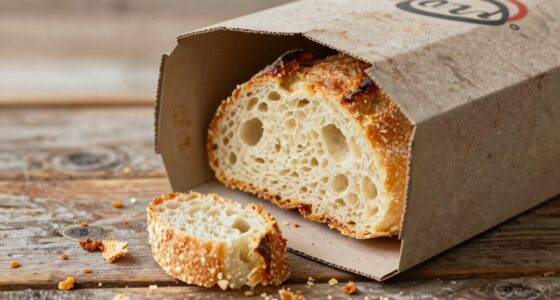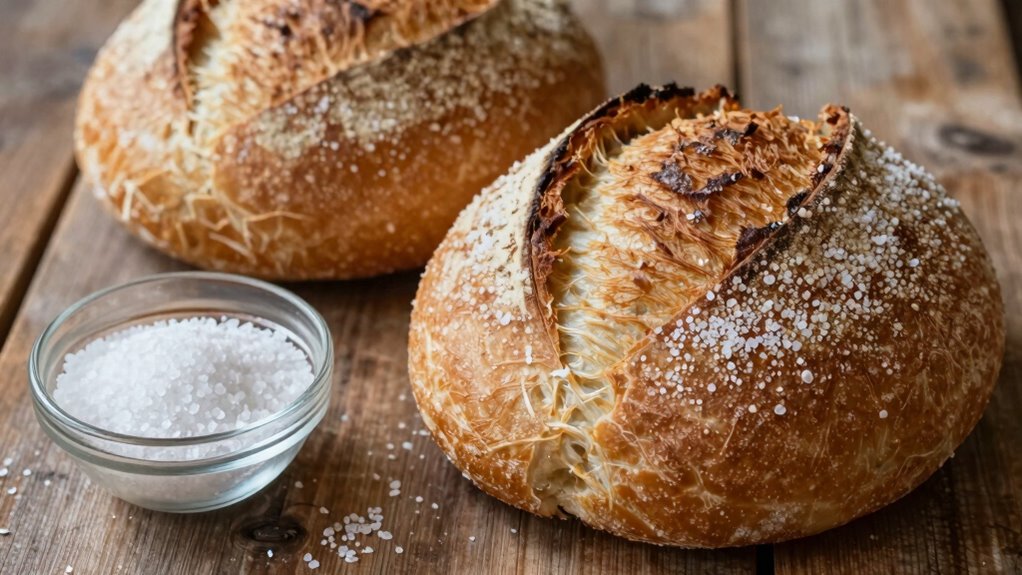

Adding salt early in bread-making helps control fermentation, as it slows yeast activity and prevents over-proofing. It also strengthens the gluten network, making the dough easier to handle and giving you a finer crumb. Plus, early salt promotes a balanced, complex flavor. If you want a more consistent, flavorful loaf, incorporating salt at the start is the way to go. Keep going, and you’ll uncover even more tips for perfect bread.
Key Takeaways
- Adding salt early strengthens gluten, improves dough elasticity, and promotes even fermentation.
- Late salt addition allows faster fermentation but risks over-proofing and uneven rise.
- Early salt controls yeast activity, preventing over-proofing and coarse crumb development.
- Late salt may lead to a quicker bake but can reduce flavor complexity and dough handling ease.
- Choice depends on desired bread texture, flavor, and fermentation control preferences.
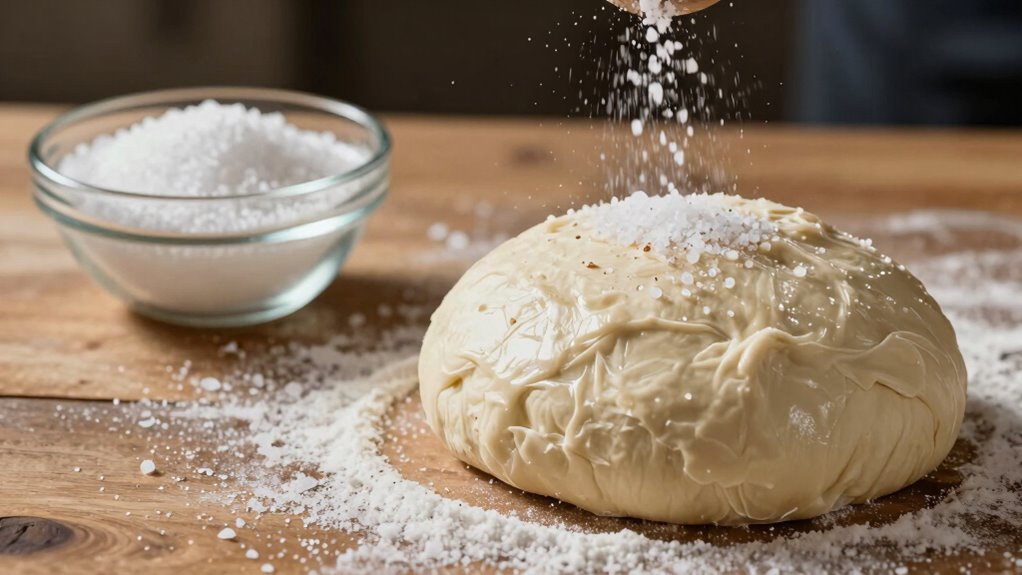
The timing of when you add salt during bread making can considerably impact the final product’s texture, flavor, and fermentation process. If you add salt early in the mixing stage, it begins to influence the dough from the start, allowing for better fermentation control. Salt acts as a regulator, slowing down yeast activity so that fermentation proceeds at a controlled pace. This is beneficial because it helps prevent over-proofing, which can lead to a coarse crumb and uneven texture. By controlling fermentation effectively, you also promote consistent flavor development, ensuring that the bread develops a well-balanced taste without any overpowering salty notes. When salt is incorporated in this early stage, it interacts more thoroughly with the flour, strengthening the gluten network, which can result in a better rise and improved dough elasticity. This makes handling easier and contributes to a finer crumb structure.
On the other hand, adding salt later in the process, such as after some initial fermentation or mixing, can alter these dynamics. When salt is introduced late, the yeast experiences less immediate inhibition, leading to a faster fermentation early on. This can be advantageous if you’re aiming for a quicker rise or want to develop specific flavor notes that require shorter fermentation times. However, it can also cause less control over fermentation, increasing the risk of over-proofing or uneven fermentation, which might compromise the dough’s texture. Additionally, delayed salt addition might result in less effective flavor development because the salt’s influence on yeast activity and enzymatic processes is reduced. You may find that your bread lacks the depth and complexity of flavor that comes from a more prolonged, controlled fermentation process.
Ultimately, your choice depends on your baking goals. If you prioritize a well-developed, flavorful loaf with a fine crumb and steady fermentation, adding salt at the beginning is usually the best approach. It gives you more control over fermentation and ensures even flavor development. Conversely, if you want a quicker bake or are experimenting with specific flavor profiles, late salt addition can be useful, but it might require more careful monitoring to avoid issues like over-proofing or uneven fermentation. Whichever method you choose, understanding how salt timing impacts fermentation control and flavor development helps you craft better bread. Adjusting your process based on these factors allows you to tailor the final product to your preferences and baking style.

EHOMEA2Z Stainless Steel Dredge Shaker Ideal For Salt, Spice, Sugar, Flour (1, 10 oz)
10 oz Stainless Steel Dredge is the best shaker on the market. It is durable, heat resistant, and…
As an affiliate, we earn on qualifying purchases.
As an affiliate, we earn on qualifying purchases.
Frequently Asked Questions
How Does Salt Timing Affect Bread Shelf Life?
Salt timing markedly impacts bread shelf life by influencing salt distribution and baking consistency. When you add salt early, it evenly disperses, strengthening gluten and improving structure, which helps prevent spoilage. Late addition can cause uneven salt distribution, weakening the dough’s integrity and potentially reducing shelf life. By controlling salt timing, you enhance both the texture and longevity of your bread, ensuring it stays fresh longer.
Can Salt Timing Change Bread’s Flavor Profile?
Yes, salt timing can change your bread’s flavor profile. When you add salt early, it distributes more evenly, enhancing flavor development and creating a balanced taste. Adding it late might result in a sharper or less complex flavor, as salt doesn’t fully integrate. By controlling when you add salt, you influence how the flavors develop and how evenly they are distributed throughout your bread, affecting the overall taste experience.
Does Salt Timing Impact the Bread’s Texture?
Like a master painter, your timing of salt can shape your bread’s texture. If you add it early, it strengthens gluten development, making the crumb chewier and the structure more resilient. Late addition can result in a softer interior and a crisper crust. By controlling salt timing, you influence how well gluten forms and how the crust develops, giving you the power to craft your perfect loaf.
Is There a Health Benefit to Adding Salt Early or Late?
Adding salt early in bread making can enhance your health benefits by controlling salt absorption, helping your body manage sodium intake more effectively. When you add it late, you might miss out on some of these advantages, but it won’t considerably impact your health. Overall, early addition supports better salt regulation, making your bread not just tasty but also potentially more beneficial for your health.
How Does Salt Timing Influence Fermentation Speed?
Salt slows down yeast activity, so adding it early can decelerate fermentation, giving you more control over dough development. Conversely, late addition allows faster fermentation rates, which can speed up rising. Your timing determines yeast activity; early salt addition suppresses fermentation speed, while late salt boosts it. By choosing when to add salt, you shape the fermentation rate, ultimately influencing bread texture, flavor, and rise.

Jacobsen Salt Co. Pure Italian Fine Grain Sea Salt – Real Sea Salt for Cooking, Baking, or Pickling, Gourmet Seasoning, Harvested in Italy – 1.8 lb
PREMIUM FINE GRAIN SEA SALT – Jacobsen Salt Co.'s Pure Italian Sea Salt is their finest grain, consisting…
As an affiliate, we earn on qualifying purchases.
As an affiliate, we earn on qualifying purchases.
Conclusion
Whether you add salt early or late, remember it’s the subtle touch that shapes your bread’s soul. Picture the warm aroma filling your kitchen, each crumb a proof to your choice. When you decide, you craft more than just bread—you craft comfort, tradition, and love. So trust your instincts, embrace the process, and let your hands tell the story. In every slice, a little piece of your passion rises to meet the day.

TempPro TP02S Digital Food Thermometer for Cooking Bread Baking Sourdough Liquids, Meat Thermometer Digital with Super Long Probe for Kitchen BBQ Yogurt Candy Making Accessory (Previously ThermoPro)
Fast and Accurate Reading: Kitchen thermometer for cooking features a 1 to 3 second readout speed and high…
As an affiliate, we earn on qualifying purchases.
As an affiliate, we earn on qualifying purchases.

Sourdough Proofing Basket Gift Set, 9" Round and 10" Oval Banneton Bread Baking Supplies, Sourdough Baskets with Bread Lame, Danish Whish, Bowl Scraper, Sourdough Scraper, and Linen Liner
What You Get: 1 9-inch round banneton bread proofing basket , 1 10-inch oval proofing basket, 2 liners,…
As an affiliate, we earn on qualifying purchases.
As an affiliate, we earn on qualifying purchases.