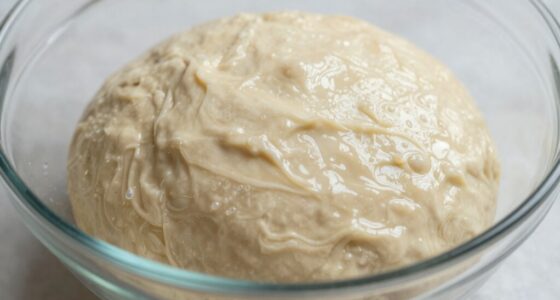
Controlling your dough temperature is the key to successful fermentation and consistent baking results. When you manage temperature precisely, you influence yeast activity and gluten development, which affects dough rise, texture, and flavor. Too hot or cold can lead to issues like dense bread or poor rise. Maintaining steady dough temps ensures reliable fermentation and a better final product. Keep exploring to discover how skilled temperature control can elevate your baking skills.
Key Takeaways
- Maintaining optimal dough temperature (75°F-85°F) ensures consistent yeast activity and proper fermentation rates.
- Precise temperature control enhances gluten development, affecting dough elasticity and final bread texture.
- Regular monitoring with thermometers helps detect and correct temperature fluctuations promptly.
- Managing temperature at each baking stage prevents overproofing, underproofing, and uneven baking results.
- Consistent dough temperature improves flavor, crumb structure, crust quality, and overall bread quality.
Why Dough Temperature Shapes Fermentation
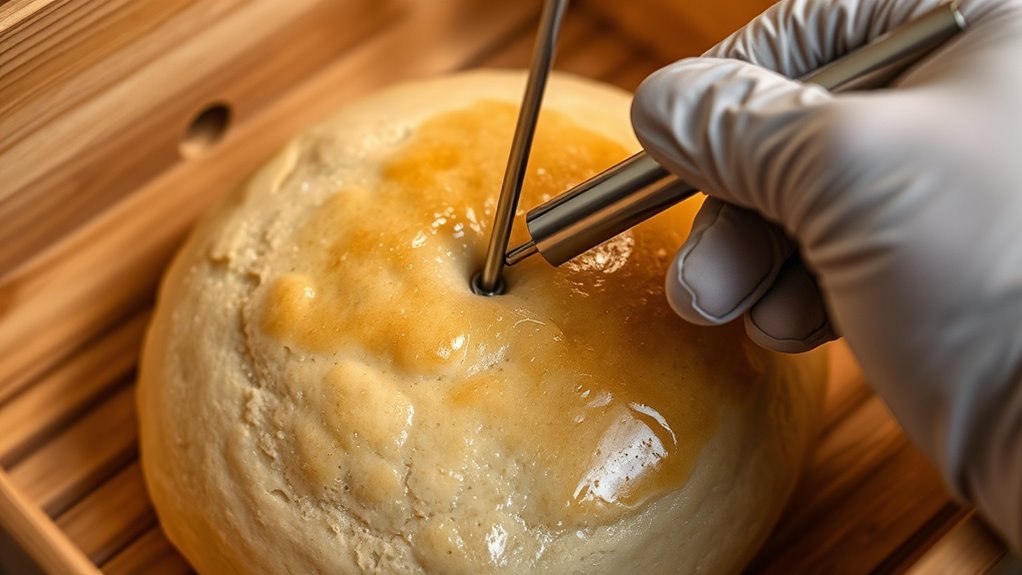
Dough temperature plays a vital role in shaping fermentation because it directly influences the activity of yeast and bacteria. When your ingredients are fresh, they work best within an ideal temperature range, ensuring consistent fermentation. If the dough is too cold, fermentation slows down, delaying the development of flavor and texture. Conversely, if it’s too warm, fermentation speeds up, risking over-proofing and uneven rise. Maintaining the right dough temperature helps you control fermentation timing, so your dough develops properly without rushing or stalling. Fresh ingredients respond better to temperature adjustments, making it easier to achieve the desired fermentation pace. Additionally, understanding how temperature regulation impacts microbial activity can help optimize your fermentation process and improve your bread quality. Proper temperature control also helps prevent unwanted bacterial growth, ensuring a safer and more predictable fermentation. By monitoring and managing dough temperature, you set the stage for optimal fermentation, resulting in better flavor, texture, and overall bread quality.
How Temperature Influences Yeast and Gluten in Dough
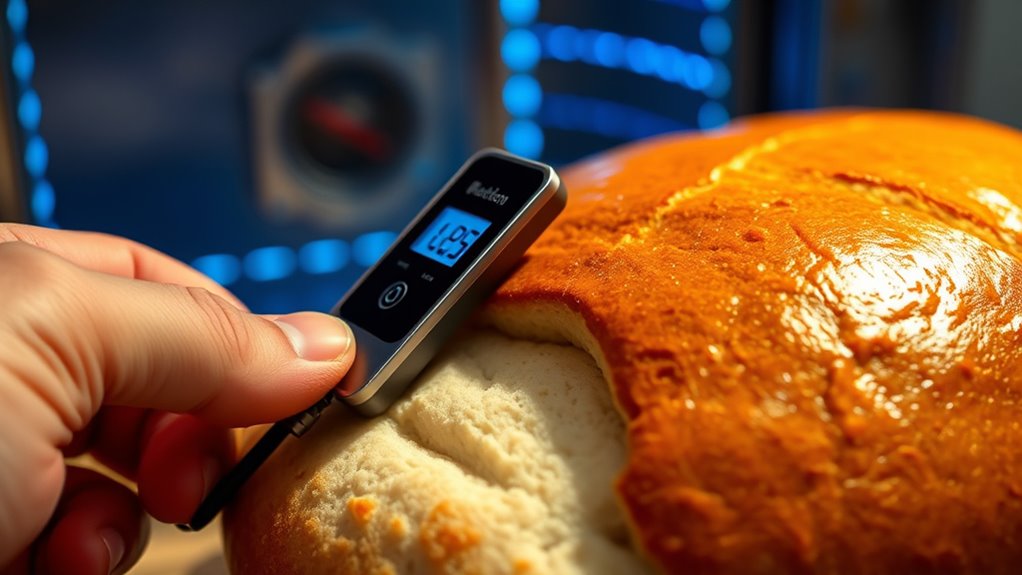
Temperature directly affects how yeast activity is regulated, impacting how quickly your dough ferments. It also influences gluten development, determining the dough’s elasticity and structure. Staying within the ideal fermentation range ensures both yeast performance and gluten strength work in harmony. Additionally, understanding at-home fermentation devices can help you better control these temperature factors for optimal results. Employing smart kitchen technology can further enhance your ability to monitor and maintain precise temperatures during fermentation. Being aware of temperature control strategies is essential for consistent baking outcomes. Using contrast ratio insights can also help you optimize your environment for better fermentation conditions. Moreover, utilizing precise temperature measurement tools is crucial for maintaining consistent dough quality and achieving reliable fermentation results.
Yeast Activity Regulation
Since yeast activity is highly sensitive to temperature, maintaining the right range is crucial for ideal fermentation. When you control temperature, you directly influence yeast fermentation speed, which impacts dough consistency. Too warm, and yeast becomes overly active, risking over-proofing and a weaker structure. Too cold, and fermentation slows, resulting in dense dough and poor rise. By keeping your dough within the suitable temperature range, you ensure steady yeast activity, leading to consistent fermentation and reliable texture. Precise temperature regulation allows you to balance fermentation pace, prevent over- or under-proofing, and achieve the desired dough characteristics. Remember, even slight deviations can considerably alter yeast performance, so monitoring dough temperature closely is key to controlling fermentation and producing high-quality baked goods. Temperature control is the biggest lever you have to optimize fermentation success. Additionally, understanding how temperature influences gluten development can further improve dough elasticity and strength. Proper seasonal preparation and maintaining consistent ambient conditions can help stabilize dough temperature during proofing, ensuring optimal yeast activity throughout the process. Adjusting proofing environments with climate considerations can further enhance fermentation control and dough quality.
Gluten Development Dynamics
Understanding how temperature influences gluten development is essential for achieving the desired dough structure. As temperature varies, it affects how the gluten network forms and strengthens. Warmer conditions accelerate gluten relaxation, making dough more extensible and increasing dough elasticity, which helps trap gas more effectively. Conversely, cooler temperatures slow down gluten formation, resulting in a firmer, less elastic dough. Too high a temperature can weaken the gluten network, compromising the dough’s ability to hold gas, while too low can hinder gluten development altogether. By controlling dough temperature precisely, you guarantee ideal gluten synthesis, balancing extensibility and strength. This control allows you to tailor dough characteristics to suit specific recipes and desired textures, ultimately improving fermentation and baked results.
Optimal Fermentation Range
Maintaining the right fermentation temperature is essential because it directly impacts yeast activity and gluten development. When your dough stays within the ideal range—typically between 75°F and 85°F—yeast ferments efficiently, producing the gases needed for rise. Too cold, and fermentation slows, leading to dense bread; too hot, and yeast may overproof or die, compromising gluten structure. Dough hydration influences how temperature affects fermentation, as wetter doughs tend to ferment faster at the same temperature. Additionally, flour types matter: whole grain flours often require slightly different temperature adjustments due to their higher enzyme activity. Proper temperature control is crucial for consistent results and optimal fermentation outcomes. By keeping your dough within this recommended range, you ensure balanced yeast activity and gluten development, resulting in better texture, flavor, and rise. Understanding temperature management can help bakers troubleshoot issues like under- or over-proofing and achieve more reliable baking results, especially when considering factors like yeast vitality and environmental variations. Properly managing ambient temperature and dough insulation can further refine fermentation control for consistent results, leading to better bread quality.
Mistakes to Avoid When Controlling Dough Temperature—and How to Fix Them
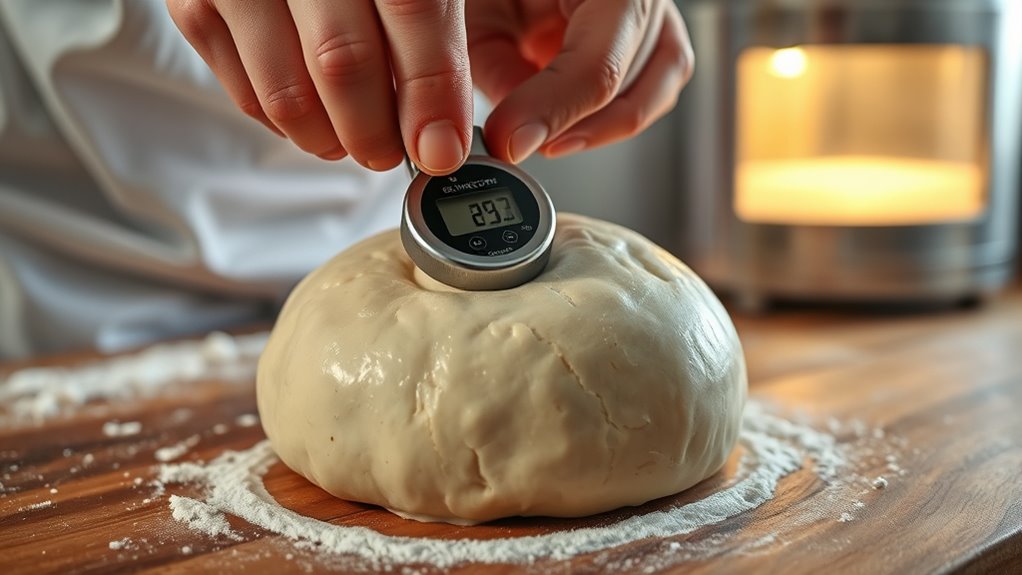
- Ignoring internal dough temperature—use a thermometer to measure actual dough temperature regularly.
- Incorrect cooling methods—avoid quick fixes like overcooling, which can halt fermentation; instead, use gentle cooling techniques such as placing dough in a cooler environment or using ice baths carefully.
- Overlooking temperature fluctuations—ensure consistent environment control, especially in changing weather conditions.
- Properly managing fermentation temperature is crucial for achieving the desired dough texture and flavor development.
Best Techniques and Tools for Precise Dough Temperature Control
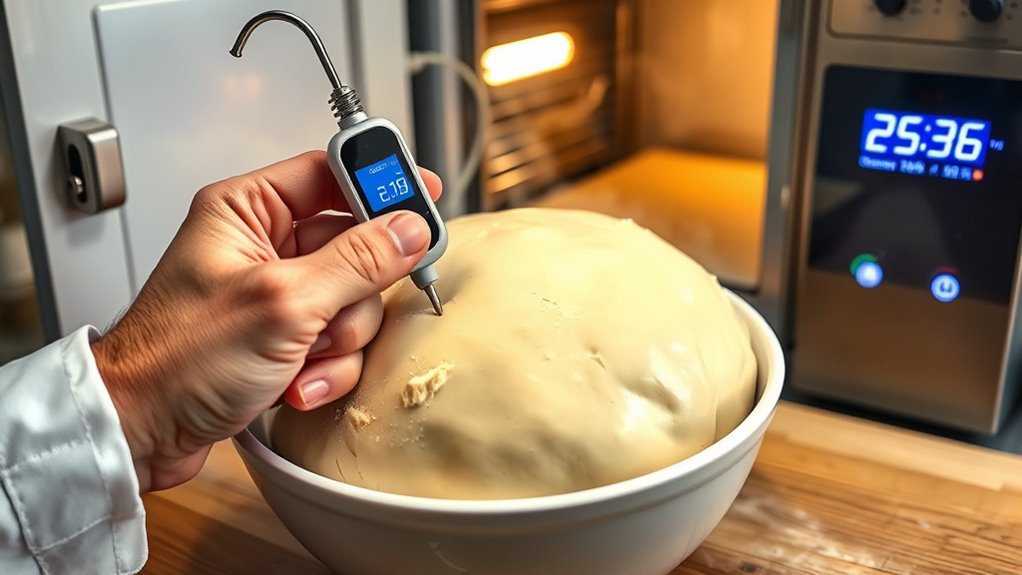
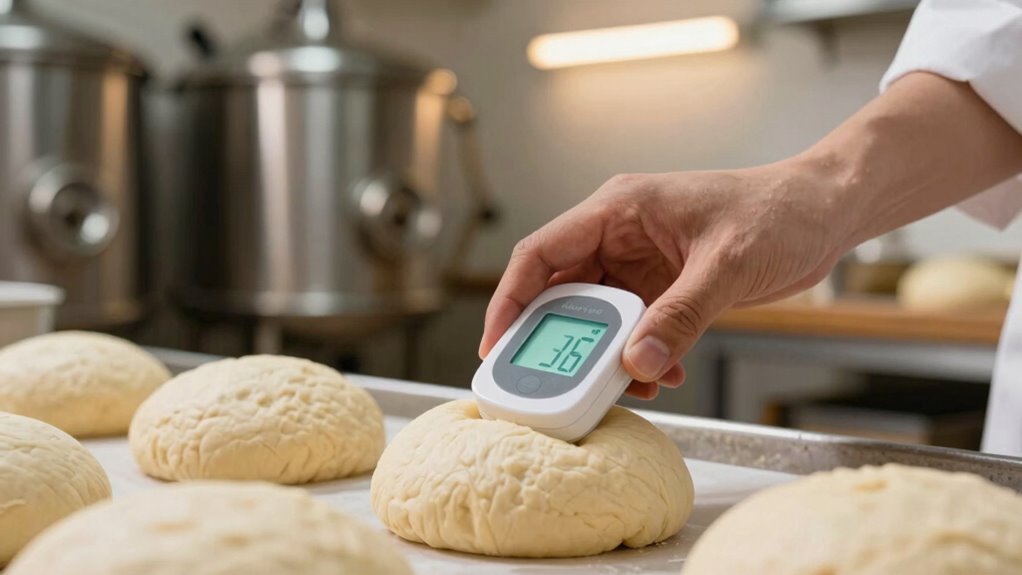
Achieving precise dough temperature requires using the right techniques and tools to monitor and adjust conditions effectively. Start by regularly checking temperature with a digital probe thermometer for accurate readings. For dough cooling, use controlled environments like refrigerated proofing boxes or ice water baths to bring down excessively warm dough quickly. Incorporate temperature monitoring devices such as infrared thermometers or data loggers to track changes over time. Consistent monitoring guarantees you catch temperature fluctuations early and can make adjustments before fermentation is affected. Using these tools prevents common mistakes like uneven temperature distribution or delayed cooling. Proper air circulation around the dough and equipment can also help maintain even temperature during fermentation. Additionally, understanding thermal mass and how it influences heat retention helps optimize cooling strategies. Recognizing the impact of essential oils for temperature regulation can also support more precise control in fermentation environments. Employing temperature stability techniques ensures a more consistent fermentation process and better final product quality. By combining precise temperature monitoring with effective dough cooling techniques, you gain better control over fermentation, leading to more consistent and high-quality baked goods.
How to Adjust Dough Temperature During Each Baking Stage
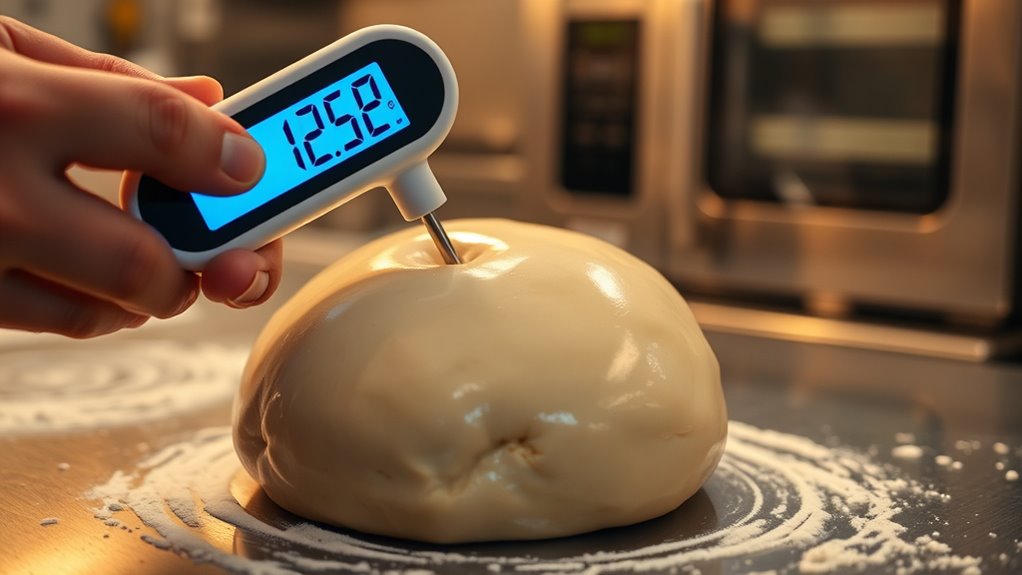
Adjusting dough temperature at each baking stage guarantees consistent results. You’ll want to monitor pre-scaling conditions, maintain warmth during shaping and proofing, and control oven temperature precisely. Mastering these points helps you achieve the perfect bake every time.
Pre-Scaling Temperature Tips
Controlling dough temperature during each baking stage is essential for consistent results, and knowing how to fine-tune it can make a significant difference. To optimize pre-scaling temperature, consider these tips:
- Adjust hydration levels to influence dough warmth—higher hydration can retain heat, while lower levels cool the dough.
- Use ingredient freshness to your advantage—fresh ingredients often require less temperature adjustment, ensuring consistent fermentation.
- Manage the ambient environment—cooler room temperatures help keep dough cool during mixing, while warmer rooms may necessitate pre-cooling ingredients or equipment.
Shaping and Proofing Warmth
Once you’ve set the right dough temperature before shaping and proofing, maintaining ideal warmth during these stages can greatly influence your final product. Proper dough handling involves keeping the dough at a consistent temperature to promote even fermentation. If the dough cools too much, fermentation slows, affecting ingredient hydration and gluten development. To adjust warmth, use techniques like insulating dough with cloths or placing it in a warm, draft-free environment. Avoid sudden temperature fluctuations, as they can disrupt fermentation. During proofing, monitor the ambient temperature and adjust as needed to keep the dough in the perfect range. Consistent warmth ensures even fermentation, improves ingredient hydration, and results in a better rise and texture in your finished bread.
Baking Temperature Precision
To achieve perfect baked bread, paying close attention to baking temperature at each stage is essential. Small temperature fluctuations can lead to uneven crusts or underbaked centers. To maintain precision:
- Regularly calibrate your oven to prevent temperature fluctuations that can affect baking consistency.
- Use an oven thermometer to monitor actual temperatures, not just the dial reading.
- Adjust baking times or oven settings based on observed temperature deviations to guarantee even heat distribution.
Why Keeping Dough Temperature Consistent Boosts Your Baking Results
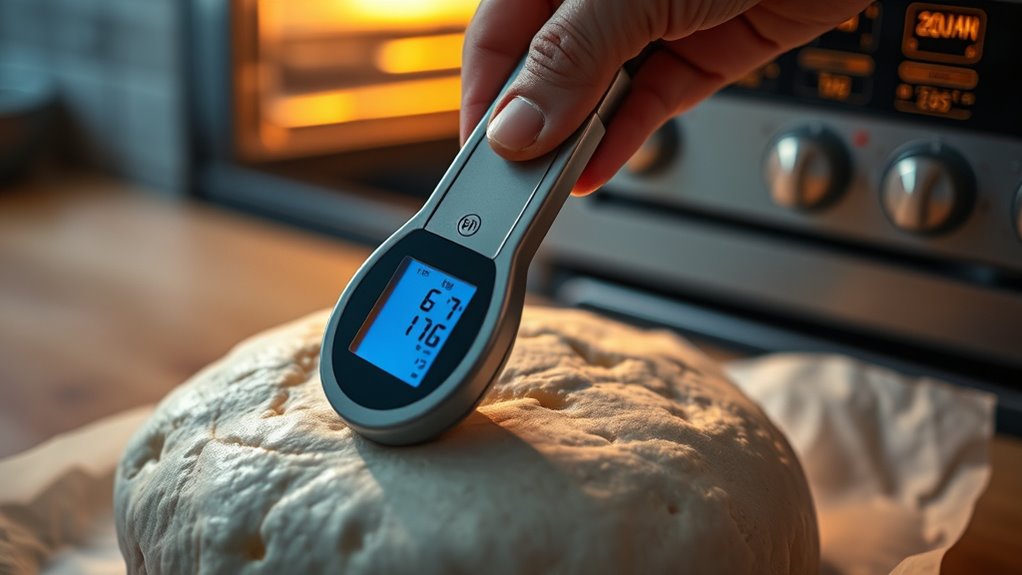
Maintaining a consistent dough temperature is essential because it directly influences how your dough ferments and develops. When temperature stays steady, fermentation proceeds predictably, improving flavor enhancement and crust texture. Fluctuations can cause uneven fermentation, resulting in inconsistent crumb and crust quality. To illustrate, consider the following factors:
| Factor | Impact |
|---|---|
| Fermentation rate | Consistent temperature ensures steady yeast activity |
| Flavor development | Steady heat enhances complex flavors |
| Crust formation | Even temperatures produce a crisp, uniform crust |
| Gluten development | Reliable temperature promotes ideal gluten structure |
Frequently Asked Questions
How Does Ambient Room Temperature Affect Dough Temperature Control?
You need to monitor how ambient room temperature fluctuations impact your dough temperature, as higher temperatures can speed up fermentation, while cooler ones slow it down. Be aware of ambient humidity effects, which can alter dough consistency and fermentation rates. Adjust your temperature control methods accordingly, like using a proofing box or adjusting ingredient temperatures, to maintain consistent dough fermentation regardless of changes in room conditions.
Can Different Flour Types Require Different Dough Temperature Ranges?
Yes, different flour types require different dough temperature ranges. Higher protein flours, like bread flour, often need slightly warmer dough to develop gluten properly, especially with high hydration levels. Conversely, lower protein flours, such as cake or pastry flour, perform best at cooler temperatures to prevent over-strengthening. Adjust your dough temperature accordingly, considering flour protein content and hydration levels, to optimize fermentation and achieve the best texture and flavor.
What Are the Signs of Incorrect Dough Temperature During Fermentation?
Did you know that improper dough temperature affects fermentation speed by up to 50%? If your dough feels overly sticky or too stiff, it’s a sign your temperature isn’t right. You’ll also notice uneven dough texture, with some areas fermenting faster than others. These signs indicate incorrect dough temperature, which can hinder proper fermentation and affect your final product’s quality. Adjust your temperature to guarantee consistent fermentation and ideal dough texture.
How Long Should Dough Be Held at a Specific Temperature for Optimal Fermentation?
You should hold your dough at the essential temperature for about 1 to 2 hours during resting to guarantee proper fermentation. During this time, temperature monitoring is vital to maintain consistent conditions. If the dough gets too warm or cold, it can affect fermentation speed and flavor development. Keep a close eye on your dough’s temperature and adjust your environment as needed to achieve the best fermentation results.
Are There Seasonal Considerations When Managing Dough Temperature?
Imagine a cozy bakery as seasons change—warmer summers and colder winters. Seasonal variations influence how you manage dough temperature, so you modify ingredients and settings accordingly. During hot months, chill ingredients and ferment at lower temps; in winter, warm your dough slightly to prevent sluggish fermentation. By adjusting for seasonal shifts, you ensure consistent dough quality, capturing the perfect rise no matter the time of year.
Conclusion
Mastering dough temperature is your secret weapon for perfect fermentation. When you control it precisely, you’re like a baking wizard wielding a magic wand—no more unpredictable results! Keep your dough consistent, avoid common mistakes, and use the right tools to fine-tune every stage. Think of it as your own personal alchemy, turning simple ingredients into bread that’s truly legendary. Embrace this power, and your baked goods will impress even the most discerning judges, past or present.