In rich bakes, vanilla’s delicate aroma often disappears because high heat quickly breaks down its aromatic compounds, causing the flavor to fade. If you add vanilla too early or bake at very high temperatures, the intense heat accelerates evaporation and transformation, diminishing its presence. To preserve its warmth and sweetness, try adding vanilla later or adjusting baking temps. Keep exploring to discover more tips on keeping vanilla flavorful in your baked goods.

Get baking supplies delivered free with Prime
- Fast, free delivery on millions of items
- Prime Video, Amazon Music and more included
- Member-only deals all year
Key Takeaways
- High baking temperatures cause vanilla’s aromatic compounds to break down and evaporate.
- Extended baking times lead to the gradual loss of vanilla flavor and aroma.
- Using imitation vanilla extract, which is less potent, increases the chance of flavor fading.
- Adding vanilla earlier in the process can result in significant flavor loss due to heat exposure.
- Insufficient mixing or uneven distribution can cause vanilla to be less perceptible in the final bake.
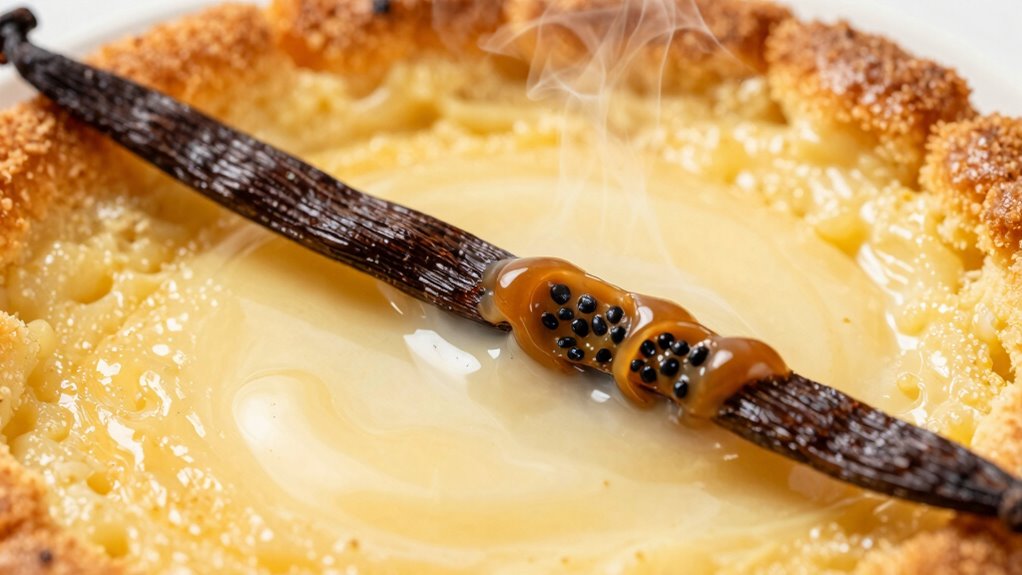
Have you ever noticed that your baked goods sometimes lack the rich, warm aroma of vanilla? It’s frustrating, especially when you’ve carefully measured out your ingredients and followed a trusted recipe. The problem often stems from how vanilla interacts with other components in your bake, causing its flavor to fade or even disappear altogether. One key reason is the type of vanilla you use. A vanilla bean, with its tiny seeds and intense aroma, offers a more robust flavor than imitation vanilla extracts. When you incorporate a vanilla bean into your batter, you’re adding not just vanilla flavor, but also a natural source of flavor enhancement that can hold up during baking. However, if you rely solely on a less potent extract, the flavor may become muted or lost amidst the other ingredients.
Using a vanilla bean boosts flavor and aroma more effectively than imitation extracts during baking.
The baking process itself plays a significant role in vanilla’s disappearance. High temperatures and extended baking times can cause the delicate aromatic compounds in vanilla to break down. As the heat intensifies, some of these compounds evaporate or transform into less fragrant molecules, resulting in a less noticeable vanilla aroma. This is especially true if you’re baking at very high temperatures or for longer durations. To counteract this, you can add vanilla towards the end of the baking process or incorporate it into the batter after initial mixing, preserving more of its natural scent and flavor. Additionally, understanding the heat sensitivity of vanilla compounds can help you better preserve delicate aromas during baking. Incorporating flavor stability techniques, such as adding vanilla in different stages, can further enhance aroma retention. For optimal results, consider experimenting with timing of addition to find what best preserves vanilla’s aromatic qualities in your specific recipes. Recognizing how the heat exposure impacts vanilla’s volatile compounds can also guide you in adjusting your baking methods for better flavor retention.
Another factor is how well you distribute the vanilla in your batter. If you just pour in vanilla extract without mixing thoroughly, some parts of your baked good might lack vanilla altogether. Properly dispersing the vanilla ensures that every bite has a consistent flavor. When using vanilla bean, make sure to scrape out those tiny seeds and blend them evenly throughout the mixture. This not only enhances flavor but also adds a speckled appearance that visually indicates vanilla’s presence.
Lastly, consider the overall flavor balance of your recipe. Sometimes, strong spices, citrus, or chocolate can overpower vanilla, making it seem as though vanilla has disappeared. In such cases, boosting the vanilla’s presence with a more concentrated vanilla bean or a splash of vanilla extract can help it stand out again. Remember, vanilla is a subtle flavor that works best as a flavor enhancer, complementing and elevating other ingredients rather than competing with them. With mindful use and attention to these details, you can guarantee that the warm, inviting aroma of vanilla remains a prominent feature in your baked goods. Additionally, understanding how flavor compounds respond to heat can help you better preserve delicate aromas during baking.
As an affiliate, we earn on qualifying purchases.
Frequently Asked Questions
Can Artificial Vanilla Flavor Substitute Real Vanilla Effectively?
Yes, artificial vanilla flavor can effectively substitute real vanilla, but it depends on your preference. Synthetic flavor mimics the vanilla bean’s aroma and taste but lacks the depth and complexity of natural vanilla. If you want a more authentic flavor, opt for pure vanilla bean or extract. However, for a budget-friendly option or in large recipes, synthetic vanilla works well and provides a consistent, sweet vanilla note.
How Does Vanilla Quality Affect Its Disappearance in Baking?
The quality of vanilla considerably influences its flavor preservation during baking. High-quality vanilla has stronger, more resilient flavor compounds that withstand heat better, reducing disappearance. You’ll notice that lower-quality vanilla interacts with other ingredients more readily, causing its aroma and taste to fade faster. To keep that rich vanilla flavor intact, opt for pure, high-quality vanilla beans or extract, and be mindful of how ingredient interactions during baking can affect its presence.
Are There Specific Baking Techniques That Preserve Vanilla Flavor Better?
To preserve vanilla flavor and aroma better, you should add vanilla early in your baking process, allowing its aroma to meld with other ingredients. Use high-quality vanilla extract or paste, as they retain flavor better during baking. Avoid overmixing, which can break down vanilla molecules, and bake at moderate temperatures to prevent flavor loss. Covering your baked goods can also help trap the vanilla aroma, boosting flavor retention.
Does Vanilla Extract’s Alcohol Content Influence Its Stability During Baking?
Think of vanilla extract’s alcohol as a tiny escape artist. During baking, alcohol evaporation occurs, but it’s quick—often within the first 15 minutes. This process helps flavor preservation, meaning the vanilla’s essence stays embedded in your baked goods. Higher alcohol content can influence stability, but most standard extracts are formulated to retain flavor even as alcohol diminishes. So, yes, alcohol content impacts vanilla’s stability, but proper baking preserves its rich, aromatic profile.
Can Vanilla Beans Be Used Directly Instead of Extract for Richer Flavor?
You can definitely use vanilla beans as a direct substitution for vanilla extract for a richer, more natural flavor. When you use vanilla beans, you get the benefits of natural vanilla, including a more complex aroma and taste. Simply split the beans and scrape out the seeds, then add them to your batter. This vanilla bean substitution enhances your baked goods with authentic, aromatic richness that extract can’t fully match.
vanilla extract high heat resistant
As an affiliate, we earn on qualifying purchases.
As an affiliate, we earn on qualifying purchases.
Conclusion
As you bake, vanilla’s delicate aroma drifts away like a whisper in a gust, blending into the rich tapestry of flavors. Its subtle presence can vanish like a faint star at dawn, leaving behind the warmth and depth of your creation. Remember, even when it seems to disappear, vanilla’s essence lingers beneath the surface, enriching every bite with a quiet, lingering glow—proof that sometimes, the most subtle ingredients leave the deepest mark.
vanilla flavor stabilizer for baking
As an affiliate, we earn on qualifying purchases.
As an affiliate, we earn on qualifying purchases.
As an affiliate, we earn on qualifying purchases.
Halloween Picks
halloween
As an affiliate, we earn on qualifying purchases.