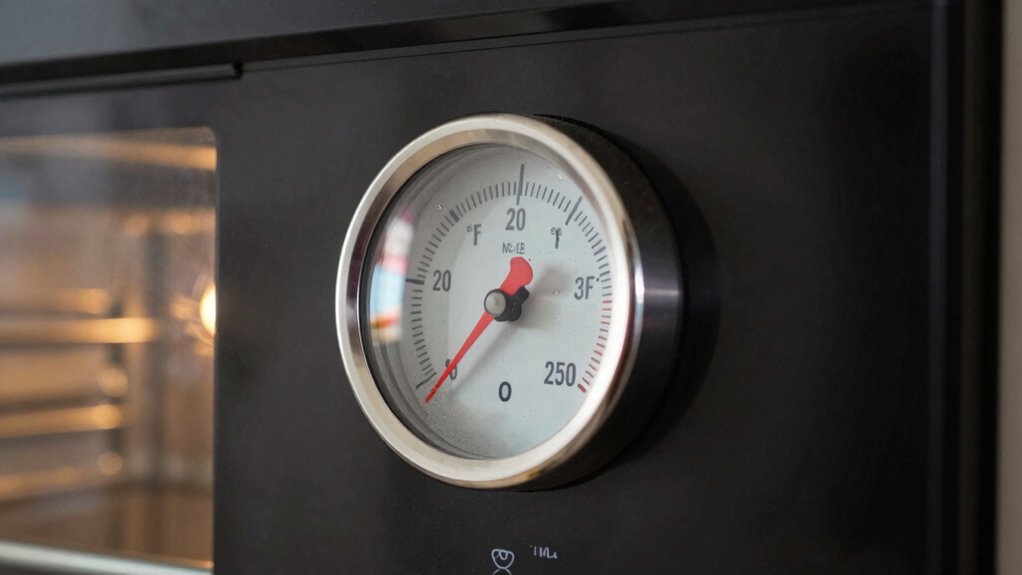

Oven thermometers reveal heat cycling problems by showing you temperature fluctuations over time. When your oven struggles to maintain a steady temperature, the thermometer will display rises and falls, indicating issues with its heat regulation. These fluctuations suggest problems with heating elements or calibration. By monitoring your oven’s temperature patterns, you can identify if heat cycling is affecting your cooking results. Keep exploring, and you’ll learn how to address these issues effectively.

Get baking supplies delivered free with Prime
- Fast, free delivery on millions of items
- Prime Video, Amazon Music and more included
- Member-only deals all year
Key Takeaways
- Oven thermometers show temperature fluctuations caused by heat cycling, indicating inconsistent heat maintenance.
- They help identify if the oven’s temperature rises and falls repeatedly rather than staying steady.
- Temperature readings reveal if the oven struggles with heat stability due to faulty components.
- Monitoring heat cycles enables diagnosis of issues like faulty thermostats or heating elements.
- Consistent temperature tracking helps adjust baking techniques to compensate for heat cycling.
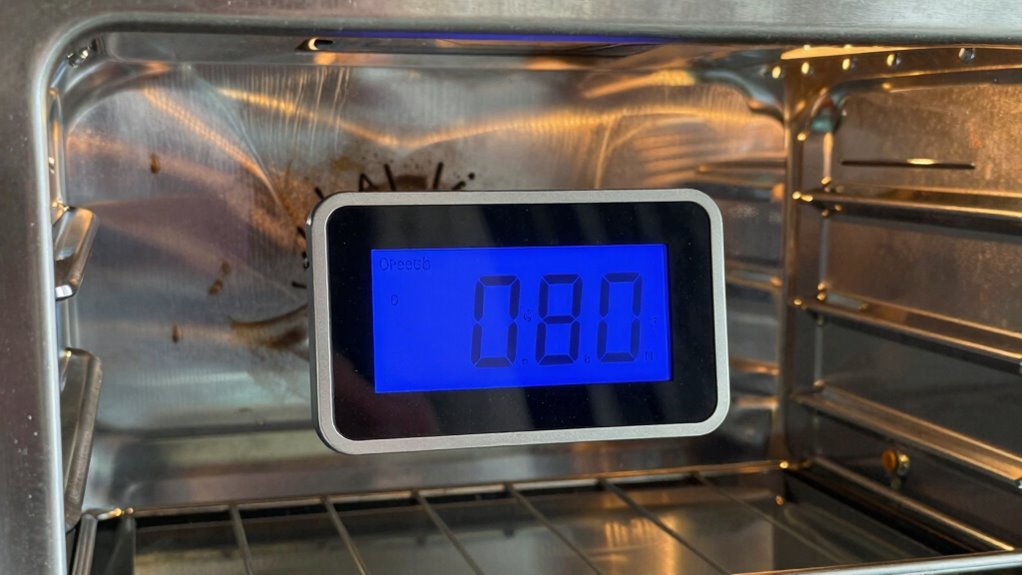
Understanding how your oven heats and cools is essential for consistent cooking and baking results. When you’re aiming for the perfect baked goods or evenly cooked meals, the baking temperature must be accurate. Many home ovens are not perfectly calibrated, which can lead to temperature fluctuations. This is where oven thermometers become invaluable tools. They provide a clear, real-time reading of the oven’s actual temperature, helping you identify if your oven’s temperature matches what you set on the dial. If your oven thermometer shows a discrepancy, it indicates a need for oven calibration to guarantee your oven heats as intended.
Heat cycling, or the way an oven repeatedly turns on and off to maintain temperature, can cause uneven baking and inconsistent results. When your oven experiences frequent heat cycling, you might notice that baked goods rise unevenly, or that foods don’t cook through evenly. An oven thermometer can reveal these heat fluctuations because it displays the temperature changes over time. If you see the temperature constantly rising and falling, rather than staying steady, it suggests your oven is struggling to maintain a stable heat. This instability often points to issues with the oven’s heating element, thermostat, or calibration settings. Recognizing the importance of oven calibration ensures you understand how your oven’s internal adjustments impact heat cycling. Regular maintenance and understanding your oven’s heat cycling patterns can help prevent larger issues and extend the lifespan of your appliance. Additionally, being aware of temperature fluctuations can help you troubleshoot and optimize your cooking process more effectively. Knowing how your oven’s temperature control system functions can further assist in diagnosing and fixing these issues.
By using an oven thermometer, you can determine whether your oven’s temperature is accurate throughout the cooking process. If it’s not, you may need to adjust the oven’s calibration or have it serviced. Proper calibration ensures that when you set the oven to a specific baking temperature, it truly reaches and maintains that temperature. Without proper calibration, your oven might run hot or cool down too quickly, both of which can cause heat cycling problems. Regularly checking your oven’s temperature with a thermometer helps you catch these issues early, saving you from wasted ingredients and disappointing results.
In addition, understanding your oven’s heat cycling patterns allows you to adapt your baking techniques. For example, if you know your oven turns off and on frequently, you might need to increase baking times slightly or use an oven thermometer to manually adjust your baking temperature. Monitoring these patterns over time can help you develop more precise control over your oven’s performance, leading to better, more consistent outcomes. Ultimately, oven thermometers serve as an essential tool for diagnosing heat cycling problems and maintaining proper oven calibration, ensuring that your kitchen creations turn out just as you envision—even if your oven isn’t perfectly calibrated out of the box.
oven thermometer for heat cycling
As an affiliate, we earn on qualifying purchases.
As an affiliate, we earn on qualifying purchases.
Frequently Asked Questions
How Often Should I Calibrate My Oven Thermometer?
You should calibrate your oven thermometer at least once a year to guarantee accurate readings. Regular oven calibration helps maintain thermometer accuracy, especially if you notice uneven cooking or temperature inconsistencies. Check your thermometer against a reliable oven thermometer and adjust if needed. By doing this, you prevent over- or under-cooking and keep your oven operating efficiently. Consistent calibration keeps your cooking precise and your recipes perfect every time.
Can Heat Cycling Damage My Oven Over Time?
Yes, heat cycling can damage your oven over time. Frequent temperature fluctuations strain oven insulation and can cause thermostat malfunction, leading to inconsistent heating. Over time, this stress can wear down components and reduce your oven’s efficiency. To prevent damage, monitor heat cycles with an oven thermometer, address thermostat issues promptly, and guarantee your oven’s insulation remains intact. Regular maintenance helps avoid costly repairs caused by heat cycling damage.
What Causes Inconsistent Temperature Readings in Ovens?
You experience inconsistent temperature readings in your oven mainly due to thermostat malfunctions or power fluctuations. A faulty thermostat struggles to regulate heat properly, causing temperature swings. Power fluctuations interrupt the oven’s electrical supply, leading to erratic heating cycles. These issues can make your oven’s temperature unreliable, affecting cooking results. Regularly checking your thermostat and ensuring a steady power supply can help maintain consistent oven temperatures.
Are Digital or Analog Thermometers More Accurate?
Digital thermometers generally offer better digital accuracy, providing quick and precise readings that help you monitor oven heat cycles accurately. Analog thermometers, on the other hand, are often more reliable over time because of their simple design and fewer electronic components that can fail. If you want consistent results, choose a digital thermometer for accuracy, but rely on an analog thermometer for long-term reliability.
How Do I Fix Heat Cycling Issues Permanently?
To fix heat cycling issues permanently, check your oven’s insulation and replace any damaged panels to maintain consistent heat. Inspect the heating element’s lifespan; if it’s worn or malfunctioning, replace it to guarantee steady temperature control. Regular maintenance and upgrading worn parts help your oven cook evenly and prevent temperature fluctuations. Proper insulation and a healthy heating element are key to a long-lasting fix for heat cycling problems.
As an affiliate, we earn on qualifying purchases.
Conclusion
Think of your oven as a heartbeat, each pulse representing its steady rhythm. When an oven thermometer shows heat cycling, it’s like a restless drumbeat—uneven and unpredictable. By paying attention to these signs, you become the conductor of your kitchen symphony, ensuring each note (or bake) hits perfectly. Addressing heat fluctuations keeps your oven’s rhythm true, so every dish you make sings with consistency and confidence.
As an affiliate, we earn on qualifying purchases.
infrared oven temperature sensor
As an affiliate, we earn on qualifying purchases.
As an affiliate, we earn on qualifying purchases.
Fall Picks
fall essentials
As an affiliate, we earn on qualifying purchases.