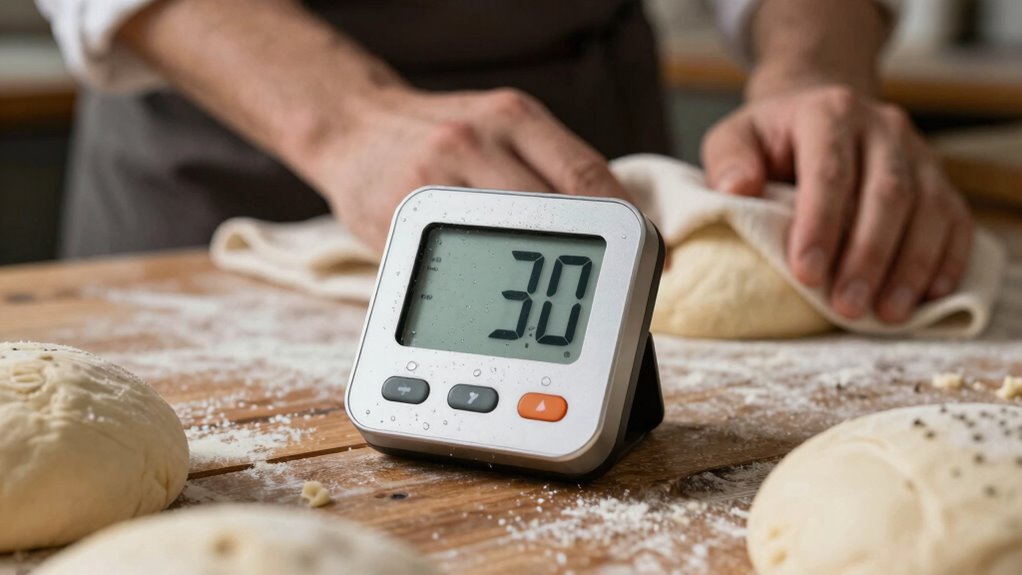

Hygrometers help you make better proofing decisions by providing accurate humidity levels in your environment. When you know the moisture content, you can adjust humidity to keep dough from drying out or becoming too sticky. This real-time data allows you to make adjustments on the fly, resulting in improved dough rise and crust quality. Keep exploring to discover how maintaining the right environment can transform your baking results.

Get baking supplies delivered free with Prime
- Fast, free delivery on millions of items
- Prime Video, Amazon Music and more included
- Member-only deals all year
Key Takeaways
- Hygrometers provide accurate humidity readings to optimize dough fermentation conditions.
- They enable bakers to make real-time adjustments for ideal proofing environments.
- Consistent measurements help prevent under- or over-proofing by monitoring moisture levels.
- Proper calibration ensures reliable data, leading to more precise proofing decisions.
- Monitoring humidity helps maintain dough quality and achieve consistent baking results.
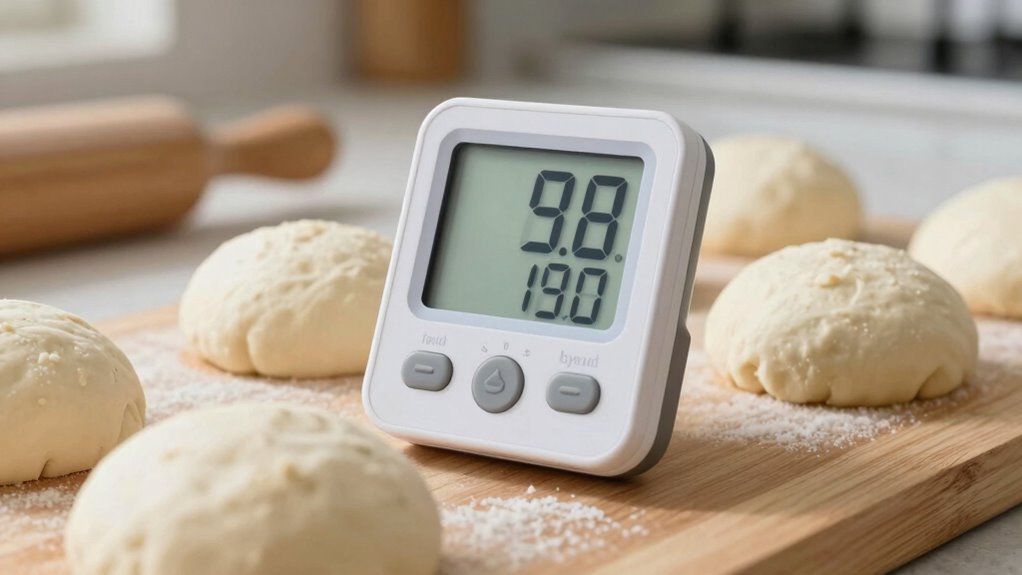
Hygrometers play an essential role in proofing dough by accurately measuring humidity levels, ensuring your baked goods turn out perfect. When you’re working to create ideal conditions for fermentation, understanding the moisture content in the environment is fundamental. A reliable hygrometer helps you monitor humidity so you can make informed decisions about your proofing environment. Proper humidity calibration is imperative here; if your device isn’t properly calibrated, it might give you false readings, leading to over- or under-hydrated dough. Regularly checking and adjusting your hygrometer ensures its device accuracy, which is indispensable for consistent results.
When your hygrometer is correctly calibrated, you can trust its readings to guide your proofing process. If the humidity is too low, your dough can dry out, forming a tough crust and inhibiting proper fermentation. Conversely, if the humidity is too high, excess moisture can cause the dough to become overly sticky, slow down gluten development, or lead to unintended microbial growth. With an accurate hygrometer, you can prevent these issues by maintaining the right humidity level—usually between 75% and 85% for most bread doughs. This precise control helps improve the overall quality of your baked goods, giving you a better rise, improved texture, and a desirable crust.
Knowing the humidity levels in your proofing space also helps you decide whether to add moisture or ventilation. For example, if the hygrometer indicates low humidity, you might introduce a humidifier or cover your dough more tightly. If humidity is too high, you can increase airflow or reduce moisture sources. This real-time data allows you to adjust your environment dynamically, resulting in more consistent proofing. Besides, understanding device accuracy means you can trust your hygrometer’s readings over time, avoiding guesswork and reducing the risk of errors that could compromise your baking results. Additionally, proper calibration of your hygrometer ensures sustained accuracy, which is crucial for consistent proofing conditions. Being aware of the accuracy of measurement tools can help you develop better baking routines and achieve more reliable outcomes. Furthermore, selecting a hygrometer with long-term stability can provide ongoing reliable measurements, saving you time and effort in calibration. Regularly monitoring environmental factors affecting humidity can also help you anticipate changes and adapt your methods accordingly, leading to even better proofing outcomes.
Maintaining an understanding of environmental factors affecting humidity can further optimize your proofing process, especially in fluctuating conditions. In essence, a good hygrometer is an invaluable tool for anyone serious about bread baking. It combines the importance of humidity calibration with device accuracy to give you precise, reliable data. When you pay attention to these details, you gain better control over your proofing conditions, leading to better dough development and, ultimately, superior baked goods. Your ability to fine-tune the environment based on accurate humidity readings makes all the difference in achieving bakery-quality results at home or in a professional setting.
As an affiliate, we earn on qualifying purchases.
Frequently Asked Questions
How Often Should I Calibrate My Hygrometer?
You should calibrate your hygrometer at least once every month to guarantee ideal humidity accuracy. Regular calibration helps catch any drift in readings, which can affect your proofing process. If you notice inconsistent results, calibrate more often. Using salt tests or commercial calibration kits can improve accuracy. Ultimately, maintaining proper calibration frequency ensures your hygrometer provides reliable data, helping you make better proofing decisions and achieve perfect baked goods.
Can Hygrometers Measure Humidity Accurately in Cold Environments?
Yes, hygrometers can measure humidity accurately in cold environments, but you need a device suitable for cold climates. Cold temperatures can affect moisture measurement, so look for hygrometers designed for low temperatures. Regular calibration and proper placement help maintain accuracy. Keep your hygrometer away from direct cold drafts and guarantee it’s functioning correctly. With the right tool, you can effectively monitor humidity levels in cold climate settings to assist proofing and other moisture-sensitive processes.
What Types of Hygrometers Are Best for Home Baking?
For home baking, digital hygrometers are your best choice because they offer quick readings and ease of calibration. Place the hygrometer near your proofing area, away from drafts or direct heat, to get accurate humidity readings. Regularly calibrate it using simple techniques like salt tests or distilled water to guarantee accuracy. This helps you maintain ideal humidity levels for perfect dough rising and bread baking.
How Does Humidity Affect Yeast Activity During Proofing?
Humidity plays a vital role in yeast activity, with 75-80% humidity being ideal for peak yeast growth and dough fermentation. When humidity is too low, yeast can struggle to produce gases, slowing proofing. Conversely, too much moisture can cause over-fermentation or uneven rising. By maintaining the right humidity levels, you guarantee consistent dough rise, better texture, and enhanced flavor, making your baking results more predictable and delicious.
Are Digital Hygrometers More Reliable Than Analog Models?
Digital hygrometers are generally more reliable than analog models because of their digital accuracy, providing precise humidity readings essential for consistent proofing. Analog hygrometers can be affected by calibration issues and environmental factors, making their reliability lower. You should choose a digital hygrometer for better accuracy, especially if you’re serious about achieving perfect dough rise. However, quality analog models can still be dependable if properly calibrated and maintained.
As an affiliate, we earn on qualifying purchases.
Conclusion
By now, you see how hygrometers are essential in your proofing process. They help you monitor humidity levels accurately, ensuring your dough rises perfectly every time. When you rely on precise measurements, you avoid the pitfalls of guesswork, making your baking game stronger. Remember, the proof is in the pudding—if your environment isn’t just right, your efforts might go to waste. Trust your hygrometer, and you’ll always be on the right track.
As an affiliate, we earn on qualifying purchases.
As an affiliate, we earn on qualifying purchases.
Halloween Picks
halloween
As an affiliate, we earn on qualifying purchases.