Data loggers teach you the true performance of your oven by continuously capturing temperature, humidity, and other critical parameters. They reveal subtle fluctuations and patterns that you might overlook, helping you identify irregularities early. This insight allows you to make precise adjustments, maintain quality, and guarantee compliance with standards. By monitoring consistently, you can prevent downtime and improve long-term reliability. Keep exploring, and you’ll discover even more ways these tools can optimize your oven’s performance.

Get baking supplies delivered free with Prime
- Fast, free delivery on millions of items
- Prime Video, Amazon Music and more included
- Member-only deals all year
Key Takeaways
- Data loggers reveal subtle temperature and humidity fluctuations that impact oven performance and product quality.
- They help identify patterns and irregularities in oven operation for proactive maintenance.
- Continuous data collection ensures the oven maintains optimal conditions over time.
- Analyzing logged data highlights calibration needs, ensuring sensor accuracy and reliable readings.
- Automated monitoring enables early detection of issues, supporting consistent oven performance and compliance.
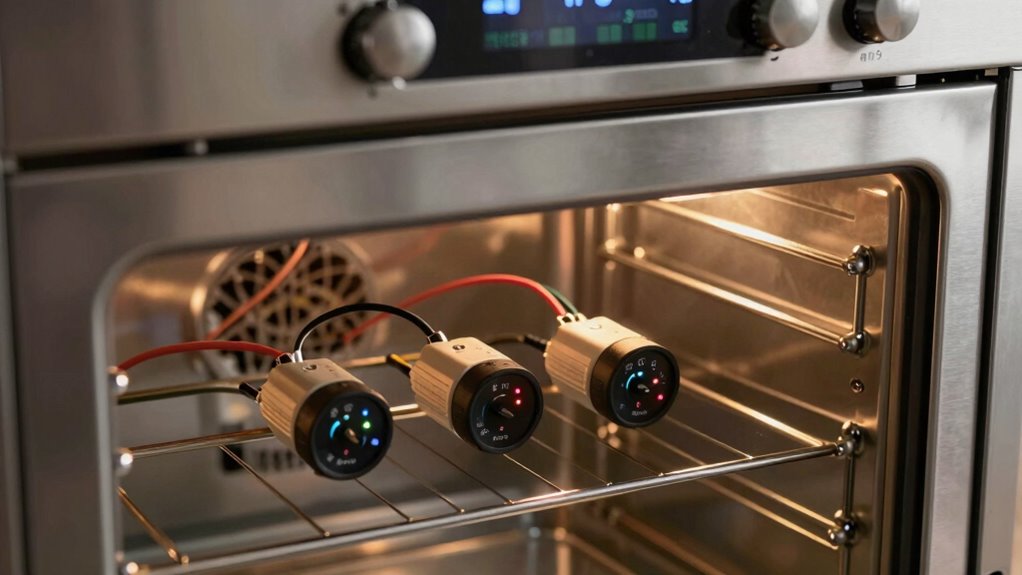
Monitoring oven performance is essential for ensuring consistent results in many industrial and laboratory processes. When you use data loggers, you gain a clear picture of how your oven actually operates over time, revealing subtle fluctuations that can impact your outcomes. These devices record temperature, humidity, and other critical parameters continuously, providing detailed insights that help you identify patterns or irregularities. By analyzing this data, you can determine whether your oven maintains the desired conditions or if adjustments are necessary. This level of monitoring enables you to troubleshoot issues proactively, minimizing downtime and ensuring quality control.
One of the fundamental aspects you need to focus on is sensor calibration. Over time, sensors can drift from their original accuracy, leading to unreliable readings. Data loggers help you spot these discrepancies by comparing ongoing measurements against known standards. Regular sensor calibration ensures that your data remains precise, allowing you to make informed decisions based on trustworthy information. Proper calibration also helps you maintain compliance with industry standards and regulatory requirements, which often specify calibration intervals and documentation. When your sensors are properly calibrated, you reduce the risk of false alarms or unnoticed deviations that could compromise your process. Additionally, implementing proper calibration procedures can extend the lifespan of your sensors and improve long-term accuracy. Conducting routine maintenance and calibration checks ensures ongoing reliability and performance of your data logging system. Incorporating continuous data analysis can help you detect emerging issues early, preventing major disruptions and maintaining consistent oven performance, especially when you employ automated monitoring systems to streamline oversight.
As an affiliate, we earn on qualifying purchases.
Frequently Asked Questions
How Long Should Data Loggers Record Oven Temperatures?
You should run data loggers for at least one full baking cycle to capture accurate oven performance, ensuring calibration accuracy. If your process involves multiple cycles or variable conditions, consider recording over several days. Keep in mind, data storage capacity is vital—choose loggers with enough memory to store all readings without interruptions. Regularly review the data to identify trends, maintain calibration, and optimize oven efficiency effectively.
Can Data Loggers Detect All Oven Performance Issues?
Data loggers can’t detect all oven performance issues because sensor calibration affects data accuracy. If sensors aren’t properly calibrated, you might miss subtle temperature fluctuations or inconsistencies. While data loggers provide valuable insights into oven temperature trends, they may not catch mechanical faults or airflow problems. Regular calibration and thorough maintenance are vital to guarantee the data accurately reflects your oven’s performance and to identify issues early.
Are Data Loggers Suitable for High-Temperature Industrial Ovens?
Did you know that over 80% of industrial ovens experience temperature inconsistencies? Data loggers are indeed suitable for high-temperature industrial ovens. They enable thermal mapping, providing a detailed view of temperature distribution, and offer real-time alerts for deviations. This helps you quickly identify issues, maintain peak performance, and guarantee product quality. Using data loggers in such environments empowers you to preempt problems before they escalate.
How Do Data Loggers Improve Energy Efficiency?
Data loggers improve energy efficiency by providing precise temperature accuracy, allowing you to monitor and enhance oven performance. With real-time data analysis, you can identify inefficiencies, adjust settings, and reduce energy waste. This proactive approach guarantees your oven operates at the most effective levels, saving energy and lowering costs. Over time, you gain better control, enhanced performance, and a clearer understanding of how to maintain energy-efficient operations.
What Maintenance Do Data Loggers Require?
Did you know that proper maintenance extends a data logger’s lifespan by up to 30%? You’ll need to regularly check calibration requirements to guarantee measurement accuracy and replace batteries before they die, which typically lasts 6 to 12 months. Keep the device clean and protected from extreme temperatures or moisture. This simple upkeep guarantees reliable data collection, helping you optimize oven performance and prevent costly downtime.
temperature humidity data logger for oven
As an affiliate, we earn on qualifying purchases.
As an affiliate, we earn on qualifying purchases.
Conclusion
By now, you see how data loggers reveal the true story behind your oven’s performance, much like a modern-day oracle. They help you identify flaws, optimize settings, and guarantee consistent results, turning guesswork into certainty. Remember, even in a world of ancient alchemy, precision mattered. Embrace this tool, and you’ll master your oven as surely as a blacksmith masters his forge—no need to wield a magic wand, just data and dedication.
industrial oven monitoring system
As an affiliate, we earn on qualifying purchases.
As an affiliate, we earn on qualifying purchases.
calibration temperature data logger
As an affiliate, we earn on qualifying purchases.
As an affiliate, we earn on qualifying purchases.
Halloween Picks
halloween
As an affiliate, we earn on qualifying purchases.