To keep dough cold during roll-out, start by chilling ingredients like butter and water before mixing. Use a cold surface and tools, such as chilled marble and rolling pins, to maintain low temperature. Work in small portions, wrapping and refrigerating dough between steps, and re-chill if it warms up. Lightly dust with flour to prevent sticking and handle gently. You’ll uncover more tips as you explore these cold-working techniques.
Key Takeaways
- Chill all ingredients and tools, including the rolling pin and surface, before starting to keep dough cold.
- Work on a cold marble or granite surface, refrigerating it prior to rolling for consistent coolness.
- Wrap dough tightly in plastic wrap and refrigerate for at least 30 minutes before rolling out.
- Dust the surface and rolling pin lightly with flour or powdered sugar to prevent sticking without warming the dough.
- Lift, turn, and rotate the dough periodically during rolling to maintain even temperature and prevent overheating.

JEmarble Pastry Board 16×24 inch with Non-Slip Rubber Feets for Stability Perfect for Keep the Dough Cool and Chocolate Tempering(Premium Quality) White
Perfect for making dough / chocolate-tempering
As an affiliate, we earn on qualifying purchases.
As an affiliate, we earn on qualifying purchases.
Chill Your Ingredients Before Mixing
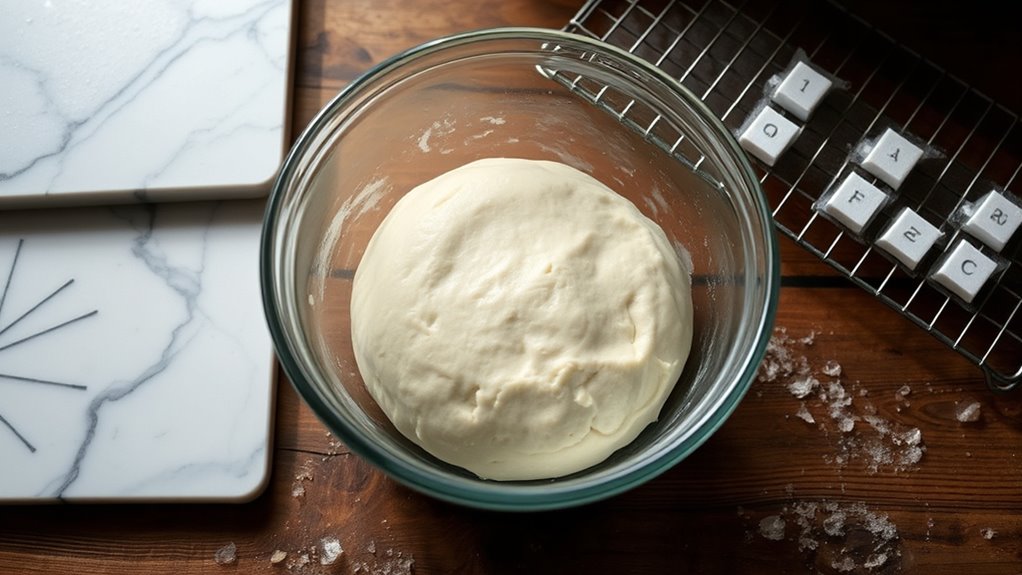
Chilling your ingredients before mixing is essential for keeping your dough cold and manageable. Fresh ingredients maintain better texture and flavor, so start with cold butter and eggs. Store ingredients in airtight storage containers in the refrigerator until needed, preventing warmth exposure that can soften fats. Using cold, fresh ingredients helps ensure your dough stays firm during rolling, making it easier to handle. Avoid warming ingredients by leaving them out too long; instead, prepare everything ahead and keep it chilled. Proper storage containers keep ingredients insulated and protected from temperature fluctuations. Additionally, incorporating temperature control techniques can also inspire new ideas for perfecting your baking process. This simple step helps maintain ingredient integrity, reduces the risk of over-softening, and sets a solid foundation for a perfectly cold dough.

RSVP International Gray Marble Rolling Pin for Baking & Stand, 10" | Designed to Keep Pastry Dough Cold | Fondant, Pie Crust, Cookies, Pastries, Pasta, Pizza Dough, Biscuits
Made of gray marble with polished finished, with cast aluminum handles
As an affiliate, we earn on qualifying purchases.
As an affiliate, we earn on qualifying purchases.
Use Cold Water and Ingredients for Better Results
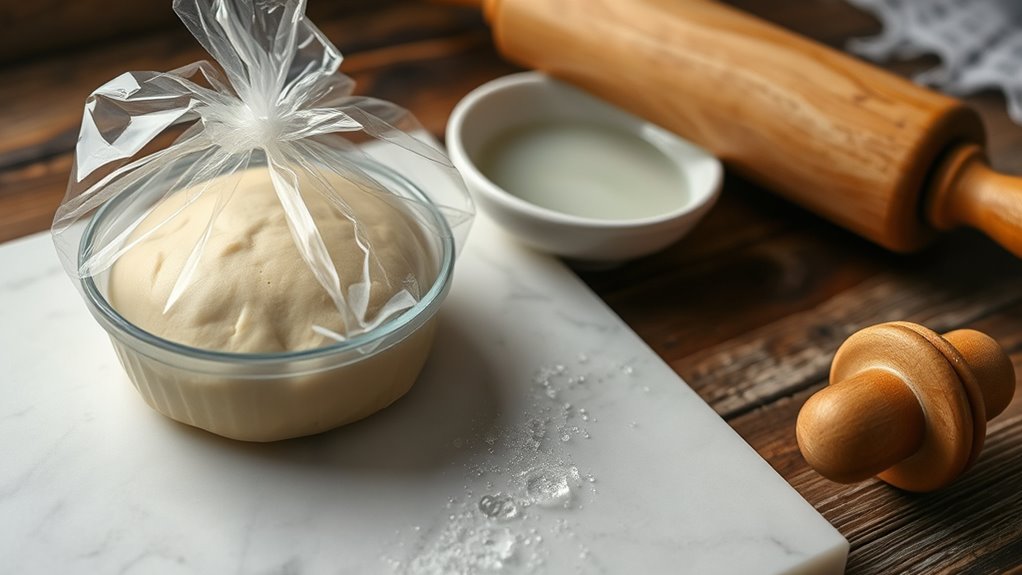
Using icy water and chilled ingredients helps keep your dough cold while you work. When you start with cold components, it slows down the gluten development and prevents the dough from warming up too quickly. Make sure to chill your ingredients before mixing to achieve the best roll-out results. Incorporating energy-efficient cloud servers into your kitchen appliances can also help reduce overall energy consumption during baking sessions. Additionally, managing your lease costs effectively can contribute to a more sustainable and budget-friendly baking environment. Understanding the science of temperature control in baking enables you to optimize your process for better texture and flavor, and being aware of VR comfort tips can help you stay relaxed during long baking sessions. For precise temperature regulation, investing in a high-quality home projector can also aid in monitoring your environment for optimal baking conditions.
Use Icy Water
To make certain your dough stays cold and easy to work with, start by using icy water when combining your ingredients. Icy water helps maintain the chilled temperature of your dough, preventing it from warming too quickly. This is especially important when working with chilled ingredients, which can easily soften if exposed to warmer water. To optimize the process, consider these steps:
- Keep your water in the freezer until just before mixing.
- Use a thermometer to ensure the water stays around 32°F (0°C).
- Combine icy water gradually to monitor the dough’s temperature, avoiding over-warming. Incorporating temperature control strategies can further enhance your dough’s consistency and ease of handling.
- Incorporate Free Floating techniques to help keep the dough evenly chilled and prevent sticking during roll-out. These temperature regulation methods are key to achieving a smooth, manageable dough every time.
Using icy water ensures your dough remains firm, manageable, and less sticky, giving you better control during roll-out.
Chill Ingredients Before Mixing
Starting with cold ingredients sets the foundation for a perfectly manageable dough. Guarantee your ingredient temperature is low before mixing by refrigerating butter, flour, and water. Using cold water helps maintain a consistent dough temperature, making dough handling easier and preventing it from becoming sticky or warm. When ingredients are chilled, it reduces the risk of overworking the dough, which can lead to tough textures. Keep butter and other fats refrigerated until just before mixing, and add ice-cold water gradually. This practice helps maintain the dough’s coolness throughout preparation. Properly chilled ingredients are essential for controlling dough temperature, resulting in better stretchability and a flaky, tender final product. Additionally, understanding ingredient temperature can significantly influence the dough’s texture and handling properties, especially when considering thermal management in baking. Maintaining a consistent dough temperature prevents uneven baking and ensures a more uniform crust. Proper temperature control is crucial for achieving consistent results and a high-quality crust. Always prioritize ingredient temperature to keep your dough cold and manageable during roll-out, and consider using baking thermometers to monitor and maintain ideal dough temperatures.

Rubbermaid Wrap N' Craft Plastic Wrapping Paper Organizer Storage Container with Top Ornament Storage Compartment for 20 Standard 30 Inch Rolls, Clear
Wrapping Paper Storage Container: Sturdy and convenient gift wrapping organizer storage efficiently declutters your space, keeping everything neat…
As an affiliate, we earn on qualifying purchases.
As an affiliate, we earn on qualifying purchases.
Keep Your Work Surface and Tools Cold
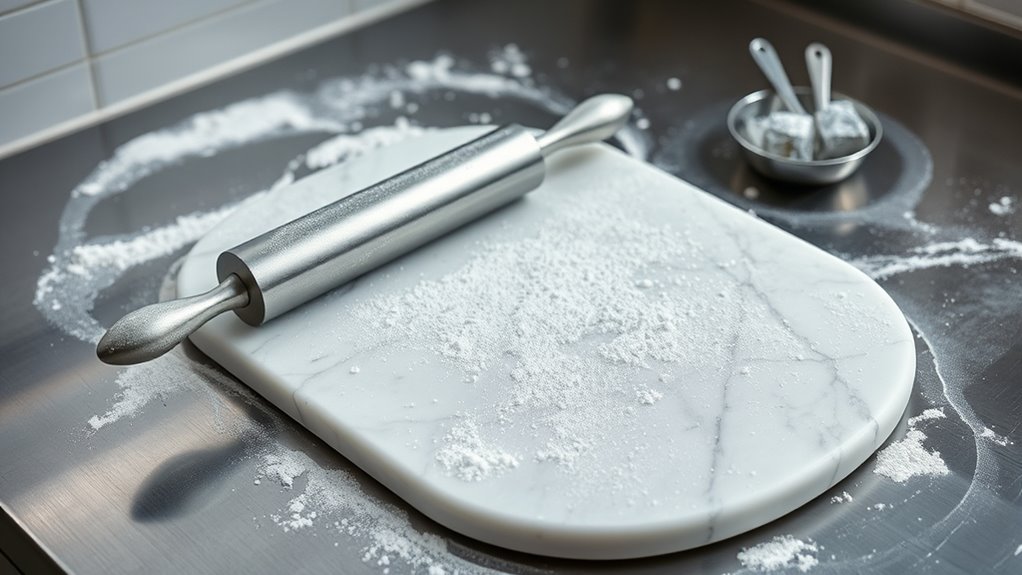
Keeping your work surface and tools cold is essential to prevent the dough from warming up and becoming sticky. When surfaces stay cool, dough maintains its dough elasticity, making rolling easier and more controlled. Cold tools help slow down gluten development, ensuring the dough doesn’t become tough or overworked. To achieve this:
- Chill your rolling pin and spatula before use.
- Work on a cold marble or granite surface, kept in the fridge beforehand.
- Periodically place your tools and work surface in the fridge or freezer to keep them cool during rolling.
- Being aware of manipulation tactics in food preparation can help you maintain control over your process and prevent accidental warming of ingredients.
- Using temperature control techniques can further enhance your ability to keep everything consistently cold throughout the process.
- Regularly checking and maintaining proper temperature management is key to consistent results in dough handling. Incorporating knowledge of sound healing science can also help create a calm environment, reducing stress that might lead to hurried handling, which can warm the dough. Additionally, understanding credit card security measures can help prevent disruptions if working in a shared or digital environment.
This approach helps you maintain the ideal dough consistency, preventing warmth from compromising elasticity and gluten structure. Keeping everything cold ensures your dough remains manageable and yields a flaky, tender result.

HULISEN Flour Duster for Baking, One-Handed Operation, 304 Stainless Steel Powdered Sugar Shaker Duster, Pick Up and Dust Flour Sifter, Gift Package
Bakers Dusting Wand: Great for dusting cocoa powder or powdered sugar on desserts, and for dusting flour on…
As an affiliate, we earn on qualifying purchases.
As an affiliate, we earn on qualifying purchases.
Wrap Your Dough in Plastic Wrap to Maintain Chill

Wrapping your dough tightly in plastic wrap creates a barrier that helps it stay cool and prevents it from drying out. This method maintains the dough’s dough elasticity, making it easier to roll out without cracking or tearing. By keeping the dough cold, you also support ideal flavor development, ensuring a richer, more balanced taste. Plastic wrap traps moisture and heat, stopping the dough from warming up too quickly and losing its perfect consistency. Make sure to press the wrap tightly around the dough, eliminating air pockets that could lead to uneven warming. Resting the wrapped dough in the refrigerator allows it to stay chilled, making the rolling process smoother and more manageable while preserving its quality and flavor. Incorporating proper storage techniques can further enhance your dough’s preservation during the chilling process, especially when combined with temperature control to prevent warming. Additionally, using a refrigerator thermometer can help you maintain the optimal temperature for storage, which is crucial for consistent dough temperature and successful baking results.
Work in Small Portions to Keep Dough Cold and Manageable
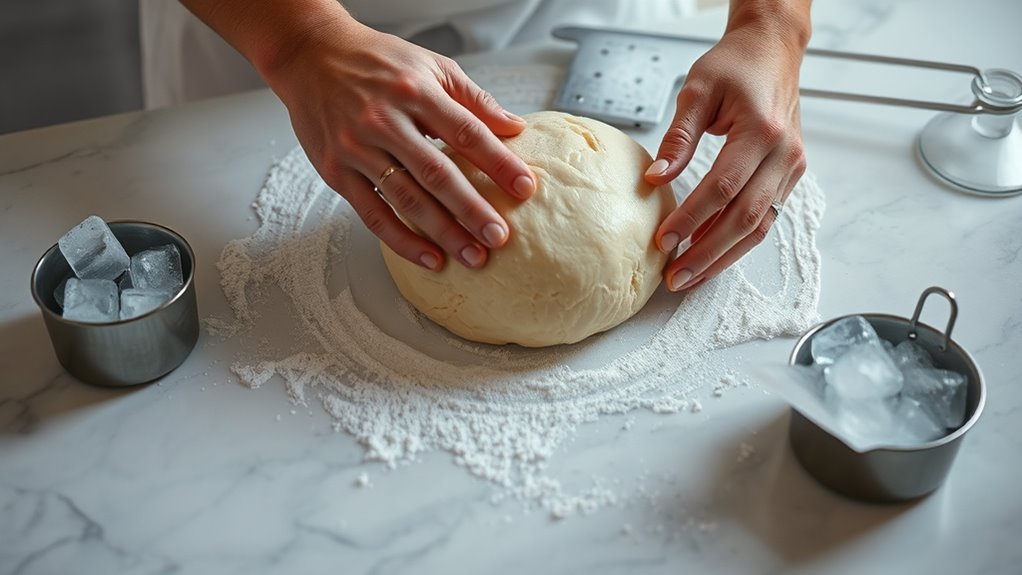
Working with small portions of dough at a time helps keep it cold and manageable during rolling. This approach enhances portion control and simplifies dough management, preventing the dough from warming too quickly. By dividing your dough, you can focus on one piece while keeping the rest chilled and ready for use. This method reduces handling time and minimizes the risk of overworking the dough.
To optimize this process:
- Portion the dough into equal-sized pieces before starting.
- Keep unused portions wrapped and refrigerated.
- Work on one piece at a time, returning the rest to the fridge frequently.
This strategy ensures your dough stays cold longer, making rolling easier and the final product more consistent.
Use a Cold Marble Slab or Surface for Rolling
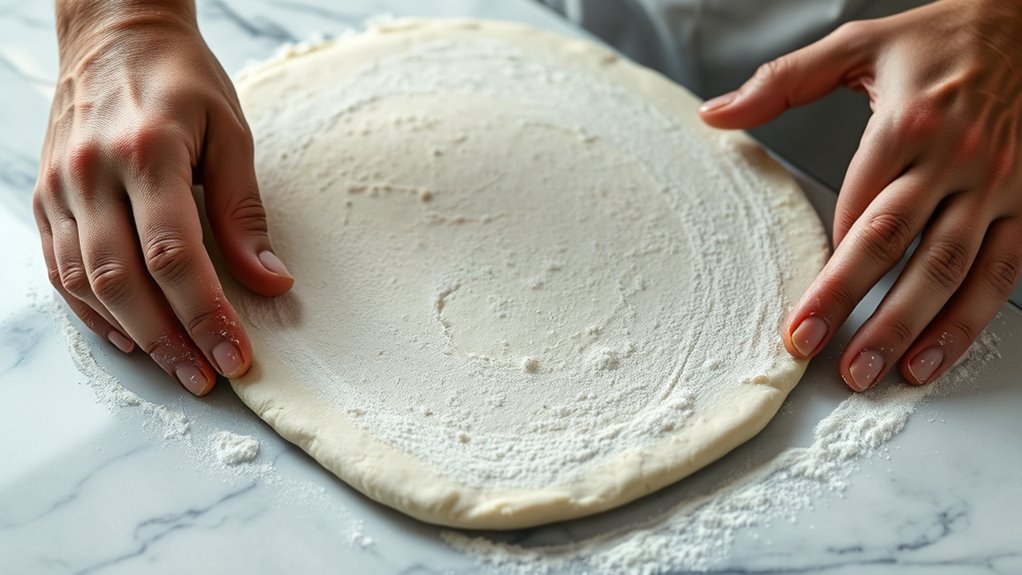
Using a cold marble slab or surface helps keep your dough at the right temperature during rolling. It’s important to maintain that coldness so the dough stays manageable and doesn’t warm up. Proper temperature control guarantees your dough remains smooth and easy to work with.
Proper Surface Temperature Control
To keep dough from becoming too warm and sticky while rolling, a cold marble slab or surface is essential. This helps maintain proper surface temperature control, preventing the dough from softening under ambient humidity or fluctuating oven temperatures. To optimize this, consider these steps:
- Chill the marble slab thoroughly before use, ensuring it stays cold during rolling sessions.
- Work in a space with stable ambient humidity, avoiding moisture fluctuations that can warm the surface.
- Use an oven set to a low temperature or keep a cold environment nearby to assist in maintaining surface coolness.
Maintaining Coldness Throughout
Ever wondered how to keep dough consistently cold during rolling? Using a cold marble slab or surface helps maintain the ideal ingredient temperature and dough consistency. Pre-chill your marble surface in the freezer for at least 30 minutes before working. As you roll, periodically lift and rotate the dough to prevent warming. Keep extra flour nearby to avoid sticking and maintain smoothness. Here’s a quick guide:
| Tip | Explanation | Benefit |
|---|---|---|
| Chill the surface | Freeze marble before use | Keeps dough cold longer |
| Use cold tools | Keep rolling pin and utensils in the fridge | Prevents warming of dough |
| Work in small sections | Roll small portions at a time | Maintains consistent temperature |
| Rest the dough | Chill dough between steps | Improves dough consistency |
These steps help preserve ingredient temperature and dough integrity.
Refrigerate or Freeze Dough Between Steps
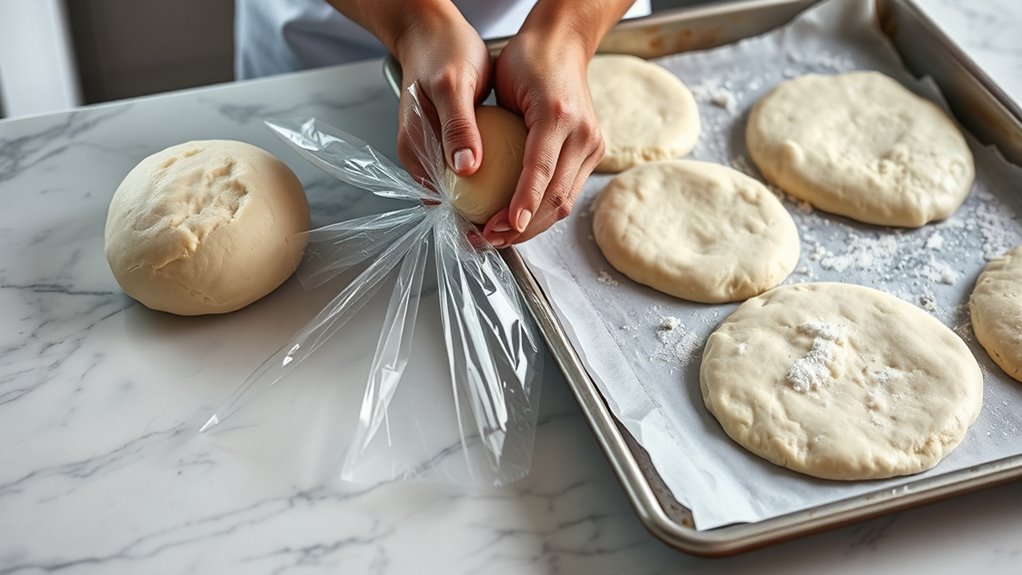
Refrigerating or freezing your dough between steps helps maintain its stiffness and prevents it from becoming too soft to work with. This process preserves dough elasticity and halts gluten development, ensuring it stays manageable. To optimize results, consider these steps:
Chill your dough to keep it firm, elastic, and easy to work with.
- Chill the dough for at least 30 minutes before rolling to enhance dough elasticity.
- Wrap the dough tightly in plastic wrap to prevent moisture loss and maintain consistent temperature.
- Use a flat surface for chilling; this promotes even cooling and stabilizes gluten structure.
Roll Gently and Use Flour or Powdered Sugar to Prevent Sticking
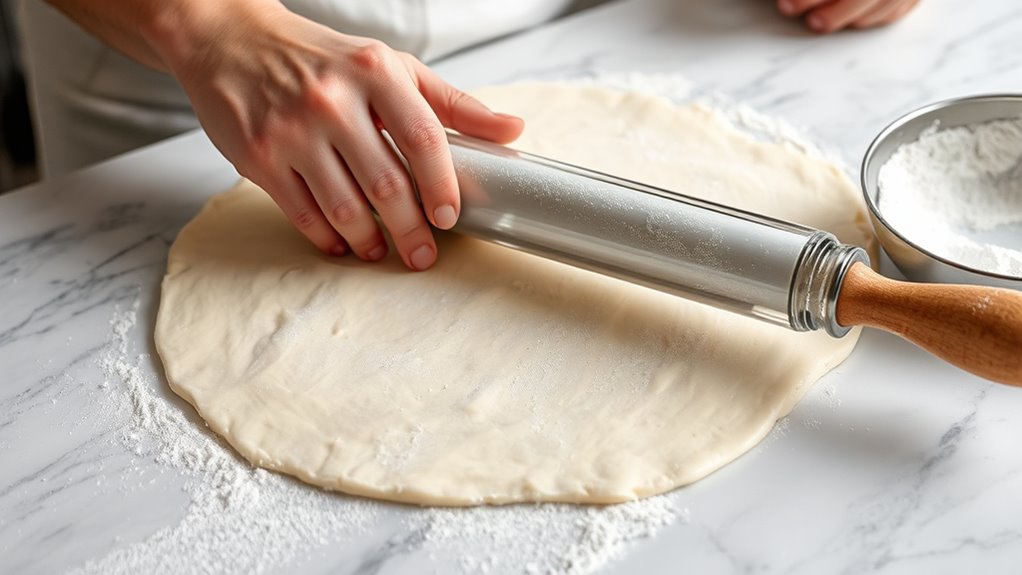
When rolling out dough, it’s important to handle it gently to prevent tearing or flattening too quickly. Apply gentle pressure to maintain an even thickness and avoid overworking the dough. To prevent sticking, use flour dusting or powdered sugar on your surface and rolling pin. Lightly sprinkle the surface and the dough’s top to create a barrier that keeps it from adhering. Refrain from pressing too hard, which can deform the dough and warm it up. Instead, use smooth, controlled motions, periodically lifting and turning the dough to ensure it rolls out evenly. This careful approach helps keep your dough cold and firm, making it easier to work with and resulting in a better final texture.
Re-Chill Dough if It Becomes Too Warm or Sticky
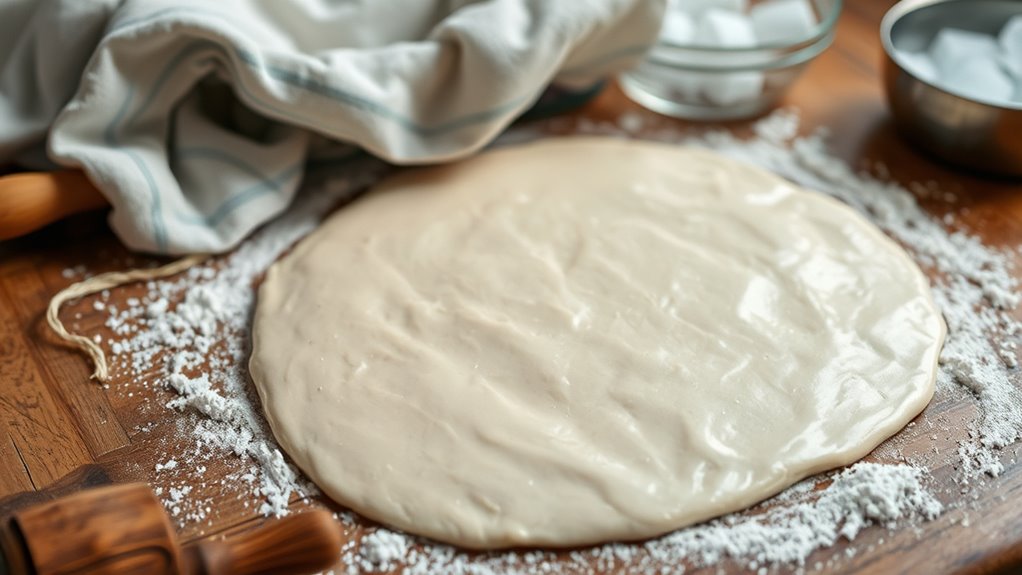
If your dough starts to become too warm or sticky during rolling, it’s a good idea to pause and chill it again. Maintaining proper dough temperature is vital to prevent sticking and guarantee even rolling. When the dough feels soft or tacky, re chilling can restore its ideal consistency.
If dough becomes sticky, chill it again to restore ideal consistency and ensure smooth rolling.
Consider these steps for an effective re chilling process:
- Wrap the dough tightly in plastic wrap to prevent moisture loss.
- Place it in the refrigerator for 15-30 minutes, allowing the dough temperature to drop.
- Check if the dough firms up; if not, repeat the process until it’s manageable.
This method helps keep your dough at the perfect temperature, making rolling easier and preventing over-softening or sticking.
Frequently Asked Questions
How Can I Tell if My Dough Is Too Warm?
You can tell if your dough is too warm by feeling its temperature; it should feel cool and firm to the touch. If it’s soft, sticky, or starts to stick to your hands or surface, it’s likely too warm. Check the dough’s temperature with a thermometer—ideal dough temperature is typically around 60-65°F. For best results, store your dough in cold storage before rolling to maintain the proper dough temperature.
What’s the Best Way to Store Dough Long-Term?
Think of your dough as a treasure that needs safeguarding. For long-term storage, you should use dough refrigeration for up to a few days, keeping it wrapped tightly. For even longer, employ freezing techniques—wrap it well in plastic wrap and place it in an airtight container or freezer bag. This preserves freshness, prevents freezer burn, and keeps your dough ready for when inspiration strikes, just like a well-kept secret.
Can Using a Fan Help Keep Dough Cold While Rolling?
Using a fan can help with fan cooling and temperature regulation while rolling dough, but it’s not the most effective method. It might create uneven cooling or introduce airflow that warms the dough. Instead, try refrigerating or chilling the dough beforehand. If you do use a fan, keep it at a gentle breeze and monitor the dough closely to prevent it from warming up. This way, you maintain better control over the dough’s temperature.
How Does Room Temperature Affect Dough Consistency?
Ever notice how your dough becomes tough or sticky? Room temperature directly impacts its elasticity; warmer air softens it, making it harder to handle, while cooler temps firm it up. To maintain ideal dough consistency, use temperature control techniques like chilling or refrigerating the dough before rolling. Keeping the environment cool helps you achieve perfect elasticity, making rolling easier and your final product better.
Are There Alternative Surfaces to Marble for Keeping Dough Cold?
Yes, you can use alternative surfaces like granite, quartz, or even a cold marble slab to keep dough temperature low. These surfaces naturally stay cool, helping prevent the dough from warming up too quickly. Simply chill them beforehand, or occasionally dust with flour to prevent sticking. Using these alternatives guarantees your dough remains cold during roll-out, resulting in better texture and easier handling.
Conclusion
By keeping your dough cool, you’ll guarantee it stays as smooth as a silk ribbon and easy to work with. Think of your dough as a delicate dancer—if it overheats, it stumbles. So, chill, handle gently, and work smart. With these tips, you’ll master perfect, flaky pastries every time, turning your kitchen into a culinary stage where coolness is your secret weapon for flawless roll-outs.