To prevent a sticky cake top after cooling, make sure to let your cake cool completely on a wire rack without covering it, as trapped steam causes moisture buildup. Wrap it tightly with plastic wrap or store it in an airtight container once cooled to control surface moisture. Also, avoid slicing or frosting while warm. Proper cooling and storage techniques will help keep your cake smooth and non-sticky—continue with these tips to learn more.

Get baking supplies delivered free with Prime
- Fast, free delivery on millions of items
- Prime Video, Amazon Music and more included
- Member-only deals all year
Key Takeaways
- Cool the cake in the pan briefly, then transfer to a wire rack for full cooling.
- Avoid covering the cake while warm to prevent trapped steam and moisture buildup.
- Allow the cake to reach room temperature before wrapping or storing.
- Wrap the cooled cake tightly with plastic wrap or store in an airtight container to control moisture.
- Lightly dust the top with powdered sugar or apply a thin layer of frosting to mask any residual stickiness.
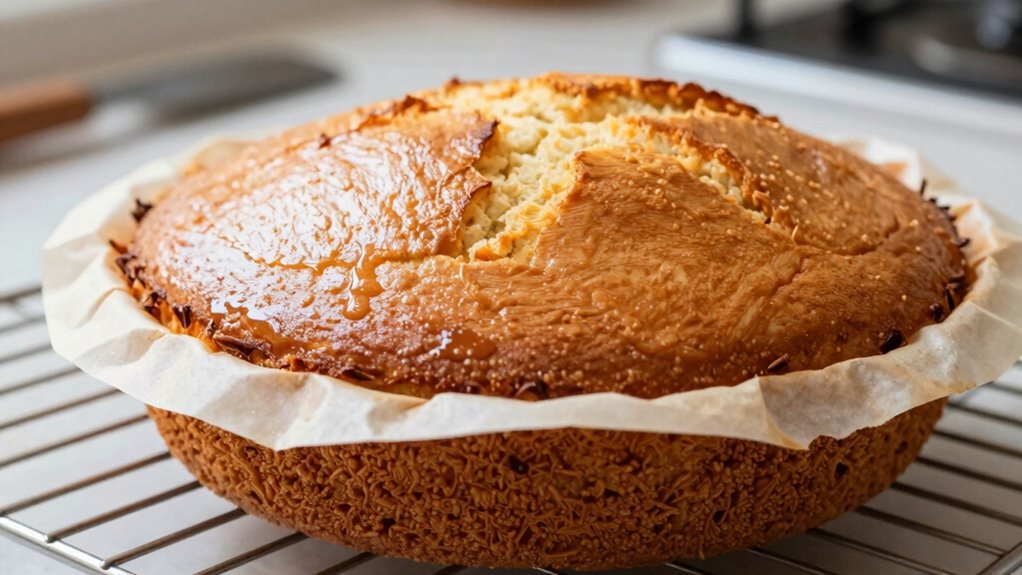
A sticky cake top can ruin an otherwise perfect dessert, but with some simple steps, you can prevent this common problem. The key lies in proper cake storage and effective cooling techniques. When you store your cake incorrectly or rush the cooling process, condensation forms on the surface, leading to that undesirable sticky layer. To avoid this, you need to understand how to control moisture and temperature during and after baking.
First, focus on how you handle your cake after it’s baked. Once your cake comes out of the oven, it’s tempting to cut right into it, but this isn’t the best move if you want a smooth, non-sticky top. Instead, let the cake cool in the pan for a few minutes, which prevents immediate exposure to air and reduces moisture loss. Then, transfer it to a wire rack to cool completely. Proper cooling techniques are essential because they allow moisture to escape evenly, preventing condensation from forming on the surface. If you cover your cake while it’s still warm, trapped steam can create a sticky top once it cools, so always wait until the cake is at room temperature.
When it comes to cake storage, how you store your cake afterward makes a difference. Once cooled, wrap your cake tightly with plastic wrap or place it in an airtight container. This prevents excess moisture from settling on the surface and keeps the cake from drying out or becoming sticky. If you plan to store it for a longer period, consider refrigerating it; however, let it come to room temperature before serving to avoid condensation buildup. Avoid stacking wet or freshly frosted cakes directly on top of each other without proper sealing, as this can lead to stickiness on the top layer.
Additionally, if you notice your cake’s top is still sticky after cooling, it might be due to excess moisture in the batter or improper cooling. In such cases, you can lightly dust the top with powdered sugar or a thin layer of frosting to mask the stickiness. For future baking, tweak your recipe or baking time to ensure the cake is fully baked through, which also minimizes moisture issues.
Being aware of how to control moisture and use proper cooling methods can significantly reduce the chances of a sticky cake top, ensuring your dessert remains perfect and appealing.
As an affiliate, we earn on qualifying purchases.
Frequently Asked Questions
Can the Type of Cake Affect the Stickiness of the Top?
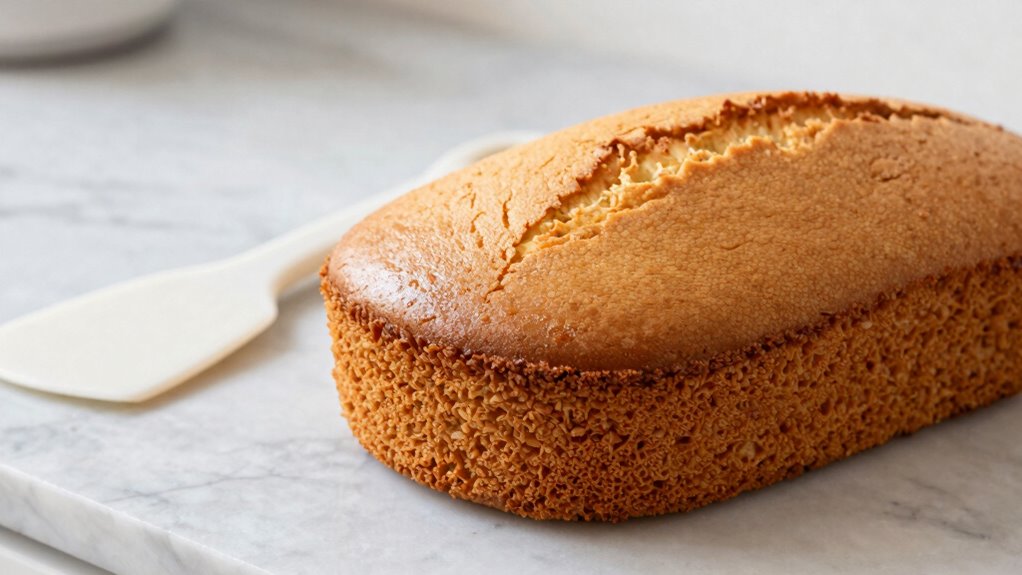
Yes, the type of cake can influence the stickiness of the cake surface. Denser cakes like pound or fruit cakes tend to have a more moist surface, which can cause stickiness if not cooled properly. Additionally, choosing frosting compatible with your cake surface helps prevent stickiness and ensures smooth application. Proper cooling and selecting the right frosting are key to avoiding a sticky top and achieving a professional finish.
Does Using a Different Pan Material Help Prevent a Sticky Cake Top?
Using a different pan material can definitely help avoid a sticky cake top. Non-stick or glass pans, for example, promote even heat conduction, reducing hot spots that cause sticking. Metal pans with good heat conduction distribute heat more evenly, helping the cake bake uniformly and preventing a sticky surface. Choosing the right pan material guarantees consistent heat, minimizing the chances of a sticky top after cooling.
Can the Humidity in the Kitchen Influence Cake Surface Stickiness?
Humidity in your kitchen can definitely influence cake surface stickiness. If the air is humid, your cake absorbs moisture, making its top sticky after cooling. To combat this, control humidity levels by using a dehumidifier or opening windows during baking. Proper humidity control prevents excess moisture absorption, ensuring your cake’s top stays smooth and firm. Keep the environment dry, and you’ll enjoy a perfectly textured cake every time.
Are There Specific Cooling Racks That Reduce Stickiness?
Using wire racks with non-stick coatings can markedly reduce cake stickiness during cooling. These racks allow air to circulate evenly around your cake, preventing moisture buildup that causes stickiness. Make sure to select a wire rack labeled as non-stick, which helps prevent the cake from adhering to the surface. Position the cake carefully on the rack, and you’ll notice a cleaner, less sticky top once cooled.
How Does Overbaking Contribute to a Sticky Cake Top?
Did you know that overbaking is responsible for about 85% of sticky cake tops? When you bake too long or set your oven temperature too high, the exterior dries out and forms a sticky, caramelized layer. This happens because excess heat causes the sugars and proteins to overcook, creating a tacky surface. To avoid this, monitor your baking time carefully and keep your oven temperature accurate, ensuring a perfectly baked cake without stickiness.
As an affiliate, we earn on qualifying purchases.
Conclusion
Now that you know the tricks to prevent a sticky cake top, you’re ready to conquer your baking adventures. Think of your cake as a delicate butterfly; with the right care and attention, it’ll emerge from the oven beautifully glossy and smooth, ready to impress. Just remember, patience and proper cooling are your best tools. With these tips, you’ll master the art of a perfect, non-sticky cake top every time—like a skilled artist finishing a masterpiece.
As an affiliate, we earn on qualifying purchases.
powdered sugar shaker for baking
As an affiliate, we earn on qualifying purchases.
As an affiliate, we earn on qualifying purchases.
Halloween Picks
halloween
As an affiliate, we earn on qualifying purchases.