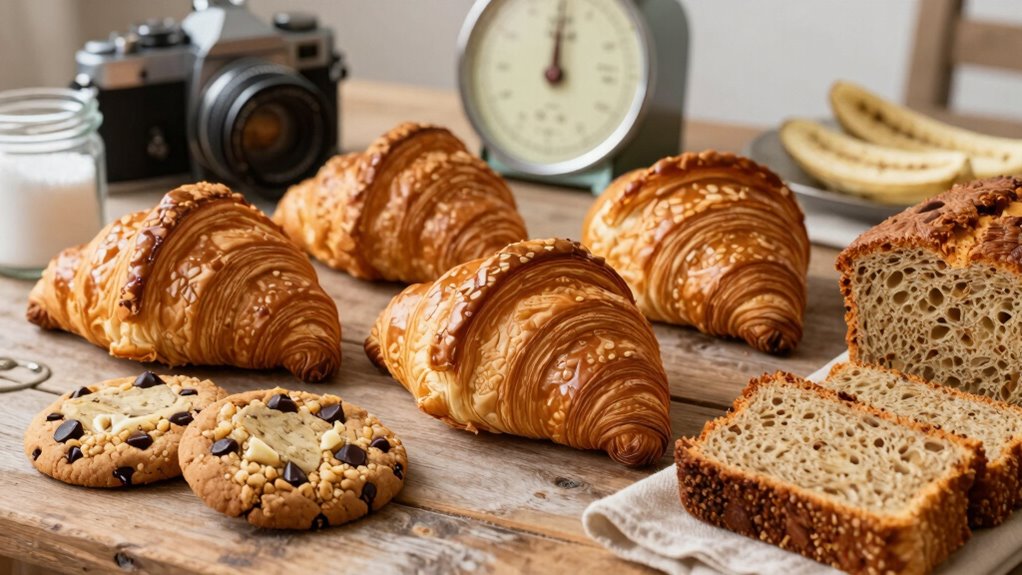
Baked goods typically last from a few days up to a week depending on the type and storage method. Bread stays fresh for 2-4 days at room temperature, while cookies last about 3-5 days. Cakes and pastries keep well if wrapped tightly and stored properly, and muffins or quick breads usually last 1-3 days at room temperature. To maximize freshness and safety, proper storage is key—if you want helpful tips, keep exploring this guide.

Get baking supplies delivered free — and shop member deals
- Fast, free delivery on millions of items
- Access to Prime Big Deal Days deals on October 6–7
- Prime Video, Amazon Music and more included
Key Takeaways
- Storage duration varies: bread (2-4 days), cookies (3-5 days), cakes (2-3 days at room temperature).
- Proper packaging and storage conditions extend freshness and prevent spoilage.
- Freezing baked goods can preserve them for up to 3 months; ensure airtight wrapping.
- Signs of spoilage include mold, discoloration, off-odor, or bad taste; discard unsafe items promptly.
- Refrigeration prolongs shelf life for certain items but may affect texture; allow to reach room temperature before serving.
airtight food storage containers
As an affiliate, we earn on qualifying purchases.
As an affiliate, we earn on qualifying purchases.
How Long Does Bread Stay Fresh, and How Should You Store It?
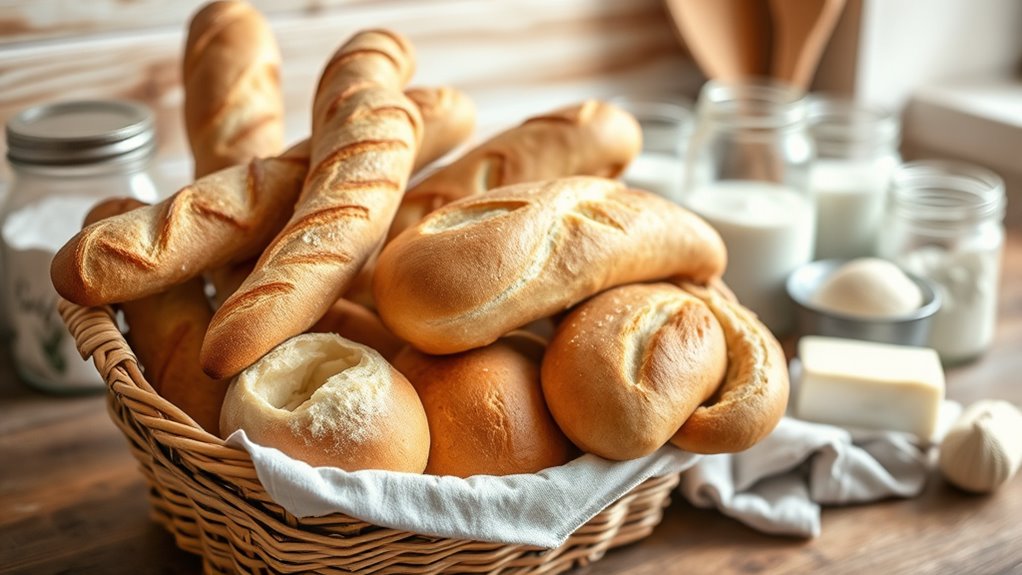
When it comes to keeping bread fresh, understanding how long it stays good and the best storage methods is essential. Proper bread storage helps preserve its softness and flavor, preventing mold and staleness. Typically, bread remains fresh for about 2 to 4 days at room temperature if stored correctly. To maximize freshness preservation, keep bread in a bread box, paper bag, or loosely wrapped in plastic to allow airflow while preventing excess moisture. Avoid refrigerating bread, as it accelerates staling. If you won’t consume it within a few days, freezing is your best option—wrap it tightly to prevent freezer burn. When stored properly, you’ll enjoy fresh bread longer, reducing waste and keeping your baked goods delicious. Additionally, understanding the impact of storage environments on bread’s shelf life can help you make better choices to extend freshness, especially considering how different storage methods can influence bread’s longevity. Proper storage techniques can significantly impact how long bread stays fresh and edible.
As an affiliate, we earn on qualifying purchases.
How Long Do Cookies and Biscuits Stay Crispy and Tasty?
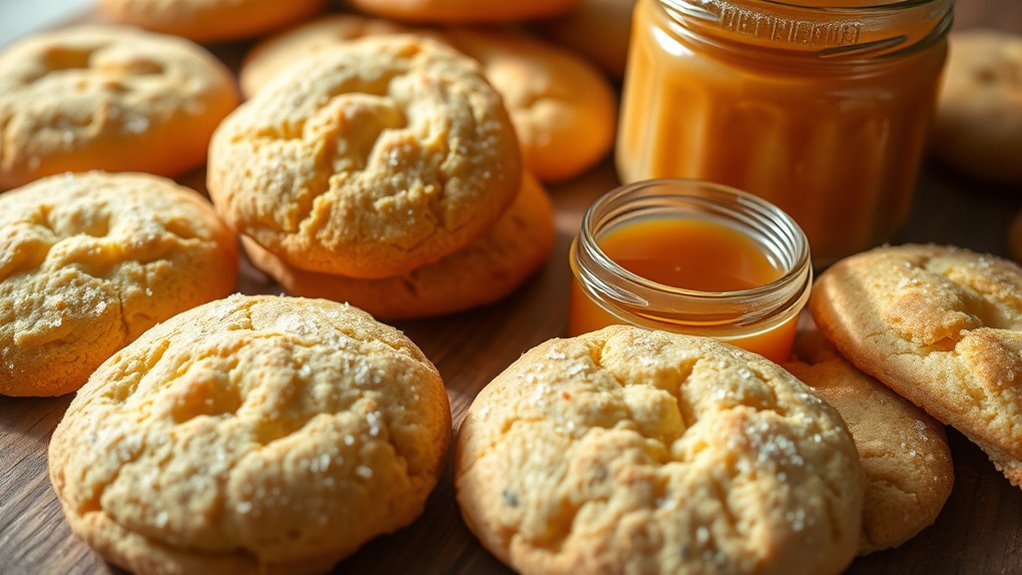
Cookies and biscuits are best enjoyed crispy and fresh, but their texture can change quickly if not stored properly. To maintain cookie freshness, store them in an airtight container at room temperature. Usually, cookies stay crispy and tasty for about 3 to 5 days, depending on ingredients and moisture content. Biscuits tend to retain their crispness for a similar period, but softer varieties may lose their texture sooner. If you want to extend their crunch, avoid stacking them directly on top of each other and keep them away from humidity. Once they begin to soften, you can re-crisp them by briefly baking in a low-temperature oven. Proper storage helps preserve the cookie freshness and biscuit texture, ensuring each bite remains satisfying.
As an affiliate, we earn on qualifying purchases.
How Can You Keep Cakes and Pastries Fresh Longer?
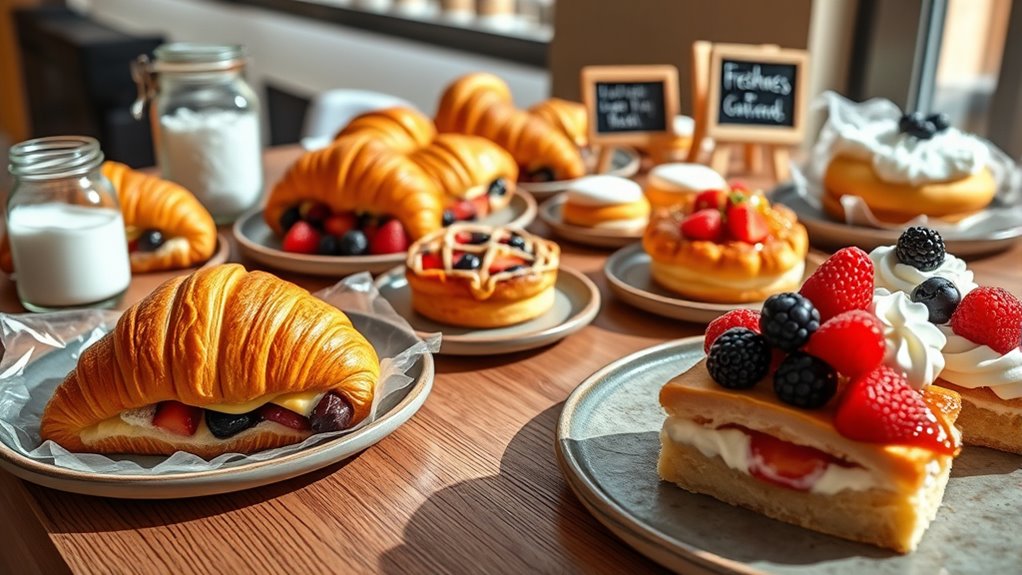
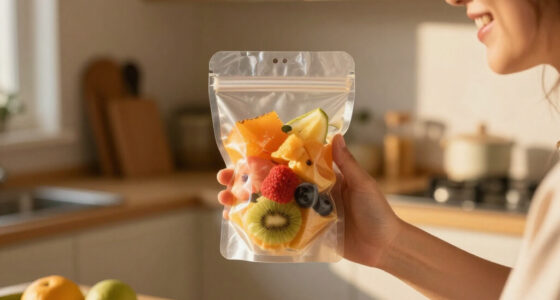
To keep cakes and pastries fresh longer, proper storage is essential. Effective freshness preservation relies on using the right storage techniques. Wrap your baked goods tightly in plastic wrap or aluminum foil to prevent air exposure, which can cause drying out. For added protection, place them in airtight containers or resealable bags. Keep cakes and pastries at room temperature if they’re meant to be enjoyed within a couple of days; otherwise, refrigerate to extend freshness. When refrigerating, allow baked goods to come to room temperature before serving for better flavor and texture. Avoid stacking items directly on top of each other to prevent crushing. Proper storage techniques help maintain moisture, prevent staleness, and prolong the enjoyable freshness of your cakes and pastries. Additionally, utilizing modern kitchen technology such as smart storage containers can help monitor humidity and freshness levels more precisely, ensuring your baked goods stay fresh longer. Incorporating innovative storage methods can further optimize how you preserve baked goods, especially for longer periods. Using temperature control devices can further enhance storage conditions for different types of baked goods. For example, some appliances integrate humidity regulation to maintain ideal moisture levels for delicate pastries.
freezer storage bags for baked goods
As an affiliate, we earn on qualifying purchases.
As an affiliate, we earn on qualifying purchases.
What’s the Shelf Life of Muffins, Scones, and Quick Breads?

Ever wonder how long muffins, scones, and quick breads stay fresh? These baked goods typically last 1 to 3 days at room temperature. Muffin moisture can decrease quickly, leading to dryness after the first day, so storing them in an airtight container helps retain softness. Scone freshness diminishes faster, often within 24 hours, especially if they contain dairy or fruit fillings. To extend their shelf life, you can freeze muffins and scones for up to three months; just wrap them tightly to prevent freezer burn. Quick breads like banana or zucchini bread tend to stay good for about 4 to 5 days at room temperature or up to a week if refrigerated. Keep in mind, the key is proper storage to maintain muffin moisture and scone freshness longer.
When Should You Eat or Freeze Pies and Tarts for Best Results?

Pies and tarts are best enjoyed at their peak freshness, but knowing when to eat or freeze them can help you preserve their flavor and texture. For ideal results, eat them within two days if kept at room temperature, especially if covered with a breathable storage container. If you need to store them longer, use proper freezing techniques—wrap them tightly in plastic wrap or aluminum foil, then place in airtight storage containers or freezer bags to prevent freezer burn. This helps maintain their quality and prevents flavor loss. Label the containers with the date so you can track freshness. For best flavor, consume frozen pies and tarts within three months, and thaw them in the refrigerator before serving for best results. Proper storage helps prevent spoilage, and choosing the right storage containers can further extend their shelf life and quality. Additionally, utilizing airtight packaging can significantly improve preservation and keep baked goods tasting fresh longer. Maintaining the correct temperature during storage is also crucial to prevent premature spoilage and preserve texture. Incorporating knowledge of net worth and other personal factors can sometimes inform decisions about hosting or sharing baked goods, especially at gatherings or events.
What Factors Influence How Long Baked Goods Last?

The moisture level inside baked goods plays a big role in how long they stay fresh. Ingredients like fats and preservatives also affect their shelf life, either helping keep them moist or causing spoilage. Understanding these factors helps you store baked goods properly and enjoy them longer. Additionally, proper storage techniques can prevent global chaos caused by unexpected spoilage or contamination, ensuring safety and quality. To further extend freshness, it’s important to consider proper packaging methods that protect baked goods from air and moisture exposure. Proper packaging can also help maintain ideal moisture levels and prevent microbial growth, which is crucial for longer-lasting baked treats. Moreover, selecting packaging with moisture barriers can significantly reduce spoilage caused by humidity fluctuations.
Shelf Moisture Impact
Moisture levels play a crucial role in determining how long baked goods stay fresh. When baked goods retain adequate moisture, they stay soft and flavorful longer, but too much moisture can encourage mold growth. Proper packaging techniques help maintain ideal moisture retention by creating a barrier against air and humidity. Airtight containers, resealable bags, or wrapping in plastic wrap are effective ways to preserve freshness. Conversely, if baked goods lose moisture too quickly, they become dry and stale faster. Balancing moisture is key; avoid exposing baked goods to excessive dryness or humidity. Additionally, understanding moisture management strategies can help optimize shelf life. By controlling moisture levels through thoughtful packaging, including the use of smart storage solutions, you can extend their shelf life and keep your baked treats tasting their best for as long as possible. Properly managing ambient humidity levels in storage areas also helps prevent moisture-related spoilage and staling. Maintaining appropriate storage conditions is essential to prevent rapid quality loss. Incorporating climate control techniques can further enhance preservation efforts and prolong freshness.
Ingredients and Preservation
Ingredients used in baked goods considerably influence how long they stay fresh. Fresh ingredients, like high-quality flour, butter, and eggs, help extend shelf life. Preservation techniques such as airtight storage, wrapping, and refrigeration can slow spoilage and mold growth. For example, sealing baked items tightly prevents moisture loss and limits exposure to air, which can cause staleness. Ingredient freshness is key—older ingredients may lead to quicker deterioration. Using preservatives like natural acids or commercial additives can also prolong freshness, especially in commercially produced baked goods. Additionally, understanding product shelf life helps in planning storage and consumption to maintain quality. Proper storage conditions, such as maintaining consistent temperatures, also play a crucial role in baked goods preservation. Keep in mind that the specific ingredients impact how long baked goods remain safe and tasty, so selecting fresh components and employing proper preservation techniques are essential for maximizing shelf life.
What Are the Signs That Baked Goods Have Gone Bad?

You’ll notice baked goods have gone bad if you see mold or discoloration on their surface. Unpleasant odors or a strange taste are also clear signs they should be discarded. Paying attention to these clues helps keep you safe and enjoy fresh treats.
Mold and Discoloration
How can you tell if baked goods have gone bad? Look for mold growth, which appears as fuzzy patches in green, blue, white, or black. Mold can develop quickly in warm, humid environments, so regular inspection is key. Discoloration signs are another indicator; if the bread or pastry’s color changes unnaturally or develops dark spots, it’s a sign of spoilage. Even if mold isn’t visible, discoloration can hint at bacterial activity. Always examine the surface carefully—if you notice any fuzzy patches or unusual color changes, it’s safest to discard the baked good. Mold and discoloration not only compromise flavor but can also pose health risks. When in doubt, trust your senses and err on the side of caution.
Unpleasant Odors or Taste
Ever notice a strange, sour, or rancid smell coming from your baked goods? That’s a clear sign they’ve gone bad. An unpleasant odor often indicates bacterial growth, which can lead to food poisoning if consumed. If the taste is off—bitter, sour, or stale—don’t take a chance. Always check your baked goods’ storage containers; improper sealing can accelerate spoilage. Even if mold isn’t visible, a foul smell means the product isn’t safe to eat. Trust your senses: when baked goods smell or taste unusual, it’s best to discard them. Consuming spoiled baked goods can cause stomach issues or worse. Proper storage and regular smell tests are your best defenses against eating spoiled food. When in doubt, it’s safer to throw it out.
Frequently Asked Questions
How Can I Tell if Baked Goods Are Still Safe to Eat?
You can tell if baked goods are still safe to eat by checking for mold growth, which indicates spoilage. Also, do a smell test—if they smell sour, off, or strange, it’s best to discard them. Trust your senses—visual cues like discoloration or mold and an unusual odor are strong signs you shouldn’t eat the baked goods. When in doubt, it’s safer to throw them away.
Do Homemade Baked Goods Last Longer Than Store-Bought?
Homemade baked goods typically last longer than store-bought ones because they lack preservatives found in store-bought options. Without these preservatives, homemade treats usually stay fresh for a few days longer if stored properly. You have the advantage of controlling ingredients, so you can choose natural methods to extend freshness. However, store-bought baked goods often have preservatives that help them last longer but may affect taste and health.
Can Freezing Extend the Shelf Life of Baked Items?
Freezing benefits your baked goods by substantially extending their shelf life. To get the most out of storage tips, wrap items tightly in plastic wrap or foil, then place them in airtight containers or freezer bags. This prevents freezer burn and preserves freshness. When you’re ready to enjoy your baked treats, thaw them at room temperature or reheat briefly. Freezing is a simple way to keep baked goods fresh for weeks.
What Is the Best Way to Reheat Stored Baked Goods?
Did you know that over 60% of people prefer oven warming for baked goods? To reheat stored baked items, you can use a microwave for quick results—just heat in short bursts to prevent drying out. For a more even and fresher taste, try oven warming at 350°F for 10-15 minutes. Both methods help restore the texture, making your treats delicious and enjoyable.
How Do Preservatives Affect the Shelf Life of Baked Products?
Preservative types like antioxidants and antimicrobials considerably extend your baked goods’ shelf life by preventing mold, staling, and spoilage. When you use these preservatives, you enhance shelf life, keeping products fresh longer. They work by inhibiting bacteria growth and slowing moisture loss. So, if you want baked treats to last more than a few days, incorporating appropriate preservatives can be a smart choice for shelf life enhancement.
Conclusion
To keep your baked goods tasting fresh, think of proper storage as your best friend. While some treats stay good like a loaf of bread for a few days, others, like cookies or muffins, might only last a day or two. Pay attention to signs of spoilage, and when in doubt, freezer storage can be a lifesaver. With the right care, your baked delights will stay delicious longer—like a treasure chest waiting to be opened.
Fall Picks
fall essentials
As an affiliate, we earn on qualifying purchases.