To prevent allergen cross-contact during home baking, always clean all surfaces, utensils, and appliances thoroughly before starting. Use separate tools and storage containers for allergen-free ingredients, and double-check labels to avoid surprises. Keep allergen-containing items away from allergy-safe ingredients, and wash your hands well between tasks. Label your tools clearly and clean your environment after baking to minimize risks. Following these steps helps create a safe baking space—more tips can help you further refine your approach.
Key Takeaways
- Thoroughly clean and sanitize all surfaces, utensils, and appliances before baking to prevent allergen transfer.
- Use dedicated tools and storage containers for allergen-free ingredients to avoid cross-contact.
- Substitute common allergens with safe alternatives, ensuring labels are carefully checked for hidden allergens.
- Separate allergen-containing ingredients from allergen-free items during preparation and baking.
- Implement strict post-baking cleaning practices to eliminate residual allergens from equipment and environment.
When you’re baking at home, it’s easy for allergens to cross-contact between ingredients, utensils, and surfaces. Even small traces can cause serious reactions, so staying vigilant is essential. To minimize risks, you should carefully plan ingredient substitution and prioritize kitchen sanitation. Ingredient substitution involves choosing alternative products that do not contain allergens, but it’s important to select options that work well in your recipes. For example, if a recipe calls for eggs, you might swap in applesauce or a commercial egg replacer. This reduces the chance of allergen cross-contact, especially if you’re baking for someone with sensitivities. However, you need to ensure these substitutes don’t introduce new allergens or alter the recipe’s texture and flavor too much. Always read labels carefully and verify that your substitutions are safe for those with allergies.
Kitchen sanitation is your first line of defense against allergen cross-contact. Before you start baking, thoroughly clean all surfaces, utensils, and appliances. Wipe down counters with soap and water, and consider using a disinfectant if necessary, especially if previous baked goods contained allergens. Use separate cutting boards and utensils for allergen-free baking, and clearly label them to prevent accidental use. Washing your hands thoroughly before handling ingredients also helps prevent transferring allergens from one item to another. During baking, avoid placing allergen-containing ingredients near allergen-free ingredients, and use dedicated storage containers. After baking, clean all equipment again, paying special attention to cracks and crevices where residues can linger. Proper kitchen sanitation minimizes the risk of unintended allergen transfer, creating a safer environment for everyone involved. Incorporating kitchen sanitation practices can further reduce the chance of cross-contact and ensure a safer baking experience.
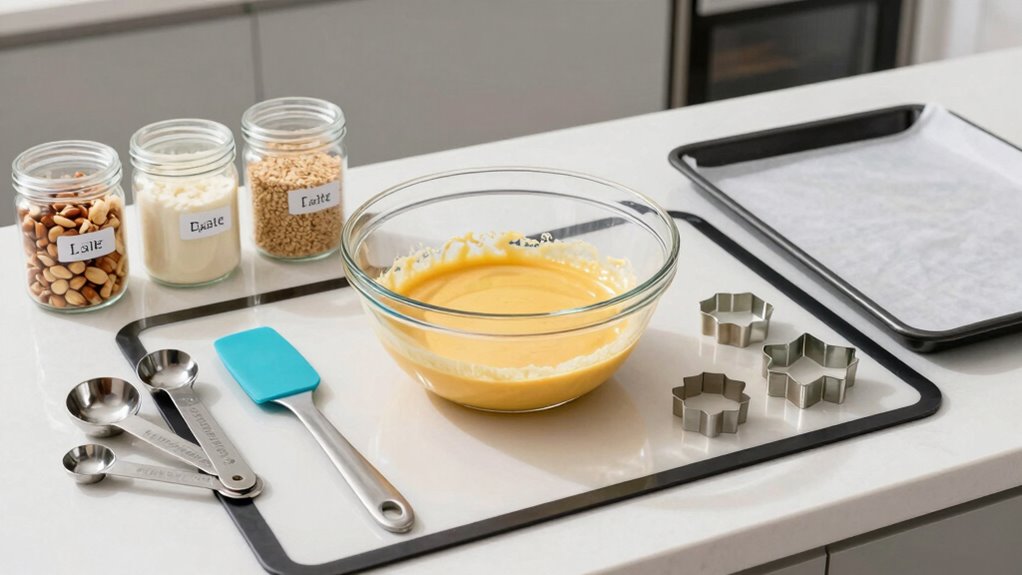
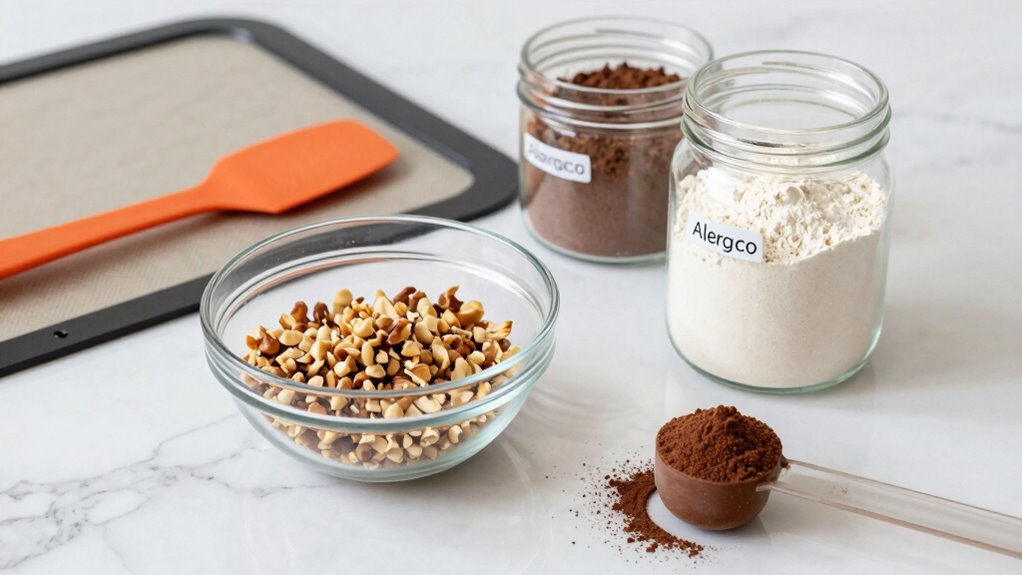
In addition to cleaning, it’s beneficial to designate specific tools and storage areas for allergen-free ingredients. This prevents cross-contact during ingredient handling and storage. Keep allergen-free ingredients separate from those containing common allergens like nuts, dairy, or gluten. When shopping, select products that are labeled allergen-free or specifically designed for allergen-sensitive households. Always double-check labels before using any ingredient, as manufacturing processes can change, introducing new risks. Implementing these practices creates a controlled environment, reducing the likelihood of accidental allergen exposure during home baking.
As an affiliate, we earn on qualifying purchases.
Frequently Asked Questions
Can Cross-Contact Occur Through Airborne Flour Particles?
Yes, cross-contact can happen through airborne contamination from flour dispersal. When you bake, flour particles become airborne and can settle on surfaces, utensils, or even your skin. This airborne dispersal increases the risk of allergen cross-contact, especially if you’re handling multiple ingredients or baking in a shared space. To minimize this, work in well-ventilated areas, clean surfaces thoroughly, and avoid creating excessive flour clouds during your baking process.
How Long Do Allergens Stay on Kitchen Surfaces?
Allergens can stay on kitchen surfaces for hours or even days, depending on the residue’s duration of residue and surface contamination. If you don’t clean thoroughly, allergens may linger and pose a risk. To minimize cross-contact, wipe down all surfaces with soap and water or a suitable cleaning agent after baking. Regular cleaning guarantees that allergens are removed and reduces the chance of accidental exposure in future baking sessions.
Are Non-Stick Pans Safe for Allergen-Free Baking?
Imagine you’re in a time machine—are non-stick pans safe for allergen-free baking? The answer is yes, if you guarantee non-stick safety by thoroughly cleaning them. While non-stick pans can reduce allergen residue, they can still trap tiny particles, so proper cleaning is essential. Always inspect for scratches or damage, and consider dedicated pans for allergen-free baking to prevent cross-contact.
Can Shared Utensils Transfer Allergens Even if Cleaned?
Shared utensils can definitely transfer allergens through utensil contamination and surface residue transfer, even if you wash them. Residue from previous use can cling to utensils and surfaces, risking allergen cross-contact. Always thoroughly clean and, if possible, designate specific utensils for allergen-free baking. This way, you minimize the risk of accidental allergen exposure and guarantee a safer baking environment for everyone.
What’s the Best Way to Store Allergen-Free Ingredients?
You should store allergen-free ingredients separately to prevent cross-contact. Use clearly labeled, airtight storage containers to keep ingredients fresh and prevent contamination. Implement ingredient segregation by dedicating specific containers for allergen-free items, and avoid using the same utensils or containers for different ingredients. Regularly clean storage areas and containers, ensuring they’re completely dry before refilling. This careful storage minimizes the risk of allergen transfer, keeping your baking safe.
kitchen sanitation disinfectant spray
As an affiliate, we earn on qualifying purchases.
As an affiliate, we earn on qualifying purchases.
Conclusion
By staying vigilant and following these practical steps, you can minimize allergen cross-contact and keep your loved ones safe. Remember, a stitch in time saves nine—being proactive now prevents bigger issues later. Home baking with allergies requires attention, but your care makes all the difference. Keep these tips in mind, and you’ll create delicious, safe treats everyone can enjoy. After all, safety is the best ingredient in any recipe for success.
dedicated allergen-free storage containers
As an affiliate, we earn on qualifying purchases.
As an affiliate, we earn on qualifying purchases.
As an affiliate, we earn on qualifying purchases.