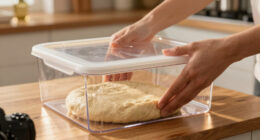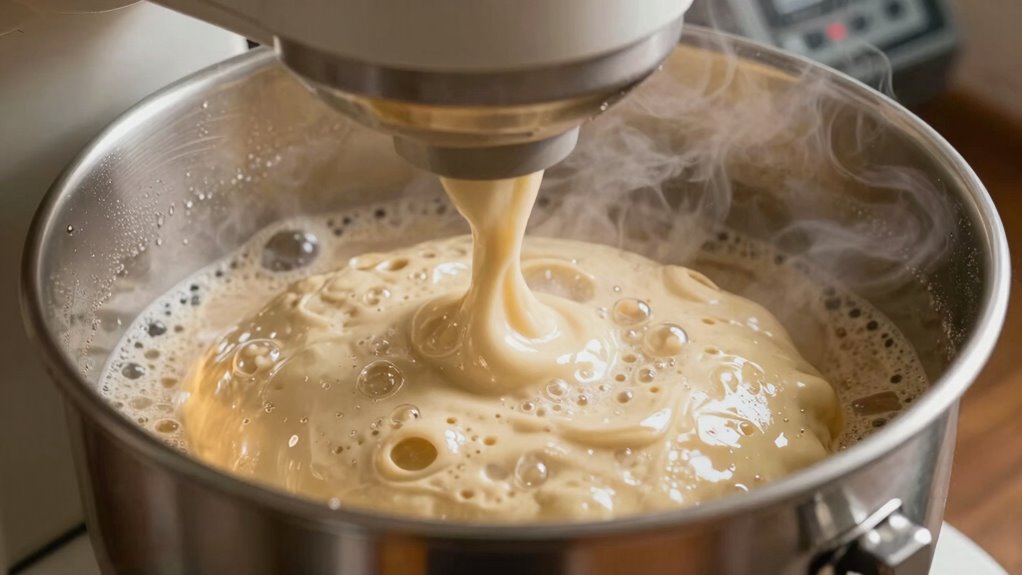

If your dough’s temperature suddenly rises during mixing, it’s often due to friction from the mixer blades and mechanical forces generating heat. Warm ingredients or prolonged high-speed mixing can also cause overheating, affecting yeast activity and fermentation. Excess heat may lead to over-proofing or structural issues. Monitoring your dough with proper tools and adjusting your process can prevent temperature spikes. Keep going to uncover effective techniques to keep your dough perfectly controlled.
Key Takeaways
- Mechanical friction during mixing converts energy into heat, raising dough temperature unexpectedly.
- High mixer speeds and extended mixing times accelerate heat buildup, impacting fermentation.
- Warm ingredients or improper ingredient temperature control can cause sudden temperature spikes.
- Insufficient cooling or insulation of the mixer allows heat to accumulate rapidly.
- Over-mixing can generate excessive mechanical heat, leading to over-fermentation and inconsistent dough.
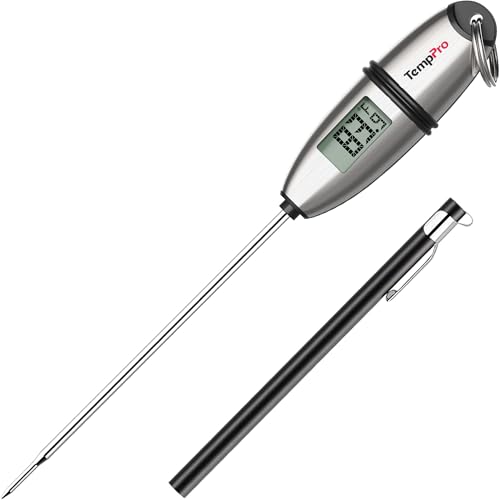
TempPro TP02S Digital Food Thermometer for Cooking Bread Baking Sourdough Liquids, Meat Thermometer Digital with Super Long Probe for Kitchen BBQ Yogurt Candy Making Accessory (Previously ThermoPro)
Fast and Accurate Reading: Kitchen thermometer for cooking features a 1 to 3 second readout speed and high…
As an affiliate, we earn on qualifying purchases.
As an affiliate, we earn on qualifying purchases.
How Does Temperature Affect Dough Fermentation?
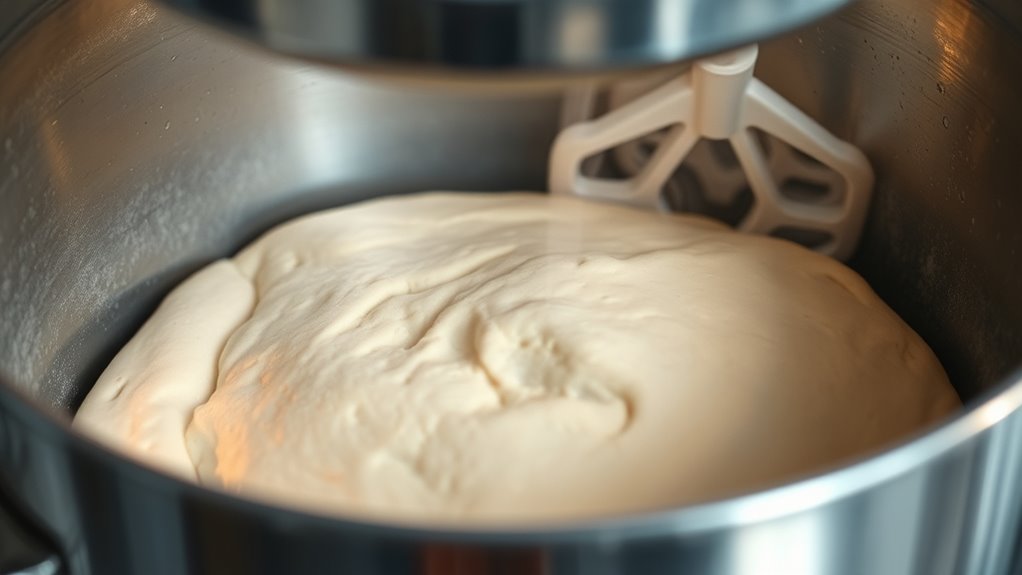
Temperature plays a crucial role in dough fermentation because it directly influences yeast activity. When you manage temperature regulation carefully, you control how quickly or slowly fermentation occurs. Warmer temperatures accelerate yeast activity, causing faster fermentation, which can lead to over-proofing if not monitored. Conversely, cooler temperatures slow down yeast, resulting in a longer fermentation process that develops flavor and texture. Precise temperature control helps you achieve consistent results and prevents unwanted dough behaviors. Proper fermentation control ensures the yeast produces the right amount of carbon dioxide and alcohol, giving your dough the rise and flavor you want. By maintaining ideal dough temperatures, you can fine-tune fermentation, ensuring your baked goods turn out perfect every time.

VOEDOR 85-2 Digital Display Magnetic Stirrer with 4 Magnetic Stir Bars – Magnetic Stirrer Hot Plate, 0-2000 RPM Lab Stirring System with Temperature Probe, Stainless Steel Plate & Stand Support
【Strong stirring & efficient heating】Our magnetic stirrer features a robust motor offering stepless speed control up to 2000…
As an affiliate, we earn on qualifying purchases.
As an affiliate, we earn on qualifying purchases.
Why Do Mixers Cause Dough to Heat Up?
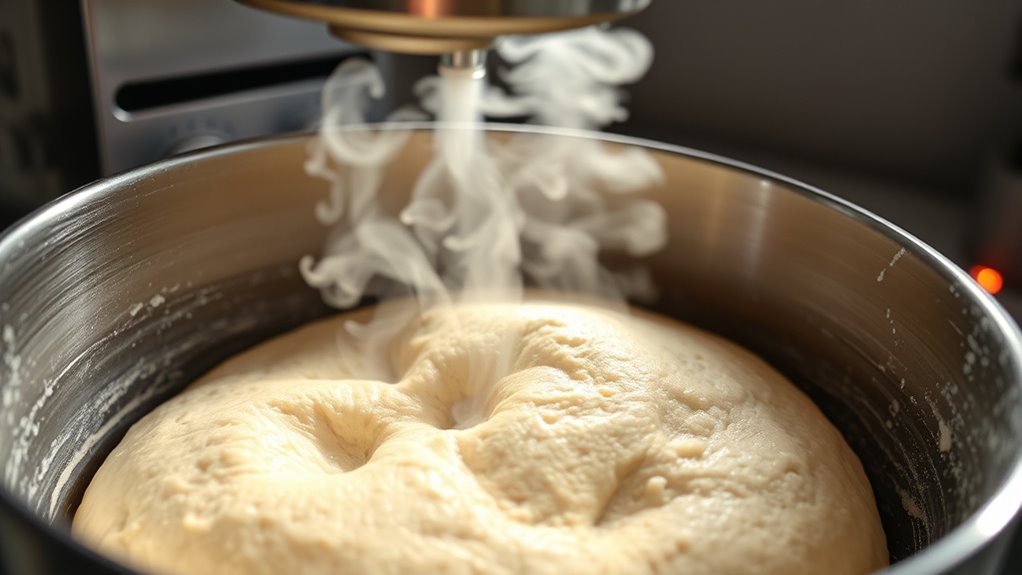
When you mix dough, friction between the ingredients and the mixing blades generates heat. Mechanical forces also produce heat as the mixer works to develop gluten. These combined effects cause the dough’s temperature to rise during mixing. Additionally, the temperature control of your mixer can influence how much heat is generated during the process. Proper maintenance and ensuring the airflow around the mixer are adequate can help prevent overheating and ensure consistent dough quality. Implementing energy-efficient components can further reduce heat production and improve overall performance. Using the right mixing speed can also help manage heat buildup and protect the dough’s integrity. Incorporating creative storytelling into your brand messaging can also elevate customer engagement and loyalty.
Friction From Mixing
As you mix dough, the mechanical action generates friction between the dough and the mixer’s blades or paddles. This friction produces heat directly through contact, causing the dough’s temperature to rise gradually. The heat can influence dough elasticity, making it softer and more pliable, but if it gets too high, it can hinder gluten development. Over-mixing or using powerful mixers increases friction, accelerating the temperature increase. The more you work the dough, the more energy is transferred as heat, affecting its consistency and fermentation potential. Proper temperature control is essential to maintaining dough quality during mixing. Understanding this friction helps you control temperature during mixing, ensuring your dough remains within ideal ranges for proper gluten formation and consistent fermentation. Additionally, monitoring the mixing speed can help prevent excessive heat buildup, preserving dough integrity. Being aware of the heat transfer mechanisms involved can further enhance your control over dough temperature, especially since thermal conductivity varies between different dough compositions. Moreover, applying insulation techniques can help retain heat or prevent excessive temperature rise during mixing, depending on your specific needs.
Mechanical Heat Generation
Mechanical heat generation occurs directly from the movement and contact within the mixer. As the mixer’s parts rotate and knead, they create friction that converts mechanical energy into heat. This process impacts dough elasticity, causing it to warm up even without external heat sources. The heat produced can alter the dough’s structure, making it softer and more prone to over-proofing. If the dough heats up too quickly, it can compromise baking consistency, resulting in uneven fermentation and texture. Understanding how mechanical heat adds to the dough’s temperature helps you manage mixing times and speeds. By controlling these factors, you guarantee your dough maintains ideal elasticity, leading to more predictable, high-quality baked goods. Mechanical heat generation is a key factor in precise dough temperature control, especially when integrated with connected fitness technology to monitor temperature changes during mixing.

2 Pack Cold Paddle for Cooling Hot Soup in Commercial Restaurant Kitchen 2 Liter 68 oz (Blue & Clear), Easy Lift & Drive Handle Chill Utensil Cooling Wand
OUTSTANDING MATERIAL, Premium food grade Polycarbonate material, make our cold paddle durable, hygienic & long-lasting use
As an affiliate, we earn on qualifying purchases.
As an affiliate, we earn on qualifying purchases.
How Temperature Impacts Enzyme and Yeast Activity
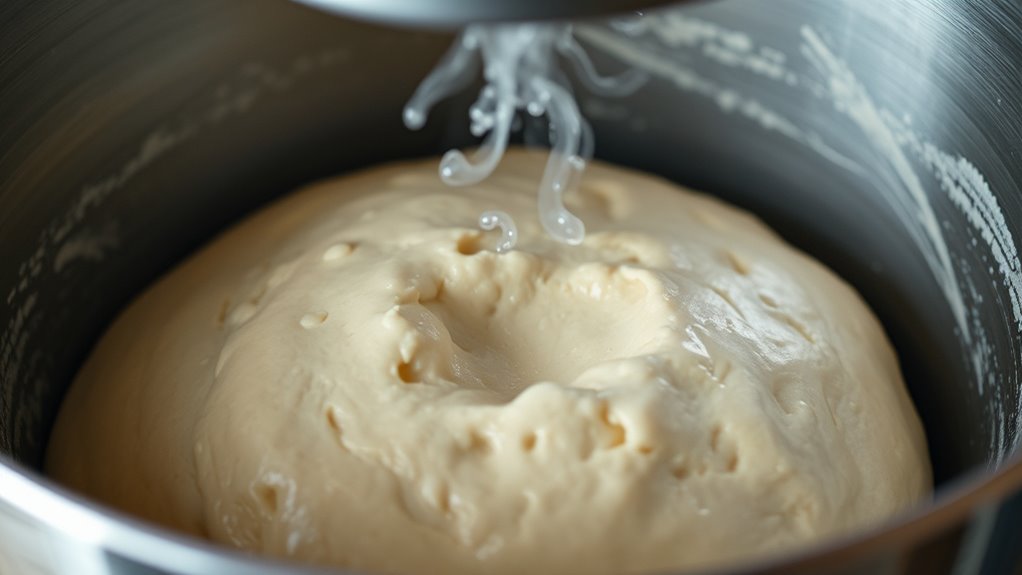
Temperature plays a crucial role in controlling enzyme and yeast activity during dough mixing. When the dough is too cold, enzyme activity slows down, delaying starch breakdown and weakening gluten development. Conversely, excessive heat accelerates enzyme activity, risking over-fermentation. For example, enzyme efficiency is highly sensitive to temperature changes, directly impacting dough quality. To maintain optimal dough fermentation conditions, precise temperature control is essential. Proper dough temperature management also impacts gluten development, influencing the dough’s elasticity and final texture. For yeast performance, moderate temperatures around 75-80°F optimize fermentation, ensuring consistent rise and flavor development. Too cold, and yeast slows considerably, leading to under-proofed dough; too hot, and yeast can become stressed or die, causing fermentation issues. Maintaining the right temperature range helps balance enzyme actions and yeast efficiency, ensuring your dough ferments properly. Understanding this relationship lets you fine-tune your process for better texture, flavor, and rise, while avoiding unexpected changes caused by temperature fluctuations.

GVODE Pouring Shield for KitchenAid Mixer, Compatible with KitchenAid 4.5-5 QT Tilt-Head Stand Mixers, Detachable Body with Flip-top Feed-inlet Lid, Fits Stainless-Steel, Glass, and Ceramic Bowls.
Two Major Upgrades: First, the pouring shield for KitchenAid mixer can be split into two parts for added…
As an affiliate, we earn on qualifying purchases.
As an affiliate, we earn on qualifying purchases.
What Causes Unexpected Temperature Spikes in Mixers?

Unexpected temperature spikes often happen when mechanical friction creates extra heat, especially if the mixer runs too long or at high speeds. Using ingredients at warmer temperatures can also contribute to rising dough temps. By controlling mixer speed, duration, and ingredient temps, you can prevent these sudden increases and keep your dough consistent. Additionally, monitoring Free Floating backyard features can help ensure your equipment and environment are optimized to reduce heat buildup. Paying attention to support breakfast options, such as ensuring your breakfast ingredients are stored at proper temperatures, can also help maintain consistent dough temperatures during preparation. Being aware of thermal management techniques can further aid in preventing unintended temperature rises during mixing.
Mechanical Friction Heat Generation
When the mixer’s moving parts rub against each other, friction naturally occurs, converting mechanical energy into heat. This heat generation depends on factors like the surface roughness and pressure between components. As friction increases, so does the heat transfer to the dough, causing unexpected temperature spikes. The thermal conductivity of the mixer’s materials influences how quickly this heat spreads, potentially raising dough temperature rapidly. If parts like blades or gears are misaligned or worn, friction intensifies, magnifying heat production. Regular maintenance helps minimize unnecessary friction. Understanding how mechanical friction contributes to heat transfer allows you to better control dough temperature. Recognizing these factors and the importance of equipment maintenance ensures you’re not caught off guard by sudden temperature rises during mixing, maintaining consistent fermentation conditions.
Ingredient Temperature Effects
Ingredient temperature at the start of mixing can considerably impact dough heat levels, often leading to sudden temperature spikes. If ingredients like flour or water are too warm, they transfer heat directly into the dough, causing unexpected increases. Additionally, ingredient moisture content influences how quickly heat is retained or dissipated; lower moisture ingredients tend to heat up faster, raising dough temperature unexpectedly. Ingredient density also plays a role—denser ingredients can hold more heat, resulting in sharper temperature rises during mixing. If your ingredients are not properly stored or tempered, these factors combine to create hot spots and inconsistent dough temperatures. To prevent this, always check ingredient temperatures before mixing and ensure consistent moisture levels, especially when working with dense or dry ingredients. Proper storage of ingredients helps maintain stable temperatures and reduces the chance of unexpected heat transfer during mixing.
Mixer Speed and Duration
Mixer speed and duration substantially influence dough temperature during mixing. Running the mixer at high speeds generates more friction, which boosts heat and can cause unexpected temperature spikes. Longer mixing times also increase heat buildup, reducing mixer efficiency and risking overheating the dough. If your mixer operates too fast or runs too long, the dough’s elasticity may be compromised, leading to uneven fermentation and texture issues. To prevent this, adjust the mixer speed to a moderate level and limit mixing duration based on your dough’s characteristics. Monitoring and controlling these parameters help maintain consistent dough temperature, ensuring advantageous fermentation and preventing sudden changes caused by excess heat. Keeping a balance in speed and duration is key to preserving dough quality and process stability.
How Can You Spot and Assess Overheated Dough?
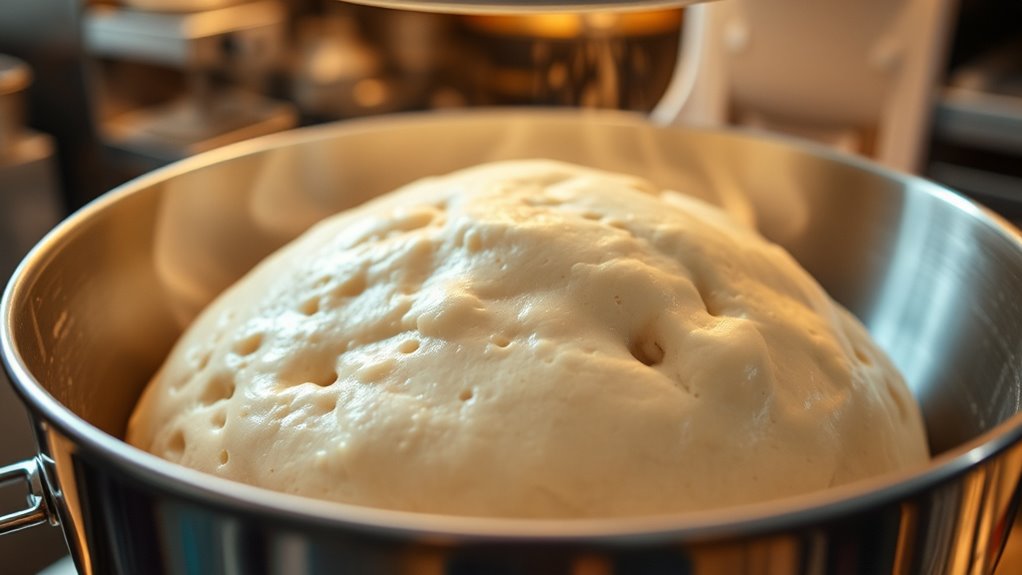
Overheated dough often shows clear signs that you can detect with careful observation. One key indicator is changes in dough consistency; it may become sticky, overly soft, or excessively slack, making it difficult to handle. You might also notice a sour or off-putting smell, signaling that fermentation has accelerated beyond normal levels. Assess the flavor development—overheated dough can have a flatter or overly yeasty taste, indicating that heat has impacted fermentation. Touch the dough gently; if it feels abnormally warm or even hot, that’s a strong sign it’s overheated. Temperature control is essential in preventing these issues and maintaining optimal fermentation conditions. Proper dough temperature management can significantly influence fermentation quality and consistency. Additionally, monitoring ambient conditions and heat management techniques can help you avoid overheating in the first place. Using adequate insulation during fermentation can also help maintain a stable temperature environment. Paying close attention to these signs helps you catch issues early, so you can adjust processes or prevent further problems in your baking. Incorporating outdoor wisdom such as maintaining proper temperature controls can help avoid these issues altogether.
What Tools Help Measure Dough Temperature Accurately?
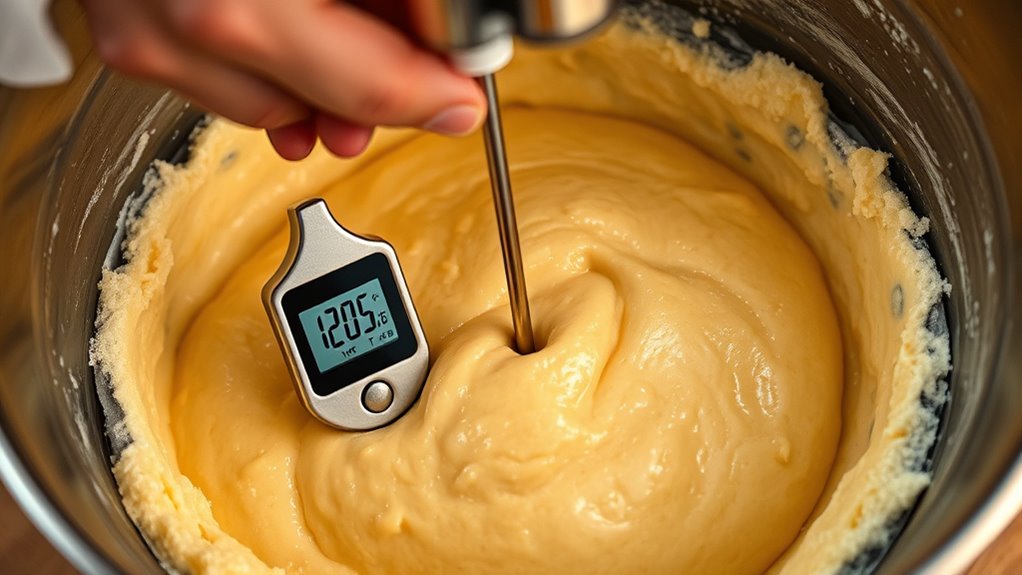
To accurately monitor dough temperature, using the right tools is essential. Infrared thermometers are quick and non-contact, perfect for measuring surface temperature without contamination. Dough thermometers, on the other hand, provide precise internal readings, ensuring your dough stays within ideal ranges. Here are four tools to consider:
- Infrared thermometers – fast, contactless surface measurement.
- Digital dough thermometers – accurate internal temperature readings.
- Dial oven thermometers – useful for checking oven and proofing environments.
- Temperature probes – ideal for continuous monitoring during mixing and fermentation.
Choosing the right tool depends on your needs. Infrared thermometers are excellent for quick checks, while dough thermometers give detailed insights for controlled fermentation. Both are essential for consistent results.
How Can You Keep Dough at the Right Temperature During Mixing?
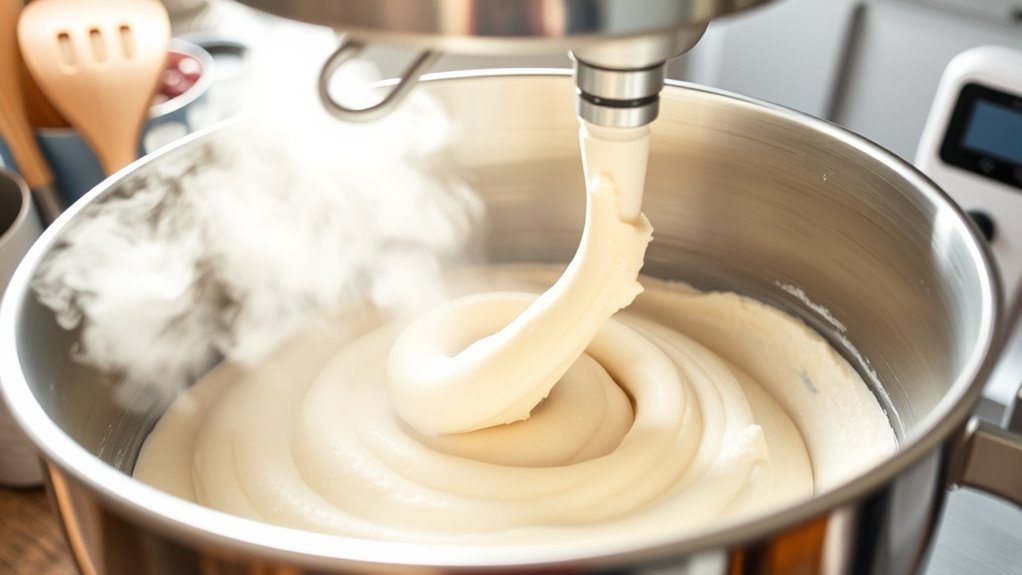
Maintaining the right dough temperature during mixing is crucial for consistent fermentation and final product quality. To control dough temperature during the mixing process, start by using ingredients at appropriate temperatures, such as cold water or refrigerated flour. Incorporate ice or chilled liquids if necessary to lower the dough temperature. Adjust mixing time and speed; longer or faster mixing can increase heat, so monitor and limit these factors. Use a dough thermometer to track temperature throughout the process, ensuring it stays within your target range. Employ insulation or cooling jackets on the mixer if needed to prevent heat buildup. Additionally, understanding the heat distribution within your equipment can help you better manage temperature changes during mixing. By actively managing these variables, you keep your dough at the ideal temperature, promoting even fermentation and superior baked goods.
How Should You Adjust Recipes When Temperatures Vary?

When dough temperatures vary from your target range, you need to modify your recipe to compensate for the difference. First, consider ingredient substitutions—use warmer or cooler liquids to balance temperature shifts. Second, change storage conditions: refrigerate ingredients if they’re too warm or allow them to warm slightly if too cold. Third, alter the amount of added water or flour to help reach the desired dough consistency. Fourth, adjust fermentation times, as temperature changes speed up or slow down yeast activity. These steps ensure your dough maintains proper fermentation and texture despite temperature fluctuations. Staying mindful of ingredient storage and making precise recipe tweaks help you control the process, no matter how the temperature varies.
Troubleshooting Fermentation Changes Due to Temperature Fluctuations
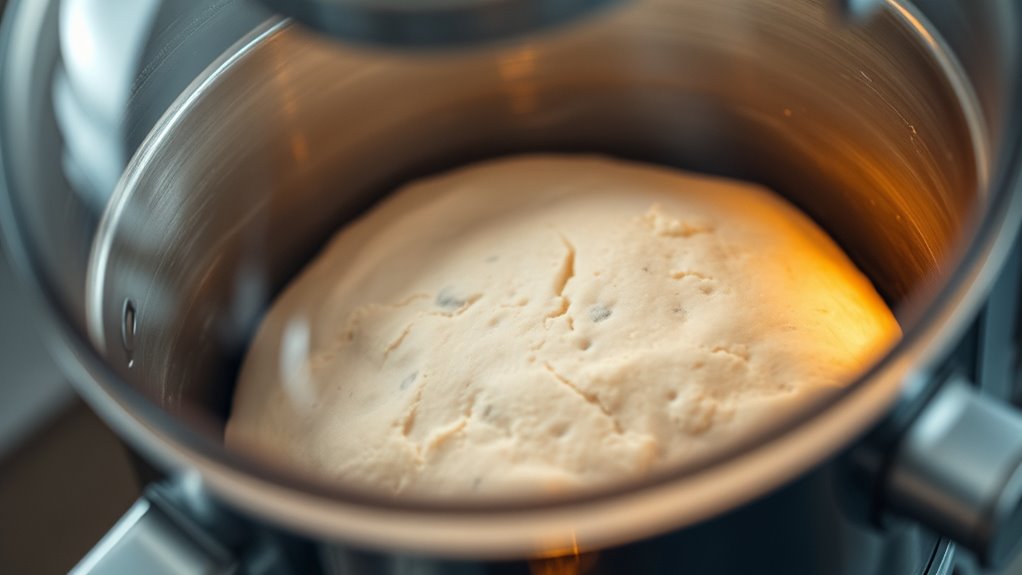
Temperature fluctuations can considerably impact fermentation, causing your dough to ferment too quickly or too slowly. When this happens, it’s essential to consider ingredient interactions and ambient temperature. If fermentation accelerates unexpectedly, check if ambient temperature has risen, as warmer conditions speed up yeast activity. Conversely, cooler ambient temperatures slow fermentation, requiring adjustments. To troubleshoot, monitor your environment and note any changes in temperature. Adjust ingredient interactions by slightly modifying water temperature or proofing times to compensate. Consistently controlling ambient temperature helps maintain steady fermentation rates. Using a thermometer in your dough or proofing environment can help you detect fluctuations early. By understanding how ambient temperature influences fermentation, you can fine-tune your process and ensure consistent dough quality.
Frequently Asked Questions
Can Ambient Room Temperature Influence Dough Temperature During Mixing?
Yes, your ambient room temperature can influence dough temperature during mixing. If the room is warmer, the dough heats up faster, affecting fermentation and gluten development. Conversely, a cooler environment slows down the process. To maintain consistent dough temperature, monitor your mixing environment and adjust ingredients or mixing time accordingly. Keeping the room temperature stable helps guarantee your dough ferments predictably and produces consistent results.
How Long Does It Take for Dough Temperature to Stabilize After Mixing?
After mixing, dough temperature usually stabilizes within 15 to 30 minutes, depending on factors like mixing speed and dough consistency. If you mix at high speed, heat builds up quickly, causing faster temperature shifts. To maintain consistent fermentation, monitor your dough and allow it to rest until the temperature stabilizes. This ensures uniform fermentation and ideal bread quality.
Are There Specific Mixer Types Less Likely to Cause Temperature Spikes?
Mixer design matters when it comes to minimizing heat spikes. You’ll find that open-bowl or planetary mixers are less likely to cause temperature troubles because they promote better heat dissipation, dispersing heat more effectively. Compact, enclosed mixers tend to trap heat, raising dough temperature unexpectedly. So, choose mixers with efficient heat dissipation features, and you’ll keep your dough cooler, controlling fermentation and preventing sudden, sour surprises.
Does Dough Hydration Level Affect Its Temperature Rise During Mixing?
Yes, your dough’s hydration levels directly impact its temperature rise during mixing. Higher hydration levels, which create a wetter dough, tend to generate more heat because of increased enzymatic activity and friction. Conversely, lower hydration results in a firmer dough with less friction, reducing temperature spikes. Pay attention to your dough consistency; adjusting hydration can help control temperature and prevent unexpected fermentation changes during mixing.
How Does Ingredient Temperature Prior to Mixing Impact Overall Dough Temperature?
You influence dough temperature considerably by the ingredient temperature you start with. Cold ingredients lower initial temperature, while warm ones raise it, affecting consistency during mixing. Mixing speed also matters; faster speeds generate more heat, increasing the overall temperature. To control fermentation, make certain ingredients are at a consistent, perfect temperature and adjust mixing speed accordingly. This careful approach helps maintain ideal dough conditions and prevents unexpected fermentation changes.
Conclusion
Understanding how mixer heat impacts your dough is vital, as studies show dough temperature can influence fermentation speed by up to 50%. When your dough suddenly ferments differently, it’s often due to unexpected temperature rises. By monitoring and controlling temperature carefully, you can guarantee consistent results and better bread quality. Don’t let a simple heat spike ruin your bake—stay vigilant, measure often, and adjust as needed for perfect fermentation every time.