You might think your thermometer’s accuracy is the main factor, but where you place it matters even more. If you position it near windows, vents, or in direct sunlight, external factors like heat or drafts can skew its results. Proper placement in stable, shaded areas away from heat sources guarantees more reliable measurements. Keep this in mind, and if you continue exploring, you’ll discover even more about how environment influences your thermometer’s performance.
Key Takeaways
- Placement near heat sources or sunlight causes readings to be artificially high, regardless of device accuracy.
- Environmental factors like drafts or airflow can alter temperature measurements more than sensor precision.
- Incorrect positioning near windows, vents, or cold surfaces skews results, overshadowing device calibration.
- Proper placement in stable, representative environments minimizes external influences affecting readings.
- Sensor calibration maintains accuracy over time but cannot correct for environmental placement errors.
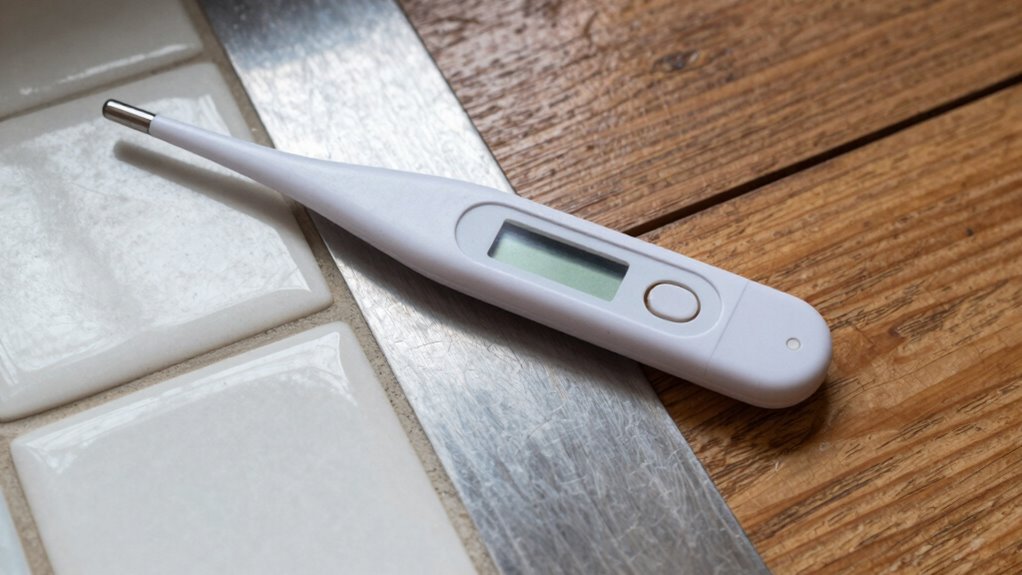
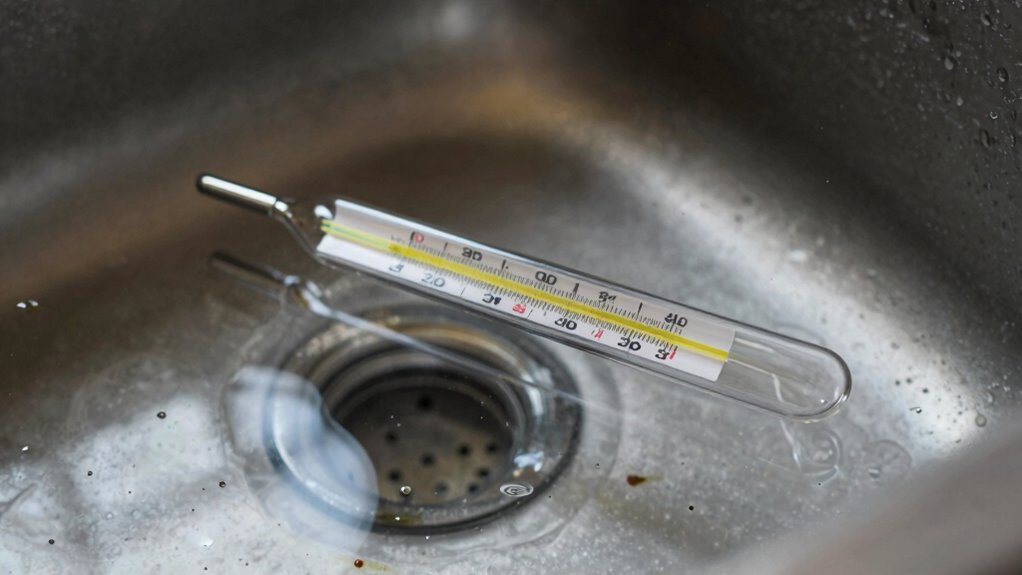
When taking a temperature reading, the position of the thermometer matters more than the device itself. Even the most accurate thermometer can give you misleading results if placed incorrectly. The key is understanding how placement affects the reading, often more than the tool’s inherent precision. Many people overlook that sensor calibration—the process of ensuring the thermometer’s sensors are adjusted correctly—is only part of the equation. If you don’t position the thermometer properly, environmental influence can skew your results, making the reading unreliable.
Proper thermometer placement is crucial; environmental factors can distort even the most accurate devices.
Environmental factors play a significant role in temperature measurement. For example, placing a thermometer in direct sunlight will likely produce a higher reading than in shaded areas. Similarly, drafts or air currents can lower or raise the temperature reading, depending on their direction and strength. You might think your thermometer is off, but the real culprit is where you’ve placed it. To get an accurate measurement, you need to position it away from heat sources, airflow, or cold drafts. This means avoiding windows, vents, or areas near heating or cooling units. Proper placement is essential to avoid external influences that can distort your readings.
Sensor calibration ensures that your thermometer provides consistent results over time, but it doesn’t compensate for poor placement. Even a well-calibrated sensor can be misled if left in an environment that’s not representative of the actual temperature you want to measure. For instance, if you’re measuring body temperature, placing the thermometer in a sweaty or cold environment before taking a reading can distort the results. The same applies to room temperature measurements—place the device in an open, stable spot, away from direct sunlight, and avoid touching it with your hands, which can transfer heat. proper placement can also help prevent external factors from interfering with your readings, ensuring more accurate data collection. Being aware of environmental influences and how they impact temperature readings is crucial for accurate measurements. Additionally, understanding sensor sensitivity can help you choose the right placement to minimize errors caused by environmental factors.
digital room thermometer with accurate placement
As an affiliate, we earn on qualifying purchases.
As an affiliate, we earn on qualifying purchases.
Frequently Asked Questions
How Does Ambient Temperature Affect Thermometer Accuracy?
Ambient temperature impacts thermometer accuracy because it influences the device’s calibration and environmental stability. When ambient temperatures fluctuate, they can cause the thermometer to drift from its calibrated settings, leading to inaccurate readings. To guarantee precision, you should regularly use calibration techniques and keep the environment stable. By doing so, you minimize the effects of ambient temperature changes, helping your thermometer provide consistent, reliable measurements.
What Are Common Mistakes in Thermometer Placement?
Poor placement poses problems; you often place thermometers improperly, impacting accuracy. Common mistakes include inconsistent positioning, such as placing sensors too close to heat sources or in drafts. You should make certain sensor calibration is correct and maintain placement consistency for reliable readings. Avoid inserting the thermometer in unusual spots or at odd angles. Properly positioning the sensor in the right environment guarantees precise, dependable temperature measurements, avoiding misleading or fluctuating results.
Does the Type of Thermometer Influence Placement Sensitivity?
Yes, the type of thermometer influences placement sensitivity. Different thermometers, like digital or infrared, require careful sensor calibration to guarantee accuracy. Placement consistency is vital because each device responds differently to slight positioning changes. For example, infrared thermometers need precise aim, while traditional thermometers need proper insertion depth. Understanding these nuances helps you get reliable readings, emphasizing the significance of correct placement tailored to each thermometer type.
How Long Should a Thermometer Be Left in Place for an Accurate Reading?
You should leave a thermometer in place for about 3-5 minutes for an accurate reading. Think of it like calibrating standards—you need enough time for the device to stabilize. Digital thermometers usually give quick results, while analog ones may require a minute or two longer. Remember, rushing can lead to inaccurate readings, like misreading a map and losing your way. Patience guarantees precise temperature measurement.
Can External Factors Like Airflow Impact Temperature Readings?
External factors like airflow disruption can substantially impact your temperature readings. When airflow moves around the thermometer, it can cool or warm the sensor, leading to inaccurate results. To guarantee precision, you must maintain placement consistency, avoiding drafts or direct airflow sources. By controlling these external factors, you help your thermometer provide reliable measurements, making sure airflow disruption doesn’t skew your readings.
infrared thermometer for surface temperature measurement
As an affiliate, we earn on qualifying purchases.
As an affiliate, we earn on qualifying purchases.
Conclusion
So, next time you check your temperature, remember—where you place that thermometer could be the difference between a normal reading and a surprise. It’s not just about the tool itself; it’s about the tiny details in placement that can change everything. Are you truly getting an accurate reading, or could a small shift be hiding something more? Keep this in mind, because the truth might be closer than you think—just waiting to be uncovered.
calibrated indoor thermometer for stable readings
As an affiliate, we earn on qualifying purchases.
As an affiliate, we earn on qualifying purchases.
best placement thermometer for accurate ambient temperature
As an affiliate, we earn on qualifying purchases.
As an affiliate, we earn on qualifying purchases.