To extend the shelf life of displayed pastries, you need to focus on proper packaging, storage, and handling. Airtight containers and resealable bags help prevent moisture loss and contamination, while keeping pastries in a cool, dry, and shaded environment avoids mold and staleness. Refrigeration of certain items and maintaining hygiene also play key roles. Understanding these strategies helps keep your pastries fresher longer—continue exploring to learn how to optimize each step effectively.

Get baking supplies delivered free with Prime
- Fast, free delivery on millions of items
- Prime Video, Amazon Music and more included
- Member-only deals all year
Key Takeaways
- Proper packaging prevents moisture loss and contamination, extending pastry freshness and safety.
- Maintaining optimal temperature and humidity levels slows spoilage and preserves texture.
- Airtight sealing, especially in refrigeration, prevents moisture buildup and microbial growth.
- Hygienic handling and clean storage areas reduce bacteria and mold risks.
- Continuous monitoring of storage conditions ensures pastries stay within ideal preservation parameters.
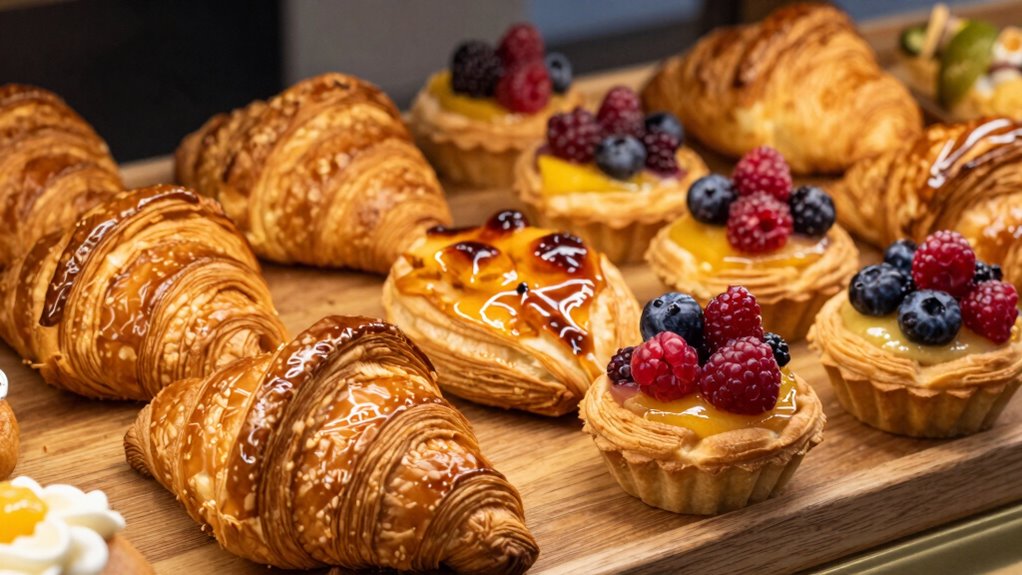
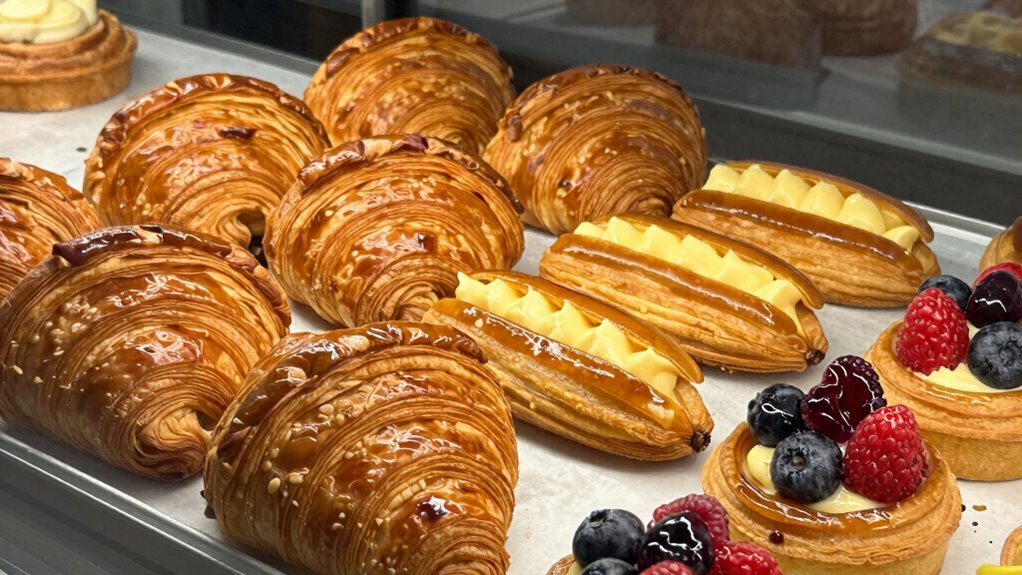
When it comes to displaying pastries, understanding their shelf life is vital for maintaining freshness, safety, and customer satisfaction. The way you package and present these treats directly impacts how long they stay appealing and safe to eat. Packaging techniques are essential because they influence moisture retention, protect against contamination, and help preserve the pastry’s texture and flavor. Using appropriate packaging—like airtight containers, resealable bags, or clamshell boxes—keeps pastries from drying out or becoming soggy. Clear packaging also allows customers to see the product without opening it, which can encourage sales while keeping the pastry protected.
The storage environment plays an equally important role in extending shelf life. Pastries are sensitive to temperature, humidity, and light, so maintaining ideal conditions is key. Typically, pastries should be stored in a cool, dry place away from direct sunlight, which can accelerate spoilage. If the display case is too warm or humid, the pastry’s crust becomes soft or mold can develop quickly. Conversely, if it’s too cold, the pastry might become stale or lose its original texture. You want to find a balance—ideally, a temperature around 65-70°F with low humidity—to preserve freshness. Additionally, proper storage conditions are crucial for preventing mold and bacteria growth, which can rapidly spoil baked goods. Proper environmental control is essential to maximize shelf life and ensure product quality.
Monitoring the storage environment helps you identify issues before they compromise the pastries. Using refrigeration for certain pastries—like cream-filled or fruit-topped varieties—can extend their shelf life, but only if the packaging is airtight to prevent moisture buildup. For baked goods that are meant to stay at room temperature, guarantee they’re kept in a sealed environment that limits exposure to air and contaminants. Additionally, regularly cleaning display cases and storage areas minimizes bacteria and mold risks, further safeguarding the quality of your pastries. Maintaining hygienic practices is essential for long-term freshness and safety. Proper handling and storage techniques are also fundamental to preventing spoilage, ensuring your pastries remain delicious and appealing for as long as possible.
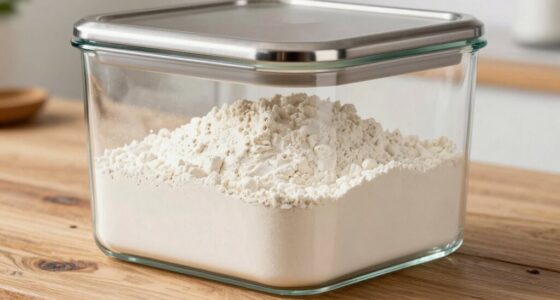
airtight pastry storage containers
As an affiliate, we earn on qualifying purchases.
As an affiliate, we earn on qualifying purchases.
Frequently Asked Questions
How Do Ambient Temperatures Affect Pastry Shelf Life?
Ambient temperatures considerably impact pastry shelf life. When temperatures fluctuate, pastries can spoil faster due to increased microbial growth. High heat accelerates staling and mold, while cooler, stable environments slow deterioration. Humidity control is essential; too much moisture promotes mold, while dryness causes pastries to become stale. By maintaining consistent, appropriate ambient temperatures and managing humidity, you extend the freshness and safety of displayed pastries effectively.
What Are the Best Storage Practices for Fresh Pastries?
You might think airtight containers are overkill, but they’re perfect for fresh pastries. To preserve pastry moisture and flavor, store them in a cool, dry place and use resealable bags or containers. Avoid refrigeration, which can dry out pastries, and consume within a couple of days for the best taste. Ironically, the simplest storage methods often keep your pastries tasting freshly baked longer.
How Can Preservatives Extend Pastry Freshness?
Preservatives like artificial acids or natural options such as citric acid help extend pastry freshness by slowing microbial growth and moisture loss. They also aid in flavor retention, guaranteeing your pastries stay delicious longer. By choosing the right preservative types, you can maintain quality and freshness, reducing waste. Just make certain you follow safety guidelines and use preservatives in moderation to preserve the natural taste while extending shelf life effectively.
What Are Signs of Pastry Spoilage?
Pastry spoilage is unmistakable when you see mold development or notice a drastic change in pastry moisture, making it feel like it’s turned into something unrecognizable. If your pastry smells sour or has a slimy texture, it’s time to toss it. These signs indicate bacteria and mold are taking over, turning your treat into a health hazard. Always trust your senses—when in doubt, discard to stay safe.
Does Packaging Impact Pastry Shelf Life?
Yes, packaging impacts pastry shelf life. Your packaging design and material selection play vital roles in preserving freshness and preventing spoilage. Opt for airtight, moisture-resistant materials that keep out air and humidity, which cause staleness and mold. Well-designed packaging also protects pastries from physical damage and contamination, extending their freshness. By choosing the right packaging and materials, you guarantee your pastries stay appealing and safe for longer periods.
As an affiliate, we earn on qualifying purchases.
Conclusion
So, next time you marvel at those perfectly fresh pastries in display cases, remember the clever logic behind their shelf life. It’s almost amusing how the quest for visual perfection often outweighs freshness itself. You might think you’re savoring the best, but really, you’re just part of a well-orchestrated game of illusions—where appearance beats reality. After all, in the world of pastries, sometimes the freshest thing is the illusion of freshness.
As an affiliate, we earn on qualifying purchases.
digital temperature and humidity monitor
As an affiliate, we earn on qualifying purchases.
As an affiliate, we earn on qualifying purchases.
Halloween Picks
halloween
As an affiliate, we earn on qualifying purchases.